

If you have been skipping meals, doing sit-ups until your back aches, and cutting out carbs entirely, and your belly is still there, you need to hear this.
Losing belly fat without starving yourself is possible. I lost about 66 pounds over four years without supplements, surgery, or eating once a day. But I am not saying it will work for everybody.
The real problem is not how much you eat. It is how often you eat and what that does to a hormone called insulin, which decides whether your body stores fat or burns it.
By the end of this article, you will know exactly what to do for the next 21 days. Five habits, no starvation, and a way to tell it is working before the scale even moves.
| Habit | What it looks like | Why it matters |
|---|---|---|
| Pick an eating window | 10 a.m. to 6 p.m., breakfast, lunch and dinner inside it | Gives insulin time to drop so your body can tap stored fat |
| Stop snacking between meals | Only water outside the window, green tea if you need something warm | Keeps insulin from switching on all day long |
| Drink only water outside the window | Water, or flavoured water if plain is boring, no juice, no soft drinks | Liquid sugar hits the bloodstream fast and spikes insulin |
| Move slowly and consistently | 5,000 to 10,000 steps or 500 to 1,000 skips, stairs, dancing | Low intensity is the version you can repeat tomorrow |
| Sleep 7 to 8 hours | Same bedtime, phone out of the room, curtains closed | Poor sleep raises cortisol, and cortisol stores fat |
Starving and one meal a day backfire
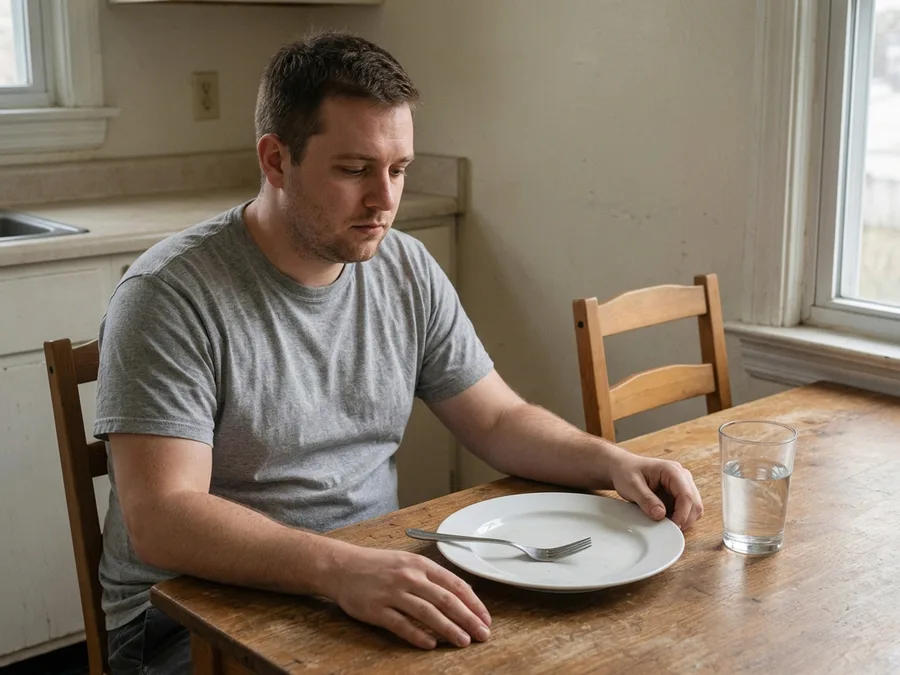
Eating once a day is not the fast lane to a flat stomach. It is the plan most people grab first, and it is the one most likely to leave you holding the same fat while running short on nourishment.
Skip enough meals and your body reads the shortage as a threat, not a gift. It slows things down and defends the fat it already has, because a body that thinks famine is coming hoards what it can. So the scale stalls, the belly stays, and your sacrifice buys you nothing but misery.
Malnourishment is not only looking thin. It also means not getting proper nourishment, and a one-meal plan delivers that easily. You can be carrying extra weight and still be badly underfed, which is a strange sentence until you have lived it.
Then there is the practical problem nobody mentions. A starved plan is the one you cannot repeat. You white-knuckle it for a week or two, feel virtuous, then you crash, and the fat comes back with the habit.
This lands on anyone planning to skip meals rather than space them. Those are two different things, and the spacing part comes later. For now, put down the idea that less food is always the answer.
Your body is not a bank account where skipping a deposit makes you richer. It is a system that responds to timing, and timing is what we are going to fix.
Score your first week
Weight crept on while sitting still

The belly usually arrives without an announcement. No single blow-out meal did it. What happened is that income started coming in, free time got spent sitting in one place, and whatever money could buy got eaten.
It happened slowly for me. My cheeks swelled first, then my stomach, then my legs and hands, over months, not weeks. Everyone around me called it the good life.
A friend even sent food money, and I was happy to eat it. That is how the environment helps. Nobody sabotages you on purpose; they just keep handing you the thing that keeps the habit going.
Then I ran a fasting blood sugar test. The result was not diabetes, but it was not normal either. That was the moment food stopped being the only suspect.
If you have not had that test, get the actual number from a doctor rather than guessing from the mirror. Your waist size tells you something has changed. A blood test tells you what.
⚠️ COMMON MISTAKE
The one meal a day trap
Skipping meals feels like progress because the scale moves fast at first. That is water and muscle, not the belly fat you are after. The plan collapses and the fat returns because you never changed the habit that put it there.
Insulin is the body’s storage manager

Insulin is the hormone that decides whether the food you just ate gets burned or stored, and how often it switches on matters as much as how much you eat.
Every time you eat, whether it is rice, biscuits, yam, juice, or even a small malt, your body turns a lot of that into sugar and your blood sugar climbs. Your body treats that rising sugar as dangerous, so it releases insulin.
Think of insulin as a storage manager. Its job is to move that sugar out of your blood and into your cells before it causes trouble. Sugar that lands in muscle gets stored as glycogen. Sugar that lands in the liver gets the same treatment.
But insulin is a storage hormone. The more often it is switched on, the more time your body spends storing and the less time it spends burning. That is the link forward: the next few sections are about capacity, not calories.
Here is what that means for your plate. A slice of bread, a glass of juice, and a handful of biscuits all ring the same bell, so spacing them out gives the manager time to finish and clock off.
Muscle and liver fill up first
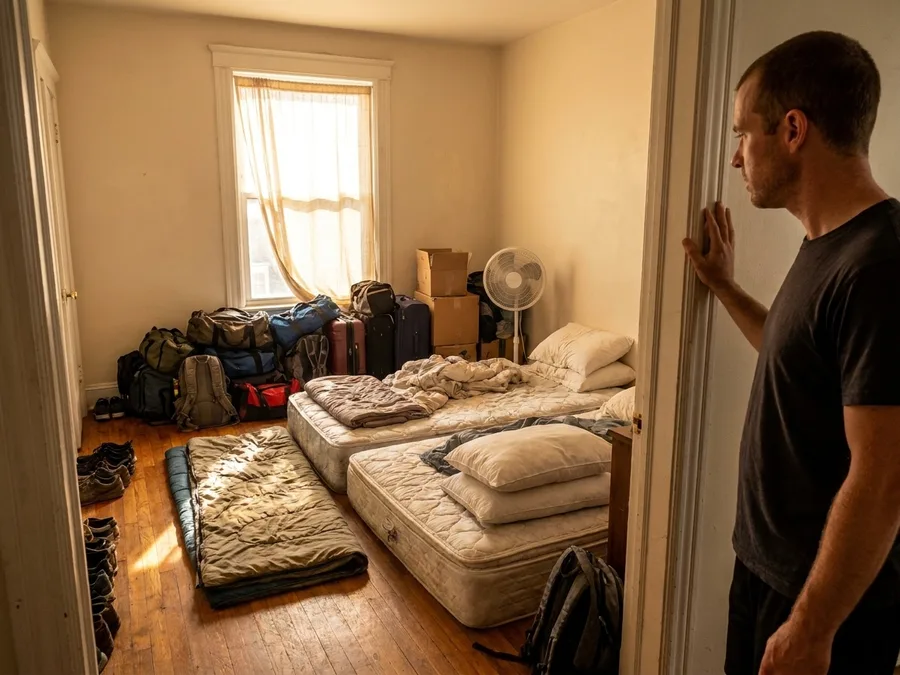
Your body turns food into fat because the places it tries to put sugar first are already full. Muscle and liver are the first stops, and neither can hold an unlimited supply.
Both of them store sugar as glycogen, and both have a ceiling. That ceiling is not a small detail. It is the whole story.
Picture trying to pack 40 people inside a three-bedroom flat. Of course not all of them are going to enter, no matter how hard you push. The rooms are full and the doors stop taking more.
So what happens to the leftover? The body does not throw it away. It says there is another place we can keep this for the long term, and it stores it as fat.
That is why the fat is not a failure of willpower. It is a full car park. Your body had nowhere else to put the sugar, so it built a new car park around your middle. Keep that image and the next section will make perfect sense.
The numbers behind the plan
What the 21 days actually ask of you
Numbers from the 21-day challenge detailed at the end.
Fat is the reserve tapped last
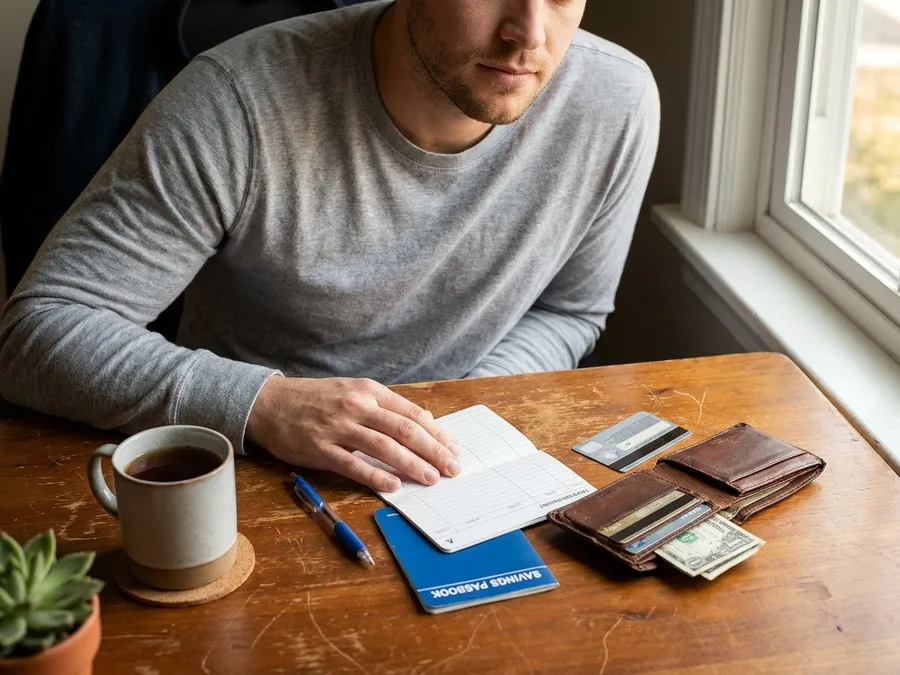
Your body starts burning stored fat only after the quick stores are used up and the tank has been empty for a while. Not during the snack, not right after dinner, and not while you keep grazing.
Quick energy comes from the muscle and liver stores. That is what the body reaches for when it needs fuel right now, and it is built for immediate needs, not for the long haul.
Fat is the long-term reserve. It gets tapped only after those short stores are exhausted, which means you cannot burn fat while you keep topping them up all day. Every biscuit resets the clock.
This is where the meal-spacing rule starts to make sense, and you do not have to count a single calorie to follow it. You just have to leave enough gap between meals for your body to reach the reserve and pull from it.
A simple test: if you find yourself nibbling every two hours, no gap ever happens, and the savings account just sits there. Move the snacks closer to meals and the gap appears on its own.
Constant snacking keeps insulin high all day
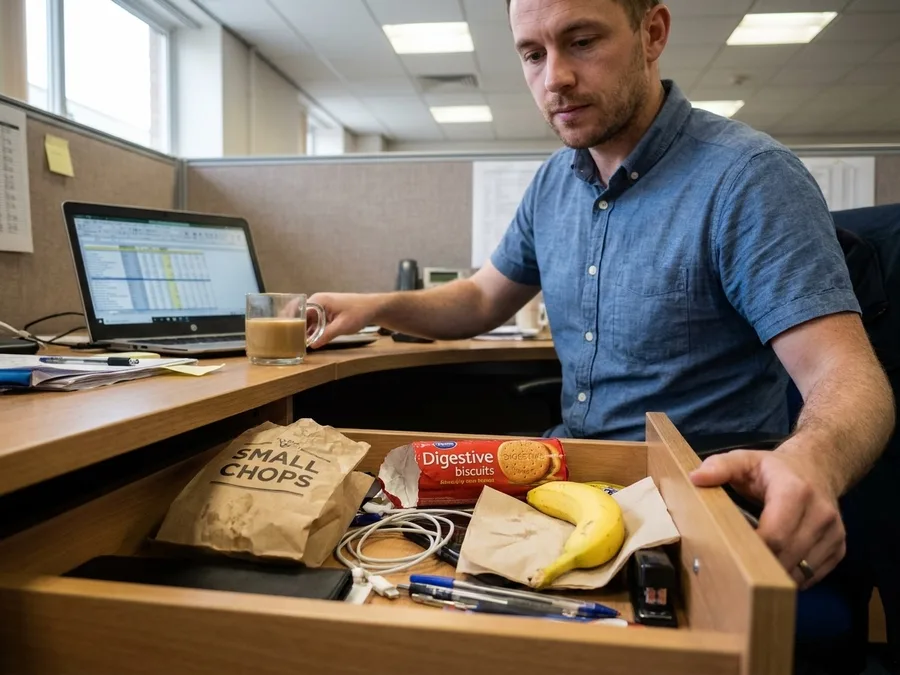
Little snacks still count, because every one of them switches insulin back on and the body adds up the whole day. It is not the size of the snack that matters, it is the number of times you press start again.
Picture a normal day. Breakfast at seven, then small chops in the office around ten, then a banana at noon because fruit is healthy, then biscuits at three because you are bored, not hungry. Four eating events, and not one of them was a real meal.
Every item was small. That is what makes it feel harmless. But there was no gap between them, so insulin never got to step down. It stayed up from morning till evening, doing its storage job the whole time.
And when insulin never rests, your body never gets to open the reserve. You keep depositing and never withdraw. You are not overeating in the dramatic sense, you are just snacking so often that your body never gets the memo to switch fuel.
Now the objection, because I know it is coming. You are a foodie and you cannot help it. I have been that foodie, the one who says it is just a small thing, just a taste, just to keep the mouth busy.
But one real gap between meals beats a smaller snack every single time. So this is not about eating less. It is about eating less often.
Try it this week. Take the small chops out, keep the banana, and put a genuine four-hour gap between your breakfast and your lunch. If your stomach complains, drink water and ride the ten minutes out. Hunger in a gap is not an emergency, and the next entry explains why the belly is always the first place that stored energy shows up.
Belly fat is visceral fat, the favourite store
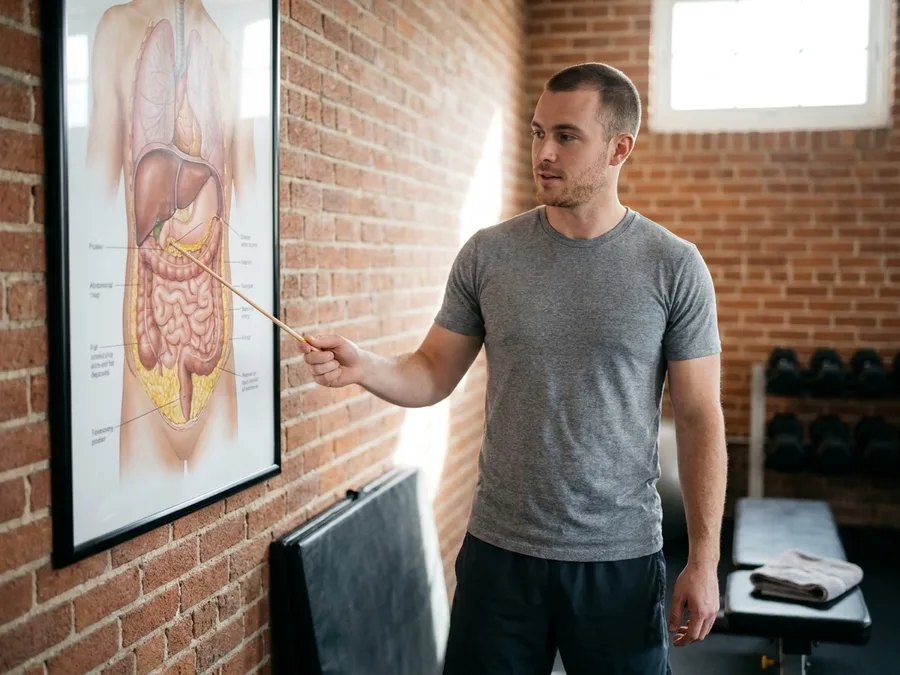
Belly fat lands there first because your organs live there, which makes the stomach the most convenient storage address in the body.
Your liver, kidneys, intestines, stomach and pancreas all sit in that neighbourhood. When the body needs somewhere to put energy as fat, that area is quick to reach. No long transport, no awkward corner of the body. Just deposit and go.
Think of it as the emergency savings account. Quick to deposit, hard to withdraw, like a fixed deposit you cannot touch until the term is up. The body treats the belly exactly like that: easy place to put money in, last place it wants to take money out.
That is why belly fat is the first place it lands and the last place it leaves. When you start burning fat, this is the account it protects the longest. Your face may thin out, your trousers may loosen at the thigh, and the stomach still sits there stubborn, holding on.
Which tells you something useful. The answer to belly fat is hormonal and whole-body, not a stomach exercise. There is no machine at the gym that reaches in and takes it off.
So stop measuring the day by how sore your abs feel. Measure it by whether the fat-burning hormone ever got a chance to switch on. That is the lever, and the next entry on snacking shows how often people jam it.
Sit-ups will not burn belly fat

Sit-ups do not burn belly fat, and six weeks of them can leave your stomach looking exactly the same in the mirror.
Here is the distinction that matters. Sit-ups work the abdominal muscle underneath. The fat layer sits on top of that muscle, and the muscle has no idea the fat is there. You are strengthening something you cannot see while the thing you can see stays exactly where it is.
I know how it feels. You do fifty a night, you feel the burn, you assume something is happening. Burning in the muscle is real, but it is not the fat burning off. The two are separate events and only one of them changes your waistline.
The honest cost is time and back comfort. Endless sit-ups buy you neither visible change nor a stronger back, and done badly, with no warm-up and a rushed crunch, they buy you a sore lower spine. That is a bad trade.
So what replaces them? Something gentler than you expect, and it is detailed a few sections down under low-intensity movement. It also happens to be the version you can still be doing next month, which is more than most sit-up streaks manage.
One thing to hold onto before you see it: the fat you are chasing does not care how many reps you did. It cares whether the body is in a state to release it at all.
Space meals so insulin can come down
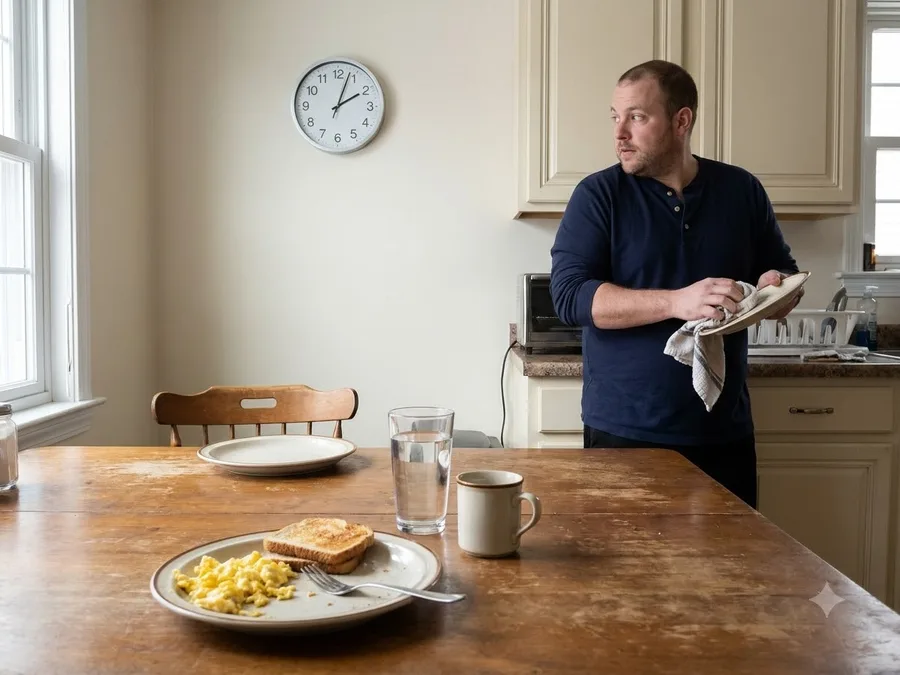
Insulin has to come down before stored fat can be used, and the way you bring it down is time between meals, not less food on the plate.
This is time-restricted eating, and it is not starvation. Starvation is one meal a day and feeling faint by noon. The version that works means you still eat breakfast, lunch, and dinner, just inside a window of hours.
You already know the difference; you just need it said plainly. Less food is a smaller deposit. More space is a chance to withdraw. You want the second one because the first one is the one that made you miserable and made you quit.
Now audit your own day, and be honest. What counts as a snack is more than you think: the drink, the fruit, the biscuit, the spoonful you taste while cooking. Every one of those opens the window again and restarts the whole thing.
Once you see the list, the fix becomes obvious. Pick a window, let the gaps do the work, and stop grazing your way through the day.
The next entry gives you the actual numbers for that window, including the dinner cut-off that does most of the heavy lifting.
🕙 Set your eating window in four steps
Pick the window
Choose 10 a.m. to 6 p.m., or the eight hours that fit your real schedule.
Fix breakfast, lunch and dinner
Give each meal a time inside the window instead of eating whenever hunger shows up.
Close the kitchen at 6 p.m.
Dinner is done by six, and nothing goes in after that, which is the hardest and most effective part.
Water only outside it
Every drink outside the window is water, or green tea if you want something warm.
Set an eating window and stop at 6
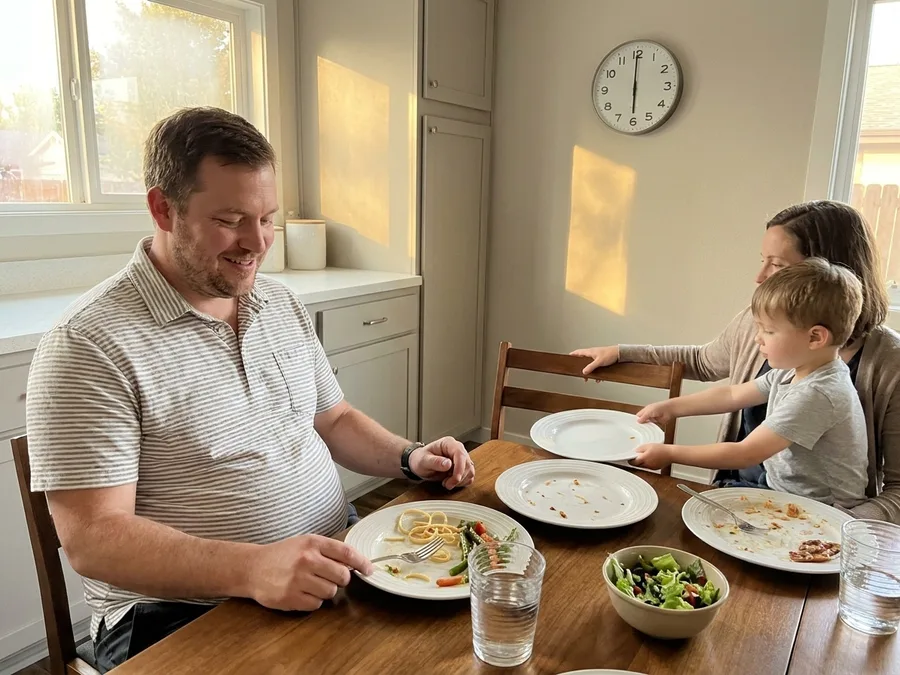
An eating window is a fixed set of times for breakfast, lunch, and dinner, not a mood you consult every time hunger shows up.
Mine was 10 a.m. to 6 p.m., three meals inside it and water outside it. That is the whole structure. The times do not need to match mine, but they do need to be decided in advance and treated like appointments.
Outside the window, only water. If you want something warm, green tea is fine. What is not fine is the small malt or the juice you tell yourself does not count, because it counts the moment it hits your tongue.
Dinner done by 6 p.m. and nothing afterwards is the hardest part of the rule. It is also the most effective. That one habit does more for your belly than any amount of willpower at lunch.
The night kitchen trip is where most windows are broken, so name it now and decide it is not happening. Not tonight, not on Friday, not just this once.
If you go to the kitchen at midnight, you are exactly who this rule was written for. Close the kitchen like you close a shop: lights off, shutters down, no negotiation at the door.
And notice what this rule does not ask of you. It does not ask you to skip meals or cut portions. It asks you to finish eating earlier, which is a timing change, not a punishment. For the meals you do keep, portion size tricks shrink servings before hunger gets a vote, without counting or weighing anything.
Swap junk food for whole food, keep carbs
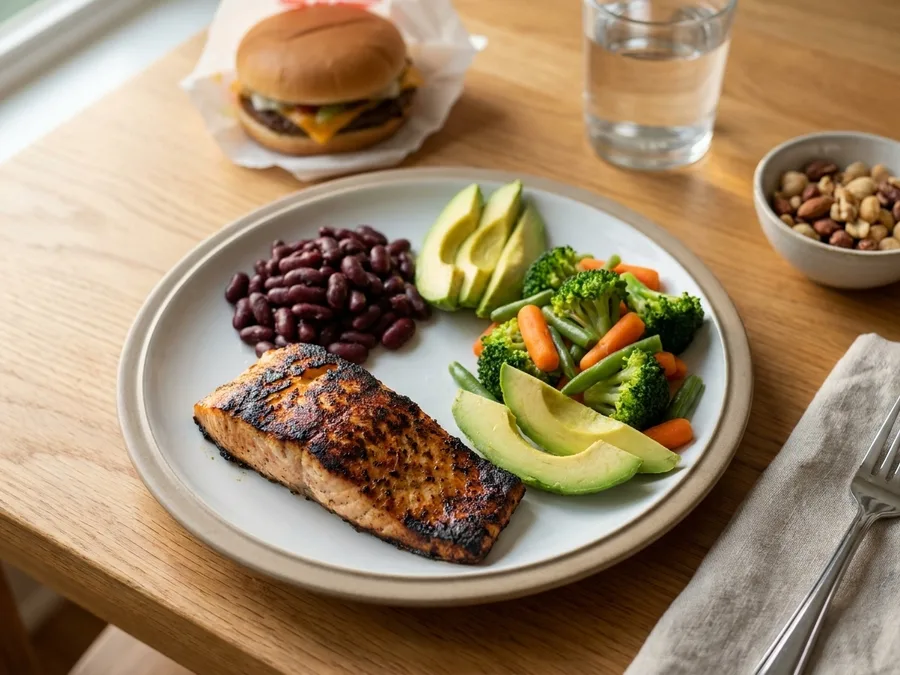
You get to keep carbs. You get to keep enjoying food. What has to change is the junk, swapped for whole food most of the time, not a life sentence of dry chicken and sadness.
A bucket of fried chicken every two days. Burgers that need cheese and cream inside, or forget it. Shawarma so loaded with sauce it slid out the side the moment you pressed it. That is not a meal plan; that is a relationship, and it was a marriage made in hellfire.
So end it. Protein first: eggs, fish, beans. Healthy fats next: avocado, nuts. Then plenty of vegetables crowd the plate, so you actually feel fed. If the gap between meals still leaves you hungry, these easy food swaps cut calories without turning dinner into a diet.
Carbs get reduced, not removed. They matter for energy, and keto is not for everybody, no matter how confidently the internet says it is. Cut them down, keep some in, and let your body keep working.
Struggling with junk food is not a character flaw. It is a habit to wear a disguise, and habits can be replaced. Plenty of people have stood exactly where you are, staring at a bucket of fried chicken and negotiating.
Eat your fruit instead of drinking it
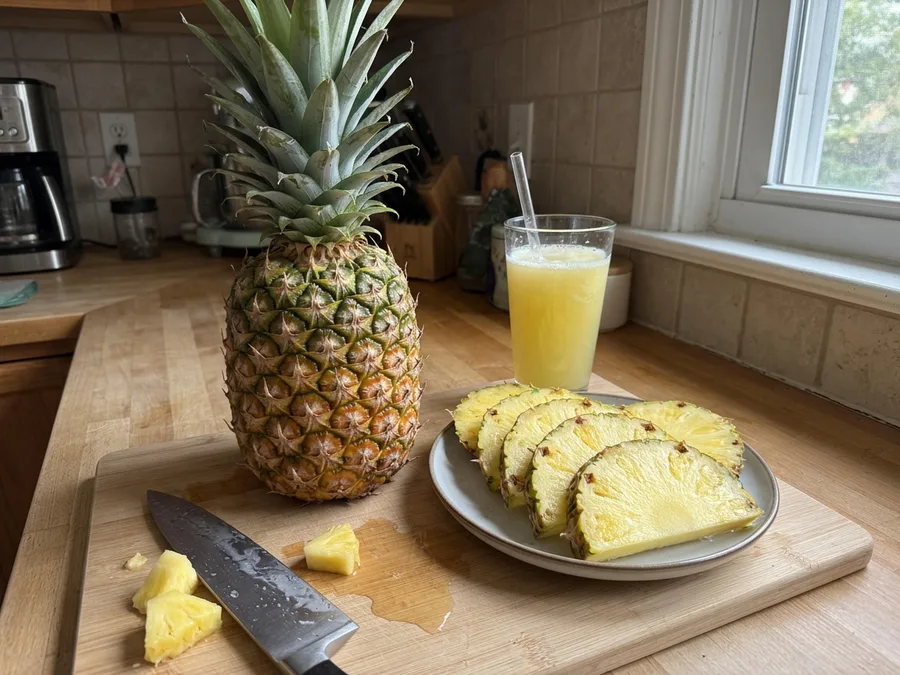
A glass of juice is not the same as the fruit, and one small demonstration explains why. Squeeze a whole pineapple and you get barely a cup of juice. That cup disappears in moments.
Slice the same pineapple instead, and by the third slice you are slowing down. Full. That is the difference between drinking your food and eating it.
Fibre is doing the quiet work. When you eat the fruit, you eat the fibre with it, and fibre reduces how high your blood sugar rises after eating. You get the sweetness and a built-in stopping signal in the same bite.
Drinking skips all of that. Liquid sugar hits the bloodstream fast, so insulin runs to bring it down. You have switched the storage hormone on without a meal to show for it, and you will be hungry again in an hour.
So juice and soft drinks go, and the whole fruit stays. Same fruit, completely different job inside your body.
Pick low-intensity movement and keep it up
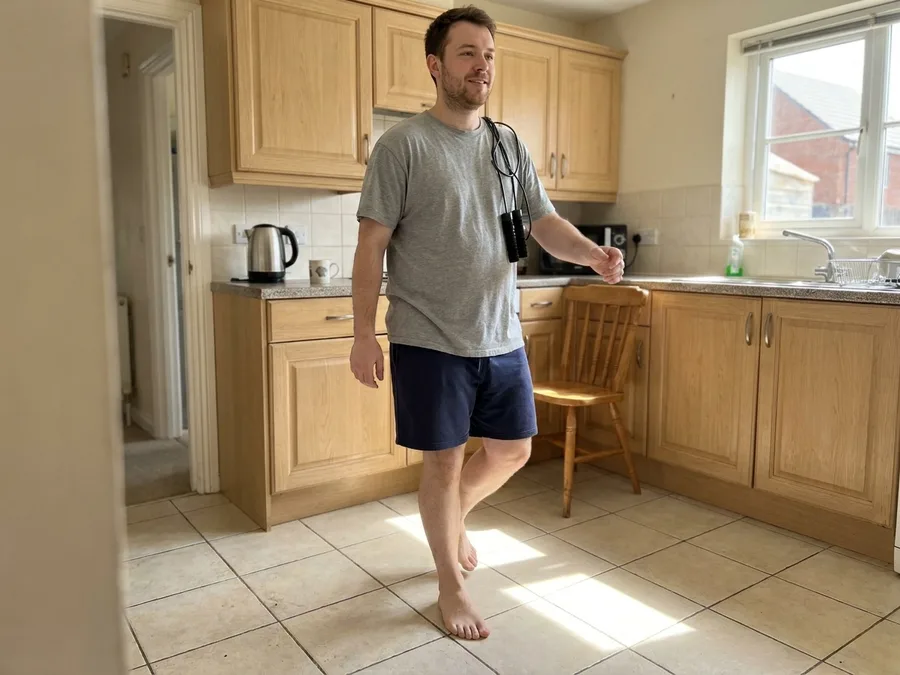
You need very little, and you need it gentle. Somewhere between 5,000 and 10,000 steps a day, or 500 to 1,000 skips, or taking the stairs, or dancing in your kitchen. Low intensity, done consistently, beats hard and occasional every single time.
Dancing counts even if you have two left feet. Nobody is scoring you. The only thing being measured is whether your body moved today.
Now the warning, because it happens constantly. You finish reading something like this, get filled with motivation from nowhere, hammer the gym for two weeks, and then never go near it again because everything hurts. Nobody quits because it was too easy.
Low intensity works for belly fat for one plain reason: it is the version you can repeat tomorrow. The brutal session you cannot repeat is worth less than the boring walk you can.
This suits the desk-bound reader who has not exercised in months, which is most people reading this. Start where you actually are, not where you wish you were.
The habit that sticks vs the one that doesn't
Low intensity, daily
- 5,000 to 10,000 steps, 500 to 1,000 skips, stairs, or dancing
- Same amount every day, even on a bad day
- You can hold a conversation while doing it
- You are still doing it in week six
High intensity, heroic
- Two weeks of heavy gym work out of nowhere
- Sore body, sore back, skipped sessions
- Motivation runs out by week three
- Gym membership goes unused by month two
You cannot choose where the fat comes off
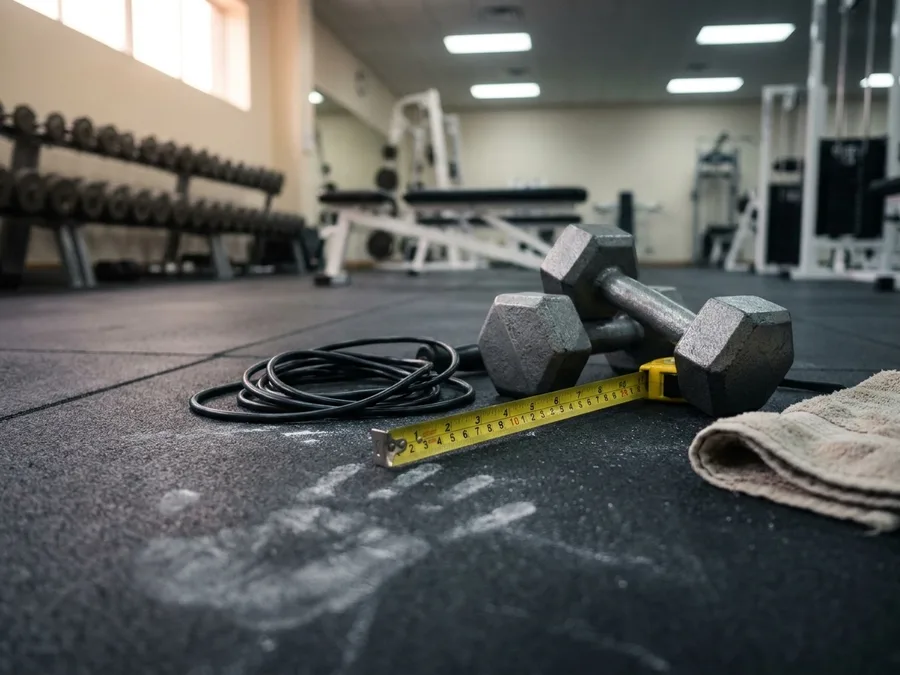
Exercise targets belly fat specifically. So the question “which move burns my stomach?” has no answer, because your body doesn’t work that way. There’s no crunch, plank or twist that attacks the fat sitting on one chosen area, no matter what the thumbnail promised.
Here’s the body’s own logic: it releases fat from all over, at its own choosing. It does not go digging into the muscle you happen to be working that evening. You could do 100 sit-ups a night for a month and the fat will leave your face, your back, your legs, and take its sweet time with your middle. The stomach is often the last to clear, which is annoying but normal.
Which is why the specific claims deserve a straight dismissal. Sit-ups for the belly, curls for the arms, squats for the bum: your body does not care which one you picked. The muscle underneath gets stronger, but the fat above it stays right where it is until the overall deficit catches up.
So stop the 100 sit-ups a night routine if the only goal was spot reduction. It’s not wasted effort, exactly, but it won’t rescue your stomach any faster. Keep the whole-body movement, keep the eating window from earlier, and let the belly follow in its own time.
This is also why the scale can look stuck while your trousers loosen. The fat is coming off, just not from the spot you were watching. Give it a few weeks and the tape measure tells the truth sooner than the scale does.
Poor sleep raises cortisol and stores fat

Sleep matters as much as the food. At least 7 to 8 hours a night is not a luxury, it is part of the plan, because poor sleep raises cortisol and cortisol tells your body to store more fat.
Sufficient sleep lowers that stress load, and it protects the eating window too. The late night is exactly when the kitchen gets raided. Tired people do not make good food decisions, they make fast ones.
This is hardest for shift workers and parents, so here is the minimum defensible version: the same wake time every day, the room as dark as you can get it, and the phone out of reach. That is not perfect, but it is repeatable.
If you cannot get eight hours, get seven and defend it. The goal is giving your body a chance to come down from stress, not chasing a flawless night you will never have.
Clothes will show it before the scale does
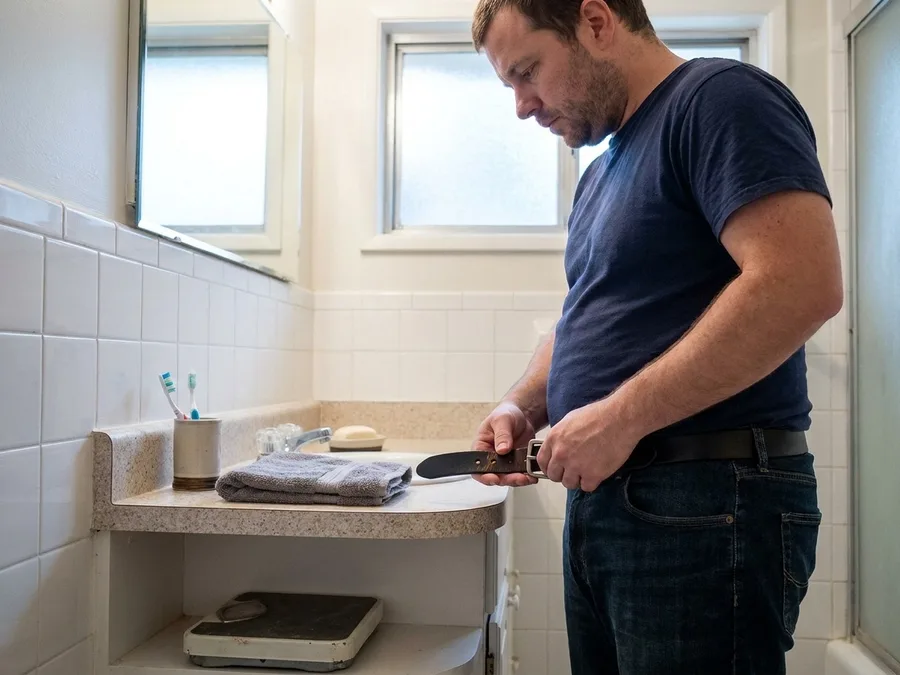
Your trousers are telling you the truth the scale is hiding. Change turns up in the waistband first, which is why the belt moves to a new hole while the number on the scale sits there like it owes you money.
Watch for the small stuff. A waistband that stops digging in. A shirt that hangs differently across the chest. Space at the sides where there was none before. That is fat coming off the places you can see and feel, even when the scale refuses to join the conversation.
Why does the scale go quiet? Because it is measuring one thing, total weight, and total weight includes water, food still moving through you, and muscle you may be building at the same time as you lose fat. Two changes pulling in opposite directions can leave the number almost flat while your shape changes underneath it.
Think of clothes you have owned for four years and not outgrown. That is a better progress report than a bathroom scale will ever give you.
This is a marathon, not a sprint, and the early signs are the ones to look for: a looser shirt, a belt hole, a mirror that looks a little different. Do not tighten anything because the scale sulked for a week. Judge by the clothes and by how long you have actually stayed consistent, because consistency is the thing you are waiting for.
The 21-day plan: five habits, one photo
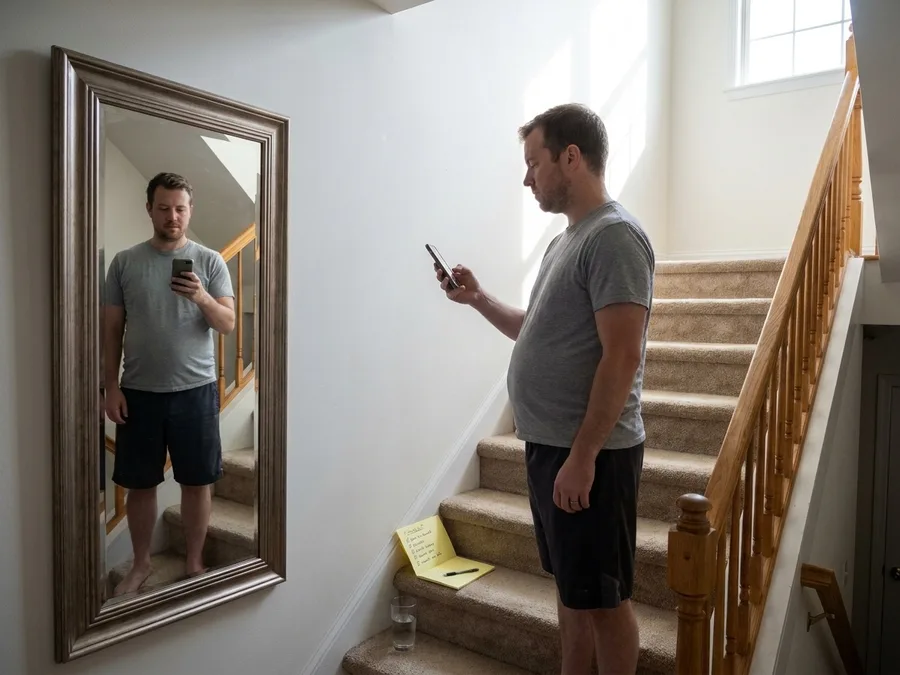
Starting tomorrow, you run five habits a day for 21 days. That is the whole plan, and none of it involves starving.
Habit one: pick an eating window. Something like 10 a.m. to 6 p.m. works, with breakfast, lunch and dinner fitted inside it. Habit two: stop snacking between meals, so insulin gets a proper break. Habit three: outside the window, drink only water, flavoured water included, and that goes for the middle of the night too. Habit four: move slowly and consistently every day, 10,000 steps or 1,000 skips, plus stairs or dancing if you feel like it. Habit five: sleep at least seven to eight hours.
Then take a photo on day one and another on day 21. Same spot, same light, same clothes if you can manage it. The scale will not tell the story, but the photos will.
On a day you break it, resume the next morning instead of writing off the three weeks. One missed evening is not a lost challenge, it is one missed evening. Why 21 days? It is long enough for your clothes to start talking and short enough that you can genuinely commit to it. Write the five habits on a note tonight and tick them off daily, one row per day, starting tomorrow.
Late dinners, parties, night shifts and travel
Real life will interfere, so here is what to do when it does. A wedding, a night shift or dinner at your mother’s house does not have to undo the week.
Family meals after 6 p.m.: shift the whole eating window later for that day rather than skipping the meal, then pull it back the next day. You are not breaking the plan, you are moving it.
Parties and weddings: fill your plate with protein and vegetables first, keep the water-only rule outside the window, and restart the normal window the next morning. Nobody at the party is counting your hours, by the way, so do not stress about the stares that are not happening.
Night shifts are the one place the clock on the wall is useless. Anchor your window to your waking hours and your sleep block instead, so the window moves with your body rather than against it.
Travel is simpler than it sounds. Water, protein and walking are the three things that travel, and they cover most of what a hotel breakfast and an airport can throw at you.
After day 21, keep the habits and judge by your clothes before you tighten anything. If the trousers still fit the same, that is your signal to adjust the window, not to start skipping meals.
Frequently Asked Questions
How long before I see results from the 21-day plan?
Most people notice their clothes loosening before the scale moves. Give it a full 21 days, and judge by the belt hole and the photos rather than the number. If nothing has changed, tighten the window slightly or add strength work.
Can I drink coffee or tea outside my eating window?
Water is the rule, but green tea is the named alternative if you want something warm. What you are avoiding is liquid sugar like juice, soft drinks, or a small malt, because those hit the bloodstream fast and spike insulin.
What if I really cannot stop snacking?
Shrink the snack before you remove it. Then move it inside the eating window so the gap between meals stays intact. The goal is fewer times insulin switches on, not punishment.
Is a 10 a.m. to 6 p.m. window the only option?
It is the illustrative example, not a fixed law. Pick an eight-hour window that fits your actual schedule, as long as it leaves a real gap between meals and you finish dinner by around 6 p.m.
Do I need to give up rice and yam completely?
No. Reduce carbs rather than removing them, and prioritize protein and vegetables. Carbs matter for energy, and keto is not for everybody.
Why is the scale not moving when my trousers fit better?
Because the scale is a blunt instrument. Fat loss and muscle changes can offset each other. Watch the clothes, the belt hole, and the day-one to day-21 photos instead.
Pick the window and take the photo tonight
You now have the whole plan. Pick your eating window tonight, write down the times, and take the day-one photo before anything else changes. That is the single first move.
On day 22, judge the 21 days by the belt hole and the photo rather than the scale. Keep the five habits, because they are the plan, not the punishment.
Only narrow the window or add strength work if the clothes have genuinely stopped moving. Until then, leave it alone and keep going.
Start the 21 days tonight
Pick your eating window, take the day-one photo, and run the five habits. Then check your belt hole on day 22.
