
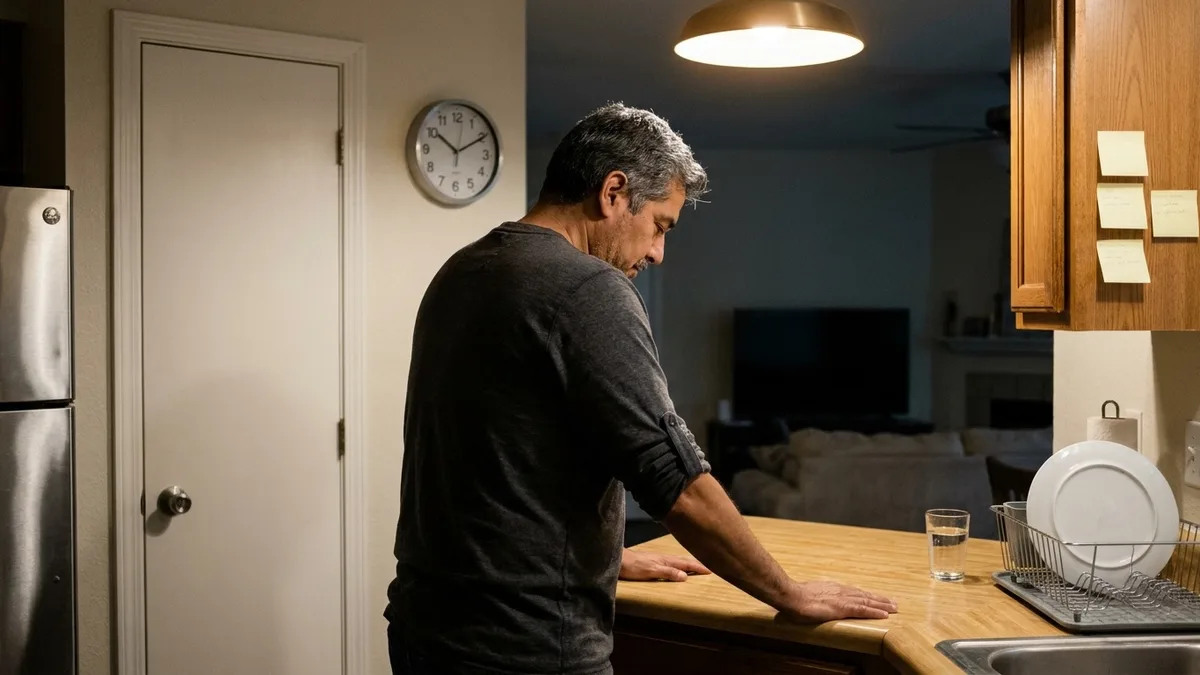
Fixing this in a weekend is the expectation; five days of running one small experiment is the reality, and a new pantry is not required.
At 9:45 pm the kitchen is 12 feet from the couch and the snack cupboard sits at eye level beside the fridge. A bowl of chips, two cookies and a glass of milk come to about 450 calories, roughly a quarter of an 1,800-calorie day. By the numbers the day looked fine: a desk salad and granola bar at noon, dinner at 6:30, kitchen wiped and closed at 7:00. The urge still lands between 9:30 and 10:15, TV on, bedtime 11:30.
That trip is not proof of a willpower defect. It is a signal from one of seven drivers, and your job is to name the one that fits and pair it with a single change.
You should leave with a named driver, a kitchen-close time, and a matched change to run tonight with everything else held still. If the urge is nightly and feels out of control, that is a clinician's call, not another rule's.
At a Glance
Why the urge shows up
Before you change anything, work out what the 9:45 pm trip is actually doing. The first four candidates are about the body's fuel and awake hours, the last three about ritual, cues and the snack itself.
Each one is a narrower guess than the last, so start with the simplest test: lunch. If the urge shrinks when only lunch changes, you've found the driver.
| Usual snack | Rough calories | Swap for the same moment | Calories in the swap |
|---|---|---|---|
| Bowl of chips + 2 cookies + glass of milk | 450 | 5 oz plain Greek yogurt + 1 tsp honey | 150 |
| Bowl of chips | ~300 | 3 cups air-popped popcorn | 90 |
| 2 cookies | ~150 | Small apple + 1 tbsp peanut butter | 190 |
| Glass of milk + cookies | ~250 | 1–2 hard-boiled eggs (70 each) | 70–140 |
1. You never really stopped for lunch

Ten o'clock hunger can be the bill for a lunch you never actually sat down to eat. Noon is a desk salad and a granola bar, then nothing until dinner at 6:30, and that first stretch alone runs six and a half hours. By the time dinner is cleared and the kitchen light goes off at 7:00, the day has already left a gap, and the urge that shows up around 9:45 finishes collecting on it.
Fix the front of the day, not the evening. Build lunch around protein that holds: chicken, eggs, beans, yogurt, eaten away from the desk so the meal registers as a meal instead of a task performed mid-email. Then plan a real snack for 3:30 pm. That turns the stretch to a 6:30 dinner into four hours instead of seven, and you arrive at the table hungry rather than depleted.
Run this as a five-day test and hold everything else still. Change lunch and the afternoon snack, keep the 6:30 dinner, the 7:00 kitchen close, the TV, the 11:30 bedtime exactly as they are. Then note when the 9:45 urge lands and whether it is quieter, later, or gone.
What you are checking is whether your 9:45 trip was hunger debt: calories the day borrowed and never repaid. If the urge thins out after lunch and the 3:30 snack, you have found your driver and you can stop treating the evening as a discipline problem. If it arrives at the same minute with the same force, your day was not short on food, and the next candidate is worth testing instead.
💡 Tip: Put the 3:30 snack on a plate or napkin, not in your desk drawer — you'll eat it instead of forgetting it.
Lunch, before and after
2. You're not hungry, you're still awake
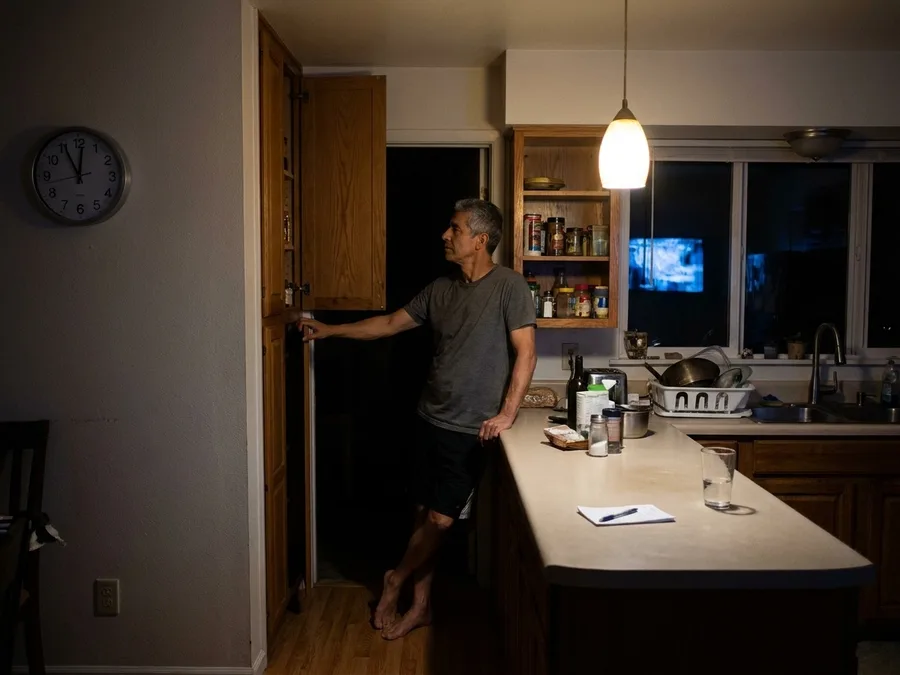
The hunger-debt test can come back flat. Plenty of people eat a real lunch with protein and a planned 3:30 snack, and the 10 pm cupboard trip happens anyway. That result is information: the trip is not paying off a food debt, because there is no debt to pay.
Look at when the urge actually lands. In this evening it runs 9:30 to 10:15 pm, while the TV is on, and bedtime is not until 11:30. That is an hour and fifteen minutes of open kitchen time after the first urge shows up, and nearly two hours between the urge and lights-out. Hunger does not keep office hours like that. A long awake window does.
Run the bedtime test for one week. Set lights-out 30 minutes earlier than usual, keep dinner and the rest of the evening exactly as they are, and jot the time of the urge on a scrap of paper each night. If the urge slides earlier, its timing is tracking your bedtime, not your stomach. That is the signature of an awake-hours driver.
Close the show at a fixed time instead of letting the next episode autoplay. The extra episode looks like 45 minutes of entertainment; it is 45 minutes in which the kitchen sits 12 feet away and nothing else is happening. Set a stop point before you sit down, and the evening ends when you decided it would, not when the streaming service decides.
One caveat on the test. Shift workers, and anyone whose only quiet hours fall after 10 pm, cannot simply move bedtime earlier without rearranging a schedule that may not bend. For them the earlier-lights-out test will fail no matter what the reason behind the trip is. The kitchen-close time is the lever that still works in that situation, because it puts a fixed boundary on the room without touching the clock.
⚠️ COMMON MISTAKE
Don't blame willpower for a long evening
If you're awake until 11:30 with the kitchen 12 feet away, the trip isn't a character flaw — it's a schedule. Try the earlier lights-out first.
3. The snack is your first quiet minute

Extra awake time is not the driver for everyone, and some schedules will not move no matter what the test says. The next question is quieter: what if the food is not filling your stomach but closing your workday? The snack may be the first quiet minute you have had since morning, and the food is marking it rather than supplying anything the body needs.
Try a 10-minute non-food version first. A shower, ten minutes of stretching on the floor, one episode with a mug of tea, a phone call to someone you owe a call to. The point is the pause, not the ban: it tests whether the snack was doing a job that something else can do.
If the urge survives the 10 minutes, eat the snack at the table, plated, and enjoy it. You have not failed the test; you have learned that this one was hungrier than it looked.
Here is the signal that separates ritual from fuel. When the urge shows up at the same time and in the same place no matter how big dinner was, the pattern points away from your stomach and toward an end-of-day marker. A snack that arrives on schedule after a heavy dinner and after a light one is not reporting a deficit. It is clocking you out.
💡 Tip: Put the kettle on before you sit down — a hot drink in your hands buys the full 10 minutes.
Works With
4. Boredom and the couch, not hunger

The same trip can have a second source: the seat and the screen. Sit in the same corner of the couch at 8:00 pm and the body starts rehearsing the walk to the cupboard long before 9:45 arrives.
The cue stack is short and repeatable: the same cushion, the same show, hands with nothing in them, and a kitchen 12 feet away. The standing-up starts before the decision does, which is why the trip feels like something that happens to you rather than something you chose.
Give the hands a job. Knitting, a game controller, a mug of tea you have to hold with both hands, a phone you are actually reading – any of these interrupts the empty-hands cue that starts the walk. The mouth stays busy enough that the cupboard loses its pull.
Then change one cue in the stack, not the whole evening. Move to a different chair for the 9:00 show, or set a couch-only rule: if you eat, you eat at the table, and the couch is for watching, not snacking. One swap is enough to break the sequence the habit runs on.
Willpower loses this fight because the 9:45 trip is not a decision – it is a cue-response that fires faster than reasoning does. Resisting it every night costs energy you do not have at 9:45; changing one cue costs a single choice, made once, and then the walk simply does not start.
The 9:45 pm trip is a cue, not a character flaw — change one cue and the walk stops starting itself.
— What habit researchers keep saying
What to change once it shows up
Once you know the driver, the fix is narrower than you think: one change, five days, everything else held still. The next three entries cover the kitchen, the snack itself and the story you tell yourself afterward.
Pick the one that matches your 9:45 pm trip and ignore the rest until the five days are up.
5. The kitchen stays open until you do
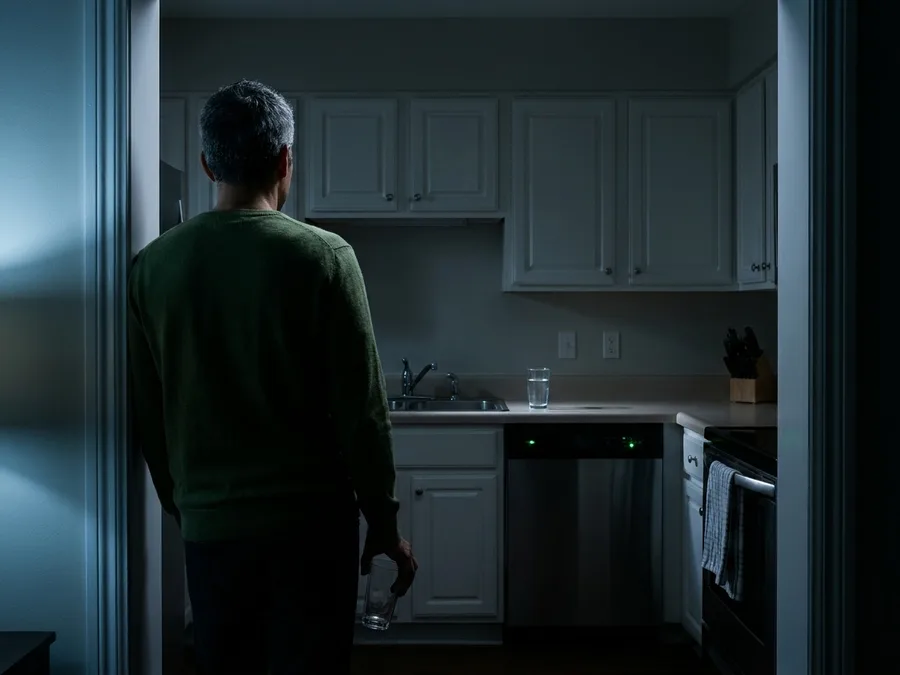
Re-arranging the couch buys you a fighting chance; an unlocked kitchen spends it for you. Every pass through that doorway is a fresh vote, and by 9:45 you have voted a dozen times on willpower that was gone at 8:15.
So make the vote happen once. For a 6:30 dinner and an 11:30 bedtime, an 8:30 pm close works: lights off over the counter thirty minutes after the plates are cleared, and the choice is already made by the time the show starts.
The closing routine takes about five minutes and leaves nothing to argue with. Wipe the counters, start the dishwasher so it hums through the evening, switch the kitchen light off, and brush your teeth straight after. That last one matters most: the mint in your mouth is a physical roadblock between you and the cupboard.
You get one key to the closed kitchen, and it is not a key. Plan a 150- to 200-calorie snack for 9:00 pm, put it on a plate, and eat it sitting at the table.
Then the ordinary night arrives: 9:45, TV on, feet carrying you toward the cupboard out of pure habit. Drink a glass of water, walk back to the couch, and do not reopen the terms you set at 8:30. The rule holds because you decided it hours ago, when you were not hungry and not tired.
💡 Tip: Turn the kitchen light off at 8:30 — a dark room is a stronger boundary than a closed cupboard.
The kitchen-close routine — at a glance
🗑️ Counters
Wiped and clear
🍽️ Dishwasher
Running
💡 Kitchen light
Off
🦷 Teeth
Brushed
🕗 Close time
8:30 pm
Allowed exception
The planned 150–200 calorie snack at 9:00 pm, plated, at the table.
6. An all-carb snack puts you back in the cupboard
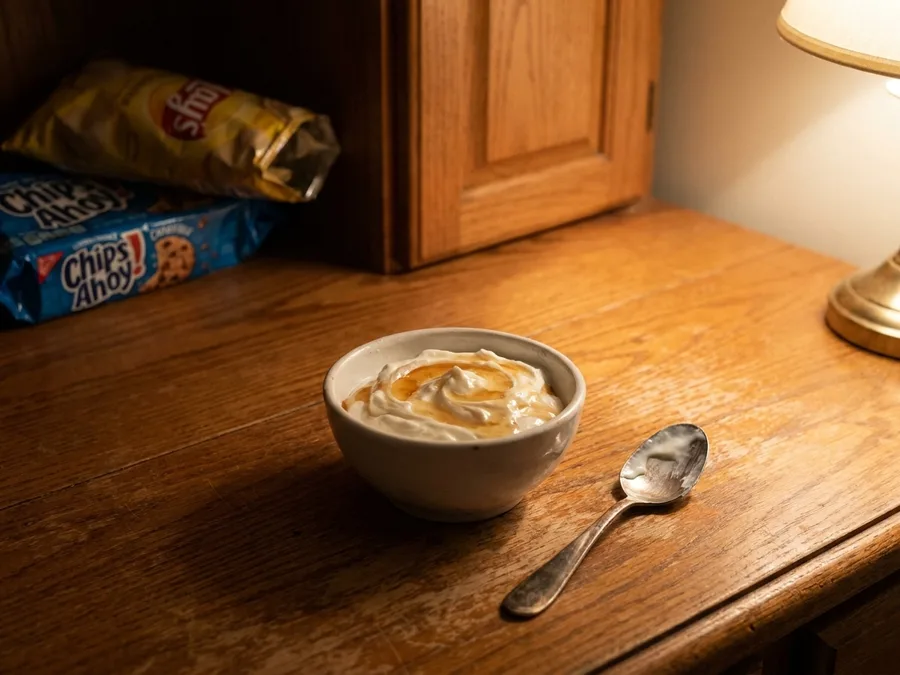
Shutting the kitchen at 8:30 pm shuts a door; it does not change what happens when the door stands ajar for the planned snack at 9:00. The makeup of that snack decides whether 9:45 walks past quietly or the cupboard starts calling again.
Consider the standard raid on an ordinary night: a bowl of chips, two cookies and a glass of milk, roughly 450 calories, about a quarter of an 1,800-calorie day in ten minutes of TV. Chips, cookies and cereal share the same flaw: they are quick to eat and quicker to out-eat. The hand keeps returning before the stomach registers a thing.
The matched swap is 5 oz of plain Greek yogurt with a teaspoon of honey. That comes to about 150 calories and roughly 15 grams of protein, and it takes long enough to eat that fullness has time to arrive.
The general rule behind the swap: pair the carb with protein or fiber and plate it. Portion it onto a plate first, put the bag or box back in the cupboard before your first bite, then eat. Three two-minute options beside the yogurt: a small apple with 1 tbsp peanut butter (about 190 calories), 3 cups of air-popped popcorn (about 90), or one or two hard-boiled eggs, at about 70 for one.
The snack is working when you stop halfway through and forget the rest is there. That is the only test to run. No calorie target or eating cutoff comes with this, and anyone after personal calorie targets can check the USDA Dietary Guidelines for them.
The 9:45 bowl vs. the matched swap
Usual raid
- Bowl of chips, two cookies, glass of milk
- About 450 calories
- Eaten standing at the cupboard
- Easy to out-eat before you notice
Planned swap
- 5 oz Greek yogurt + 1 tsp honey
- About 150 calories
- Plated, eaten at the table
- Stopping halfway feels natural
7. The all-or-nothing rule makes the raid bigger
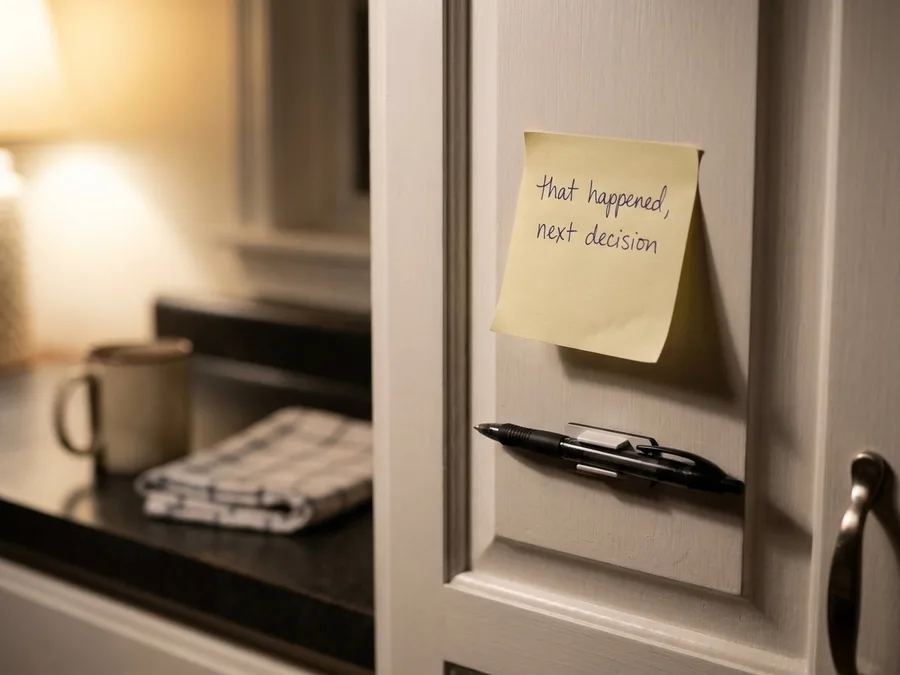
One snack does not have to become the whole evening's story, but the rule most people carry into that moment makes it one. You plate the Greek yogurt, eat it at the table, and then a second thought arrives: I already broke it, so what's the point. That verdict costs more than the food.
Run the arithmetic on a night like this. A reasonable 150-calorie snack, judged a failure, loosens the grip on everything after it, and the bowl of chips, two cookies and glass of milk follow at about 450 calories, plus whatever gets eaten standing at the counter while the bag is still open. Name it a failure and 200 calories turns into 800.
The fix is a scripted line, not a stricter rule: 'that happened, next decision.' Say it once, out loud if that helps, then finish the evening on its normal track, with the show, the teeth brushing, the usual lights-out. The line works because it treats the slip as one data point instead of a verdict on the night.
The second half of the rule is what you do at 7:00 the next morning. No make-up restriction, no skipped breakfast, no juice cleanse, no 12-hour fast to balance the books. Eat breakfast at your usual time and take the normal day, because a punished slip is what sets up the next raid.
What you track instead of calories is the trigger. For five days, write down three things: the time the urge arrives, where you were standing, and what happened in the ten minutes before it. If the urge lands at 9:40 while the credits roll, that is the pattern you are looking for, and it is more useful than any number on a label.
This is also where a new rule stops being the answer. If you are eating at night most nights, if the urge feels like something you cannot steer, or if a medication changed recently, take that pattern to a clinician rather than adding another layer of self-imposed structure. A rule cannot fix what may need a conversation.
The trip is a signal, and this driver is the meaning you attach to it, not the snack itself. Change the meaning first, hold everything else still for five days, and watch whether the 9:45 trip gets smaller when it stops being a crime.
💡 Tip: Write the scripted line on a sticky note on the cupboard door before the next 9:45 trip.
Frequently Asked Questions
Is late-night snacking bad for you?
Not automatically. What matters is what the snack is doing and what it costs. A planned 150–200 calorie snack at the table can be part of a normal day; a 450-calorie cupboard raid every night is worth changing. No calorie target or eating cutoff is prescribed here — personal targets go to the USDA Dietary Guidelines.
How long does it take to stop the 9:45 pm urge?
Give the matched change five days with everything else held still. The urge may shrink, move later, or stay the same — each outcome tells you whether you picked the right driver.
What should I eat at night if I'm really hungry?
Pair a carb with protein or fiber and put it on a plate. Five ounces of plain Greek yogurt with a teaspoon of honey is about 150 calories; a small apple with a tablespoon of peanut butter is about 190; three cups of air-popped popcorn is about 90; one hard-boiled egg is about 70.
Is it bad to eat after 8 pm?
There's no universal cutoff time. What matters is the total day and whether the evening eating is driven by a fuel gap, a cue or a ritual. A kitchen-close time of 8:30 pm works for the example here because dinner is at 6:30 and bedtime is 11:30 — adjust it to your own schedule.
When should I see a clinician about night eating?
If you're eating at night most nights, feel no control over it, or have had a recent medication change, talk to a clinician instead of trying another rule. Persistent night eating is worth a proper conversation.
Name the driver, set the close time, run five days
The 9:45 pm trip is one driver, not a character flaw, so name the matching one before you change anything.
Tonight, set the kitchen-close time: 8:30 pm fits dinner at 6:30 and bedtime at 11:30. Then run the matching change for five days with everything else held still. Daytime skimping gets a real protein lunch plus a 3:30 snack. Long late evenings get lights-out 30 minutes earlier, or the close time if the schedule cannot move. A wind-down ritual gets a 10-minute non-food pause, then the table snack. The couch habit gets one cue changed. The open kitchen gets the 8:30 close. All-carb snacks get a protein and fiber pairing. All-or-nothing thinking gets the line 'that happened, next decision.'
The kitchen is still 12 feet away and the cupboard still at eye level. Walk over at 8:30, close it, and leave with one change rather than seven. If the urge is nightly and feels out of control, book the clinician instead of adding another rule.
Run the five-day test tonight
Set your kitchen-close time now and write down the one driver you're testing. Five days, one change, everything else the same.
