

By the end you will be able to shrink every serving in your house without weighing a thing, because you will have moved the objects that decide the portion before you ever sit down. The useful starting place is the plate: the one in your cupboard is probably 11 inches across, and if that sounds large, it is. A 1990 dinner plate ran closer to 9.
You have already tried eating less by deciding to. What happens instead is the same 11-inch plate gets filled to its usual rim, and the 16-ounce bag of tortilla chips is open on the couch again before the evening is over. That is not a failure of resolve. Fewer calories land on a smaller plate, a 12-ounce bowl holds less than a 16-ounce one, a narrow glass shows a shorter pour, and the pantry snack on the top shelf sits six feet up instead of at arm’s reach.
So this is fourteen swaps, arranged in the order a portion actually grows: the dishes first, then the four feet from your chair to the counter and everything it costs to close them, then the store package, the freezer, the snack shelf, and last the restaurant plate. Four 9-inch plates run $28; the most expensive line item in the list.
Quick Tips Before You Start
Measure once
Fill your current bowl with a measuring cup once so you know what your normal pour actually is.
Buy four, not one
A single small plate gets ignored; a set of four makes the small size the household default.
Count the steps
Anything you want to eat less of should be at least four feet from where you sit.
Freeze flat
Portioned meat frozen in flat packs thaws in a fraction of the time of a solid pound block.
Opaque hides, clear invites
Use clear containers for food you want to reach for and opaque ones for food you don't.
1. The nine-inch dinner plate swap
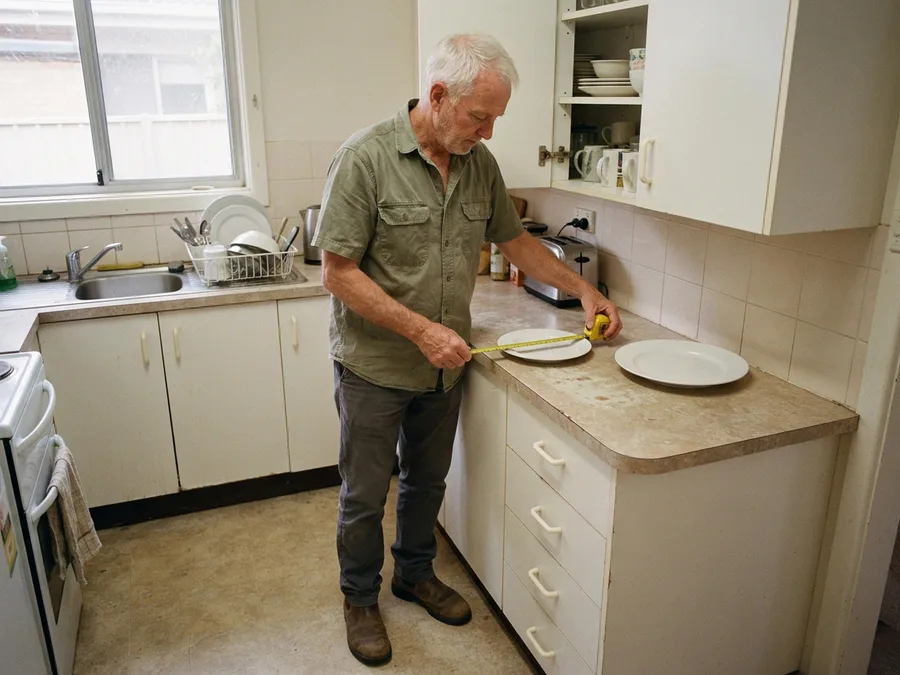
Stand at your cupboard and look at the plate you ate dinner from last night. Measure it across.
Most dinner plates sold in the last twenty years run about 11 inches across, and that width is doing more of the serving than you think. The fix costs $28: a set of four 9-inch plates from a big-box store.
Here is the part most people get wrong. What matters is not the outer diameter but the flat well in the middle – the part that actually holds food. A 9-inch plate with a wide decorative rim leaves a well barely bigger than a saucer, and it holds noticeably less than the 11-inch plate even though the two look about the same size on the shelf.
A mound of rice that reaches the edge of the smaller well looks like a full serving because it fills the space. On the 11-inch plate the same mound looks like a modest scoop, so you add more without noticing. The plate is not lying to you – it fills to look complete, and a smaller one completes sooner.
Your standing dinner routine settles in before you sit down: the pot, the serving spoon, the same plate. The plate changes the number before the decision happens.
Now the catch that decides whether this works. A smaller plate does nothing if the serving dish is within arm’s reach, because a refill is just another scoop. Put the serving bowls on the counter four feet from the table, and a second helping costs a walk across the kitchen.
The plate sets the first serving; the distance protects it.
💡 Tip: Stack the old 11-inch plates in a high cupboard for two weeks instead of donating them. If the swap is not working by then, you can reverse it without re-buying anything.
| Swap | What it changes | Typical cost |
|---|---|---|
| 11-inch dinner plates → four 9-inch plates | The first serving of dinner | About $28 for four |
| 16-ounce cereal bowl → 12-ounce bowl | The morning cereal pour | About $16 for four |
| 16-ounce tumblers → 12-ounce highballs | Juice and soda pours | About $12 for four |
| Open pour → 2-tablespoon serving spoon | Dressing, dip and sauce | Already in the drawer |
| Serving bowls on the table → on the counter | Getting a second helping | Free |
| 32-ounce yogurt tub → 5.3-ounce single cups | Yogurt, cottage cheese, ice cream bars | Higher price per ounce |
| 16-ounce chip bag → ten zip bags of ~1.6 ounces | The evening snack | Cost of zip bags |
| 1-pound beef block → four 4-ounce flat packs | How much meat thaws and gets cooked | Free |
| 1-pint carton → 4-ounce ramekins | The dessert portion | About $10 for four |
| Pantry shelf → 6-quart opaque lidded bin | Walk-past snacking | About $9 |
| 16-ounce to-go container | The restaurant plate | Free — ask when ordering |
2. A twelve-ounce bowl for cereal
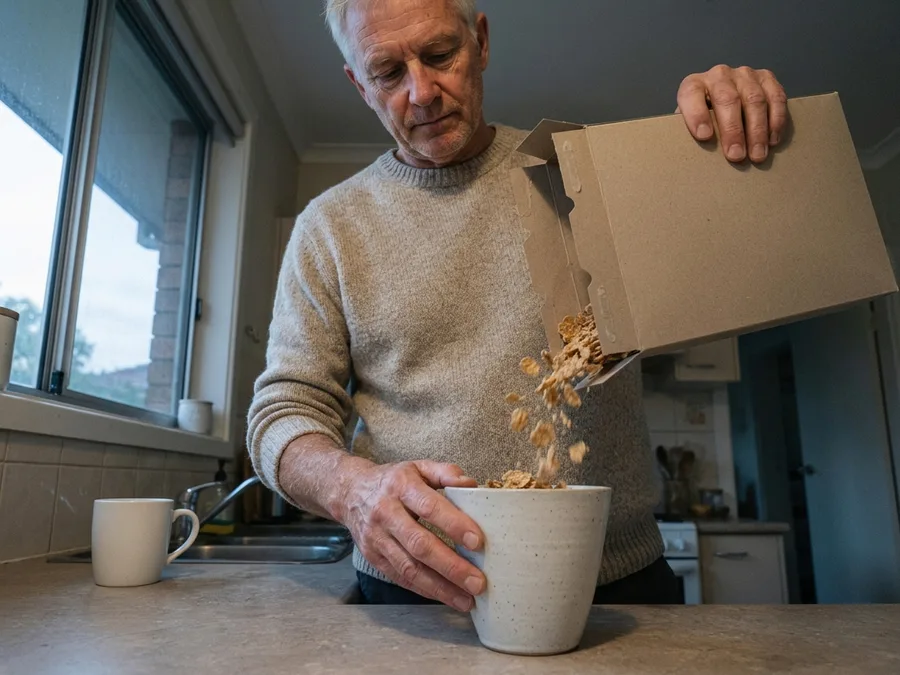
A smaller plate can set the dinner serving and still leave breakfast untouched. Morning is where discipline disappears.
Cereal is the meal most people pour by eye – no recipe, no measuring, just the bowl half full of flakes and a glug of milk. If the bowl is 16 ounces, a typical pour runs well past the serving size printed on the box. Swap it for a 12-ounce bowl, four for $16, and the pour that looked right yesterday looks like a whole breakfast in the smaller bowl.
The shape does some of the work. A narrow, taller bowl of the same volume looks fuller than a wide, shallow one. Set the two side by side and the tall bowl reads as the generous one, so the smaller pour starts to look like enough.
Do this once. Take your new 12-ounce bowl and fill it to the rim with cereal, pour it into a measuring cup, and write the number on a scrap of paper. That is your real cereal portion – fixed, not guessed – and you only have to know it once instead of every morning.
Watch for the refill loop. If a second serving goes into the same bowl, the smaller dish has changed nothing. A refill needs a fresh bowl from the cupboard, which is a separate decision with a step attached, and that pause – the same one slowing down at meals builds – is the whole point.
The bowl, not your appetite, decides where breakfast stops.
At a Glance
3. Tall twelve-ounce glasses for juice and soda
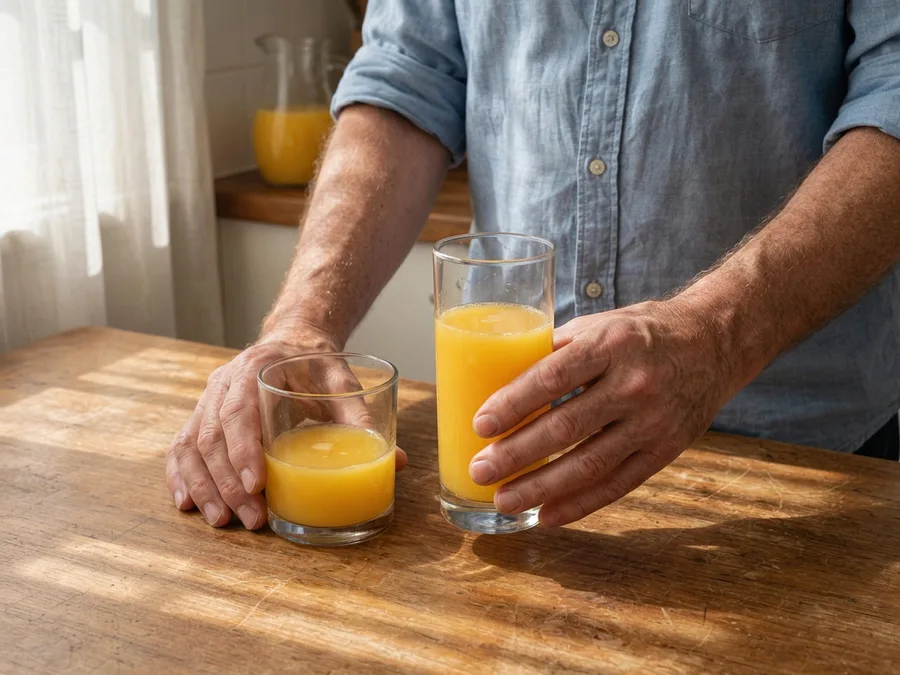
A bowl shows you the top of the pour. A glass hides it – the squat, wide tumbler is the worst offender, because the same 4 ounces of juice looks like nothing in a 16-ounce glass, so the pour creeps higher until the glass looks properly filled.
Switch to 12-ounce highballs, four for $12, and pour juice and soda 4 ounces at a time. The tall, narrow shape makes 4 ounces look like a real drink, because the liquid rises high up the sides. The glass looks full while holding less than the tumbler it replaced.
The bottle or pitcher stays in the kitchen, not on the table. That is the second half of the mechanism – a second pour now costs a walk, which is enough friction to make the refill a decision rather than a reflex.
Be clear about the target: this is for juice and sweet drinks, not water. Water stays freely available in whatever glass is closest, because the aim is cutting sweet-drink volume, not making anyone think twice about hydration.
Tall glass, smaller pour, bottle in the kitchen. The glass and the distance set the drink default, and nobody has to count a thing.
💡 Tip: Fill the highball with ice first, then juice. The ice does the visual work of a full drink at 3 ounces instead of 4.
4. The two-tablespoon serving spoon
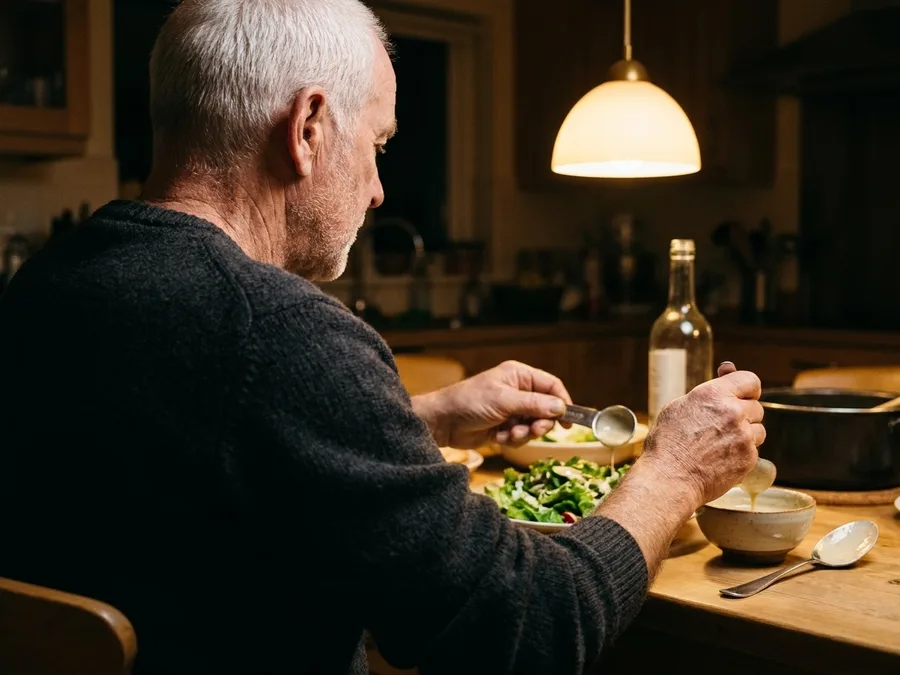
Dressing, dip and sauce never arrive by portion. They arrive by pour, and the pour is the part nobody watches.
A two-tablespoon spoon is the fix for the dressings, dips and sauces that get poured rather than measured. Two tablespoons is exactly 1 ounce, so the spoon carries the number with it, and the amount lands on the salad where you can see it instead of flooding the greens from a bottle held at arm’s length.
The bottle in the hand is what does the damage. A dressing pour from an open bottle is an open-ended quantity, decided by wrist angle and how long you hold it; a spoon carries its own ceiling, so the amount is set before anyone lifts it.
Chili and soup get the same treatment with a 4-ounce ladle instead of the 8-ounce one hanging beside it. That halves the scoop before any decision is made, so every bowl starts at half the previous default and a second ladle is a separate, visible act rather than an automatic return to the pot.
Ladling the chili out of the pot with the 4-ounce ladle changes the whole arithmetic of the meal. The larger one pours the bowl to the rim in one motion and nobody counts it; the smaller one leaves room the eye can register, so a second scoop is a choice rather than the finish of a single one.
Spoon the dressing over the salad rather than pouring it. The dressing coats the leaves and the amount is visible on the food, and a second spoonful is a separate decision made in plain view of everyone at the table.
Measured this way, dressing, dip and sauce go further than they did from an open pour. The scoop is the default, and the second scoop is deliberate. What the smaller spoon changes is the size of the unit, not the appetite, and that is the whole reason it works without a count sheet taped inside a cupboard door.
💡 PRO TIP
Leave the bottle in the fridge
Restaurants put dressing on the side because it changes how much people use. Do the same at home: carry the salad to the fridge, spoon the dressing there, and put the bottle back before you sit down. The extra trip does the portion control for you.
5. Serving bowls stay on the counter

A spoon decides what lands on the food. What sits in front of you decides whether a second scoop needs getting up.
Keep all the serving bowls on the counter instead of on the table. The counter sits four feet from the table in a typical kitchen, and four feet is enough to turn a second helping from a reach into a decision.
The reach-and-serve loop is the thing being interrupted. Plate down, fork in hand, bowl within arm’s length: the hand goes out before any thought arrives, and the food is on the plate again. A counter four feet away breaks that loop at the exact point where it usually closes.
Standing up does more than a rule about seconds ever does. A rule sits in the head and argues with the appetite at the worst possible moment; four feet of floor does not argue, it simply costs something, and that small cost is often enough for the moment to pass.
When the table is the only surface available, serve from one end and leave the bowls at that end. Anyone reaching for a refill is reaching across the whole table, which is its own kind of pause, and the dishes stay where the first serving started rather than drifting to within an easy arm’s length of every chair.
Distance is the control here, not the size of the pot. The first plate is exactly what it always was, which is why nobody feels rationed, and the second helping costs a walk to the kitchen. The serving default survives the meal because it was never touched.
Same dinner, two setups
How often a second helping happens when the bowl is within reach versus four feet away
Illustrative of the pattern, not a measured study result.
6. Plate in the kitchen, carry only the plate

Distance keeps a second scoop off the plate. The same distance can keep the first serving honest.
Plate the food in the kitchen, carry the plate to the table, and leave the pots and platters behind. One trip, one plate, nothing within reach but the meal itself.
The table stops being a refill loop. When the pot sits beside your elbow, every pause in the conversation becomes a chance to add a little more, and the meal grows a few bites at a time without anyone deciding anything. When the pot is in the kitchen, a second helping needs a return trip, and the portion that got plated is the meal.
Containers for the leftovers go out before anyone sits down. The extra food leaves the serving line and becomes future meals, so what is on the plate at the start is the entire portion that was ever going to be eaten at this sitting.
This suits family-style households with shared dishes and several people at the table. It does not suit anyone already eating single-serve meals, where the package did the plating before the food ever came out of the fridge and the table was never where the portion grew.
The plated portion becomes the meal. The table offers no refill loop, and the second helping needs a walk back to the kitchen.
7. Smaller packages at the store

Some portions get settled before the food ever reaches your cupboard, on the shelf where you buy it. A single-serve yogurt cup is 5.3 ounces; the same yogurt in a 32-ounce tub costs less per ounce, which means every cup carries a “diet” product premium you pay at the register.
That premium is the price of a portion decided for you.
For yogurt, cottage cheese and ice cream bars, the extra cost buys something real: the package is the serving, and nothing in your kitchen can talk you into a second scoop because there is no tub to scoop from. Rice and pasta are a different story. You portion those anyway, so paying more for a small bag is money spent on nothing.
The trade-off is honest: more money, more packaging, one fewer decision a day.
If that sounds like a small return, think about when the decision actually lands. It arrives at 9 p.m., standing in front of the open fridge, spoon in hand, willpower already spent. A cup of yogurt settles the serving while you are still in the dairy aisle, calm and unhurried, with no appetite in the room.
A second cup is a separate package, not another scoop from a 32-ounce tub, and that difference is the whole point.
The cup makes the default the whole serving, and the only way past it is to open a second container on purpose.
💡 Tip: Buy the big tub for the family and the 5.3-ounce cups for yourself. Same fridge, two formats, no argument.
Single-serve math — At a Glance
🛒 Decision point
Aisle, not 9 p.m.
🔓 Second serving
Requires opening a new lid
📏 Portion you control
None – the cup is the measure
✅ When to buy singles
Foods eaten straight from the container
❌ When to buy bulk
Anything you already scoop or boil
♻️ Packaging cost
One extra wrapper per serving
The trade
You pay a per-ounce premium so the serving is sealed before appetite arrives, and a second helping becomes a deliberate act.
8. Single-serve bags made at purchase
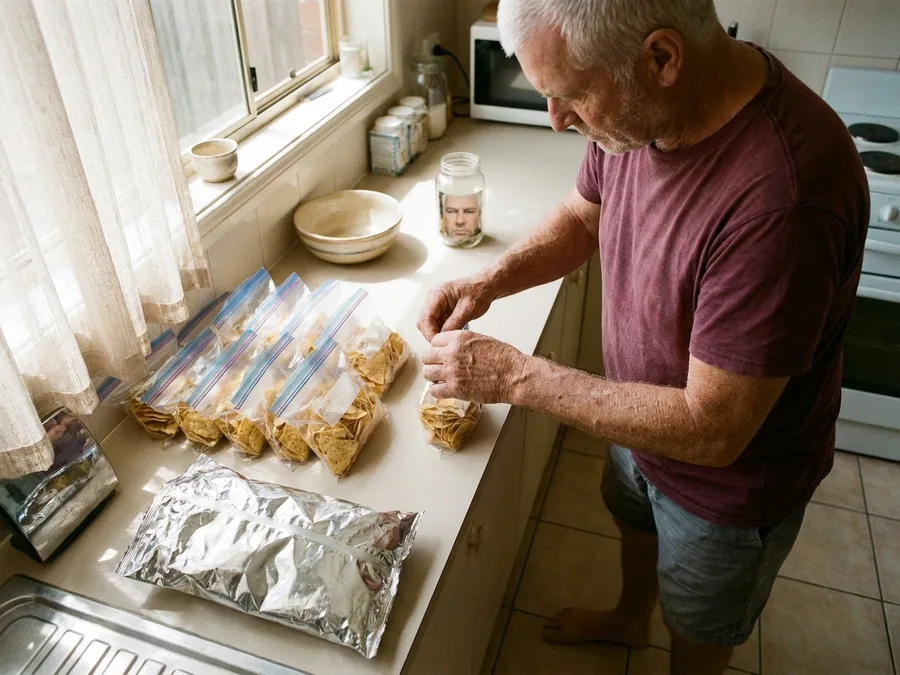
The store does this work for you when you buy yogurt in single cups. The same move takes ten minutes at your own counter the day a big bag comes home.
Empty a 16-ounce bag of tortilla chips into ten zip bags, roughly 1.6 ounces in each. That is about a cup and a half of chips, a real bowl, not a token handful.
Do it the afternoon you shop, while the bag is still a grocery item. Wait a week and the open bag has already taught you how easy it is.
The whole case for doing it early: you are packing when you are full and slightly bored, not at 9 p.m. with your hand in the bag. The portion is decided by a person who is not hungry, which is a much better negotiator.
A sealed bag becomes the snack. And a second one is not a reach into an open bag at your elbow; it is a walk to the pantry and a deliberate decision to tear open another package.
Set the ten bags in a bowl where the chips used to sit. The first one is right where your hand expects it, and that is the point.
A portion you decided on while full beats a portion you decide while hungry — every single time.
— The rule behind every pre-bagged snack
9. Four-ounce freezer portions for meat
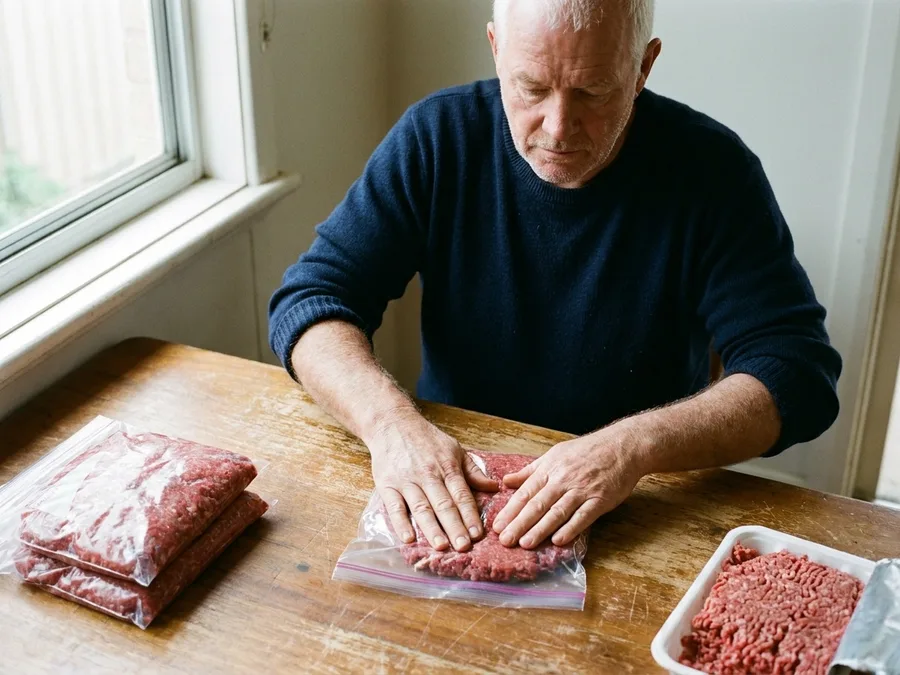
A bag of chips gets portioned the day it comes home; dinner meat usually does not. The freezer is the last place a large package quietly decides the size of the meal.
Take a one-pound pack of ground beef and divide it into four packs of about four ounces each. Flatten each one before it goes into the bag, then stack them flat in a quart freezer bag.
The flat pack is not just neater. A thin four-ounce slab thaws in a fraction of the time a solid pound block needs, and it browns better because more surface hits the pan at once.
Pull one pack and you have cooked exactly what the meal calls for. The extra portions are not sitting in the pan getting picked at while you wait for the rest to finish.
The meal starts at the size you intended. A second pack means going back to the freezer, so the freezer, not the appetite, sets the meat default.
10. The four-ounce ice cream dish

Meat portions get settled before anything touches the stove. Dessert gets settled later, by whatever dish the scoop goes into.
A 4-ounce ramekin, which is half a cup, takes four level 2-tablespoon scoops out of a 1-pint carton and comes up full to the rim. Four of those little dishes run about $10, and they stack in a cabinet corner smaller than a cereal box.
The move that makes it work happens seconds after the scooping: the carton goes straight back to the freezer, before anyone sits down or takes the first taste.
That single trip removes the pint from the table, so the container never becomes the serving dish and the spoon never goes back into it from the couch.
Vanilla in a ramekin looks like a real dessert, which matters more than it sounds. A half cup in a wide bowl looks skimped and sends you back for a correction scoop.
A second helping is still allowed. It just costs another dish, a return walk to the freezer and a fresh round of scooping, and most nights the pause is the whole answer.
💡 Tip: Run the ramekin under hot water for ten seconds before scooping. The scoop releases cleanly and the dish looks fuller.
What works and what quietly undoes it
Holds the smaller portion
- Small plate, serving bowls on the counter
- Dessert in a ramekin, pint back in the freezer
- Pre-bagged snacks made at purchase
- Meat frozen in flat 4-ounce packs
- Vegetables plated first, starch last
Puts the portion back
- Small plate, platter on the table
- Pint and spoon on the couch
- Open 16-ounce bag on the counter
- One-pound block thawed for two people
- Starch plated first, vegetables squeezed in
11. Vegetables first, then the rest of the plate
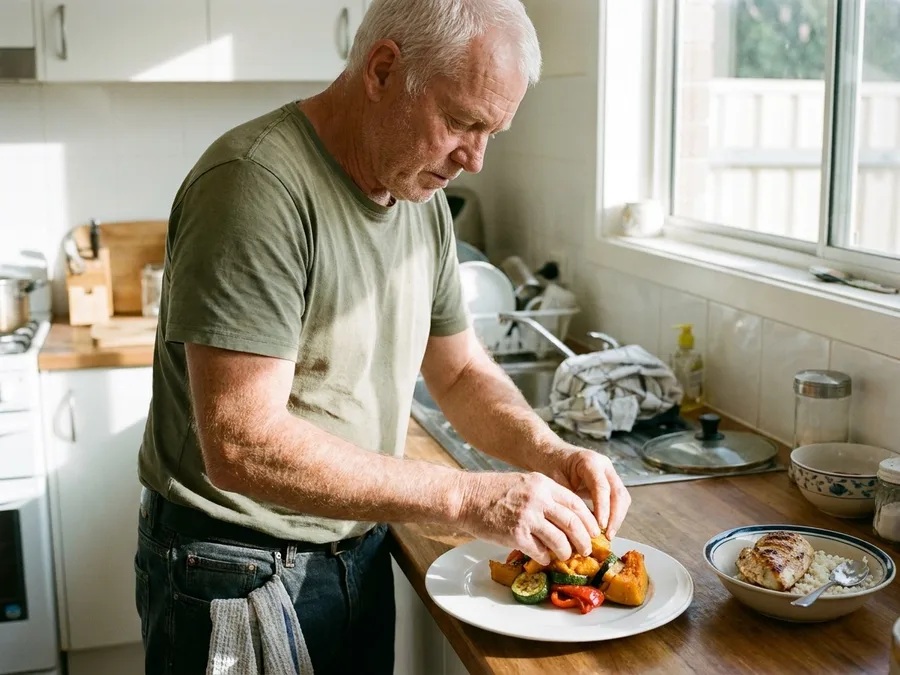
A dessert dish governs one course. The way you fill a dinner plate governs the proportions of everything on it, and it does it without a single measurement.
Sequence, not arithmetic, is the trick: whatever lands on the china first claims the real estate, and everything else has to fit around it.
So vegetables and fruit go on first and take as much of the surface as they want. Protein comes next into what is left, and the starch gets the remaining corner – physically last, so automatically smallest.
The reference proportions are the ones on MyPlate, and myplate.gov is the official place to check them if you want a picture of the target. You do not need the picture at dinner, because the stacking does the work.
No scale enters into it. Loading the plate in that sequence means the dense, calorie-heavy foods start with less room, and the crowded-out portion is the one you would otherwise have poured by eye.
It costs nothing and takes no extra minutes – the food goes on in a different order than you would have grabbed it.
12. The opaque bin on the top shelf
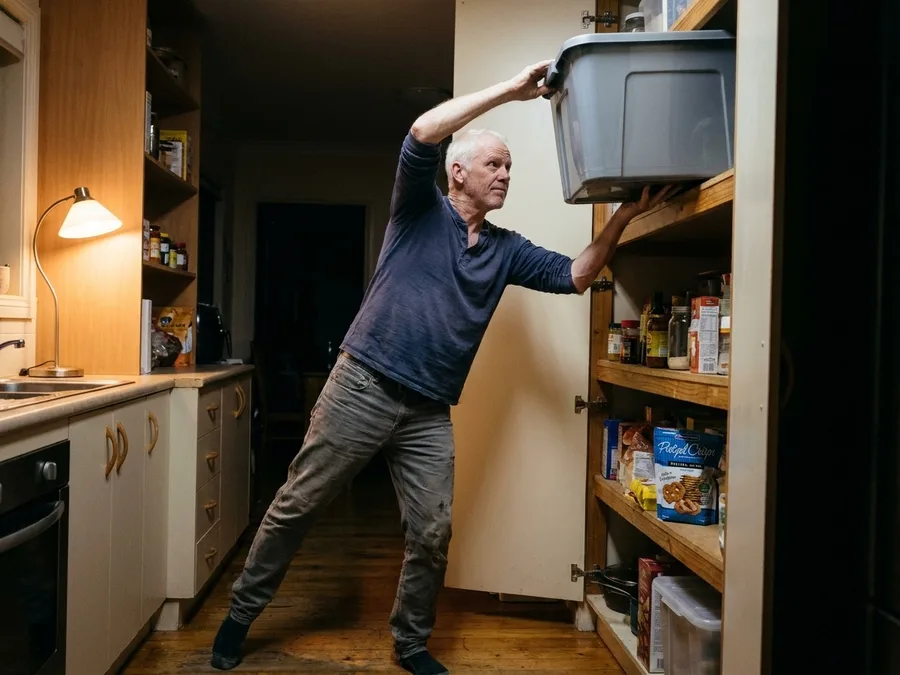
Building the plate in order fixes a meal. It does nothing for the food you walk past a dozen times between meals, which needs a physical obstacle rather than a sequence.
The pantry’s top shelf sits about six feet up, and a lidded 6-quart opaque bin costs around $9 at a big-box store. The bin goes up there, the snacks go inside, the lid goes on.
The fruit bowl and a container of cut vegetables stay out on the counter, visible and reachable at any hour.
Opaque and lidded is the entire point. A clear jar at eye level is a display case; it shows you the pretzels every time you cross the kitchen and invites a grab at 4 p.m. when you are not even hungry.
The bin turns walk-past grazing into a small project: pull it down off a high shelf, wrestle the lid, dig through, put it all back. By the third step, the impulse has usually gone quiet.
Friction, not a ban. The snack still exists and you can still have it – it just takes more than a reaching arm.
13. Cut vegetables at eye level in the fridge
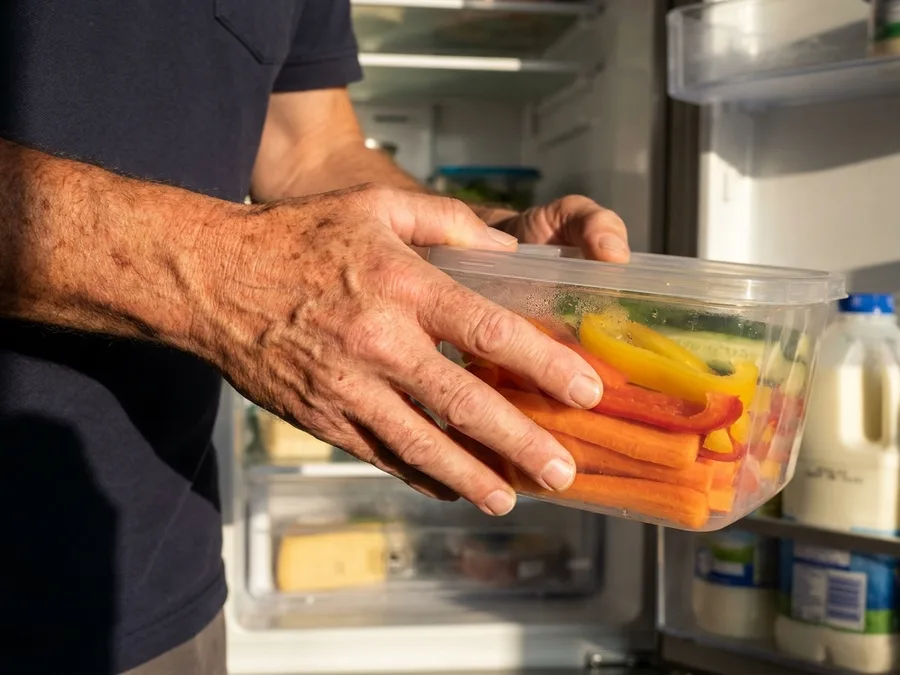
The pantry bin works by making the snack harder to reach. The fridge can do the opposite job with the food you want more of, and the trick is the same one in reverse: put the good thing where the hand lands first.
So the middle shelf, at eye level, holds a clear 2-quart container packed with carrots, peppers and cucumber already cut into sticks. Clear matters, because you see the color before you have decided anything. It costs one Sunday afternoon of chopping and about ten dollars in containers.
The cheese and the leftovers go down to the drawer. Not thrown out, not hidden with a lecture attached, just moved below the line of sight. What leaves the middle shelf is exactly what used to win at 4 p.m.
That is the whole contrast. The snack bin up top is opaque and lidded, a barrier you have to dismantle; the vegetable container is clear and open at the front, an invitation. One makes the grab take work, the other makes it take nothing.
Open the door hungry and the first thing in view is the first thing eaten. It is not a decision you make; it is a reflex the shelf arrangement makes for you. After a week the reach goes to the carrots without a thought, and a second look at the drawer meets vegetables before cheese.
The portion here comes from the container, not the plate. Fill a small bowl from the 2-quart and the serving is set before you sit down. Go back for more and it is a second bowl and another walk to the fridge, which is the same friction that keeps the dinner plate honest.
The catch: cut vegetables only work if they are already cut. A whole cucumber on the shelf is a project at 4 p.m., and the cheese wins. Do the chopping when you are not hungry, and the easy snack becomes the better one.
💡 Tip: Put the vegetable container on the middle shelf and the cheese in the drawer, not the other way around. Whatever is at eye level wins.
14. The to-go box ordered with the meal

Everything so far assumes you are the one plating. At a restaurant the plate arrives already loaded, often with two or three servings on it, and you did not set that default. The box does it for you, and the timing is the whole trick.
Ask for a 16-ounce to-go container when you place the order, not when the server clears the plates. Ordering it up front means the box is on the table before the food lands, so the split happens while the meal is still hot.
Then move half the plate into the container before the first bite. What stays on the plate is the portion, decided while you are still hungry enough to be reasonable about it. Wait until you feel full and the split gets harder, because the food is already half gone.
The restaurant serving is set aside before you start, so the box is the default and a second portion would need another container. A 16-ounce box covers most entrées with room to spare, and it costs nothing but the ask.
The box does not touch the bread basket, the drinks or the shared appetizer that arrives first and empties fast. Those are separate problems with separate fixes, and pretending one container solves the whole table is how people quit.
This is the same principle as the smaller dish, carried out the door. The serving is set by the container before appetite votes, and the extra food sitting in a closed box is a second helping that costs a walk to the fridge later, not a reach across the table now.
Frequently Asked Questions
Will a smaller plate actually make me serve less, or is that a myth?
It holds up well enough to be worth the $28, but the plate is only half of it. A 9-inch plate shrinks the first serving because the well holds less food. The effect disappears if the serving bowl stays on the table, because the second helping cancels the swap. Change the plate and move the serving dishes to the counter in the same week.
Do I need to weigh or count anything?
No, and that is the point of every swap here. The plate, the bowl, the glass, the spoon, the package and the shelf height all decide the portion before you get a vote. The one measurement worth taking is a single cup-measure of your normal cereal pour, done once, so you know what your usual breakfast actually is.
What if I live with someone who does not want to change anything?
Change your own objects and leave theirs alone. Give them the 11-inch plate and the 16-ounce tumbler, keep the 9-inch set and the highballs for yourself, and let the serving bowls sit on the counter because that helps everyone. Portion changes stick better when they are not framed as a household referendum.
How long before any of this shows up on the scale?
For most people, two to four weeks before the smaller servings feel normal rather than stingy. The plate swap is the one that produces the fastest change, because dinner is the meal where people most reliably over-serve. Start with one swap and add the next after two weeks, not all fourteen at once.
Are single-serve packages worth the extra cost?
For yogurt, cottage cheese, ice cream bars and hummus cups — yes, because the package is the portion and a 5.3-ounce cup settles the serving before the food reaches your fridge. For rice, pasta, oats and frozen vegetables — no, since you portion those into a pot anyway and the big bag does no harm.
What about restaurant meals and takeout, where I cannot control the plate?
Request a 16-ounce to-go container when you order and box half the plate before the first bite. It is the only restaurant swap that reliably works, because it moves the decision to the front of the meal instead of the end. The bread basket and the drinks need their own handling.
Pick the one place your portions actually grow
The answer here is not a diet. It is the objects around your food, and you only need to change the one place where your portions actually grow: the dinner plate that gets refilled, the chip bag that empties on the couch, the pint of ice cream. Pick that one, run it two weeks before adding anything else, and leave the other thirteen alone for now.
The 11-inch plate and the open 16-ounce bag are exactly where you started reading. One swap, held long enough to stop being a decision, beats seven abandoned by Thursday. But every swap on this list holds under one condition, and it is the same one each time: a second helping has to cost a walk to the kitchen. The moment the serving bowl comes back to the table, the math returns to where it began.
So start tonight with the plate you ate from last night. If it spans 11 inches, order four 9-inch plates for $28, put the big ones in a high cupboard, and see what two weeks does. Then bring one question to your next checkup: given my labs and my medications, is there a portion or food I should watch more closely than the general advice suggests?
Start With the Bowl on the Counter
Before your next meal, carry the serving dishes to the counter and leave them there. That one move protects every other swap on this list.
