
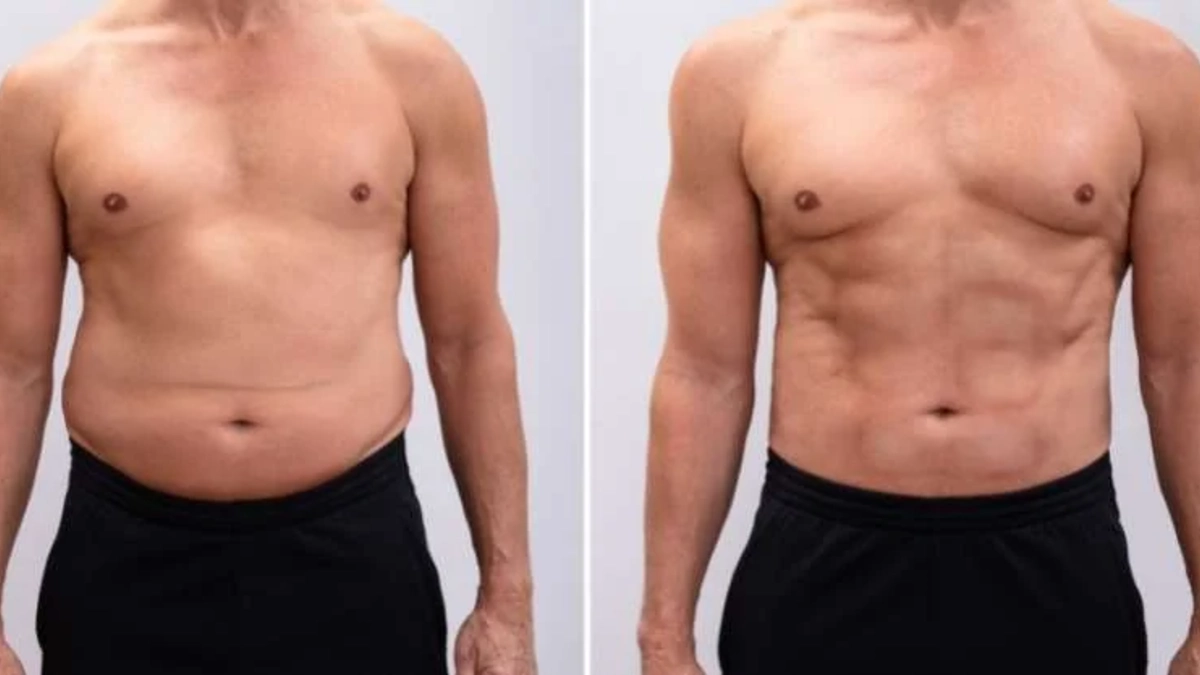
You’re eating clean, you’re at the gym four times a week, and that deep belly fat still won’t move. It’s the most frustrating place to be.
Cortisol is the hormone your adrenal glands release when you’re under stress. When it stays switched on, it breaks down muscle for quick energy and routes surplus calories straight to your abdomen. That’s the stubborn fat you can’t pinch away with a few more crunches.
This is a ranked protocol to bring cortisol down naturally: cool the training, cap the caffeine, top up magnesium and vitamin C, protect sleep, and cut the hidden stressors that keep you in fight-or-flight all day. It works best in that order. And if you only do one thing this week, start with sleep — the rest stacks on top of it.
Quick Tips Before You Start
Set a caffeine curfew
Nothing caffeinated after 2:00 p.m. — that includes tea, energy drinks and pre-workout.
Walk before you sprint
Swap one hard session this week for a 20-minute walk in nature.
Cool the room
Set the bedroom to 65°F and screens off 60 minutes before bed.
Eat your stress nutrients
Leafy greens, pumpkin seeds and citrus cover magnesium and vitamin C.
Kill the notifications
Turn off non-essential alerts and batch replies — a phone that never stops keeps you in low-grade fight-or-flight.
1. Deep Belly Fat Is the Dangerous Kind

You’re getting dressed, you catch yourself in the mirror, and you grab a pinch of belly fat. It’s the same handful you’ve been squeezing for months, no matter what you do. Here’s what that pinch is really telling you, and what it hides.
The layer you can grab just under the skin is subcutaneous fat. It’s annoying when it bulges over a waistband, but it isn’t the fat doing the damage. Visceral fat sits deeper, wrapped around your internal organs, and it is metabolically active, pumping out inflammatory chemicals. That, not how you look in a shirt, is why it matters.
You can also be relatively lean and still carry it. The pinch test tells you nothing about what’s sitting behind the muscle wall — see what the latest research on targeting belly fat says — so don’t use it as reassurance if your waist has crept up while the scale stayed flat.
Here’s the part that matters for everything next: this is the fat that answers to stress hormones. Fix the hormone and you finally get a real shot at the fat underneath.
💡 Tip: Measure your waist at the navel with a soft tape, not your jeans size. That number is your baseline for the next six weeks.
| Instead of | Do this | Why it helps |
|---|---|---|
| A 60-minute HIIT session after a stressful workday | Zone 2 cardio, brisk walking, or heavy lifting with longer rests | Stops adding to the cortisol fire you’re already carrying |
| Coffee at 4 p.m. to beat the afternoon dip | Last caffeine by 2:00 p.m.; walk or water instead | Caffeine triggers its own cortisol spike and keeps fat-storage mode active |
| A punishing calorie deficit | A moderate deficit with enough protein | Extreme deficits read as famine and push cortisol up |
| Hours of endurance cardio | 20-minute walks in nature | Credited with up to a 20% cortisol drop |
| Scrolling until lights out | Screens off 60 minutes before bed, room at 65°F | One poor night can raise the next evening’s cortisol by around 37% |
2. Cortisol Routes Fat Straight to the Belly
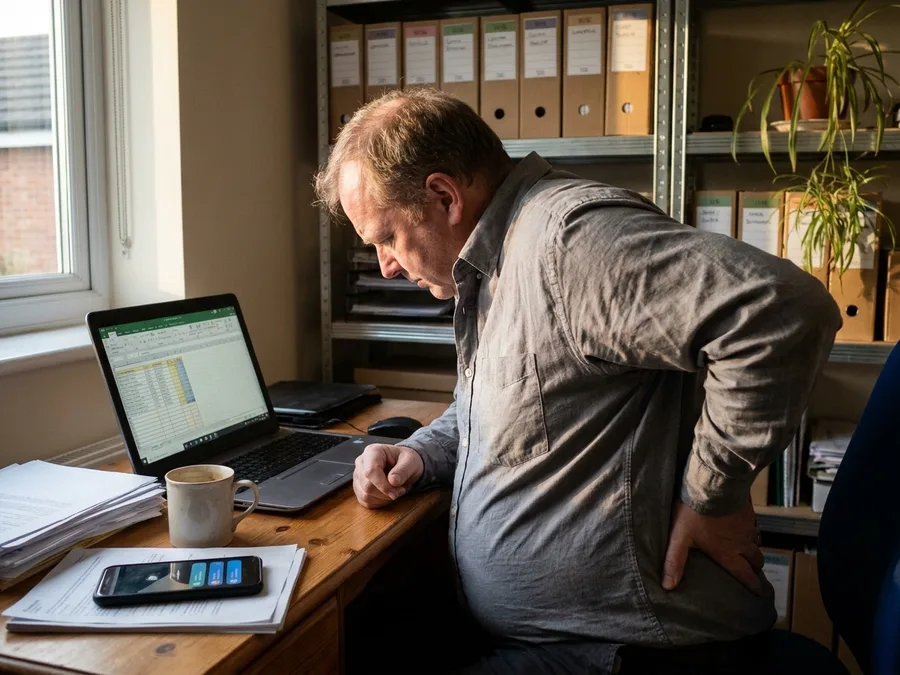
So visceral fat is the target. Why does cortisol keep winning the fight? Because when you’re chronically stressed, your adrenal glands keep pumping it and the signal never switches off.
That signal does two things that wreck your progress. It breaks down muscle for quick energy, and it shifts fat storage toward the abdomen. Visceral fat has roughly four times the cortisol receptors of fat anywhere else, so it’s the first place surplus calories land.
Think of cortisol as a GPS that routes every extra calorie to your belly. When you’re stressed and dieting hard, you’re not just fighting calories, you’re fighting the routing system that decides where they go.
That explains why grinding harder can stall you instead of speeding things up. Your body reads the extra stress as danger, holds onto energy, and parks it exactly where you don’t want it. Say you’re in a 500-calorie deficit, doing doubles, sleeping five hours: the deficit is real, but the signal is telling your body to keep the fat and spend the muscle.
The fix is to treat the hormone as part of the problem, not a background detail. Everything in the steps that follow is aimed at switching that signal down.
💡 Tip: If your training and diet are already tight but your waist is growing, suspect the stress side before you cut more calories.
Cortisol Myths, Straightened Out
3. Step One: Swap Hard Sessions for Zone 2
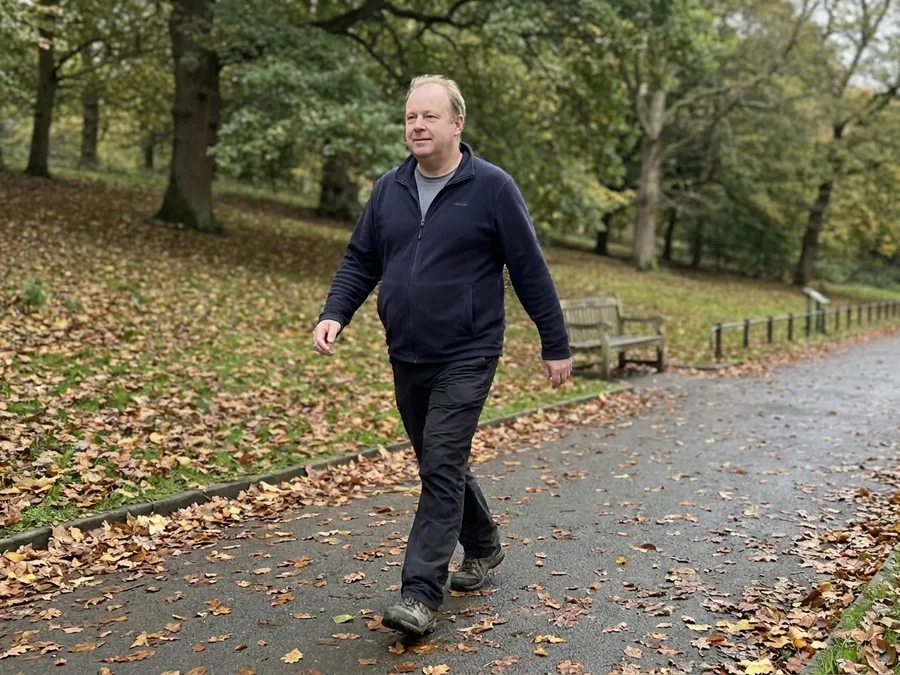
Picture a brutal workday followed by a 60-minute HIIT session. That’s not discipline, that’s pouring gasoline on the cortisol fire.
The fix is to stop stacking stress on stress. Swap some hard sessions for easy zone 2 work, brisk walks, or heavy lifting with extended rest between sets. You’re not quitting training. You’re keeping the lifting that holds muscle while you bring the stress volume down.
Walking in nature has been credited with dropping cortisol by as much as 20% in a mere 20 minutes. That’s a cheap, repeatable tool you can use every day.
And who doesn’t need to dial anything down? If you’re sleeping well, your waist is stable, and you feel recovered, your current training is probably fine. The swap is for the people who are already running hot.
💡 Tip: Keep two heavy lifting days a week. Replace the extra HIIT with a walk and see how your sleep and energy respond.
4. Step Two: Stop Caffeine by 2 P.M.
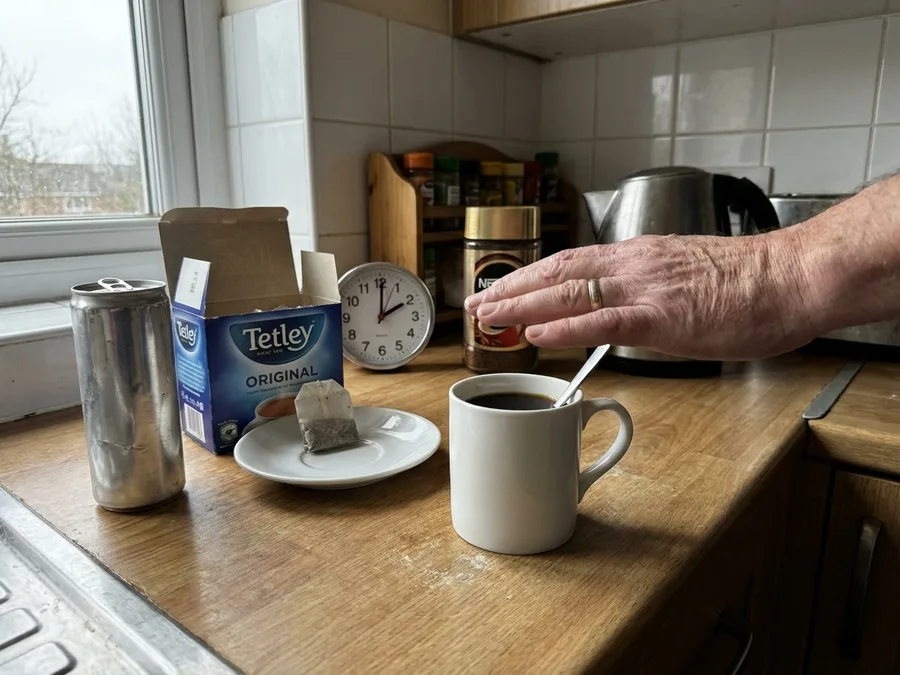
Training is the stress you can see. Caffeine is the one nobody counts, even though it triggers its own cortisol spike on top of the stress you’re already carrying, and late in the day it feeds elevated evening cortisol that keeps fat-storage mode running all night.
The rule is simple: nothing caffeinated after 2:00 p.m. That includes tea, energy drinks and pre-workout, not just coffee. If cutting cold turkey gives you headaches, back the cutoff up by an hour a day over a week so your body adjusts without derailing the plan.
For the 3 p.m. dip, take a 10-minute walk or drink a glass of water. And if you’re a slow metabolizer, the sort who can’t sleep after one afternoon coffee, move the cutoff to noon.
💡 Tip: Read the label on pre-workout. Most contain 150–300 mg of caffeine, and a 4 p.m. scoop is the same as an afternoon coffee.
Do This, Not That
Do this
- Walk 20 minutes in nature
- Lift heavy with longer rests
- Last caffeine by 2 p.m.
- Screens off 60 minutes before bed
Not that
- Stack a 60-minute HIIT on a stressful day
- Hours of endurance cardio
- An afternoon energy drink
- Scrolling in bed until lights out
5. Step Three: Replenish Magnesium and Vitamin C

Stress makes your body use up magnesium and vitamin C more quickly than normal. Magnesium signals the nervous system to settle; vitamin C helps the adrenals recover. Both are part of the brake on the stress response, and both are easy to run short on when you’re wired.
Food first. Build a day around leafy greens, pumpkin seeds and citrus. A cup of cooked spinach, a small handful of pumpkin seeds and an orange cover a lot of ground, and that’s a real plate, not a powder.
If you want a supplement example, magnesium glycinate before bed is the one most people tolerate well. Take it at the dose on the label, no guesswork with grams. If you take medication, check with a pharmacist or clinician first.
🌙 Your Wind-Down Order
60 minutes before bed
Screens off. Phone goes face down in another room.
Set the room to 65°F
Cooler air supports the drop in core temperature that sleep needs.
2 minutes of box breathing
Inhale 4, hold 4, exhale 4, hold 4 — this manually resets the vagus nerve.
Lights out
Keep the same bedtime, even on weekends.
6. Sleep Is the One Lever You Cannot Skip

A rough night cranked the volume on it. One night of poor sleep can send your cortisol up by around 37% the following evening. That’s not a small nudge.
Diet alone can’t outrun that. You can eat perfectly and still have hormones quietly pushing you to store fat. No amount of willpower overrides a body that thinks it’s under threat. So the sleep setup isn’t a nice extra; it’s the load-bearing wall.
Breathe in for a count of four, pause for four, breathe out for four, pause for four. That pattern is doing real work, because it manually resets the vagus nerve and pulls you out of fight-or-flight. Lights out last. Skip a step and the rest works less well.
💡 Tip: If you wake at 3 a.m. with a racing mind, do two more minutes of box breathing instead of reaching for the phone.
Stress Load: Before vs After the Protocol
Illustrative of relative stress load, not a clinical measurement.
7. ‘Healthy’ Habits That Quietly Raise Cortisol
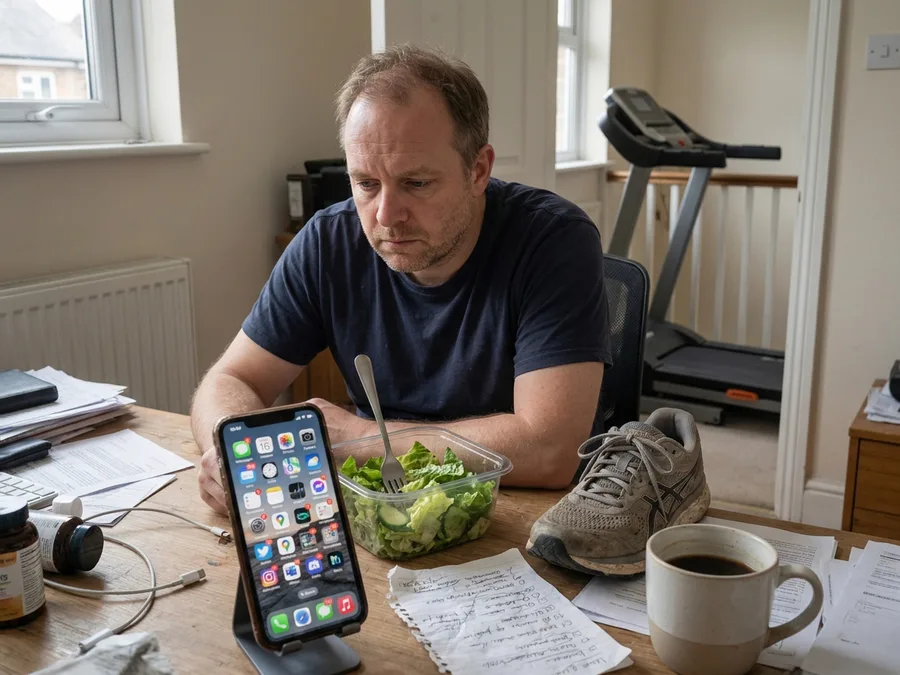
Picture the moment you’re proudest of: it’s 6 a.m., you’re on the treadmill, you’ve cut your food down to almost nothing, and you feel virtuous. If your waist has been stuck for three weeks, this is usually the scene that’s keeping it stuck. You’ve hit a plateau, so you did more of everything. That’s the trap.
Extreme caloric deficits read to your body as famine. Cortisol climbs, metabolism slows down, and the fat you’re trying to lose gets stickier. Hours of endurance cardio is a massive physiological stressor on top of that. Both feel like discipline and both are just more stress stacked on a body that already has too much.
For a quick example, take a reader stuck at the same waist for a month. She cuts the deficit from 1,200 calories to a sane maintenance level, swaps two of her five hard sessions for easy walking, and switches off all alerts except calls. Three weeks later her sleep is deeper and her belt loosens a notch.
So if your waist hasn’t moved in three weeks, the answer is usually less stress, not more discipline. Stop treating every hard session as proof of effort.
⚠️ COMMON MISTAKE
The plateau trap
When progress stalls, the instinct is to cut calories and add cardio. That's the exact combination that raises cortisol and stalls visceral fat further. Pull back first, then reassess.
8. Calm the Body Instead of Punishing It

Go back over everything here and a single thread runs through it: lower the stress, fix the sleep, move mindfully. That’s the whole game, and it works as one change of posture rather than as another punishment to endure.
Here’s a day assembled. Morning: a 20-minute walk in nature. Through the day: last coffee by 2 p.m., with leafy greens and pumpkin seeds on the plate. Evening: screens off 60 minutes before bed, room at 65°F, two minutes of box breathing. Nothing on that list is punishing.
If only one change is possible this week, start with sleep. It touches cortisol, appetite and training recovery at the same time, so it pays you back three ways. The catch is that it’s the first thing people sacrifice when they’re busy, which is exactly when it matters most.
💡 Tip: Judge the plan at six weeks on waist measurement at the navel, sleep hours and daytime energy — not the scale.
Should You Test Cortisol Before You Start?

You might be wondering whether to get a cortisol test before you change anything. Here’s the honest answer: a blood or salivary cortisol test measures one moment in time, and cortisol naturally swings through the day. One number rarely tells the whole story, so a single result can worry you without actually explaining anything.
There are red flags that take this out of the do-it-yourself lane. Trunk fat with thin arms and legs, easy bruising, unexplained blood-pressure changes, or feeling constantly cold or hot belong with a doctor. Those are the signs worth ruling out properly, because a clinician can check for Cushing’s syndrome or a thyroid problem, and neither is something to guess at.
Don’t self-diagnose or self-treat from a test you bought online. If you’re worried, take the result to a clinician and let them interpret it in context, alongside your symptoms and timing.
What Realistic Progress Actually Looks Like
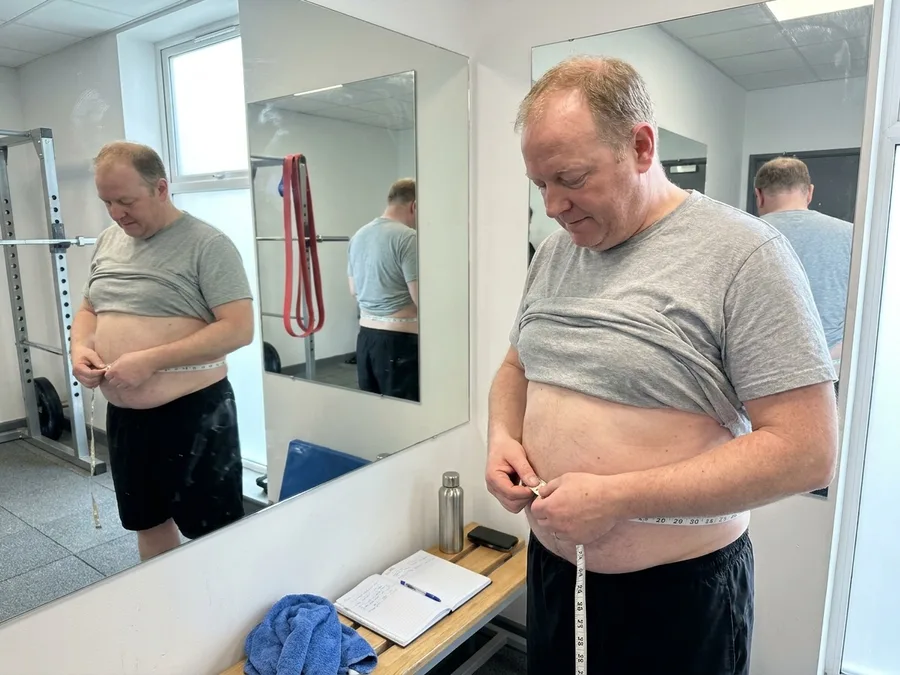
You won’t see your waist drop overnight, and that’s normal. Track four things weekly: waist measured at the navel, sleep hours, daytime energy and gym performance. Those four give you the real picture.
The scale can stall early even when the plan is working. Stress hormones take time to settle, and water weight moves around for reasons that have nothing to do with fat. That’s why waist and energy matter more than the number under your feet.
Six weeks is the checkpoint to judge it by. That’s a typical coaching expectation, not a study result, so treat it as a sensible line in the sand rather than a guarantee. If nothing has moved by then, change one variable, usually sleep or training volume, rather than adding more cardio.
The biggest mistake is judging the plan at day four and going back to intense cardio. Give it the full six weeks before you decide. For a concrete example, someone who drops 3cm from the waist and gains an hour of sleep a night is winning, even if the scale hasn’t budged. That’s progress, measured correctly.
When the Stress Itself Will Not Go Away

So what do you do when the stress isn’t a gym habit you can swap or a coffee you can skip? Some loads don’t come off. The job is still the job, the caregiving is still there, the situation is still the situation. In that case you stop waiting for calm to arrive and start managing the load you’re carrying.
A micro-stress audit is the place to start. Turn off notifications, block one screen-free hour in the day, and put a hard stop on the workday. Between meetings, take two minutes of breathing. At lunch, take a short walk. None of these remove the stress; they lower the drip, which is what actually keeps cortisol elevated.
One honest caveat before you close the laptop. If the situation is genuinely unmanageable or unsafe, this protocol is not a fix. Professional support is the next step, and reaching for it is not a failure. You can manage a load; you can’t carry one that was never yours to carry alone.
Start with sleep and the 2 p.m. curfew, then judge at six weeks
Tonight: set the bedroom to 65°F, turn off screens 60 minutes before bed, and have your last caffeine by 2:00 p.m. This week: swap one hard session for a 20-minute walk and keep two heavy lifting days. Alongside that: leafy greens, pumpkin seeds and citrus on the plate, and magnesium glycinate before bed if you and your clinician decide it’s right.
If you’ll only do one thing, start with sleep. It touches cortisol, appetite and recovery at the same time.
Then leave it alone for six weeks. Check your waist at the navel, your sleep hours and your daytime energy. If nothing has moved, change one variable — not your entire life.
Measure your waist at the navel today
That number is your baseline. Write it down with tonight's bedtime and your last caffeine time, and check all three again in six weeks.
