
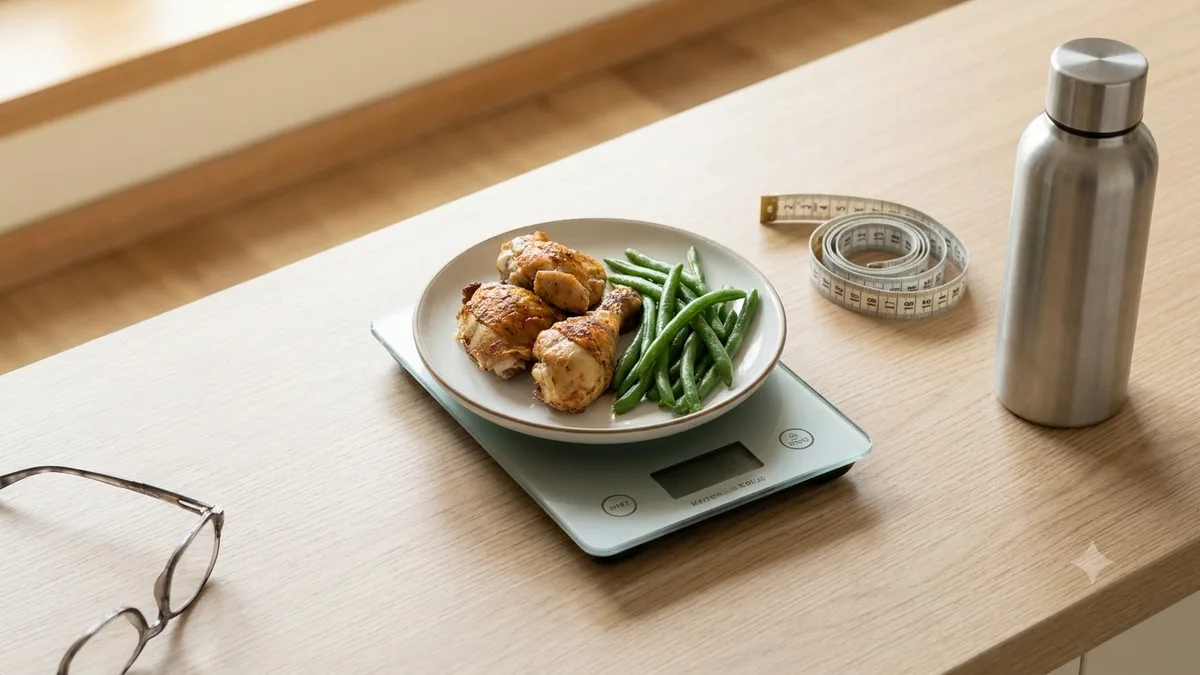
At 66 the body has less muscle and lower estrogen or testosterone, so it burns fewer calories at rest; the same intake that once created a deficit can now sit near maintenance.
For a 66-year-old woman at 5 ft 5 in and 185 lb with 20 lb to lose, the plans sold to her promise summer. Aging muscle loss, lower hormones, poor sleep, joint pain and some medications each trim movement and resting burn without any change in willpower.
The realistic version is 0.5 to 1 lb a week, about 20 lb over 6 to 9 months: two 30-minute strength sessions weekly, 7,000 to 8,000 steps a day, roughly 1,600 calories and 100 g of protein, reviewed at 12 weeks with a waist measure and a chair-stand test.
So hold every plan or pill against two tests: does it protect muscle, and does it fit a 6 to 9 month horizon? Start with two weeks of tracking and two strength sessions. Unexplained loss or a serious condition goes to a clinician first.
| Goal | What is realistic | What is not | Why it matters |
|---|---|---|---|
| Rate of loss | 0.5–1 lb a week | 20 lb in 30 days | Faster loss is mostly water and muscle, and it returns |
| Time to lose 20 lb | 6–9 months | By summer | A slower pace protects muscle and is easier to hold |
| Calorie cut | About 400 calories (2,000 to 1,600) | 1,000-calorie crash plans | A modest cut is sustainable and preserves muscle |
| Muscle protection | 100 g protein plus two 30-minute strength sessions a week | Walking and cardio alone | Without strength work, a meaningful share of lost weight comes from muscle |
| Progress check | Waist measure and chair-stand test at start and 12 weeks | The scale alone | The scale stalls while fat loss continues |
| Belly fat | Overall deficit plus strength work | Crunches to spot-reduce | Core work builds muscle but does not choose where fat comes off |
| Products | None — food and movement | Detox teas, fat-burner pills, waist trainers | Any loss is water or appetite suppression, not fat |
| Drugs and surgery | Clinical options with real costs | Diet shortcuts | GLP-1 drugs $200–$1,000 a month; bariatric surgery $15,000–$25,000 |
Loss is slower after 60, and that is normal

At 66 the numbers have moved under your feet, and the 1,400-calorie week that peeled off weight at 45 now barely registers.
Two things have shifted. Years of muscle loss and the drop in estrogen or testosterone after menopause lower the calories your body spends just staying alive, so a day that once burned 2,000 at rest burns noticeably less. The same intake you ran at 45 can now land within a few hundred calories of maintenance for a 185 lb frame, which is why the scale sits there for a month and you call it stubborn.
Then there is the movement you never logged. A blood pressure pill that makes you tired, a bad night’s sleep, a sore knee on the stairs: each one trims steps, standing time and errand walking without a single decision on your part. Your willpower did not collapse. Your daily burn quietly did.
And if you have lost and regained before, you are starting from the hardest place, because each cycle leaves a little less muscle behind. That is the reason the plan for the 20 lb has to defend muscle from the first week rather than after the first stone comes off.
⚠️ COMMON MISTAKE
The first-week mistake
Dropping to 1,200 calories in week one feels productive and backfires: you lose water, feel depleted, and lose muscle you need. Start at about 1,600 and hold it for six weeks before changing anything.
Protect muscle or you lose the wrong weight

Dieting without strength work can take a real share of the weight off your muscle, and that is the weight you most need to keep.
Muscle is the tissue that spends calories around the clock, even in a chair. Lose it and your daily burn drops again, so the next 5 lb is harder than the last, and the regain that follows arrives mostly as fat. The scale can show 8 lb gone while your body composition has barely improved.
The fix is built into the week from day one: two 30-minute strength sessions and roughly 100 g of protein a day. Walking and cardio add movement and help your heart, but they do not send the load signal that tells muscle to stay, which is why walking versus strength training is not a tie. Some resistance has to come from something heavier than your own feet.
The Muscle-Protection Plan — At a Glance
🥩 Protein split
25–30 g at each meal, not one big dinner
🛑 Stop-rule
Chair stands drop while weight falls — add calories, keep lifting
📏 Second test
Grip strength and waist measure, same two dates
🏋️ Where the load comes from
Bands, dumbbells or machines — steps do not count
🗓️ Review point
12 weeks, then adjust intake before cutting again
Why It Works
Splitting protein across the day clears the per-meal threshold older muscle needs; the 12-week tests catch muscle loss while it is still reversible.
Half to one pound a week is realistic

At 65, half a pound to a pound a week is the pace that keeps muscle on your frame, which puts the 20 lb goal at roughly 6 to 9 months, not by summer.
That is not a lack of ambition; it is arithmetic. A daily deficit big enough to strip 20 lb in 30 days would exceed your whole day’s intake. Push loss faster than a pound a week and what comes off first is water and muscle, and it is the water and muscle that come back, usually within weeks, often with interest.
The 12-week review is the piece most plans skip. At that mark you look at portions, your 7,000-8,000 steps and your two strength sessions and adjust one of them before a three-week plateau turns into a quit. A weight-loss plateau is a signal to change something, not a verdict.
For a 185 lb reader aiming at 20 lb, half to one pound a week is what leaves the muscle intact for the decade after. If you have diabetes, heart failure or kidney disease, a clinician may set the pace slower still, and that conversation belongs before the first week, not after it.
Realistic versus crash
Realistic
- 0.5–1 lb a week
- About 1,600 calories
- 100 g protein a day
- Two 30-minute strength sessions a week
- Review at 12 weeks
Crash
- 20 lb in 30 days
- 1,000 calories or less
- Protein an afterthought
- Cardio only, no strength work
- Quit when the plateau hits
Cut a few hundred calories, not a thousand
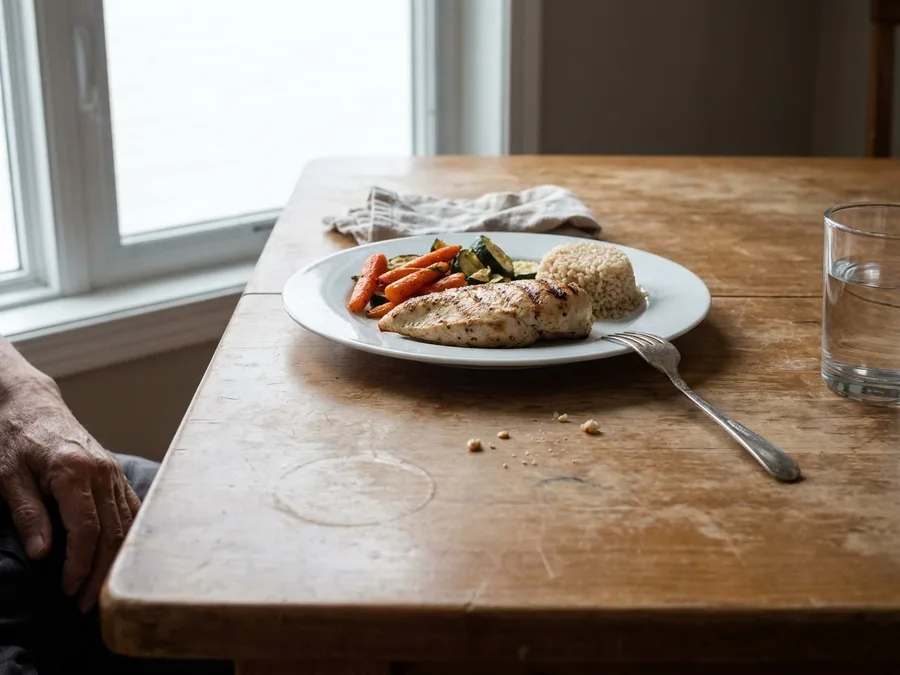
About 1,600 calories a day is where the example lands, down from roughly 2,000, and that is a smaller change than it sounds. Picture it as one snack dropped and one portion trimmed: the afternoon crackers, half the pasta you would normally serve. No meal replacement, no skipping breakfast.
The reason for a gentle cut is muscle. A crash diet forces the body to pull energy from wherever it can, and after 60 some of that comes from muscle. A few hundred calories a day keeps the deficit modest enough that fat is the main thing leaving.
The catch is that a bit over 1,500 calories done badly is still a bad diet. Calories from crackers and calories from eggs sit very differently at this age. The example pairs its intake with 100 g of protein, and without that, the restriction trades muscle for nothing.
Some readers should not set the number themselves. If you take insulin or steroids, or you have kidney disease, protein and calorie needs shift with the condition, and the target belongs in a clinician’s hands, not on a calculator.
📅 Your first 12 weeks, in order
Start with a two-week baseline
Track what you already eat and do two 30-minute strength sessions before changing anything.
Set the modest cut
Drop from about 2,000 to about 1,600 calories and build to 100 g protein a day.
Add daily steps
Work toward 7,000–8,000 steps a day, breaking up long sitting with two minutes of movement per hour.
Measure at the start
Record waist circumference and chair-stand count so you have a baseline beyond the scale.
Review at 12 weeks
Re-measure waist and chair stands; adjust portions, steps or strength work based on what changed.
Protein at every meal keeps you full and strong

The plan puts about 100 g of protein on the plate every day, which breaks down to roughly 30 g at each of three meals. That number does two jobs at once: it gives muscle the material to hold on, and it keeps hunger quiet enough that 1,600 calories does not feel like a punishment.
Thirty grams looks smaller than most people expect. A cup of plain Greek yogurt and a boiled egg covers the morning. A five-ounce can of tuna and a slice of bread gets lunch most of the way. Six ounces of chicken thighs at dinner, a block of tofu, or a bowl of black beans with rice finishes it, and all of those sit cheap on a US grocery bill.
It has to be spread across the day, not saved for dinner. Muscle uses protein in doses, not a weekly total, and a big evening steak does not make up for a morning coffee and nothing else.
Kidney disease changes the rule entirely, so if that is on your chart, the protein number is a conversation with your clinician, not a target from an article.
💡 PRO TIP
The 30-gram plate rule
Aim for a palm-sized portion of protein at each meal — about 30 g. It is the simplest way to hit 100 g a day without weighing food after the first week.
The scale stalls; your waist and strength do not
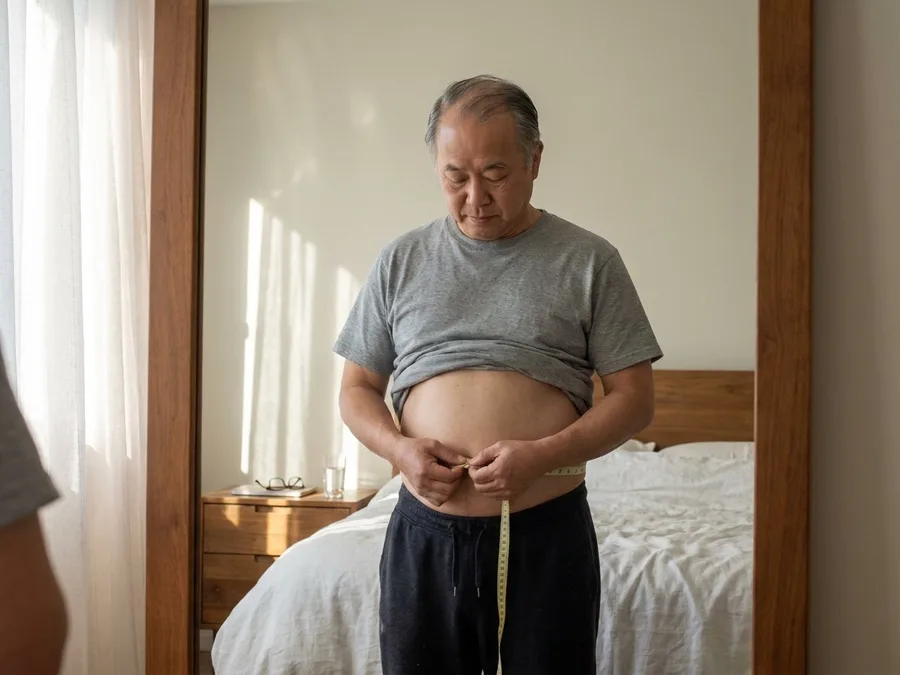
Because weight loss is not linear, and a stretch of two to three weeks with no movement is normal rather than proof the plan failed. Fluid shifts and new muscle can both hide fat loss from a scale that cannot tell the difference.
That is why the example measures the waist and runs a chair-stand test at the start and again at 12 weeks. These catch changes the scale misses: a belt notch that loosens while the number holds, or two more stands in the same time.
Your knees are not the problem, and neither is your willpower. Reach for the tape before you reach for the calorie cut.
Check three things for one week before changing anything. Portions, the 7,000 to 8,000 daily steps, and sleep, which quietly drives appetite when it slips. Often one of them has drifted, and correcting it restarts the loss without another cut.
A plateau is not a verdict. It is a prompt to measure your waist and your strength before you cut another calorie.
— What the pros keep repeating
Twenty pounds a month is not a real goal

Twenty pounds of fat in thirty days requires a daily deficit of roughly 2,300 calories. The example plan runs on about 2,000 calories a day in total. You would have to burn more than you eat and then some, every single day, for a month. It cannot happen, and any program that says it can is selling you something else.
What does happen in the first week of a crash diet is water. Glycogen holds water, cut the food and the water goes, and the scale drops three or four pounds fast enough to feel like proof. Then the rebound arrives and much of it comes back.
The costs are not abstract. Fatigue that makes the two strength sessions feel impossible, muscle lost alongside the water, and a rebound that can leave you heavier than the 185 lb you started at, with less muscle to burn calories going forward.
How risky is your plan?
- 0.5–1 lb a week with strength work: Low risk — the example's plan
- 1–2 lb a week, no strength work: Moderate risk — muscle loss likely
- Crash diet, under 1,200 calories: High risk of rebound and fatigue
- 20 lb in 30 days: Not fat loss — water and muscle
You cannot spot-reduce belly fat with crunches

Crunches build the muscle under the fat and leave the fat exactly where it is. Fat comes off across the whole body as the overall deficit runs, not at the muscle you happen to be working, so a hundred sit-ups a day changes the strength of your core and nothing about the layer on top of it.
What moves the waist is the same modest calorie cut and the two 30-minute strength sessions, sustained. The core work is worth keeping for balance and for lifting groceries, but it is not the fat-loss lever.
This is where the tape measure earns its place. Measure the waist at the start and again at 12 weeks, at the same spot, first thing in the morning. The mirror is a poor judge, because it compares today to a photograph in your head.
If back or knee pain makes floor crunches a bad idea, chair and standing core work do the same job for strength without the setup on the floor. Waist change over 12 weeks is the honest check either way.
Metabolism pills and detox teas are not fat loss

Detox teas, fat-burner pills, apple cider vinegar gummies and waist trainers do not produce fat loss. Whatever the scale shows on them is water or a suppressed appetite, and neither changes the daily deficit the 20-lb goal actually needs.
The tea works because it sends you to the bathroom. The waist trainer compresses soft tissue for an afternoon. The gummies sell a mild acid in a chewy format. None of them touches the 2,000-calorie intake that has to come down to about 1,600.
The real risk is not wasted money, it is interactions. Several of these products act on blood pressure, blood thinners and diabetes drugs, and at 66 the odds of being on one of those are high. Ask a pharmacist or clinician before adding any product to the shelf.
Compare the spend. A monthly supply of pills costs more than the protein that supports the two strength sessions, and the sessions and protein are what protect muscle through a 6-to-9-month loss. Put the money there.
Drugs and surgery are real options, with real costs

Weight-loss drugs and bariatric surgery are genuine medical treatments, not diet shortcuts with a marketing budget. The price is the part nobody puts on the package. A GLP-1 injection runs $200 to $1,000 a month if insurance will not cover it, and bariatric surgery lands somewhere between $15,000 and $25,000.
That is a clinical decision carrying a real bill, not a faster version of the plan you already have.
So should you raise it at your next visit? That depends on what else is on your chart. A clinician weighs three conditions in particular: type 2 diabetes, sleep apnea, and joint pain severe enough to limit walking. Any of those changes the conversation from cosmetic to medical, and it also changes whether an insurer will pay.
See a clinician first if the loss is unexplained

Weight that comes off on its own, without a plan behind it, is a symptom to assess before it is a goal to celebrate. That is the shift that outranks drugs and surgery both. If the number on the scale is dropping and you cannot say why, the question stops being how to lose 20 lb and becomes what is causing this.
The signals a primary-care clinician wants to hear about are specific. Weight going down without trying. Food catching on the way down, or a swallow that feels different than it used to. Blood in the stool or in the toilet water. A tiredness that sleep does not fix, or a low mood that arrived and stayed. Any one of those is reason enough to book the visit, not to wait and see.
Diabetes, thyroid disease, depression and some prescriptions all move weight, and each is a cause to be assessed rather than a personal failure to diet harder. Bring three things to that appointment: your medication list, whatever bloodwork you have had done recently, and a two-week diary of what you ate and how you felt.
The 20-lb plan can wait until the explanation is in hand, and it is worth asking the office about coverage, including behavioral counseling, while you are there.
The realistic plan, the fake ones, and your first two weeks
The realistic plan is the slow one: 0.5 to 1 lb a week, two strength sessions, about 100 g of protein, 7,000 to 8,000 steps and a few hundred calories trimmed, held for 6 to 9 months. Crash programmes, detox teas, waist trainers and spot-reduction promises are the ones to drop.
Your first move costs nothing. For two weeks, track what you already eat and do two 30-minute strength sessions before you cut a single calorie. That baseline shows where the cut belongs and whether your body can carry it. If weight is coming off on its own, or you live with diabetes, heart failure or kidney disease, see your clinician first and ask about coverage, behavioral counseling included.
The 66-year-old at 5 ft 5 in and 185 lb does not need 20 lb by summer. She needs 20 lb over 6 to 9 months without giving up the muscle that makes the next decade easier.
Start with two weeks of tracking
Before you cut a calorie, write down what you eat for 14 days and do two 30-minute strength sessions. That baseline is the first real step toward 20 lb in 6 to 9 months.
