
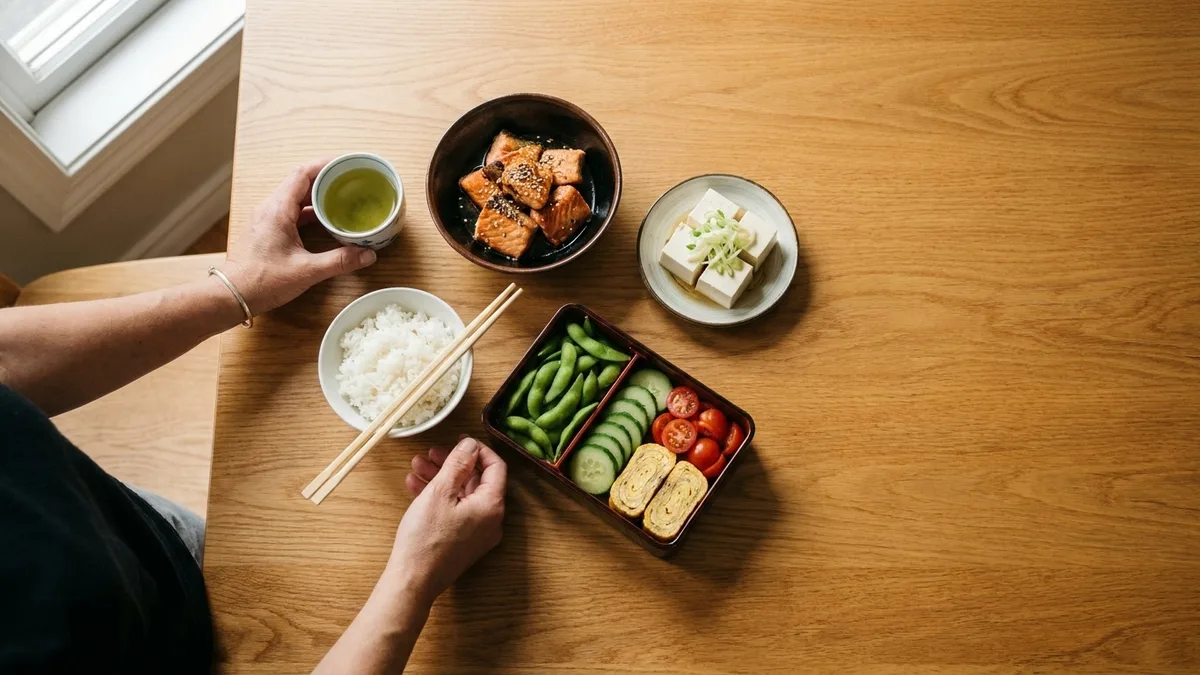
You did the gym. You cut the carbs. You logged every calorie for eleven weeks, and four months later the scale is back where it started. That is not a character flaw.
Long-term dieting fails about 95% of the time, and the reason is biology, not laziness. When you lose weight, your metabolism slows and ghrelin, the hunger hormone, climbs sharply. Your body is not sabotaging your summer plan. It is defending what it thinks is survival.
Japan offers a useful counter-example. Obesity there sits around 4.5%, roughly ten times lower than in the US, and rice, noodles and daily snacks are all perfectly normal. So the answer is not a harder diet.
It is a set of small defaults that make the slim choice the easy one. Below are nine of them, each with the first swap to make in your own kitchen or day.
Quick Tips Before You Start
Change one thing
Pick a single habit and repeat it for two weeks before adding another.
Shrink the plate
Serve dinner on an 8-9 inch plate instead of a 12-inch dinner plate.
Audit your drinks
Count the sugary drinks in your fridge right now and swap one for green tea.
Anchor a meal time
Fix breakfast first. A predictable morning steadies the rest of the day.
Use the day you have
Stairs for two floors and a ten-minute loop after dinner count as movement.
1. Willpower Fails, Japan's Design Succeeds

That is where the bounce-back comes from. Long-term dieting fails about 95% of the time, and the reason is mechanical: after weight loss your metabolism slows and the hunger hormone ghrelin rises sharply. You are not weak. You are fighting biology with a meal plan.
Look at Japan and the numbers get strange. The obesity rate is about 4.5%, roughly ten times lower than the US, and that is with rice, noodles and snacks on the menu every day. So before you credit good genes, cross off the easy explanations. Japanese and American genes are not very different. Japanese men actually smoke more than American men. And only about 3% of Japanese people hold a gym membership.
What is left is design. The environment quietly arranges the smaller portion, the walk to the station, the meal that arrives in four little dishes. Your effort was never the missing piece.
So stop budgeting willpower and copy the defaults instead. Tonight, put the fruit bowl on the counter and the chips on the top shelf, and see which one you reach for at nine.
💡 Tip: Judge a new habit over three weeks, not three days. Your appetite lags behind your intentions.
| Habit | Japanese default | First swap for a US kitchen or day |
|---|---|---|
| Taste training | Nutritionist-planned school lunch, eaten in class | Replace one processed item a week with something fresh |
| Healthy convenience | Rice bowl with grilled fish or tofu for a few dollars | Keep microwave rice, canned fish and pre-cut veg ready |
| Portion control | Hara hachi bu: eat until 80% full | Half cup rice, 3 oz fish, 1 cup vegetables |
| Sugar | 150 ml soda cans, tiny desserts | Swap one sugary drink for green tea |
| Meal rhythm | Breakfast before 9, lunch by 1, dinner before 8 | Fix one meal time and hold it |
| Movement | Walk to the train, stairs, bike to work | Park farther out, take stairs for two floors |
| Slow eating | Chopsticks, no phone at the table | Put the fork down between bites |
| Respect the meal | Meals eaten seated, without screens | One screen-free meal a day |
| Mindset | Balance, rhythm, respect | Repeat one habit until it feels normal |
⚠️ COMMON MISTAKE
Do Not Cut Harder
When the scale stalls, the instinct is to eat less. That raises ghrelin further and makes the next evening of snacking close to inevitable. Fix the setup before you cut the food.
2. Taste Is Learned and Retrainable
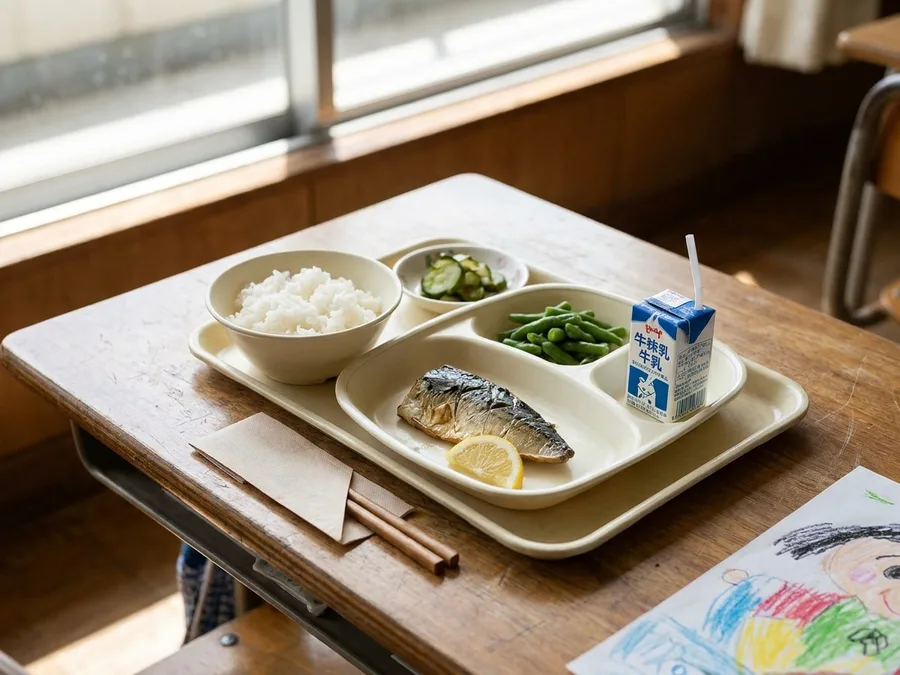
If design works that fast, it is worth asking where Japanese taste buds got built in the first place. The answer is school. Lunch there is planned by a nutritionist, cooked fresh each day and eaten together in the classroom, with no vending machines and no processed junk. Children grow up tasting vegetables, rice and fish until those flavours simply become what normal food tastes like.
Now picture the American tray: tater tots, chicken nuggets, chocolate milk. That tray trains a brain to expect sweet and salty, and it works, which is exactly the problem. The habit sticks because the food never asks anything of you.
Taste is not fixed at seven years old, though. Swap one processed item a week for something fresh and your palate starts drifting back on its own. Expect it to be slow. The first plain tomato tastes dull; by week six it tastes like a tomato. Judge it over a month, never over one meal.
If your household pushes back, change one shared item at a time. Add a fresh side without policing anyone's plate, and keep your own swap separate if someone refuses.
Nobody converts over dinner, and nobody needs to.
💡 Tip: Pick the swap you will actually repeat: frozen edamame over crisps is easier to sustain than a salad you resent.
Two Ways to Stock the Same Fridge
Japanese default
- Small dishes served together
- Fish, rice, soup at arm's length
- Convenience food is a real meal
- Portions already portioned
- Water or tea as the default drink
The usual US default
- One oversized plate
- Snack bags within reach
- Fast food means a burger
- Family-size packaging
- A 12 oz soda with every meal
3. Healthy Food Becomes the Easy Default
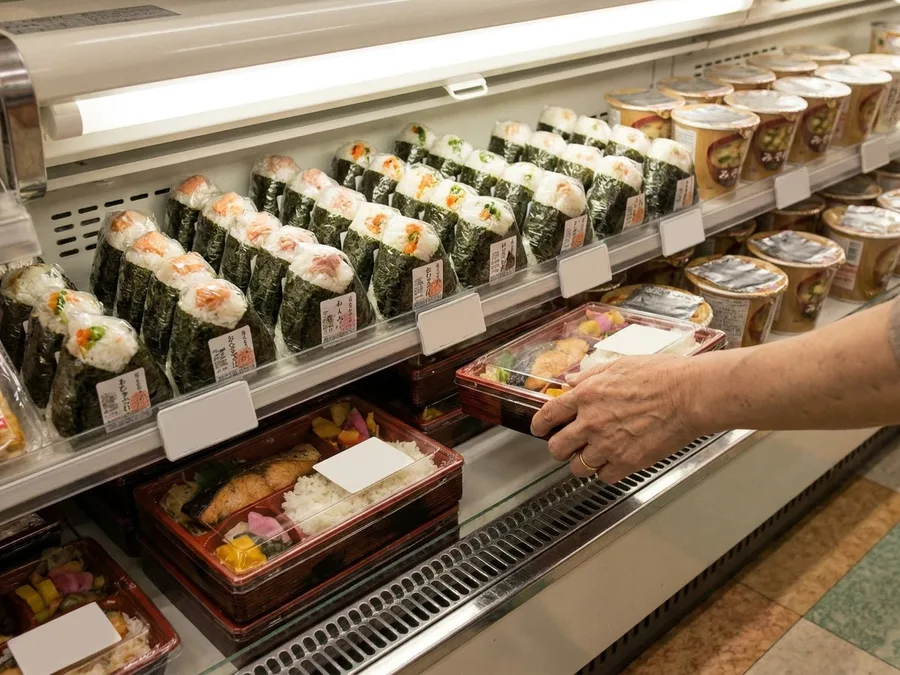
There is a moment at 9 p.m. when you open the fridge and the decision is already made for you. Japan has roughly fifteenfold the number of convenience stores the US has, yet the fast option there is a rice bowl with grilled fish, miso soup or tofu for a few dollars.
Psychologists call this environmental design. We believe we choose, but our surroundings choose first. Build the same trap in your own kitchen: microwave rice, pre-cut vegetables, tofu or canned fish, and a boiled egg or two ready to go, so the fast option is a meal rather than a bag of chips.
One check on it: convenience still needs a portion eye. A few dollars of rice and fish beats a burger, but three servings of it defeats the point.
4. Small Dishes and the 80% Full Rule
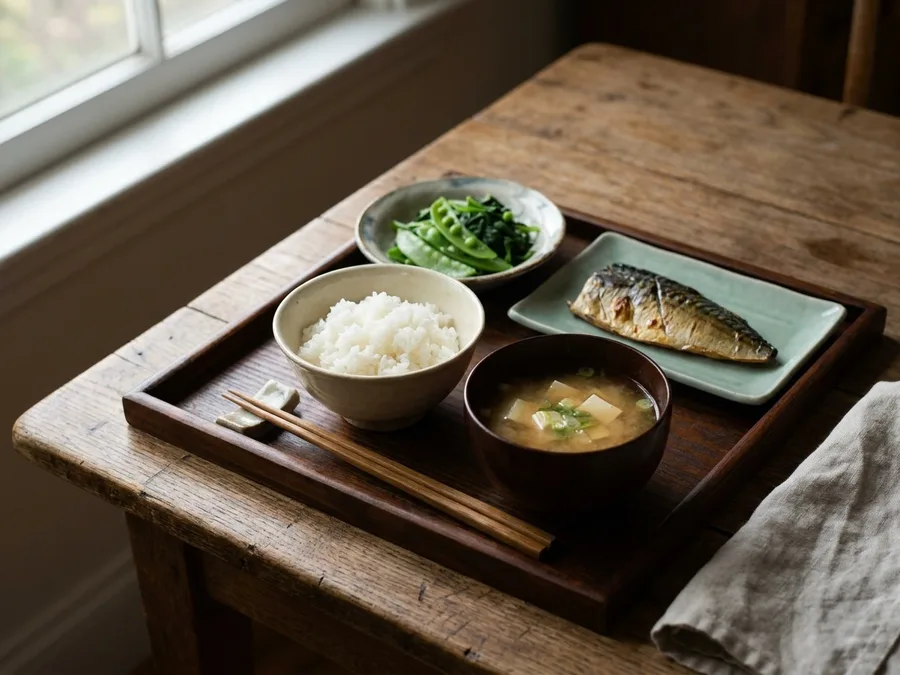
Hara hachi bu translates roughly as eat until you are 80% full, and it is a stop signal, not a deprivation rule. The cue you are listening for is no longer hungry, not stuffed.
Meals arrive as small separate dishes: rice, soup, fish, vegetables. Nothing comes in oversized cups, and nothing is endlessly refillable. The psychology underneath is unit bias, which means you feel finished when the serving is finished, not when your body is full. Smaller plates and smaller packages cut calories and never feel like a diet.
Try this plate: an 8 to 9 inch one, half a cup of rice, a cup of soup, three ounces of fish or tofu, and a full cup of vegetables. If you are still hungry, add another vegetable serving before you reach for more rice.
💡 Tip: Serve from the stove, not the table. The second helping stops being automatic.
The 80% Plate — At a Glance
⏱️ Wait before seconds
20 min
🥢 Eat slower with
Chopsticks or fork down
🥤 Soda can size
150 ml (about 5 oz)
🍱 Rice bowl fast food
A few dollars
🕗 Dinner cutoff
Before 8 pm
🚫 Refills
None — single serving
Rule of thumb
If still hungry after 20 minutes, add vegetables first, then rice.
5. Less Sugar, Smaller Sweets, Adjusted Taste
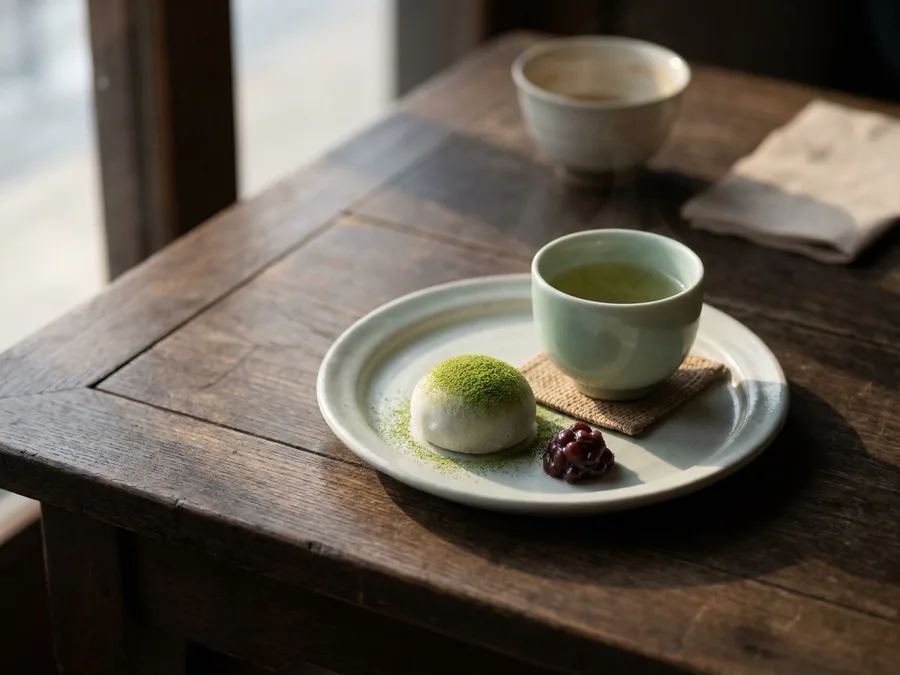
Portion size is one lever, but sugar is where the contrast gets sharpest. The average Japanese person eats about half the sugar an American does, and it starts with the can: a Japanese soda is usually 150 ml, about 5 oz, not 350 ml.
Desserts are tiny and carefully made, so the pleasure comes from how it looks and tastes rather than how much of it there is. Your palate does adjust, too. One trial found that reducing sugar intake by roughly 40% over two months left participants perceiving sweetness as about 40% stronger afterward. Gradual, not instant.
Make one swap: replace a single sugary drink with green tea. It is calorie-free, and while it is traditionally described as stress-lowering and metabolism-supporting, it is not a fat burner. The win is the missing sugar, not the magic.
💡 Tip: Buy the small cans on purpose. A 150 ml can finishes itself; a 12 oz bottle asks you to stop halfway.
A Week of Small Sugars
Illustrative figures; check the labels on your own brands.
6. Fixed Meal Times Calm Hunger Hormones
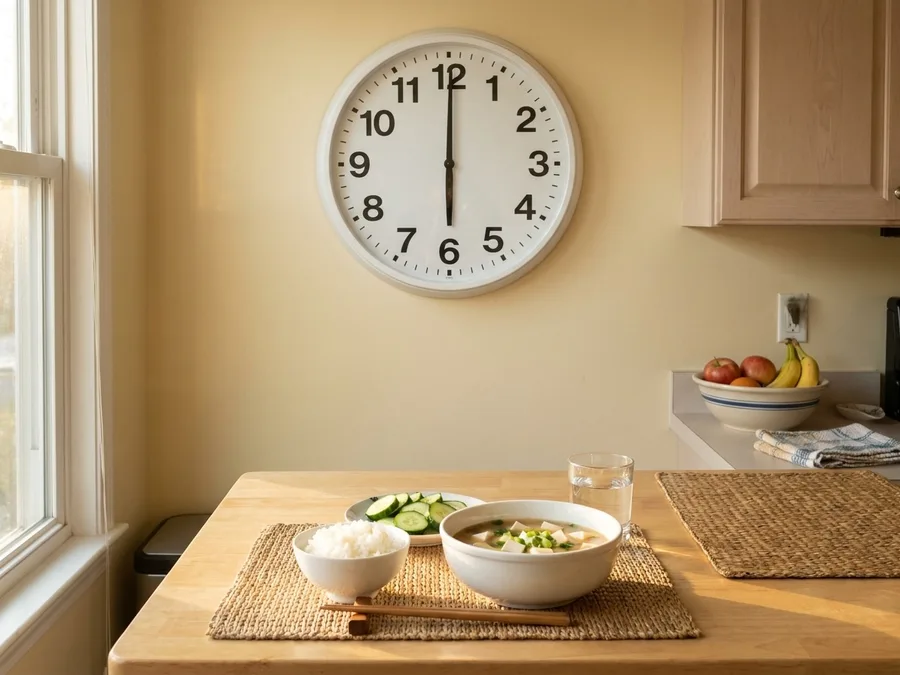
You give hunger a schedule to follow instead of letting it ambush you.
Most Japanese people eat three consistent meals: breakfast before 9, lunch by 1, dinner before 8. When meals have a rhythm, hunger hormones follow that rhythm. When the schedule is chaos, your brain grabs whatever is nearest, and whatever is nearest is rarely good.
That is the real reason late-night eating wins. It is not weakness, it is an unplanned gap. The worst option wins when the next meal is a mystery, so plan the meal before the hunger spike, not during it.
Start with one anchor. Fix breakfast or lunch and hold it for two weeks before you try to pin down all three, because moving three meal times at once is a schedule change your appetite will fight. Pick the meal you already eat most reliably, and lock it in first.
💡 PRO TIP
Plan Dinner At Lunch
Decide what dinner is while you are still full. By 7 p.m. the decision gets made by whatever is fastest, and fastest is usually takeaway.
7. Daily Movement Beats Planned Workouts
Only about 3% of Japanese people have a gym membership, and they are not exercising less than you. They are moving more, in a way that never feels like exercise: walking to the train, climbing the station stairs, biking to work.
Science calls it NEAT, short for non-exercise activity thermogenesis. It is the small movement that adds up across a day, and it asks nothing of you: no changing clothes, no commute to the gym, no guilt on the day the workout gets cancelled.
The catch is that NEAT is invisible, so it drains away without you noticing. A car door to a desk chair is a day of near-zero movement, and the step counter on your phone is the fastest way to catch the drift before it becomes a habit.
You do not need a train or a bike. Park at the far end of the lot, take the stairs for two floors, walk during one phone call, and add a ten-minute loop after dinner.
Say your usual day is 3,000 steps. Four small decisions like that can add a couple of thousand without a single workout on the calendar, and nothing to feel guilty about when life gets busy.
💡 Tip: Attach walking to something you already do daily. A walk with a fixed trigger survives bad weather; a walk with a mood does not.
8. Slow, Phone-Free Meals Register Fullness
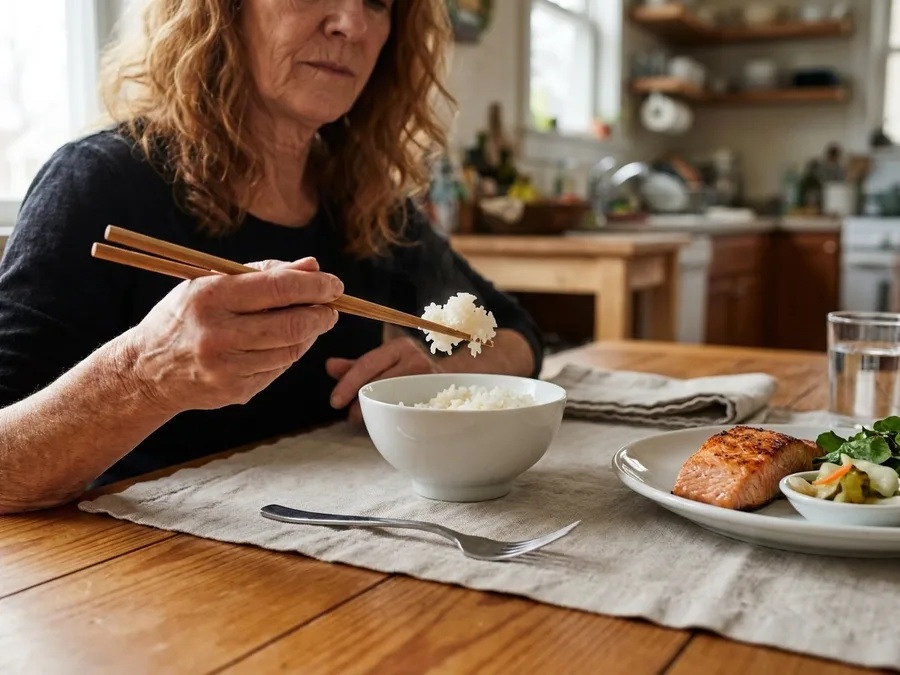
Picture the plate in front of you right now, phone propped against the salt shaker, fork working fast, and the whole meal gone before you have actually tasted it. That is the moment this habit bites.
Fullness takes about 20 minutes to reach your brain, and a fork moving at speed gets there long after the plate is empty. Chopsticks slow the pace naturally. If they are not practical for you, put the fork down between bites, chew, breathe, enjoy, because time and attention let satisfaction actually register.
There is a second rule layered on top of the pace: respect the meal. No eating while rushing around, and no devices, feeds or other tasks at the table. The meal becomes a small ceremony rather than a thing you do while doing something else.
Pace and attention together are why you eat less without feeling cheated. You simply notice the point where you are done, and stop there instead of hunting for the next bite.
💡 Tip: Try one screen-free meal a day. Start with breakfast, where the phone is least needed anyway.
9. Balance, Rhythm and Respect Become Identity
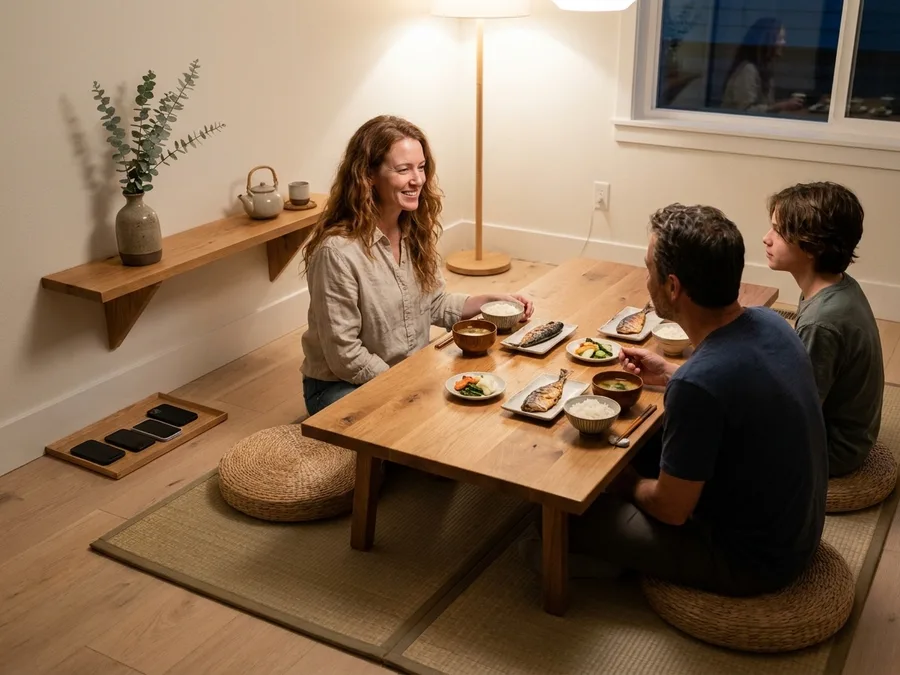
Go back through everything above and you will spot three words doing the quiet work underneath all of it: balance, rhythm and respect. Balance is the 80% rule and the small sweets. Rhythm is the fixed meal times and the walk to the station. Respect is the meal you sit down for without a screen.
Together they shift you from fighting your body to listening to it, and that is why the habits hold. Taste, environment, portions, sugar, timing, movement, pace and attention each take a little weight off willpower, so a rough day does not undo a rough month.
The caution is speed. Identity moves slowly. Pick one habit and repeat it until it feels normal rather than announcing a total life overhaul on a Sunday night.
Then add the next, and the one after that. Nine quiet defaults, stacked in the order your life allows, until staying slim stops feeling like a battle and starts feeling like who you are.
💡 Tip: If you can only hold one, hold the meal rhythm. It steadies everything that follows.
When Progress Stalls or Medication Interferes

Everything above works, and then one month the scale does not move. That is normal rather than broken, and the first move is to audit rather than punish.
Check the drift before you cut anything. Have the portions crept up, the drinks returned, the snacks re-appeared, the walking stopped, the sleep shrunk? Pick the one that slipped and restore it for a few weeks. Crash dieting after a stall tends to raise hunger and end the same way the last 95% of diets did, so go back to one or two anchor habits and measure your consistency instead of your weight.
If you have a medical condition, a medication change or an unexplained weight shift, talk to your clinician before cutting food groups or adopting any culture's eating pattern. These nine habits are general lifestyle defaults, not treatment, and condition-specific guidance belongs with your doctor or a registered dietitian rather than a list online.
One more thing worth knowing: some medications genuinely change appetite or weight, and no amount of small dishes overrides that. Get the medical question answered first, then use these habits to make the everyday part easier.
Frequently Asked Questions
How long before these Japanese habits show any effect?
Give a single habit three to four weeks before you judge it. Taste and appetite adjust on that timeline, not on a weekly weigh-in, and stacking a second habit before the first feels normal is where most attempts collapse.
Do I have to eat Japanese food to make this work?
No. What transfers is the structure: small dishes, a fixed meal time, smaller sweets, more walking and a seated meal. A bowl of lentil soup with a side of vegetables does exactly the same job as miso and rice.
Is hara hachi bu just another form of calorie restriction?
It is a stop rule rather than a counting rule. You stop at no longer hungry instead of stuffed, which usually removes a few hundred calories a day without tracking anything. The plate and bowl sizes do most of the work.
Will green tea really speed up my metabolism?
Not enough to matter on its own. Drink it because it replaces a sugary drink and because it is calorie-free. Treat any fat-burning claim with suspicion, including the ones attached to Japanese habits.
What if my family refuses to change how they eat?
Change the shared items one at a time and keep your own swaps separate. Add a fresh side to the table without policing plates, and let the small dish you serve yourself be the example rather than an argument.
Can I follow these habits if I take medication that affects my appetite?
Ask your clinician first, especially before you cut food groups or change meal timing. These habits are everyday lifestyle defaults, not a treatment plan, and your medication schedule may need to shape which ones you pick.
One Default, Held Long Enough to Feel Normal
Nine habits is a menu, not a to-do list. Pick the one that fits the day you actually have, and let the rest wait.
If dinner is your weak point, start with the plate: an 8-9 inch one, half a cup of rice, a full cup of vegetables. If your mornings are chaos, fix breakfast before 9 and watch the evening snacking calm down on its own.
If you sit all day, add the ten-minute post-meal walk after dinner and nothing else for two weeks. Consistency beats intensity every time, and one default you keep will do more than nine you abandon by Friday.
Start With Tonight's Plate
Scroll back to habit four, measure the rice, fill the rest with vegetables, and eat it seated without your phone. That is the whole experiment.
