
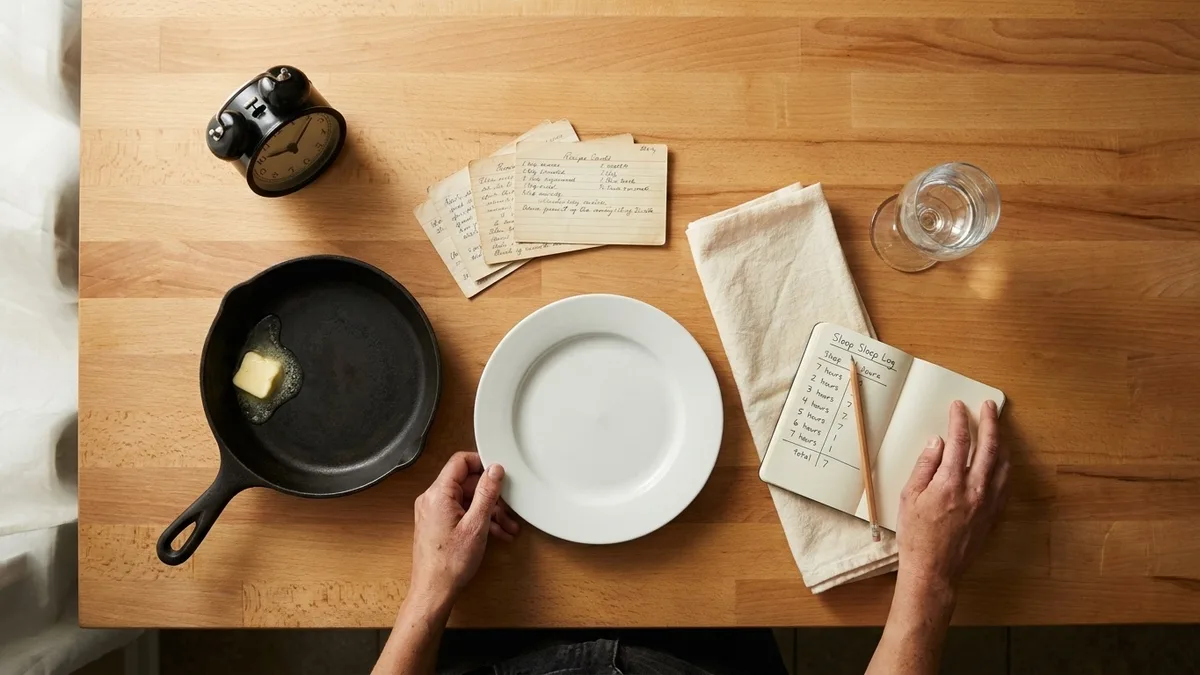
Picture a generation that never counted a calorie and stayed thin. In the 1970s, about one in six American adults was obese. By 2020, more than four in ten were. Same country, same genes, same willpower—so what changed?
It’s a series of quiet swaps: the fat in the pan, the walking built into a day, the kitchen that closed after dinner. None of them were announced. All of them are stuck.
The best thing is that old-school habits still work, and you don’t need to live in 1970 to use them. Here are seven worth bringing back, in the order they slipped away—each with the evidence, the exact first move, and the catch nobody mentions.
Quick Tips Before You Start
Pick one fat
Choose butter, lard, tallow, or olive oil for everyday cooking and read labels for seed oils.
Count all movement
Errands on foot, stairs, and standing chores count—not just gym workouts.
Set a kitchen-close time
Pick a time after dinner when the kitchen goes dark, and stick to it most nights.
Guard seven hours
A fixed bedtime and a dark, cool room do more for hunger than another cup of coffee.
Charge the phone outside
Keep the bedroom a phone-free zone and delete delivery apps after the kitchen closes.
1. A traditional cooking fat
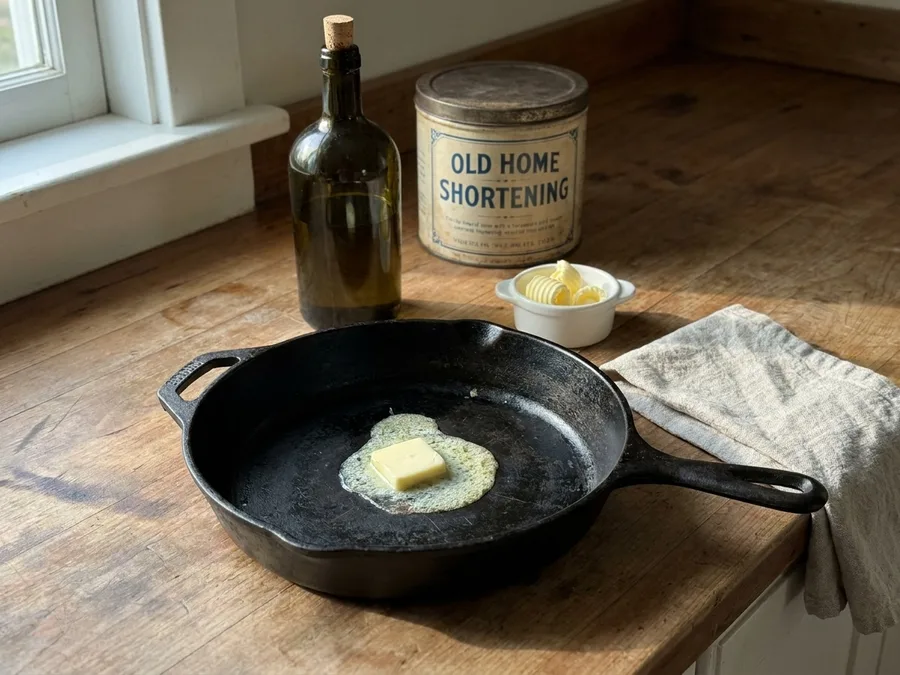
For most of American history, kitchens cooked in animal fat, butter, lard, beef tallow. That began to crack in 1911, when Procter & Gamble took the oil left over from cottonseed processing, which had been discarded by cotton mills, and hardened it into a solid that passed for lard. They called it Crisco and handed out free cookbooks that used it in every recipe.
It worked. Sales went from 2.6 million units in 1912 to 60 million by 1916, and lard quietly fell out of fashion. Seed oils now supply close to one-fifth of American calories. They’re cheap, they last, they taste of almost nothing, and they sit in bread, dressing, crackers, and just about every restaurant fryer.
Here’s the twist. The same hardening process that made Crisco also made trans fats, which the FDA ruled unsafe in 2015. The question of whether the seed oils we eat now do us harm remains unsettled, and that’s worth saying plainly. The clear story is the swap away from traditional fats, not a claim that a spoonful is poison.
So pick a traditional fat for everyday cooking: butter, lard, tallow, or olive oil. Read labels for seed oils. Keep portions in view, since all fats are calorie-dense. A tablespoon of butter is about 100 calories; a tablespoon of olive oil about 120.
💡 Tip: Buy a small tub of lard or tallow and keep it next to the stove. It makes the swap automatic.
💡 PRO TIP
One small swap, big payoff
You don't have to overhaul your pantry. Swap the oil you cook with most often—usually the one in the fry pan or the salad dressing—for butter, olive oil, or lard. That single change cuts a surprising amount of seed oil from your week.
2. Movement built into ordinary days
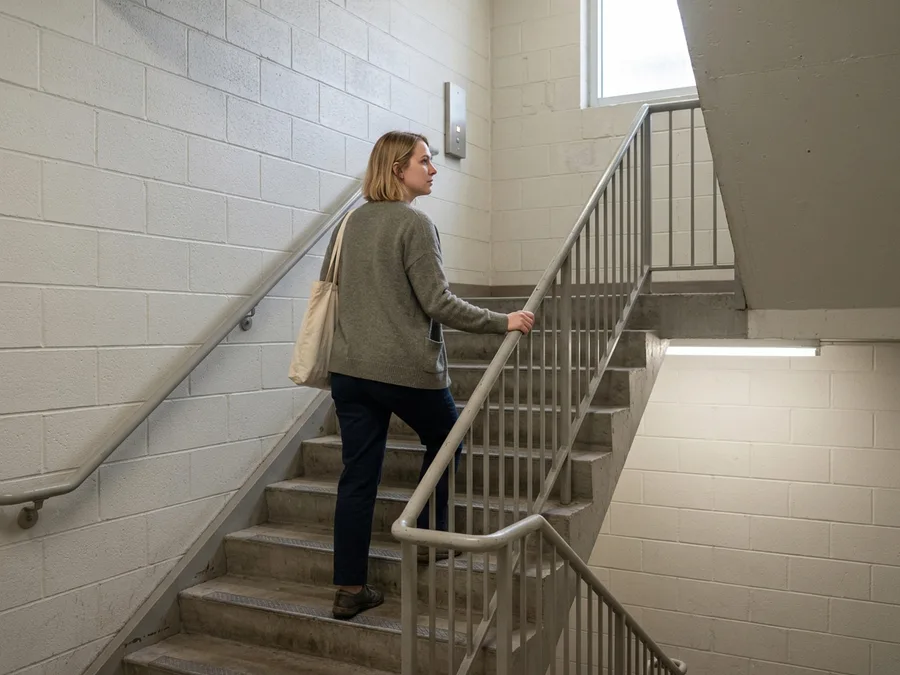
And that swap is only half the story, because the other half is that we stopped moving without noticing. The average job now burns about 140 fewer calories a day than it did in 1960, back when close to half of all private-sector work involved physical activity. Now just 1 in 5 jobs does.
At home, people spend roughly 7 hours a day on a screen and sit for 6 to 8. Childhood changed most of all: back in 1969, 48% of kids walked or biked to school. By 2009, only 13% did. The average American now walks about 5,000 steps a day, near the bottom of the developed world.
The Old Order Amish, who still work the land by hand, log 18,000 steps on average and have an obesity rate around 4%. That gap isn’t willpower. It’s built into the day.
So build it back in: walking meetings, stairs over elevators, errands on foot, standing chores, outdoor play with the kids. The catch is that total daily movement is what counts. A hard gym session doesn’t cancel eight sedentary hours. If you sit all day, a 30-minute run is great, but it won’t undo the effect of fast eating or the other 15 hours.
| Old-school habit | Modern default | First move |
|---|---|---|
| Butter, lard, tallow, olive oil | Seed oils in bread, dressing, fryers | Cook one meal with butter or olive oil today |
| Movement built into the day | 5,000 steps, 7 hours on screens | Take one errand on foot this week |
| Kitchen closed after dinner | 90% snack daily, snacks doubled | Set a kitchen-close time and brush your teeth |
| Low-advertising childhood | 83% of food ads went to TV in 1977 | Switch kids to ad-free streaming |
| Protected 7-hour sleep | 1 in 3 adults sleep under 7 hours | Set a fixed bedtime and darken the room |
| Medication review | 1 in 8 adults takes an antidepressant | Bring a full med list to your doctor |
| Phone-free bedroom | 90% carry a smartphone, 4–5 hours/day | Charge the phone outside the bedroom |
3. A closed kitchen after dinner
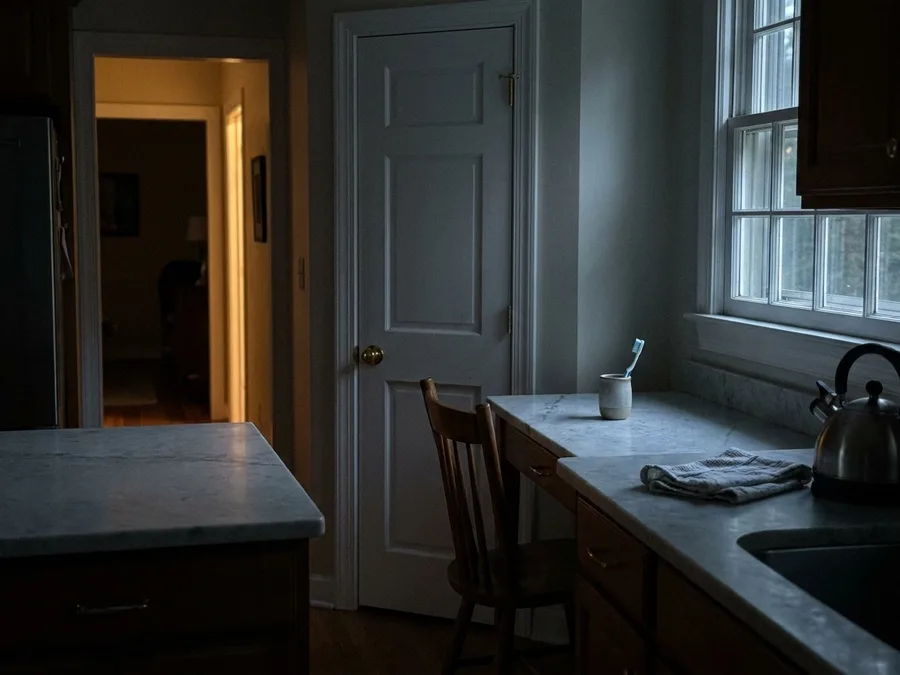
In the 1970s, there was an unspoken rule: once the meal was over, the kitchen was closed.
Four in 10 adults didn’t snack at all on a given day. Then the quiet hours filled up. By the late 2000s, 90% of adults snacked daily, and the number of snacks doubled. A whole industry grew to occupy those idle stretches: the aisle of snacks, the vending machine, the rack by the register, the chip display at the gas station.
Most of it is ultra-processed, and ultra-processed foods now make up about 60% of adult diets and nearly 70% for kids. The same years filled the glass with sugar, which the body barely registers. Serve the same calories in liquid form and people gain more than from solid food, since sugar in a drink slips right past the signal that tells you you’ve had enough. It adds up to roughly 500 extra calories a day versus the 1970s, and researchers blame the grazing more than the size of the plate. It wasn’t one big meal; it was the cover opening a thousand times.
The fix is simple. Set a kitchen-close time, say 7:30 or 8 p.m., and treat it as a real boundary. Brush your teeth right after dinner. Keep snack foods out of sight, ideally in an opaque bin on a high shelf.
If you need an evening snack, make it a planned, sit-down affair: a bowl of yogurt with nuts, or an apple with peanut butter, eaten at the table, not standing at the counter. One caveat: this boundary isn’t right for everyone. Shift workers, people with medical needs, or anyone with a history of disordered eating should adapt it with professional advice.
💡 Tip: A closed kitchen isn't for everyone. If you have medical needs, work shifts, or have a history of disordered eating, adapt the rule with professional advice.
The grazing math
How snacking changed in one generation
Source: historical food-intake data cited in the original research.
4. A low-advertising childhood
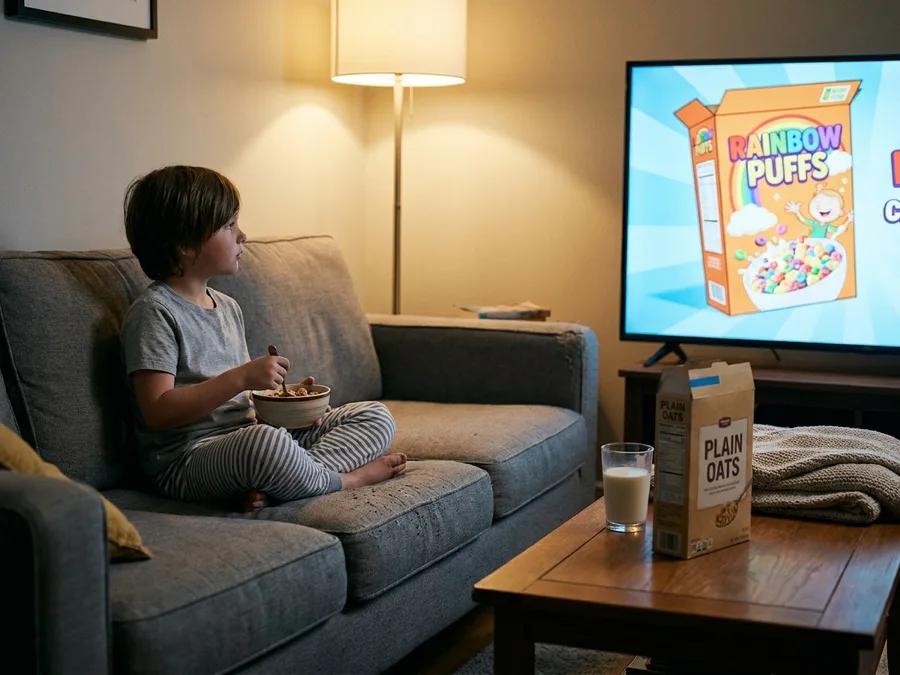
Because someone paid to put them in front of you. By 1977, 83% of the money spent on food advertising went into television, and commercials targeting children were almost entirely for sugary products, aired at kids too young to know they were being sold to.
Someone did try to stop it. In 1978, the FTC proposed banning ads to children under eight and limiting sugary food ads to kids under 12. The papers nicknamed it KidVid. The food and broadcast industries pushed back, and in 1980 Congress took away the FTC’s power to make the rule. By 1981, it was dead. The ads ran on. The craving for that one cereal wasn’t entirely yours.
You can’t unpick that history, but you can cut the exposure for your own kids: ad-free streaming, less background TV, sugary cereals and snacks out of the regular routine, and talking back to ads when they appear. You won’t build a perfect bubble, and that’s fine. The aim is fewer exposures and less shame, not a purity test.
Old-school vs. modern default
Old-school habit
- Cooking with butter, lard, or olive oil
- Movement built into errands and chores
- Kitchen closes after dinner
- Fewer food ads in childhood
- A protected 7-hour sleep window
Modern default
- Seed oils in bread, dressing, and fryers
- 5,000 steps and 7 hours on screens
- 90% snack daily, snacks doubled
- 83% of food ad money on TV
- 1 in 3 adults sleep under 7 hours
5. A protected seven-hour sleep window
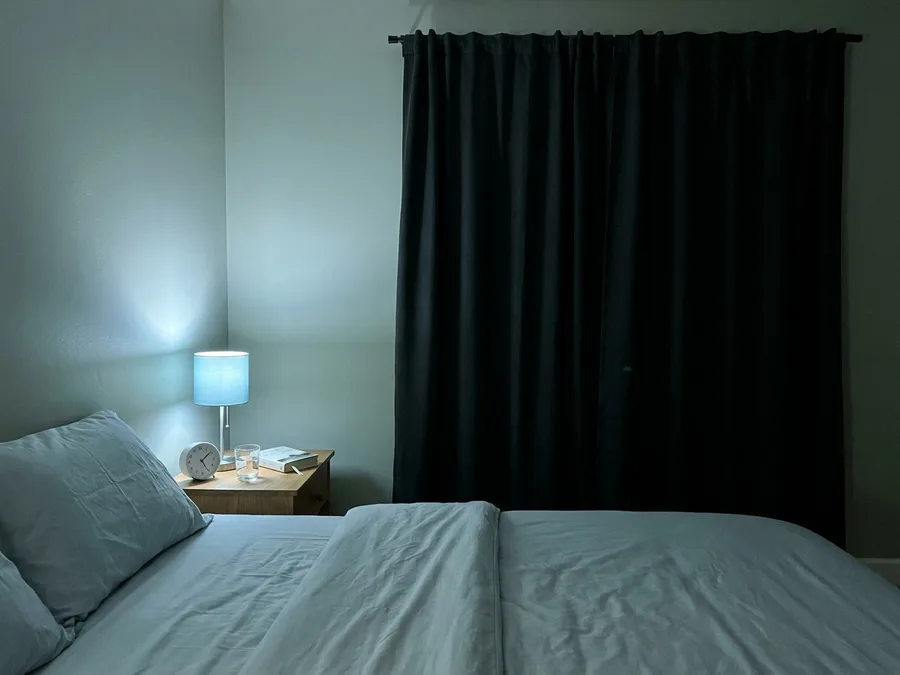
Sleep is the other door you can close. Over the same decades, the country quietly stopped sleeping, and today roughly a third of adults get by on under 7 hours a night.
Sleep does more than rest you. It sets your appetite. Cut healthy young men to 4 hours a night for two nights, and leptin, the hormone that signals fullness, drops 18%, while ghrelin, the hunger hormone, climbs 28%. Their appetite rose about a quarter, aimed straight at the sweet, salty, heavy stuff. Of everything science ties to weight gain, short sleep is one of the steadiest.
So set a fixed bedtime and wake time, even on weekends. Darken the room and keep it cool, around 65°F is a good target, and keep screens out of bed. Shift workers and anyone with insomnia should get a clinician’s help rather than lean on a guilt-driven bedtime rule.
💡 Tip: Charge your phone across the room and use a basic alarm clock. It removes the biggest bedtime temptation.
6. A medication review with your doctor

If you’ve already tried the kitchen and the bedtime and still feel stuck, the next place to look isn’t your willpower. It’s your medicine cabinet. A long list of common prescriptions can nudge weight upward, and none of them come with a warning label on the bathroom mirror.
Some antidepressants, beta blockers, certain antihistamines, antipsychotics, steroids, and older diabetes drugs can push the scale the wrong way. They do it by raising appetite, slowing metabolism, or building insulin resistance, which is why the same plate that worked five years ago quietly stops working.
The timing fits the curve, too. Prozac reached pharmacies in 1988, and antidepressant use climbed almost 400% over the following decades. These days roughly one adult in eight is on one, so this isn’t a rare corner case.
The move is simple but powerful. Bring a full list of your medications, supplements included, to your doctor, ask whether weight gain is a known side effect, and talk through alternatives or ways to manage it. But never stop a medication on your own. These drugs treat serious conditions, and the choice belongs to you and your doctor, not to a list.
7. A phone-free bedroom at night
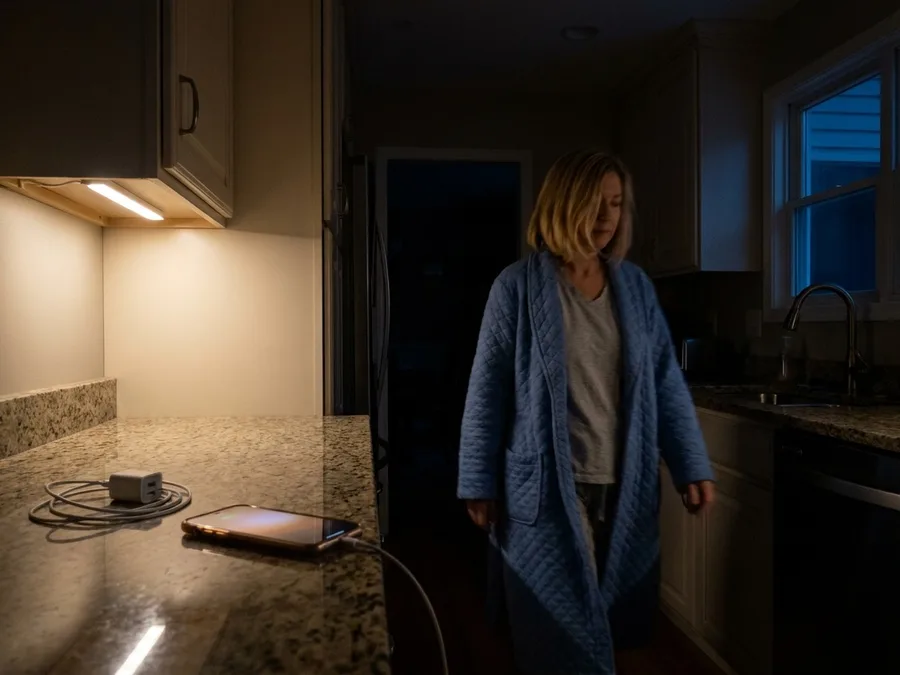
All of those habits face one final test, and it’s the rectangle in your pocket. The iPhone arrived in 2007 and pulled every earlier machine into one object. About 90% of adults carry a smartphone now and log 4 to 5 hours on it daily, mostly sitting still.
It turned ordering food into a $300 billion industry and shrank the corner store into a tap. The apps are built to keep your thumb moving, much the way food is engineered for that first hour after waking, and the phone climbs into bed with you, glowing where the lamp used to switch off.
So add friction instead of relying on discipline. Charge the phone outside the bedroom, set app limits, delete the delivery apps once the kitchen closes, and pair phone time with walking or standing. The phone didn’t invent these pressures; it just puts them within reach every hour.
🕰️ How to start the old-school way
Pick one habit
Choose the one that feels easiest to start—often the closed kitchen or the sleep window.
Set the boundary
Pick a kitchen-close time, a bedtime, or a daily walk and write it down.
Remove friction
Move snacks out of sight, charge the phone outside the bedroom, or buy a small tub of butter.
Run it for two weeks
Give the habit 14 days before judging it; consistency beats intensity.
Review and add
Once one habit feels normal, add the next one on the list.
What these habits cost at the store
Here’s the worry that comes up every time: don’t butter and whole foods cost more than the cheap stuff? Sometimes, yes. So let’s use a typical basket and see what the old-school habits actually run at the store.
Butter sits around $5 a pound, lard about $3, olive oil about $10 per 750 ml. Dried beans run about $1.50 a pound, a 12-ounce bag of frozen vegetables about $2, and a whole chicken about $2 a pound.
Compare cost per serving, not per package. Animal fats are calorie-dense, so a little covers a lot of ground; a tablespoon of butter or lard costs pennies. Dried beans and frozen vegetables usually beat snack foods and delivery per meal by a wide margin. A pot of bean soup built from dried beans and frozen vegetables can feed four for less than a single delivery order.
The real trade-off differs for everyone. Some households will spend more on butter and whole foods and less on soda, chips, and delivery, and come out ahead. Others need to start with the habit that costs nothing at all, like the closed kitchen, and build from there.
When genes or a condition are the blocker
What if you do all of this and the scale still doesn’t move? Genetics, metabolism, medications, sleep disorders, and other conditions all vary from person to person, so no seven habits guarantee weight loss. That’s not a reason to skip the basics. It is a reason to look harder for the blocker.
Certain signs should send you to a clinician rather than back to the same routine: weight changing without explanation, hunger or fatigue that feels severe, or consistent habits that simply aren’t helping after a fair stretch of time.
At the visit, ask for a medication review so the prescriptions get checked against your weight history. Ask about screening for sleep and thyroid issues as appropriate. And ask for a plan that gets discussed without blame, because shame has never once changed a lab result.
The goal is to find the blocker, not to try harder at the same thing. Sometimes the honest answer is that your body needs a diagnosis, not another diet.
Pick the door that’s hardest to close right now
None of these habits require a personality transplant. They’re small boundaries—a closed kitchen, a protected bedtime, a walk instead of a drive—that were once the default and can be again.
If nighttime grazing is your main problem, start with the closed kitchen. If mornings are chaotic, start with the sleep window. If your days are sedentary, start with built-in movement.
And if you’ve tried consistently for a month or two without change, don’t tighten the screws further. Take your medication list and your habit log to a clinician and ask what else might be going on. The old-school habits are a foundation, not a verdict.
Start with one door tonight
Pick the habit that feels most doable—close the kitchen, set a bedtime, or take a walk—and run it for two weeks. Then come back and add the next one.
