
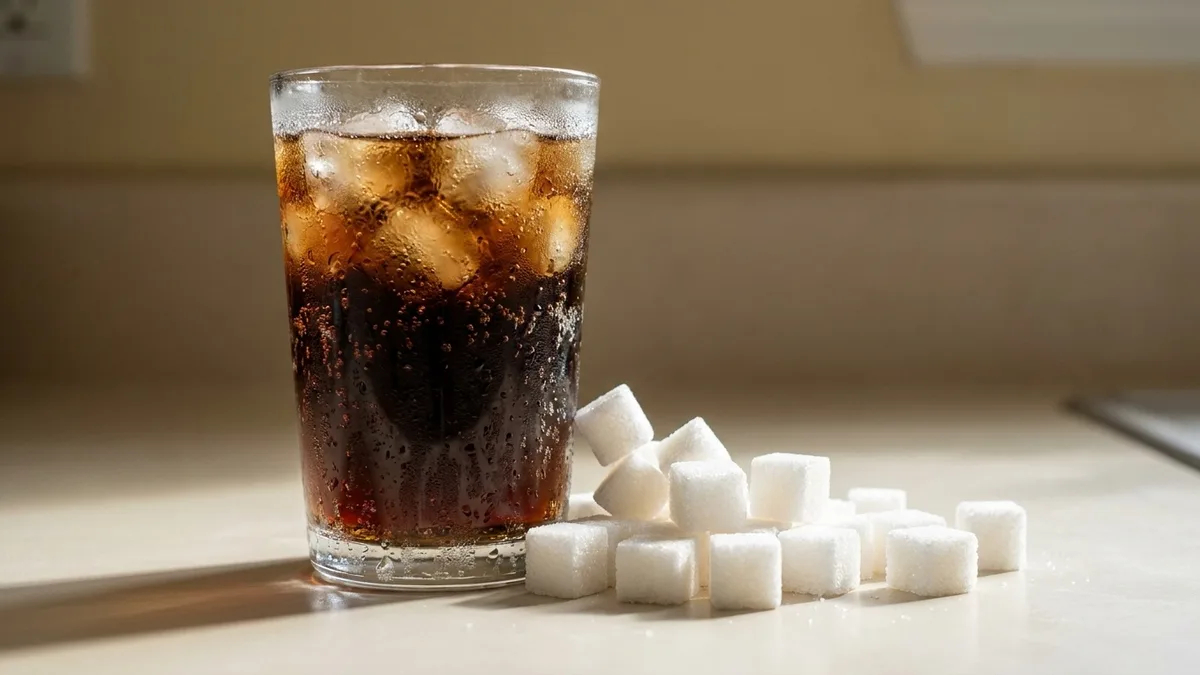
Why am I not losing weight when I am barely eating anything? That is the question, word for word, and this article settles it by looking at what you drink rather than what you eat. You have been good all week.
You skipped dessert, ordered the salad, kept the portions modest, and the daily soda, the sweet coffee, the glass of juice or wine never went into the food count at all, because none of it felt like eating. Those drinks count anyway. A 20 ounce bottle of regular cola carries 240 calories and about 16 teaspoons of sugar, and most people finish it in five to ten minutes. A 16-ounce fruit smoothie runs about 280.
So the gap is rarely the meals. It is a second ledger, one that adds to the day without replacing a single bite of food. By the end of this you should be able to name the drink in your own day that is acting as an add-on, and know the first swap to make for it, starting with tomorrow morning’s drink.
Quick Tips Before You Start
Count the minutes, not the ounces
A drink is an add-on when it disappears in under 10 minutes and you are still hungry after. That is the threshold that matters.
Rank your drinks by weekly total
Multiply the calories by how often you actually have it. Seven 20 oz colas is about 1,700 calories a week; three glasses of wine is about 375.
Strip the coffee back in steps
Whole milk with four pumps of syrup is about 250 calories. Two percent and one pump is about 150. Black is about 5. Pick the step you will actually keep.
Skip the swap if it costs you the habit
If sparkling water makes you skip the drink and reach for something else, keep the cola and cut the size instead. A 12 oz can is 145 calories, not 240.
Why Drinks Slip Past Your Appetite
Hunger is supposed to be a gatekeeper. Solid food gets chewed, sits in your stomach, and slowly releases signals that tell your brain you’ve eaten. Drinks skip that entire process, which is why a 280-calorie smoothie can vanish without a trace of fullness.
This section looks at the mechanics: why the calories in a cup barely register, how speed makes it worse, and why a drink so often adds to your day instead of replacing anything. Understanding these three things makes every other choice on this list easier.
1. Liquid calories barely touch your hunger signals

Hunger starts in the mouth and the stomach, and a drink skips both.
Solid food gets chewed, which begins the signaling, then sits in the stomach and empties slowly, so the body has time to register that something arrived. A drink bypasses the chewing entirely and leaves the stomach fast, so the calories land with no corresponding message to the brain. That is why a 16 oz fruit smoothie at about 280 calories can go down at 3pm and leave you genuinely ready for dinner at 6.
In the day’s total, that smoothie counts exactly like a 280-calorie sandwich. The only difference is the sandwich gets written into the mental ledger as a meal and the smoothie does not.
What actually registers is protein, fiber and volume. Put one whole orange beside a glass of orange juice: about 60 calories for the orange, with its fiber and the several minutes it takes to peel and chew, against 165 calories for 12 oz of juice with the fiber stripped out. Same fruit, two very different signals.
The hardest case is not the drink taken with food.
A smoothie swallowed at your desk at 3pm adds to a day that still has lunch behind it and dinner ahead. It replaces nothing and interrupts nothing, which is exactly why it slips past the count. A drink taken alongside a meal at least shares the table with food that will make you stop eating; the between-meals drink has no such brake. If there is one calorie source in your week that never feels like eating, this is it.
💡 Tip: If you drink a smoothie, add a scoop of protein powder or a tablespoon of chia seeds. Protein and fiber slow stomach emptying and make the drink feel more like food.
| Drink (typical US size) | Calories | Sugar | How filling |
|---|---|---|---|
| Regular cola, 12 oz can | 145 | about 10 tsp | Not filling |
| Regular cola, 20 oz bottle | 240 | about 16 tsp | Not filling |
| Orange juice, 12 oz | 165 | about 9 tsp | Barely filling |
| Sports drink, 20 oz | 130 | about 8 tsp | Not filling |
| Fruit smoothie, 16 oz | 280 | varies | Some, if protein added |
| Coffee, 16 oz black | 5 | 0 | Not filling |
| Coffee, 16 oz with whole milk and 4 pumps syrup | 250 | about 10 tsp | Slightly filling |
| Coffee, 16 oz blended with whipped cream | 400 | aof bout 15 tsp | Slightly filling |
| Regular beer, 12 oz | 150 | 0 | Not filling |
| Wine, 5 oz | 125 | 0 | Not filling |
| Spirits, 1.5 oz | 100 | 0 | Not filling |
| Mixed drink with juice or syrup | 250-400 | varies | Not filling |
| Diet soda or sparkling water | 0 | 0 | Not filling |
2. A drink disappears faster than a meal does

A drink can be gone before fullness has had a chance to show up.
That tightens the same miss. A 20 oz bottle of regular cola carries 240 calories and about 16 teaspoons of sugar, and most people finish it in 5 to 10 minutes. A sandwich of the same calorie load takes roughly 20 minutes to eat. The cola’s entire load is in your body before the stop signal gets a word in.
Now picture the same 20 oz sipped slowly over 20 minutes. Same calories, same sugar, different arrival. Fullness has time to build while the drink is still going, and you may not finish it, or you may eat less at the meal it accompanies.
The practical move is not a new drink. It is the drink taken with a meal, or stretched across 20 minutes, instead of drained in the car between errands.
And that in-the-car version is where the counting problem bites hardest. Speed makes a 240-calorie drink feel like nothing at all, so the daily soda gets tallied only after it is gone, if it gets tallied at all. Sip it, sit with it, and the same bottle announces itself.
⚠️ COMMON MISTAKE
Don't drink your calories standing up
The most common mistake people over 50 make is drinking a calorie-heavy beverage while distracted — in the car, at the counter, in front of the TV. When you drink mindlessly, you never register the calories and you rarely feel full. Sit down, pour it into a glass, and pay attention for five minutes. It changes how the drink lands.
3. A drink is an add-on, not a swap
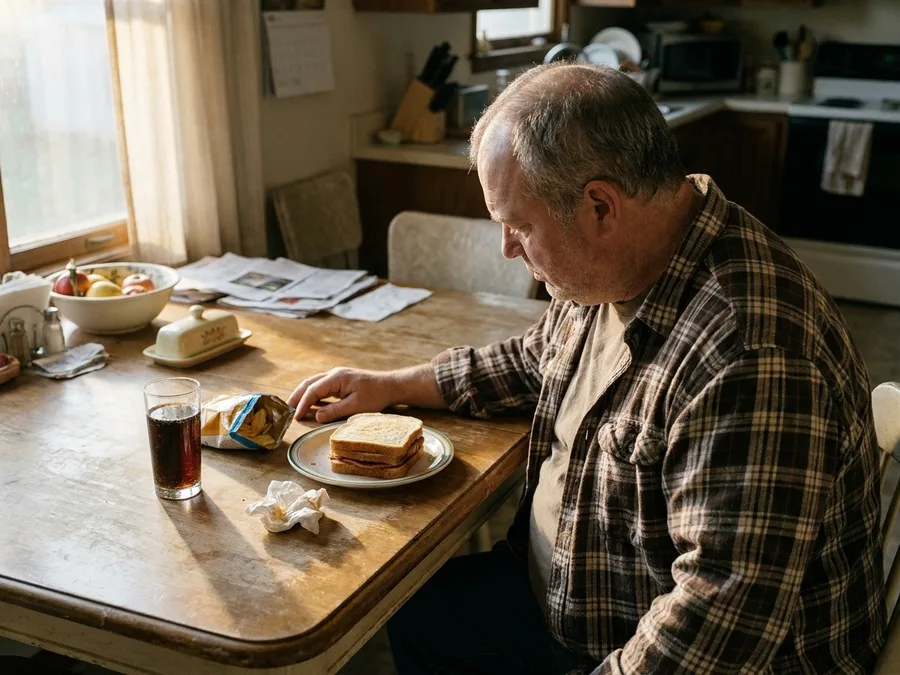
For most people, it did not. Liquid calories tend to arrive on top of the day’s meals rather than instead of them. The daily total climbs; no single meal shrinks.
Take the 3pm 16 oz smoothie at about 280 calories. It rarely means a lighter dinner. Lunch happened as planned, dinner happens as planned, and the 280 sits on top of both. Over a week that is nearly 2,000 calories that never touched a plate.
There is a genuine counterweight here, and it matters. A shake built as an actual breakfast replacement, drunk in place of the eggs and toast, is not the person this catches. There the calories stand where a meal would have stood, and the daily total barely moves. The problem is not the drink itself. It is the empty slot it fills.
So the question to ask yourself is not whether the drink counted as a meal. It is what it replaced. A drink that replaced nothing is the one worth catching, because it is the one quietly widening the week without a single hungry hour to show for it.
4. Juice gives you the sugar without the brakes
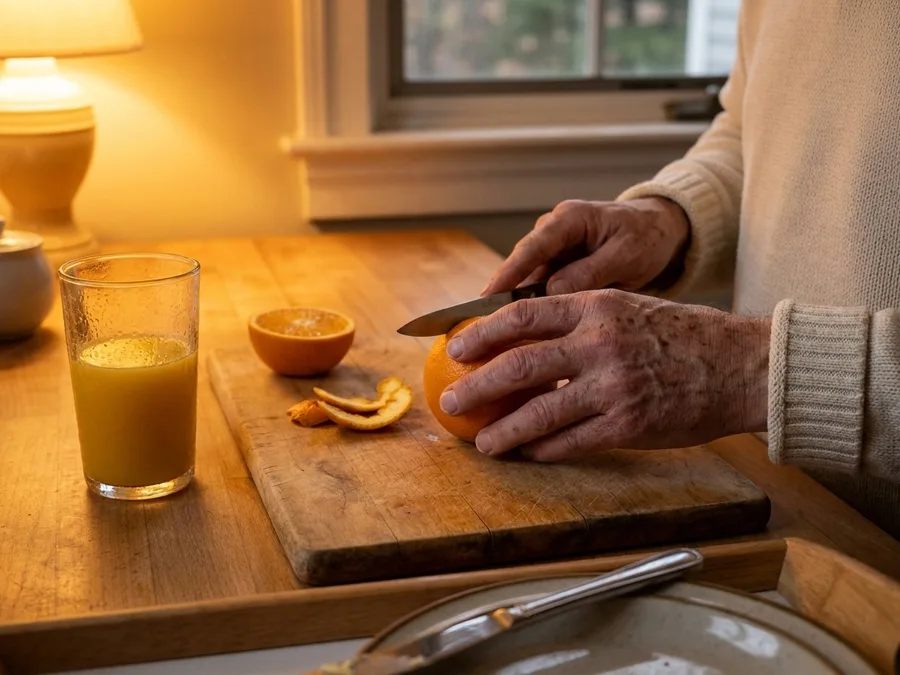
A drink that replaces nothing still has to be counted, and juice is where that gets slippery. It looks like the fruit it came from, so it passes as a serving rather than an add-on. The label says orange. The glass says breakfast. Neither says sugar arriving at speed.
Twelve ounces of orange juice is 165 calories and about 9 teaspoons of sugar, with no fiber to slow any of it. That sugar reaches your bloodstream in roughly half a minute. One whole orange is about 60 calories, and the fiber comes with it, and the peeling and the chewing and the segments take minutes.
Same fruit. Different load. And a stopping point the juice never gives you.
This is the brake fiber and chewing supply: an orange ends when the orange ends, while a glass keeps going until it is empty. A small glass alongside a meal is fine, and the person pouring 4 ounces instead of 12 is not the one this cut is aimed at. The problem is the 12-ounce pour standing in for a fruit serving and finished in under a minute.
Breakfast is where it hides best, because juice in the morning feels like virtue. The whole orange exposes the gap plainly: 165 against about 60, plus the fiber you never got. Same ledger, different entry, and the orange comes out ahead on every line.
💡 Tip: If you love juice, cut it 50/50 with sparkling water. You still get the flavor, but you halve the calories and sugar without feeling deprived.
The Juice vs. Whole Fruit — At a Glance
🍊 Whole orange
~60 calories
🥤 12 oz orange juice
165 calories
🍬 Sugar in juice
~9 tsp
🌾 Fiber in juice
0 grams
⏱️ Time to consume
30 seconds vs. 5 minutes
Why it matters
Fiber and chewing signal fullness; juice skips both, so the calories land without registering as food.
Where the Calories Actually Hide
Not all drinks are created equal, but they all count the same in your daily total. The trick is knowing which ones carry the biggest load — and which ones hide behind healthy-sounding labels.
This section breaks down the usual suspects: the size of the cup, the coffee additions, the sports drinks and smoothies, and the alcohol that comes with its own calories plus the food that follows.
5. The cup size is most of the calorie count

The drink you pour is only half the count. The other half is the vessel, and it does more of the calorie work than the brand on the label ever does.
A 20-ounce bottle of regular cola is 240 calories. The same cola in a 12-ounce can is 145. That is about 95 calories riding on 8 extra ounces of liquid, and nothing else in your day has to change to remove them.
Now look at the glass in your own kitchen. The tall one is almost always the 20-ounce pour, filled without a thought, because a bigger glass looks like a normal drink.
Pour 12 ounces instead and you cut roughly 95 calories with no food touched and no hunger following. The larger bottle is often cheaper per ounce at the store, and the calories do not come with a discount to match. You pay less and drink more of them.
So the simplest change is not a different drink at all. It is a different default vessel: make 12 ounces the glass you reach for, and the daily soda quietly comes down without a decision at every pour. The number of drinks stays the same. The size of each one stops being an accident.
6. Coffee is fine until the milk and syrup

A plain 16-ounce coffee is about 5 calories. Coffee is not the calorie problem, and no one needs to give it up to fix a daily drink habit.
The milk and the syrup are the problem. A 16-ounce coffee with whole milk and four pumps of syrup runs about 250 calories, which puts it past the 145 in a 12-ounce can of cola. Blended with whipped cream, the same cup reaches about 400. The additions are the meal-sized part, and they arrive in something you drink standing at the counter.
the fix does not require giving up the latte. Switch to 2% milk and one pump of syrup, and the same 16-ounce cup lands near 150 calories. That drops roughly 100 calories from your morning without losing the coffee, the warmth, or the stop you look forward to.
Volume got you to the cup. The recipe inside it is the lever you can pull without giving anything up, and it holds up on the mornings that are already rushed. Your order changes, not your routine.
💡 Tip: Order your latte with nonfat or 2% milk and ask for half the syrup. After a week, the full-sugar version will taste too sweet.
What Happens When You Swap One Daily Drink
7. The healthy-sounding drinks carry the same load
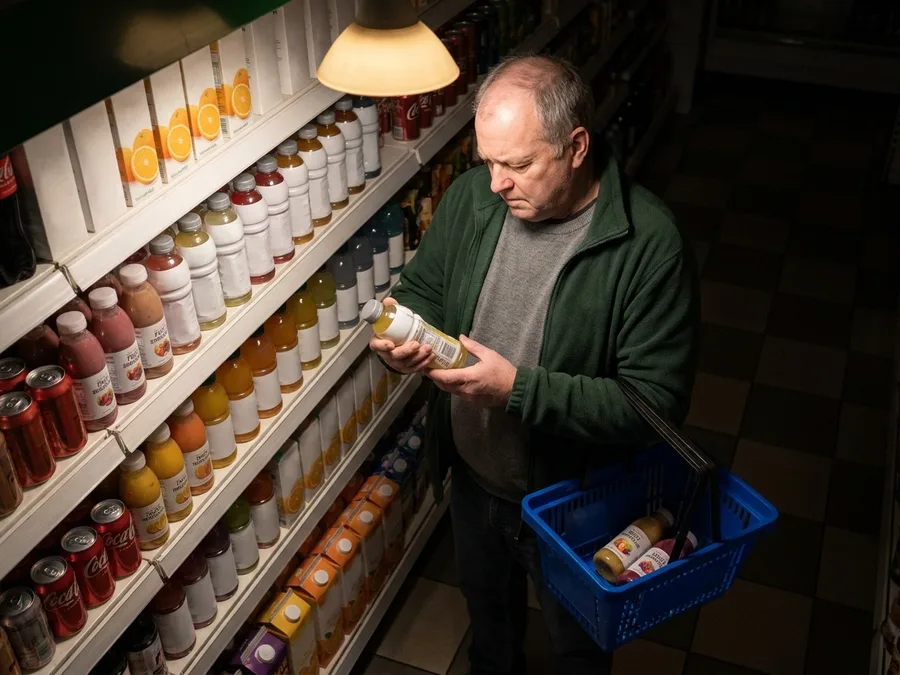
A label can say more than the liquid inside it. Twenty ounces of a sports drink carries 130 calories. A 16-ounce fruit smoothie runs about 280, a 12-ounce glass of orange juice 165, and a 20-ounce regular cola 240. Read those four numbers in a row and the pattern is plain: the drinks with the healthy wording sit beside soda, not outside the count.
That is where the additions go quiet. Milk and syrup reveal their calories in the pour; fruit and ‘electrolytes’ wear the costume of a good choice.
The juice shelf is the clearest example. A carton that says ‘no added sugar’ in large letters is still juice, and juice is still calories. Turn the bottle around and read the number per container rather than the front of the label; a single-serve bottle often holds two servings, and the full bottle is what actually gets drunk.
The desk afternoon is where these drinks land as an add-on. A sports drink or smoothie makes sense after 90 minutes of hard training or when a meal is genuinely missed and the next one is hours away. At 3pm, after a normal lunch and with dinner still ahead, it replaces nothing. It adds roughly the same load as a can of cola, and it counts exactly the same way in the day’s ledger.
8. Alcohol brings its own calories and the food after

Health wording is one place the calories hide; the wine glass is another. Does alcohol count in all this? It counts twice, and the second bill arrives later in the evening.
Start with the pour itself. A 12-ounce regular beer is 150 calories, a 5-ounce glass of wine 125, and 1.5 ounces of spirits 100. Those are standard measurements, and the glass poured at home is rarely standard.
The mixed drink is the expensive version. Juice or syrup turns the same spirits into 250 to 400 calories, so a second one effectively adds a meal to a day that already had three.
Then the food that follows the third drink. The nachos ordered at ten o’clock land in the same daily total as lunch, and nobody counts them against the glass that caused them.
A glass of wine with dinner a few nights a week is not the habit to hunt down. The nightly glass, and especially the nightly mixed drink with whatever gets ordered after it, is the add-on worth counting.
💡 Tip: Alternate each alcoholic drink with a glass of water or sparkling water. You'll drink less without feeling like you're missing out.
Drink Swaps: Worth It vs. Skip It
Worth the Swap
- Regular soda → sparkling water (saves 240 cal per 20 oz)
- Whole milk latte with 4 pumps → 2% milk with 1 pump (saves ~100 cal)
- 12 oz juice → whole orange (saves ~100 cal and adds fiber)
- Mixed drink → wine spritzer (saves 125-275 cal)
Skip the Swap
- Diet soda alongside regular soda (adds calories, doesn't replace)
- Swapping a meal replacement shake for a smoothie (same calories, less protein)
- Cutting coffee entirely (black coffee is 5 cal — not the problem)
- Giving up your Saturday latte (the all-or-nothing ban collapses)
What to Swap and What to Keep
You don’t have to give up every drink you enjoy. The goal is to find the one daily drink that adds calories without replacing anything — and swap that one.
This section covers the zero-calorie alternatives, why swapping a drink is easier than shrinking a meal, and how to keep the one drink you actually savor.
9. The zero-calorie version still leaves the habit

Once the sources are visible, the real question is what to swap, and the zero-calorie version is usually the first thing tried. Diet soda and sparkling water genuinely carry 0 calories; the saving is real, not a trick of the label.
But the habit outlives the switch. The same 3pm cue still fires, the sweet taste still needs filling, and the drink is still an add-on rather than part of a meal.
Whether diet soda helps depends entirely on what it replaces. Swap it for the regular soda and a 20-ounce bottle’s 240 calories leave the day. Drink it alongside the regular soda and nothing has changed except that the daily total grew by a second drink.
So the calories come off, and the cue stays. That makes the swap worth making but incomplete, because the next change still has to answer the 3pm trigger itself rather than just its calorie count.
Questions about sweeteners and what they mean for your health over time belong to your doctor or a registered dietitian. This is the calorie count, nothing more.
10. Swapping the drink is easier than shrinking the meal

When the question turns to what changes first, the drink wins on cost alone. A daily 20 oz regular cola traded for sparkling water removes 240 calories from the day, and about 1,700 from the week, with nothing taken off a plate.
Now put that next to the other option. Shrinking a portion at dinner saves a similar number on paper, but it costs you something at the table every single night: a smaller plate, a hunger that shows up around nine, and a fresh decision to make at every meal thereafter. Swapping the drink asks for one decision, made once, in the same aisle every week.
The pattern it fits is the one already in your day. Soda at lunch, latte in the morning, juice with breakfast, wine at night. Whatever the drink is, the swap lands exactly where the habit already sits, so you are not building a new routine, only changing what gets poured into the old one.
There is an honest catch. The first week tastes flat, and it will.
Sparkling water is not cola and never will be; the mouth notices the difference for a handful of days before the new drink simply becomes the drink. That flat week is the whole cost of the change, and it is far cheaper than the hunger that follows every cut portion.
The real test is not a good week. It is the Thursday when work runs long and dinner falls apart. A shrunken portion collapses the moment the schedule does, because hunger makes the decision for you. A drink swap holds, because there is no hunger attached to it and nothing to renegotiate at the table.
So the order matters. Cut the drink first, not the food. One swap, kept, does more for a stalled week than a dozen portion cuts abandoned by the weekend.
The drinks you never count as food are the gap between a good week and a scale that won't move.
— What dietitians keep repeating about liquid calories
11. Keep the one you actually savor

The swap that holds through a bad week is not a ban. It is one habit drink removed and one drink you genuinely love kept on purpose, and that split is what makes the plan last longer than a resolution.
Sort your drinks into two columns. The desk can at three in the afternoon is usually the habit one: it comes with the slump, not with any real pleasure, and it goes without much protest. The Saturday morning coffee from the good place, the one you wait for all week, belongs in the other column.
One gets cut. One stays, deliberately, without guilt.
An all-or-nothing ban looks cleaner on paper and collapses first in practice. Give up every drink at once and the first hard day hands you a reason to quit the entire list, so a single slip becomes a surrender. A plan that keeps one good drink has somewhere to go when the week goes wrong, and it keeps going.
The calculation also has a floor in it. If you are pregnant, managing diabetes, taking medication that interacts with what you drink, or have any history of disordered eating, the swap is a conversation to have with your doctor or a registered dietitian before you make it, not a call to make alone.
For everyone else, the goal is smaller than a list of give-ups. Name the one drink you will not miss, take that one out, and keep the other on the calendar exactly where it sits. That is the whole plan, and it is the version that survives.
Frequently Asked Questions
Is it really true that liquid calories don’t fill you up?
Research consistently shows that liquids empty from the stomach faster than solids and trigger weaker satiety signals. A 280-calorie smoothie barely registers compared to a 280-calorie sandwich, even though they count the same in your daily total.
How many calories should I cut to lose weight?
Most people see steady weight loss with a deficit of 250-500 calories a day. Swapping one 20 oz regular soda for sparkling water cuts 240 calories — almost the entire deficit without changing a meal.
Are diet drinks a good substitute?
Diet soda and sparkling water have zero calories, so they can remove 240 calories from a daily regular soda. But they don’t address the habit — the 3 p.m. cue and the sweet taste stay in place. Use them as a bridge, not a destination.
What about alcohol? Does it count?
Yes. A 12 oz beer is 150 calories, a 5 oz wine is 125, and a mixed drink can run 250-400. And alcohol often leads to extra eating later. If you drink nightly, that’s the add-on to count first.
Which drink should I swap first?
The one you drink every day without thinking. For most people that’s the lunchtime soda, the morning latte with syrup, the breakfast juice, or the nightly glass of wine. Pick the one that adds calories without replacing anything.
The one drink to swap first
The first swap depends on which drink is yours. Lunchtime soda habit: move the 20 ounce bottle of regular cola, 240 calories, to sparkling water at zero, and nothing about lunch gets smaller. Morning latte: take the 16 ounce whole-milk four-pump order down to 2% milk with one pump, roughly 250 calories to about 150, same cup, same stop. Breakfast juice: trade the 12 ounce orange juice, 165 calories and about 9 teaspoons of sugar with no fiber, for one whole orange at about 60. Nightly wine: the glass you pour out of habit becomes sparkling water; the glass you actually savor stays, as a 5 ounce pour at 125 calories.
The meals were not the problem. The uncounted drinks were. Swap one daily 20 ounce cola for sparkling water and 240 calories a day come off the week, about 1,700, with no meal lost.
Tomorrow morning, pour your first drink into a 12 ounce glass, finish that glass, and leave the 20 ounce bottle or carton closed. The12-ounceeek may taste flat. That passes, and the scale is the thing that starts moving.
Find your one daily drink
Scan yesterday: which drink added calories without replacing anything? Swap that one for sparkling water tomorrow. Start there.
