

Fast eating is linked with higher obesity risk, more weight gain, and greater metabolic risk. Research suggests one reason is that rapid meals can outpace the body’s fullness signals.
Slower eating and extra chewing may reduce how much food is eaten, while giving hormones such as PYY and GLP 1 more time to respond.
The solution is not to count every chew. Take smaller bites, slow the first few minutes of the meal, and aim to spend at least 20 minutes eating when practical.
What Scientists Actually Found About Fast Eaters
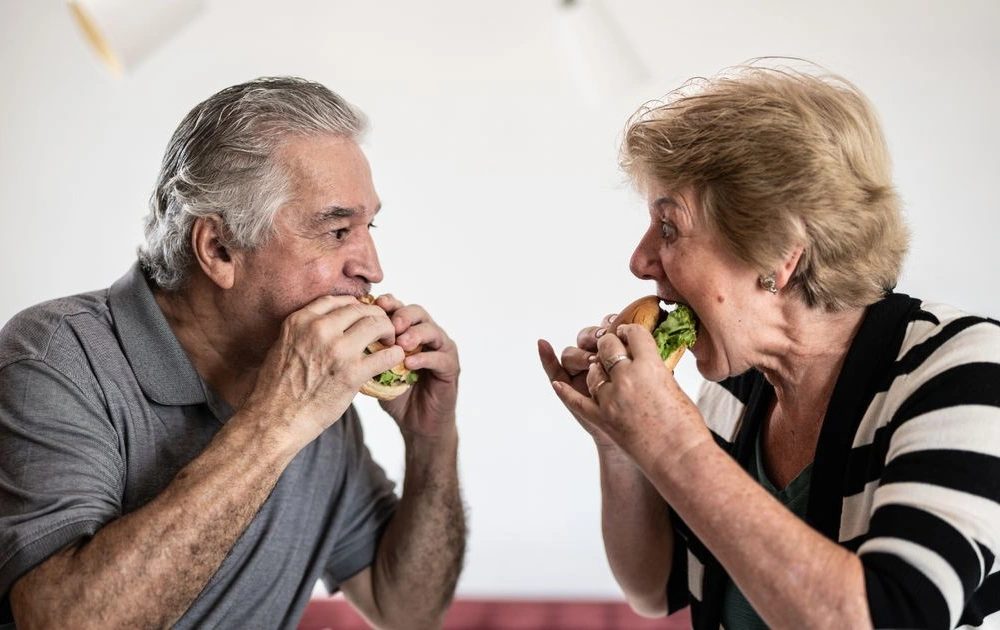
The weight connection is not based on one small experiment. A systematic review of 23 studies found that people who ate quickly had about 2.15 times the odds of obesity compared with slower eaters, although the studies varied and most could show association rather than prove cause.
An eight year study of 529 Japanese men found a similar pattern over time. Fast eaters gained an average of 1.9 kilograms, while the medium and slow eating group gained 0.7 kilograms. The relationship remained after researchers adjusted for age, starting body mass index, drinking, smoking, and exercise.
| Research finding | Study details | What researchers found |
|---|---|---|
| Fast eating and obesity | Systematic review of 23 studies | Fast eating was associated with about 2.15 times the odds of obesity |
| Weight change over time | 529 Japanese men followed across 8 years | Fast eaters gained 1.9 kg on average, compared with 0.7 kg in the medium and slow group |
| Eating speed and metabolic syndrome | Meta analysis of 29 studies involving 465,155 people | Faster eating was associated with 54% higher odds of metabolic syndrome |
| Eating speed in type 2 diabetes | 59,717 Japanese adults with type 2 diabetes | Slow eaters had lower odds of obesity than fast eaters, with an odds ratio of 0.58 |
The diabetes study is especially useful because it examined health check data from 2008 through 2013. Compared with fast eaters, normal speed eaters had an obesity odds ratio of 0.71 and slow eaters had an odds ratio of 0.58.
That does not mean eating slowly is an obesity treatment by itself. It does mean eating pace deserves a place beside portion size, food quality, sleep, activity, medications, and other factors when someone is trying to understand why weight keeps creeping up.
Your Stomach Cannot Send a Fullness Signal Instantly

The common explanation is that the brain needs about 20 minutes to realize you are full. That is useful shorthand, but the real process is more complicated.
As the stomach fills, stretch receptors send information through the vagus nerve toward the brain. Food entering the small intestine also triggers hormonal signals involved in appetite regulation, including cholecystokinin.
This means fullness is not determined by the stomach alone. The brain, gut, nerves, hormones, food texture, meal size, and environmental cues all contribute to deciding when to stop eating.
Harvard Health notes that this signaling takes time, which creates an obvious problem for someone who finishes a full meal in five or ten minutes. By the time stronger satiation signals arrive, a large amount of food may already have been eaten.
Chewing More Can Change How Much You Eat
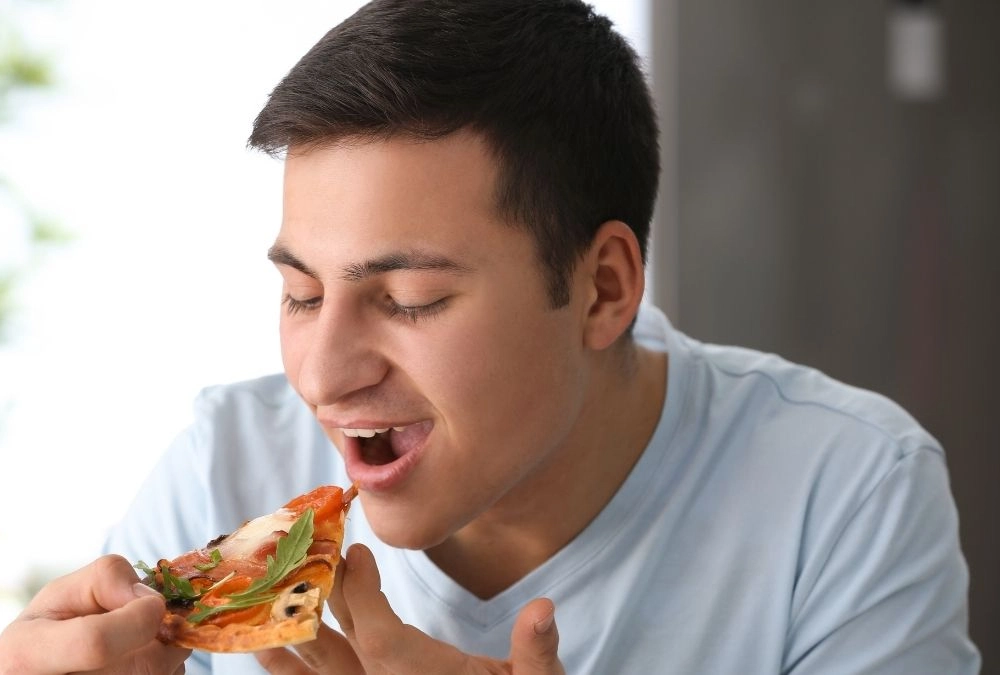
Researchers have tested what happens when people are forced to slow their oral processing rather than simply being told to eat mindfully.
In one randomized crossover trial, 45 adults ate pizza while chewing each portion at their usual number of chews, 150% of their usual amount, or 200% of their usual amount. Food intake fell by 9.5% in the 150% condition and by 14.8% when chewing was doubled.
The extra chewing also made meals last longer and reduced eating rate. Yet reported appetite afterward was not significantly different, which is an important detail because participants ate less without reporting a clear increase in hunger.
| Eating condition | What changed | What did not clearly change |
|---|---|---|
| Usual chewing amount | Normal meal size and normal eating rate | Baseline condition |
| 150% of usual chewing | Food intake fell by 9.5% and eating slowed | Subjective appetite was not significantly different |
| 200% of usual chewing | Food intake fell by 14.8% and the meal lasted longer | Subjective appetite was not significantly different |
| Slower eating across 22 experimental studies | Energy intake was lower overall | Hunger at meal end and up to 3.5 hours later did not consistently differ |
That last finding comes from a systematic review of 22 experiments. Researchers found that slower eating reduced energy intake overall, but did not find a consistent reduction in reported hunger after the meal.
So the most reliable benefit may not be feeling dramatically fuller. It may simply be giving yourself enough time to stop after less food.
The Gut Hormone Experiment Makes the Mechanism Easier to See
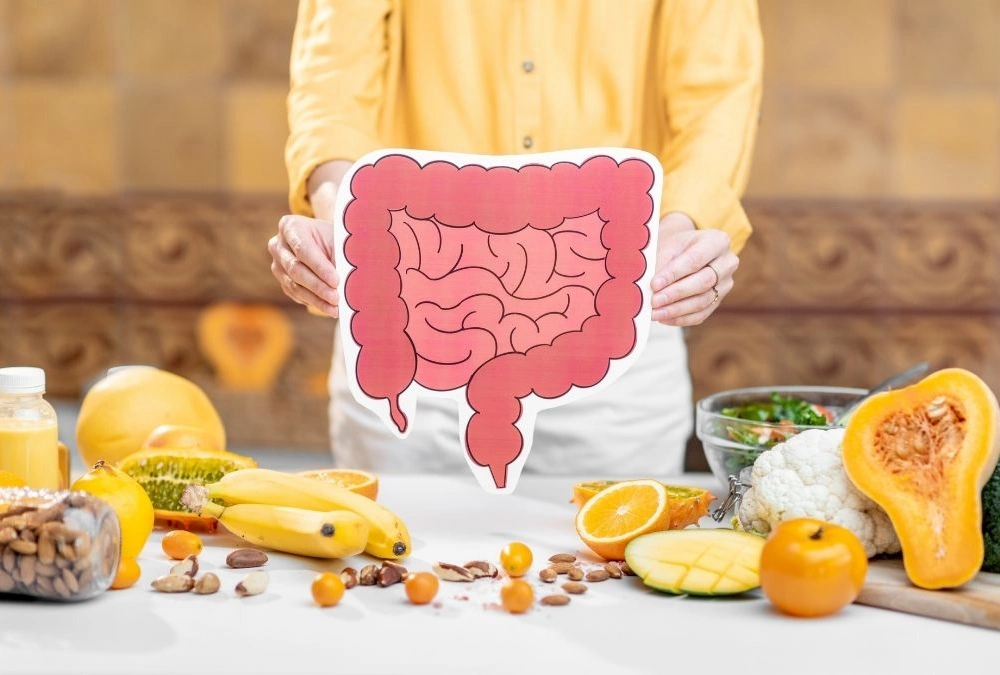
A small laboratory study gives a clearer look at what may happen during a slower meal. Seventeen healthy men consumed the same 675 calorie ice cream meal either in 5 minutes or in 30 minutes.
The 30 minute meal produced larger responses of peptide YY, known as PYY, and glucagon like peptide 1, known as GLP 1. Both are involved in appetite and satiation signaling.
The study was small, and the participants were healthy men, so it should not be treated as proof that everyone will respond in the same way. Research involving people with obesity or type 2 diabetes has found that hormone responses can differ between groups.
The useful point is narrower. Eating speed can alter the biological experience of a meal, not just the number of minutes shown on a clock.
Fast Eating Is Also Tied to Metabolic Risk
Weight is only part of the story. A meta analysis of 29 studies involving 465,155 participants found that faster eating was associated with 54% higher odds of metabolic syndrome.
The same analysis linked faster eating with central obesity, elevated blood pressure, higher triglycerides, lower HDL cholesterol, and elevated fasting glucose. Because much of this evidence is observational, these findings cannot prove that eating speed directly caused those abnormalities.
Still, the pattern is worth noticing. Someone who regularly rushes meals may be stacking one more risk related behavior on top of other habits that affect blood sugar, blood pressure, and body weight.
A large Japanese cohort adds a cardiovascular clue. Among 132,795 participants, fast eating was associated with a 23% higher risk of major adverse cardiovascular events overall and a 38% higher risk among participants whose body mass index was below 25.
Again, association is not causation. But it strengthens the case that eating speed may be a health behavior worth paying attention to.
Does Fast Eating Really Mean You Die Younger?
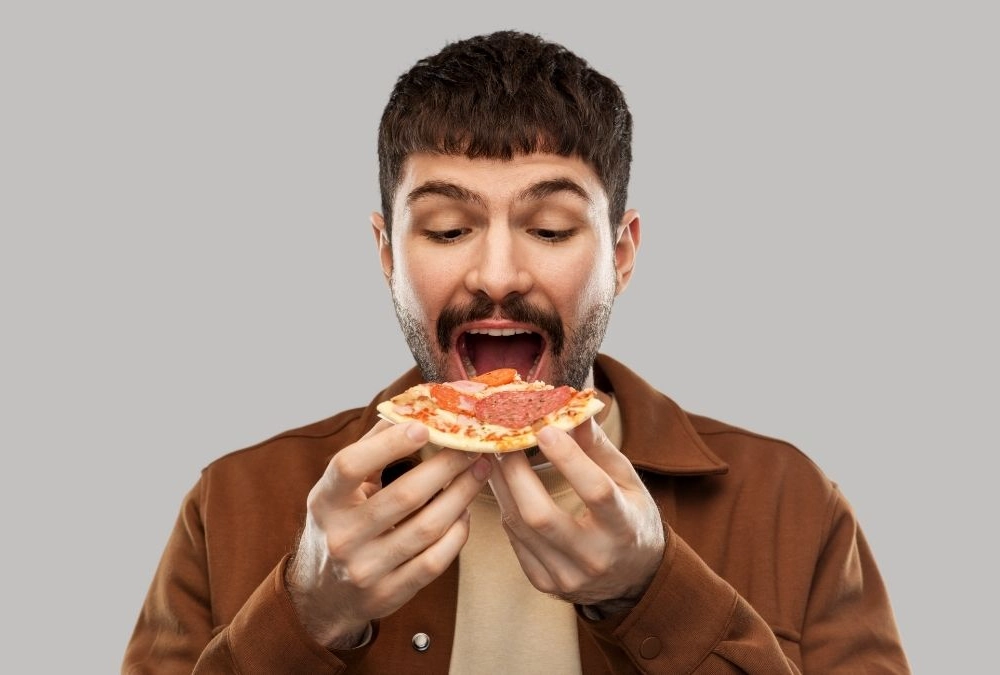
This is where the headline needs a scientific correction.
Studies do link poor chewing ability with higher mortality in older adults. But chewing ability means being physically able to chew different foods, which is not the same thing as eating quickly.
In a Taiwanese study of 1,410 adults age 65 and older, 368 participants died during follow up. Unsatisfactory chewing ability was associated with a 44% higher age and sex adjusted mortality risk.
Another study followed 697 adults who were 80 years old. People who could chew the fewest types of food had more than twice the mortality risk of those who could chew all 15 foods tested.
These studies may reflect oral health, nutrition, frailty, appetite, disease burden, or several factors working together. They do not show that swallowing dinner too quickly directly shortens lifespan.
That distinction matters because it keeps a useful health habit from turning into a false promise. Fast eating is linked with weight and metabolic problems, while poor chewing ability has been linked with mortality. Science has not established that they are the same pathway.
Chewing Speed Does Not Matter More Than Your Diet

The strongest part of the headline is also the part that needs the most caution. There is no good evidence that chewing speed outranks overall diet quality.
A meal of vegetables, beans, intact grains, fruit, nuts, fish, eggs, or other nutrient rich foods does not become nutritionally equivalent to a highly processed meal simply because both are eaten slowly. Calories, fiber, protein, fat quality, sodium, added sugar, micronutrients, and the overall dietary pattern still matter.
What eating pace can do is change the way that meal is consumed. It may affect bite size, oral exposure, total eating time, and the amount eaten before satiation becomes strong enough to stop the meal.
That makes eating speed a useful partner to good nutrition, not a replacement for it.
A Better Target Than Counting Every Chew

Cleveland Clinic suggests giving a regular meal more than 20 minutes, ideally around 30 minutes, and chewing each mouthful roughly 15 to 30 times depending on the food. Those numbers can be useful training tools, but they are not universal medical rules.
A raw carrot naturally needs more chewing than yogurt. Counting every jaw movement forever can also make meals feel mechanical or stressful.
A better goal is to notice whether food is thoroughly broken down before swallowing, whether the next bite is already loaded while you are still chewing, and whether you routinely finish before everyone else.
Try This Today
- Take a slightly smaller first bite than usual.
- Finish chewing and swallowing before preparing the next bite.
- Put your fork or spoon down briefly every few bites.
- If meals usually take under 10 minutes, work toward at least 20 minutes rather than forcing an immediate 30 minute target.
- Eat one meal without a phone, television, or work screen so you can actually notice pace and fullness.
Cleveland Clinic recommends allowing enough time for meals and using pauses between bites, while Harvard Health also points to reducing distraction as part of more mindful eating.
There is no perfect meal length or chew count for everyone. People with diabetes, digestive conditions, dental problems, swallowing difficulties, or conditions that alter appetite should ask a healthcare professional whether any eating strategy needs to be adapted.
What Helps Slow a Meal Without Making Dinner a Chore

The goal is not to turn lunch into a complicated exercise. Small changes that reduce the amount of food entering the mouth each minute are easier to repeat.
| Helps slow the meal | Why it may help | What tends to work against it |
|---|---|---|
| Smaller bites | Less food is processed and swallowed at once | Taking very large mouthfuls |
| Finish one bite first | Creates a natural pause before more food enters the mouth | Loading the next bite while still chewing |
| Put utensils down briefly | Interrupts automatic rapid eating | Keeping the fork or spoon moving continuously |
| Give meals at least 20 minutes when practical | Gives gut and brain signals more time to develop | Regularly finishing a full meal in 5 to 10 minutes |
| Reduce screen distraction | Makes pace, taste, and fullness easier to notice | Eating while scrolling, typing, or watching television |
Strategies such as smaller bites and slower eating have been studied as ways to reduce food or energy intake, while clinical advice also supports creating pauses and giving meals more time.
Try changing one part of the pattern first. Someone who normally eats in eight minutes may find a 15 minute meal far more realistic than suddenly forcing every dinner to last half an hour.
The habit works best when it is simple enough to repeat. The research does not require perfection, and a slower pace should not become another source of anxiety around food.
When Chewing or Swallowing Trouble Is More Than an Eating Habit
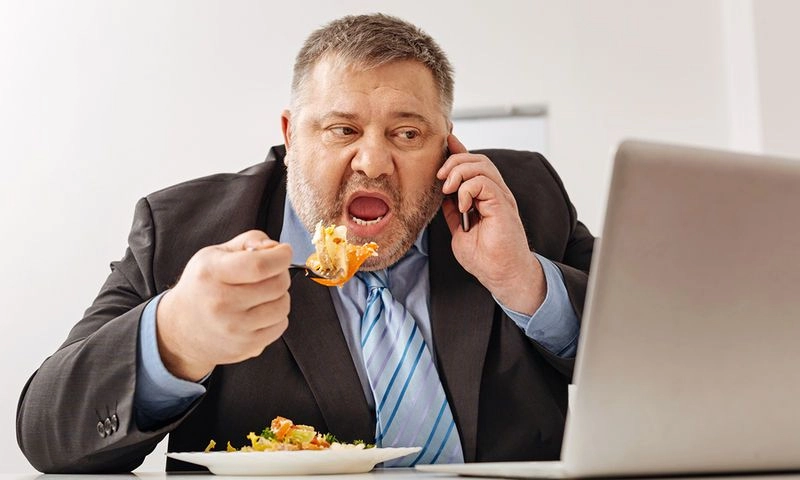
Eating fast is usually a behavior. Painful or difficult chewing and swallowing are different issues and deserve attention.
Contact a doctor, dentist, or swallowing professional if you repeatedly notice:
- Food feeling stuck in your throat or chest.
- Coughing or choking while eating or drinking.
- Pain when chewing or swallowing.
- Unexplained weight loss because eating has become difficult.
These problems should not be managed by simply forcing yourself to chew longer. Older adult studies also show that impaired chewing ability can be associated with poorer health and mortality, which is another reason persistent difficulty deserves proper evaluation.
The Takeaway Is Smaller Than the Headline, but More Useful

Fast eaters do appear to face a real disadvantage. Research links faster eating with higher energy intake, more weight gain, obesity, metabolic syndrome, and cardiovascular risk.
Slowing down may reduce how much food is eaten at a meal, and extra chewing can alter eating rate and some appetite related signals. But science has not shown that chewing speed matters more than diet or that fast eating itself directly causes an earlier death.
The practical move is to combine both sides of the evidence. Choose nutritious food, then give yourself enough time to actually eat it.
This article is for informational purposes only and is not a substitute for professional medical advice, diagnosis, or treatment. Talk with your doctor or another qualified healthcare professional before making significant changes to your diet or eating habits, especially if you have an existing health condition, take medication, or have difficulty chewing or swallowing.
