

A patient once came to see me about a dark patch on her neck. She thought it was dirt that would not wash off. Six weeks later, her doctor confirmed what I already suspected. She had prediabetes.
Stories like this happen more than people think. Blood sugar problems often show up on your skin months, sometimes years, before a blood test catches them. That matters a lot right now.
New data from the CDC shows that 40.1 million Americans have diabetes, and more than 1 in 4 of them do not know it yet. On top of that, 115.2 million adults have prediabetes. 8 out of 10 of them have no idea.
Skin often tells the story first. In this guide, you will learn the exact skin changes I check for, where to look on your own body, and what to do if you spot one.
Why Your Skin Knows Before Your Blood Test Does?

High blood sugar does damage all over your body. It hurts small blood vessels. It harms nerve endings. It changes how fast your skin cells grow and repair themselves. Skin is full of tiny blood vessels and nerves. So it often reacts first, before your blood work shows a clear problem.
This is not rare. Research shows that about 30 percent of people with diabetes have some kind of skin change, and for many of them, it was the very first clue. Other studies found that skin issues affect close to 8 out of 10 people who already have type 2 diabetes.
Some of these skin signs show up before diagnosis. Others show up later, after diabetes has been around for years, often when blood sugar has not been well managed.
What Is That Dark Patch on Your Neck? (Acanthosis Nigricans)?
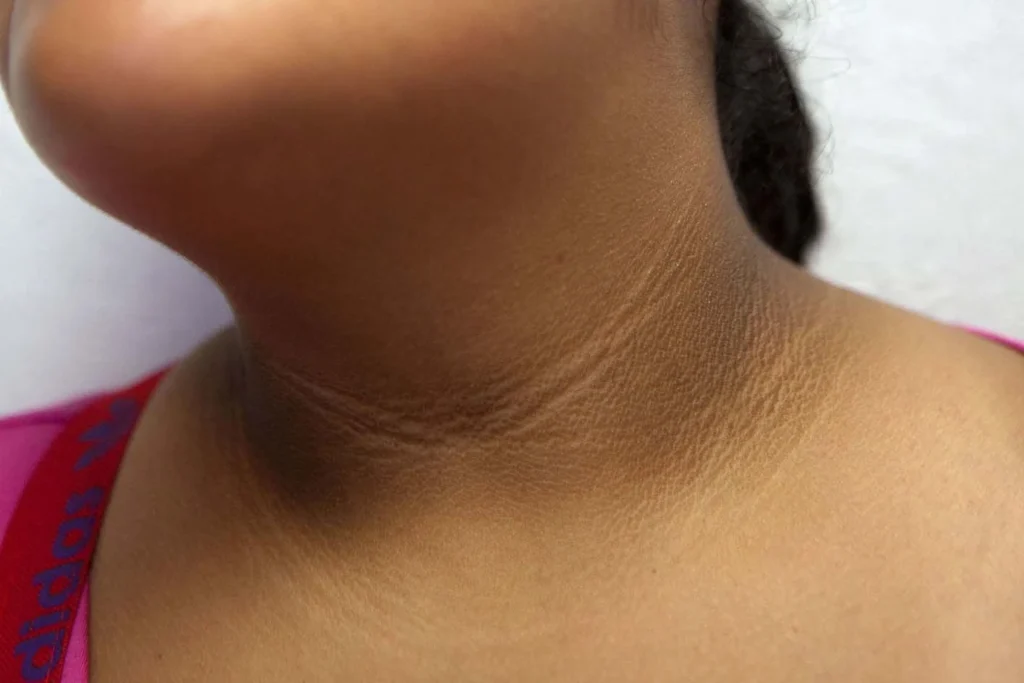
This is the first thing I check. Look at the back of your neck, your armpits, your groin, or the folds under your arms. Do you see skin that looks darker, feels thicker, and has a velvety texture? Doctors call this acanthosis nigricans.
Here is the truth about it. This is not caused by dirt or poor hygiene. It happens when you have too much insulin in your blood. That extra insulin tells your skin cells to grow faster than normal, which builds up that dark, thick patch.
This sign shows up in specific spots most often. One study found it on the neck in 85 percent of cases, the armpit in about 75 percent, the elbows in nearly 40 percent, the knuckles in 24 percent, and the knees in 21 percent.
It also shows up more in some groups than others. One study found that African Americans are 25 times more likely to have this patch than people of European descent. Other research found it in about 3 percent of white patients, 19 percent of Hispanic patients, and 28 percent of Native American patients. If you fall into a higher-risk group, checking your skin matters even more.
This sign carries real weight too. People with this patch were about twice as likely to have type 2 diabetes compared to people without it, according to one large study.
What to do: If you see this patch, do not wait for other symptoms. Ask your doctor for an A1C test or a fasting blood sugar test.
The Shin Spots People Mistake for Bruises
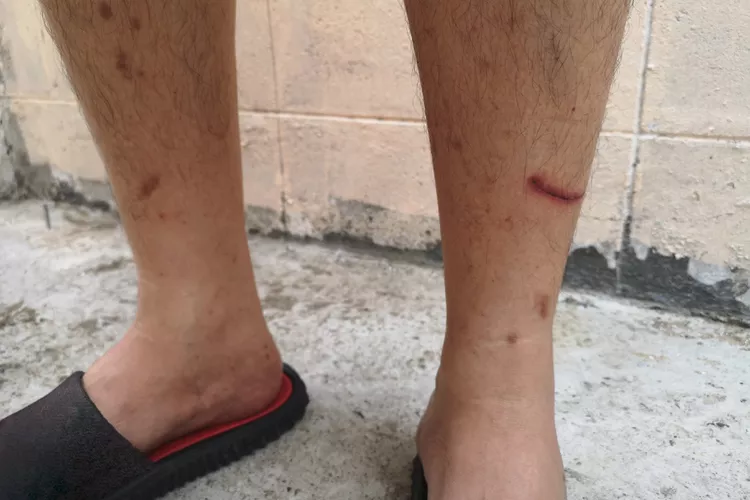
Look at your shins next. Do you see round or oval spots that are light brown or reddish-brown? A lot of people think these are old bruises or age spots. They are not. Doctors call this diabetic dermopathy, though some people just call it shin spots.
These spots come from damage to small blood vessels and nerves. That damage builds up slowly when blood sugar stays high for a long time. Early on, the spots often feel a bit scaly. Over time, they flatten out and can leave small dents in your skin.
On their own, these spots are harmless. You do not need to treat them. But they are a clear signal that your blood sugar has been running high for a while. It is worth mentioning them at your next checkup, even if nothing else feels wrong.
Are Skin Tags More Than Just Skin Tags?

Everyone gets a skin tag now and then. That alone is nothing to worry about. The real warning sign is having many skin tags in the same area, especially around your neck, armpits, groin, or under your breasts.
A recent study on pregnant women found something worth noting. Skin tags showed up far more often in women with diabetes than in women without it, and the link held up even after researchers adjusted for other factors.
What to do: Take a look at where your skin tags sit. A few scattered around your body are normal. A cluster in the folds of your skin, especially if you also have that dark neck patch, is worth mentioning to your doctor.
A Rare but Serious Sign: Necrobiosis Lipoidica
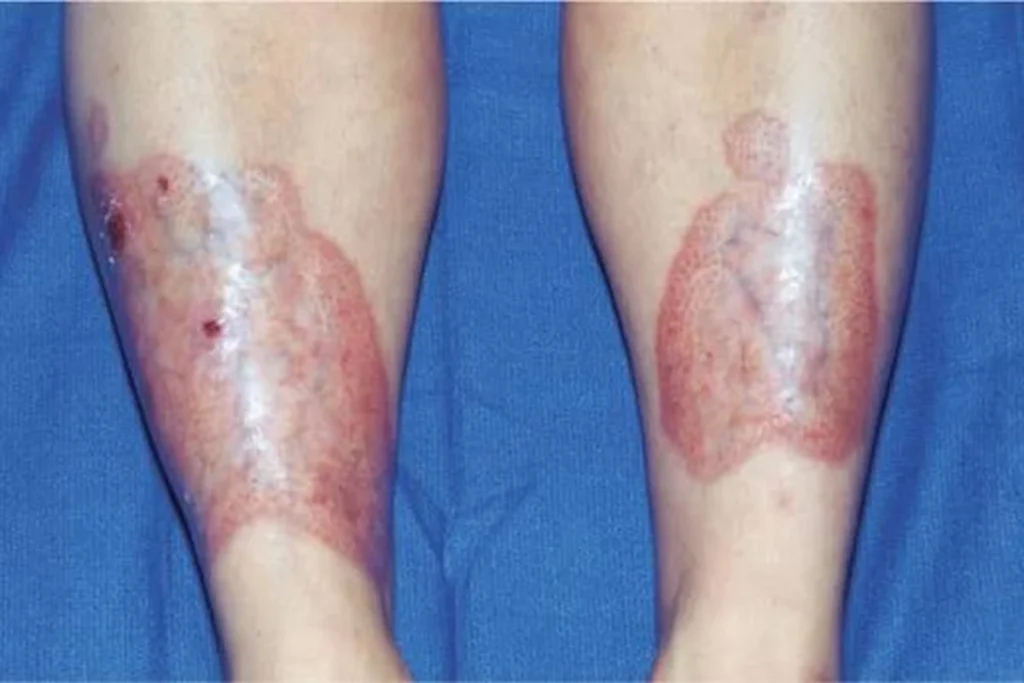
This one does not show up often, so do not panic if you have never heard of it. But when it does appear, it usually leads straight to a diabetes diagnosis.
It starts as small, raised bumps that look like pimples, usually on the lower legs. Over time, they turn into hard, shiny patches that can be yellow, red, or brown. The skin around the patch often looks smooth and shiny, almost like porcelain.
One case from the American Academy of Dermatology describes a woman who went to see a dermatologist about red, swollen patches on her legs. That visit is what led to her diabetes diagnosis.
This condition is not dangerous by itself. But do not brush it off just because it looks harmless. Get it checked.
It’s Not the Only Skin Clue, Just the First One She Checks
Acanthosis nigricans gets the most attention, but skin conditions show up in a large share of people with diabetes. Research suggests close to a third of people with diabetes develop some related skin finding, and in patients who have had diabetes for a while, that number climbs even higher.
| Skin Sign | Where It Shows Up | What It Might Mean | How Common |
|---|---|---|---|
| Acanthosis nigricans | Neck, armpits, groin, knuckles | Insulin resistance, often before diagnosis | Strongly linked, especially with obesity |
| Diabetic dermopathy (“shin spots”) | Front of the shins | Small blood vessel changes from high blood sugar over time | Very common in established diabetes |
| Skin tags | Neck, armpits, eyelids | Frequently clusters with acanthosis nigricans | Common alongside insulin resistance |
| Necrobiosis lipoidica | Lower legs | Yellow brown patches tied to blood vessel changes, more common in women | Less common but distinctive |
| Slow healing cuts or frequent infections | Anywhere, often feet | High blood sugar impairs circulation and immune response | Increases with poorly controlled blood sugar |
Diabetic dermopathy is the second thing Renee looks for, especially in patients who already carry a diagnosis. These are small, round or oval light brown marks on the shins that look a bit like old scars or faded bruises that never fully went away.
They are painless and harmless on their own, but their presence can point to microvascular changes elsewhere in the body, including in the eyes and nerves, which is why she flags them for follow up rather than dismissing them as cosmetic.
Slow Healing, Repeat Infections, and Itch That Will Not Quit
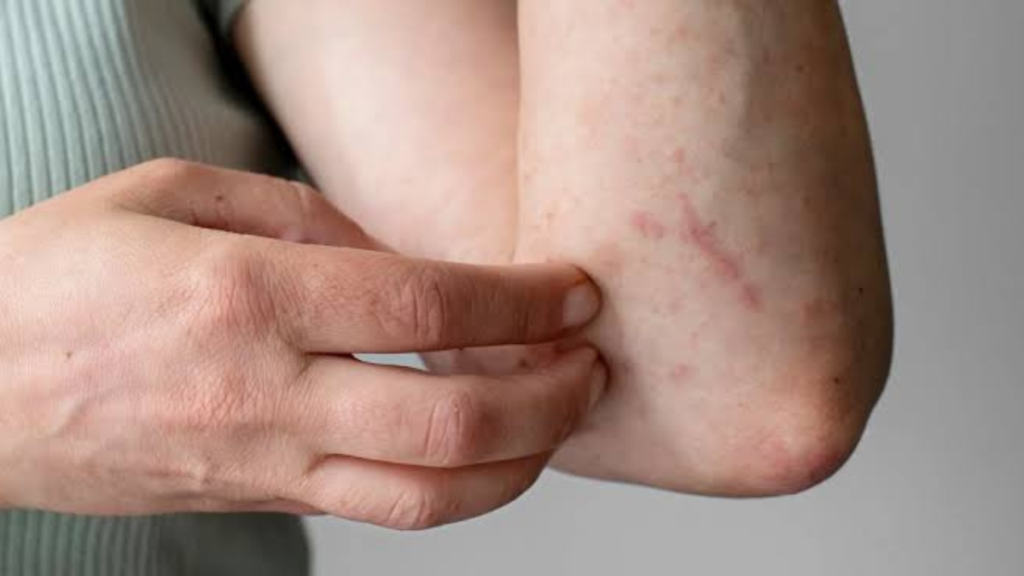
This next group is not about one single sign. It is about a pattern. Watch for fungal infections in your skin folds, frequent boils or styes, dry skin that will not go away, or cuts that take much longer to heal than they should.
One study of 750 people with diabetes found skin infections in nearly half of them, dry skin in about a quarter, and other skin inflammation in about 1 in 5. That is a lot of overlap between diabetes and everyday skin trouble.
Itch deserves special attention. One study found that about 3 in 10 people with diabetes dealt with ongoing itch. The people who had it were also far more likely to have other diabetes complications, including eye damage, kidney damage, and nerve damage. That tells you the itch is not just annoying. It can be a signal that something bigger is going on.
Dry skin in the winter is normal for most people. What is not normal is skin fold infections that keep coming back, or a cut that still has not healed after weeks. That pattern is worth a real conversation with your doctor.
Tight, Waxy Skin on Your Hands
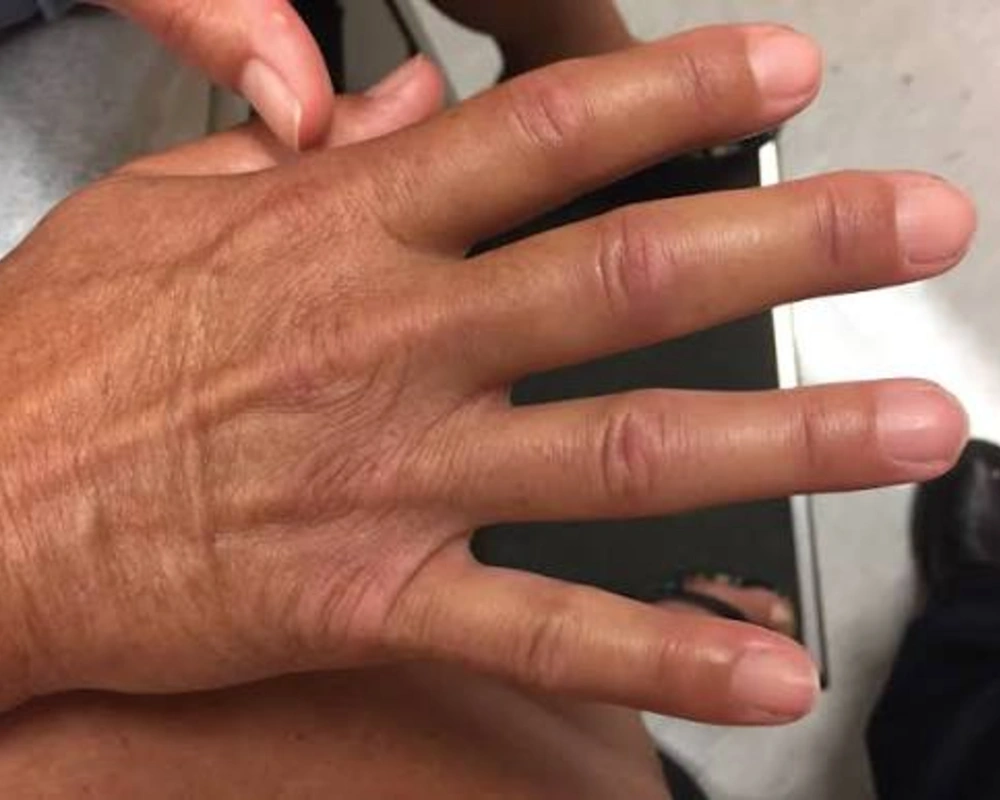
This last sign is a bit different from the others. It usually shows up after someone already has diabetes, often when blood sugar has not been well managed for years. Doctors call it digital sclerosis.
You will notice skin on the back of your hands that feels thick, tight, and waxy. Some people describe their fingers as feeling like they have small pebbles under the skin. Over time, this can make your fingers stiffer and harder to move.
This is not a sign to watch for if you are trying to catch diabetes early. But if you already have a diagnosis and notice this change, tell your doctor. It is a sign worth tracking.
Try This Today
The Habit That Actually Helps
- Once a month, do the full neck, armpit, and knuckle check described above, using your phone camera to compare month to month.
- Ask whoever cuts your hair to mention it if they notice any darkening or texture change on the back of your neck, since it is a blind spot for most people.
- If you already have a diabetes diagnosis, do a quick visual check of your shins and feet weekly, since new spots or slow healing marks are worth mentioning at your next visit.
- Keep a simple running note on your phone of when a skin change first appeared, since dermatologists and doctors both find timelines useful.
- Do not scrub, bleach, or use skin lightening products on a darkened patch before getting it checked, since treating the underlying insulin issue is what actually fades it, usually within 18 to 24 months of better blood sugar control.
What’s Normal Versus What’s Worth a Blood Test?
| Feature | Ordinary Skin Change | Possible Diabetes Related Change |
|---|---|---|
| Texture | Smooth or slightly rough, uniform | Velvety, thickened, noticeably different from surrounding skin |
| Color | Even tone with sun or age related spots | Distinct darker band, especially in folds |
| Location pattern | Random, tied to sun exposure | Clustered in neck, armpits, groin, knuckles |
| Accompanying signs | None | New skin tags nearby, slow healing cuts, unusual thirst or fatigue |
| Response to moisturizer | Often improves | Does not improve with lotion or exfoliation |
What to Do If You Notice Any of These Signs?
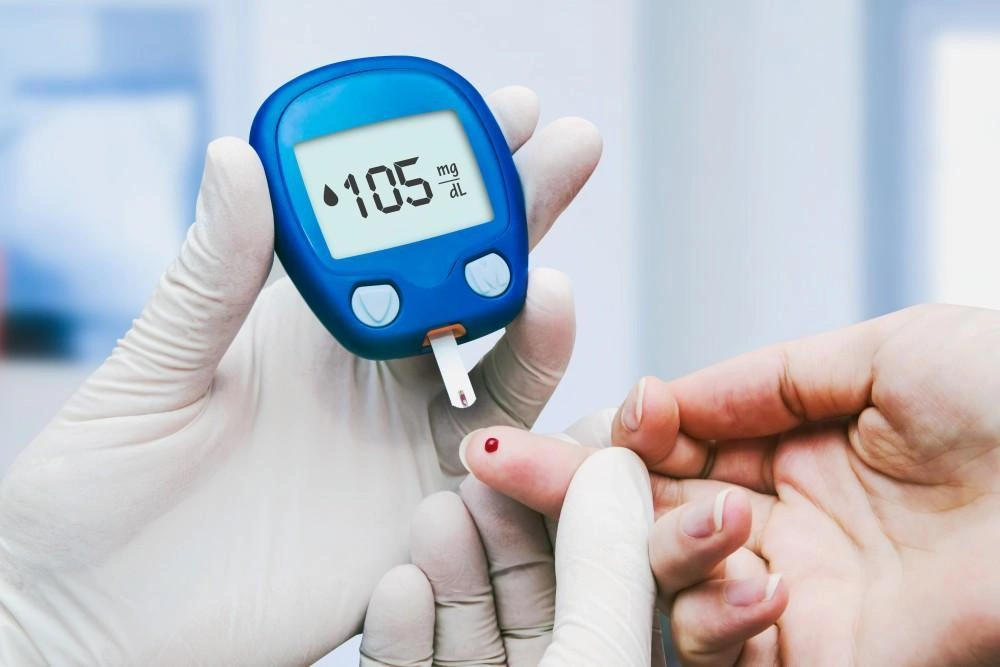
Finding one of these signs on your own skin can feel scary. Here is exactly what to do next.
- See a doctor in person. Do not try to diagnose yourself from a photo online. A dermatologist or your regular doctor can look closely and tell you what they see.
- Ask for the right test. A general checkup is not enough. Ask specifically for a fasting blood sugar test or an A1C test. These are the tests that actually catch diabetes and prediabetes.
- Take prediabetes seriously if that is your result. This is good news in disguise. The CDC found that losing weight through better eating and more movement can cut your risk of full diabetes in half.
- Get screened even without symptoms. If you are over 35 and carry extra weight, most guidelines recommend getting screened anyway. Do not wait for a skin sign to show up first.
- Take photos over time. Snap a dated photo of any patch or spot on your phone. This lets you and your doctor track whether it is changing.
Conclusion:
Your skin often speaks up before your blood test does. A dark, velvety patch on your neck. Round spots on your shins. A cluster of skin tags. Infections that will not quit. These are not random. They are your body sending a signal.
Check your neck and shins today. If anything you read here sounds familiar, book an appointment and ask for a real blood sugar test. Catching early signs of diabetes on your skin can mean starting treatment years before real damage sets in. That is a head start worth taking.
