

Angela’s hair used to break off faster than it grew in. She would trim two inches, wait months, and somehow end up right back where she started.
That is the quiet, frustrating loop a lot of people get stuck in with hair growth. You do everything right and your length just will not stick.
Here is the part nobody tells you upfront: the fix might not be a growth serum at all. Angela found that out with something sitting in her kitchen pantry the whole time.
Before making any changes based on this article, talk to your doctor, especially if you are currently taking medication or have a diagnosed condition.
Rice water has been used in hair care for generations, and Angela started using it after getting tired of spending money on products that promised more than they delivered. But before going further, it helps to clear up what rice water actually does, because the internet oversells this one constantly.
Does Rice Water Really Make Hair Grow Faster?
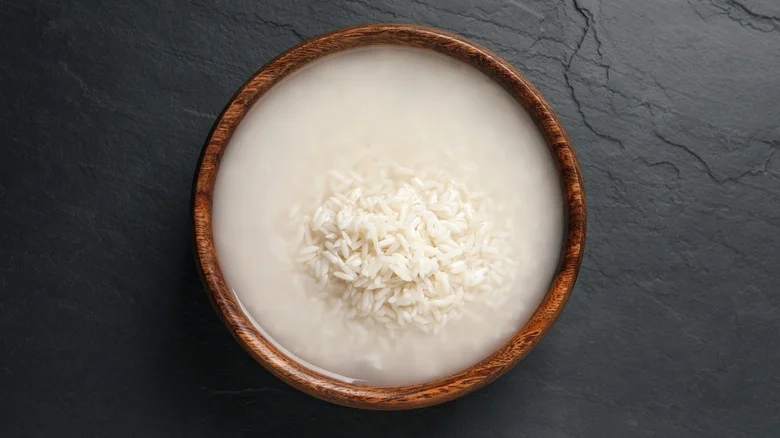
Short answer: not exactly, and it matters that you know that going in.
There is no strong clinical evidence that rice water speeds up how fast hair follicles produce new strands. Hair growth happens under the scalp, at the follicle level, and it is driven by genetics, hormones, blood flow, and nutrition delivered internally.
Rice water is a topical rinse. It sits on the hair shaft, not inside the follicle.
So when someone says rice water “grew” their hair, what usually happened is something else entirely, and it is still a big deal. It just is not what most people think.
The Real Benefit May Be Less Breakage
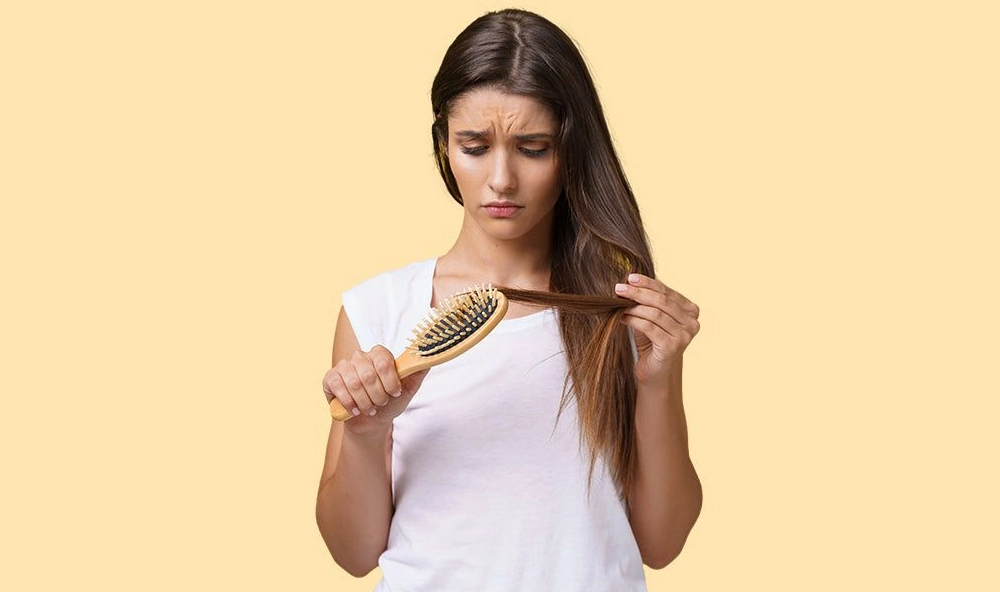
This is the distinction that changes everything about how you should use rice water.
Hair growth means new hair being produced by the follicle. Length retention means keeping the hair you already grew instead of losing it to breakage, split ends, and snapping.
Most people are not actually struggling with slow growth. They are struggling with retention. Hair grows, then breaks off before it ever gets the chance to reach your shoulders or your back.
Rice water appears to help with the second problem. It may reduce friction along the hair shaft and improve elasticity, which means strands can bend and stretch without snapping as easily.
Less breakage over months adds up to visibly longer, fuller looking hair, even though the follicles underneath were never sped up at all.
What the Rice Water Research Actually Found

A 2010 Japanese study looked at traditional rice rinse water and found that it reduced surface friction on hair strands and improved elasticity. That is a real, specific finding, and it is the strongest science backed claim you can honestly make about rice water.
What that study did not find is any change in the biological growth rate of hair. It was measuring the hair shaft, not the follicle.
Rice water also contains starch and rice derived compounds, including inositol. These can affect how the hair shaft feels and behaves. But containing nutrients is not the same as those nutrients feeding the follicle or stimulating new growth.
Here is the difference laid out plainly.
| Claim | What The Evidence Actually Shows |
|---|---|
| “Rice water makes hair grow faster” | Not supported. No proof it changes follicle growth rate. |
| “Rice water may reduce breakage” | Supported by research on friction and elasticity. |
| “Rice water feeds the follicle” | Not supported. Nutrients on the shaft do not reach the follicle this way. |
| “Rice water can help hair feel smoother” | Supported. Reduced friction is a documented effect. |
A more accurate way to say it: rice rinse water may improve hair elasticity and reduce surface friction, but that is evidence about the hair shaft, not proof it makes follicles produce hair faster.
How Angela Makes Rice Water
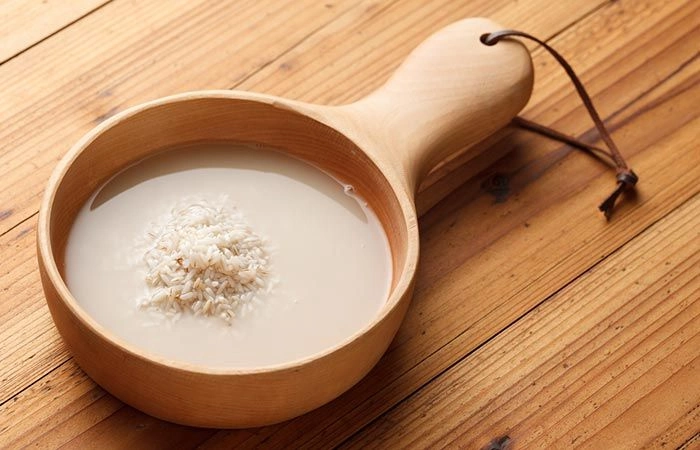
Angela follows a method popularized by natural hair educator Debbie Williams, and it has become her weekly routine.
Here is exactly how she does it.
- Use long grain white rice.
- Mix about one cup of rice with one cup of water.
- Let it ferment for at least twelve hours.
- Strain the liquid into a clean container.
- Shampoo and condition hair as usual first.
- Apply the rice water throughout damp hair.
- Leave it on for about thirty to forty five minutes.
- Rinse thoroughly with plain water.
Williams does not recommend leaving full strength rice water in overnight. That extended contact time is more likely to cause the dryness and stiffness some people report, without adding any extra benefit.
Everyone’s body responds differently, so check with your doctor before trying this if you have an existing condition or take medication, particularly a scalp condition.
Here is that process condensed into something you can glance at before your next wash day.
| Step | What Happens | How Long |
|---|---|---|
| Ferment rice and water | Mixture develops starch content and mild acidity | At least 12 hours |
| Strain liquid | Removes solid rice, keeps usable rinse | A few minutes |
| Apply after washing | Coats clean, damp hair strands | Immediate |
| Leave on | Allows the rinse to sit on the shaft | 30 to 45 minutes |
| Rinse out | Removes rice water fully | A few minutes |
Does Rice Water Need To Ferment?
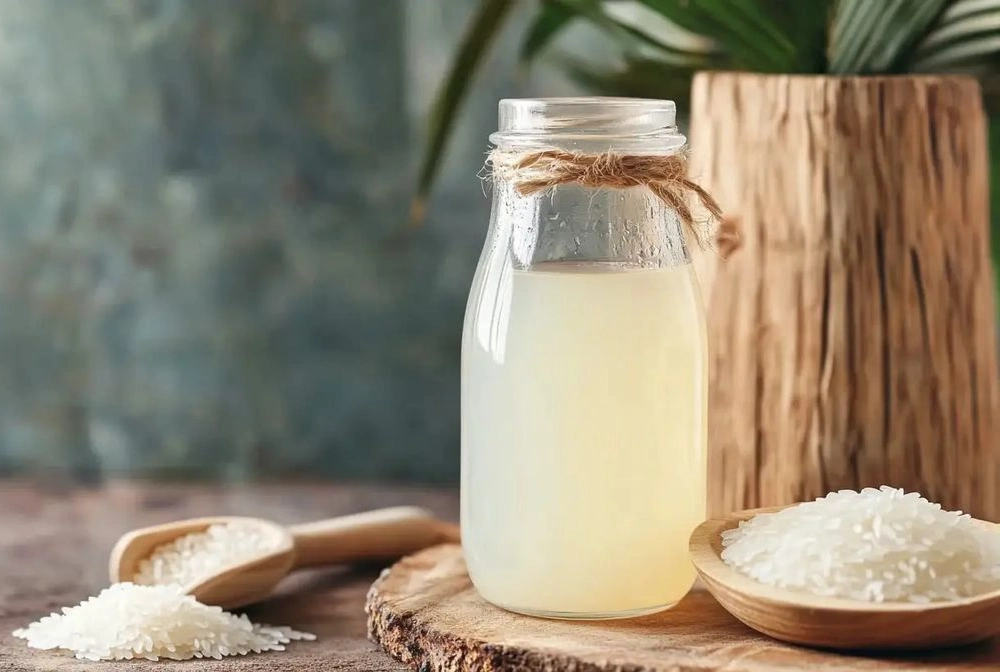
Fermentation is part of Williams’ method, but there is no strong clinical evidence that fermented rice water outperforms plain, non fermented rice water when it comes to hair growth or shaft health.
There is also a tradeoff to consider. Longer fermentation makes a homemade mixture less predictable. It can also increase the risk of contamination, especially if it sits too long or is not stored properly.
If you are someone who prefers a simpler routine, a shorter soak or quick boil method may give you similar shaft smoothing benefits with fewer variables to manage.
Why Rice Water Can Make Hair Feel Dry or Hard

Rice water does not agree with everyone, and this is the part most rice water tutorials leave out entirely.
Some people notice their hair turning straw like or stiff after repeated use. Curls can lose their bounce. Tangling and dryness can increase instead of decrease. In some cases, hair actually starts snapping more, which defeats the entire point of trying this in the first place.
“Protein overload” gets blamed for this constantly online, but that is not the whole story. Starch buildup and repeated coating of the hair shaft can also contribute to that same stiff, dull, dry feeling, independent of protein content.
| Sign You Might Notice | Possible Cause | What To Do |
|---|---|---|
| Straw like texture | Starch buildup on the shaft | Reduce frequency, clarify hair |
| Increased tangling | Product buildup affecting slip | Deep condition, space out use |
| Dryness or dullness | Repeated coating without enough moisture | Add a moisturizing conditioner step |
| Hair snapping more | Overuse or too much contact time | Stop use, reassess routine |
| Scalp itching or irritation | Sensitivity to the rinse or residue | Discontinue and consult a dermatologist |
If any of these show up, the answer is to stop using rice water, not to use it more often hoping it will resolve on its own.
How Often Should You Use Rice Water?
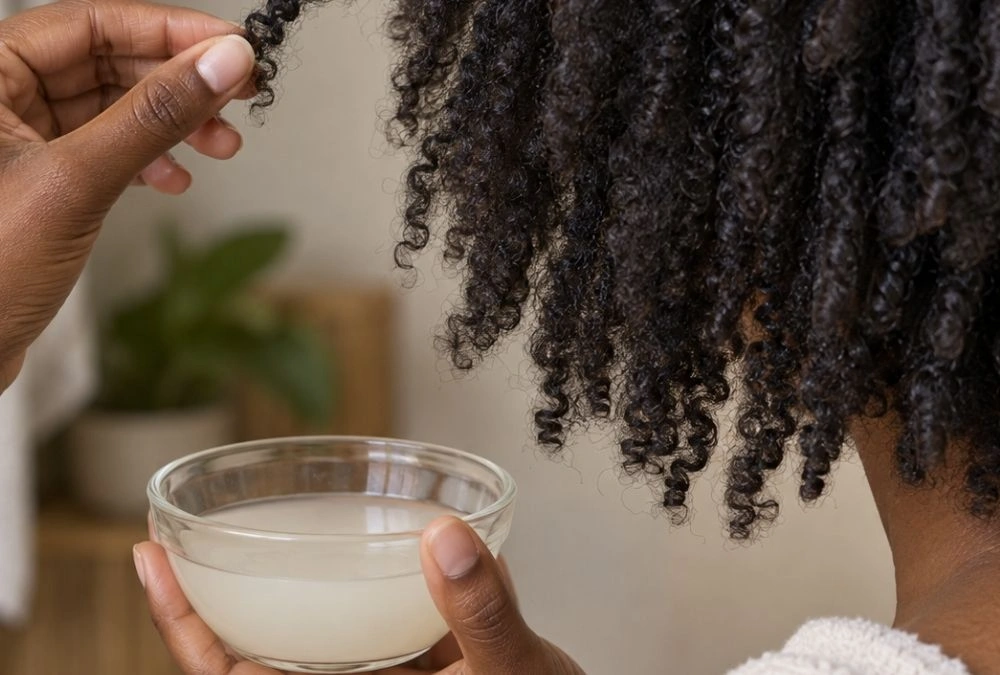
Angela uses her rice water rinse about once a week, and that pacing seems to work for most hair types without tipping into dryness or buildup.
Try This Today
- Do a strand test on a small section before applying it all over.
- Start with once every 7 to 10 days, not daily.
- Always follow with a moisturizing conditioner, never skip that step.
- Watch how your hair feels the next day, not just right after rinsing.
- Stop immediately if you notice stiffness, snapping, or scalp irritation.
Small, consistent use beats an aggressive, frequent routine here. This is not a treatment where more equals faster results.
When Hair Loss Needs More Than A DIY Treatment
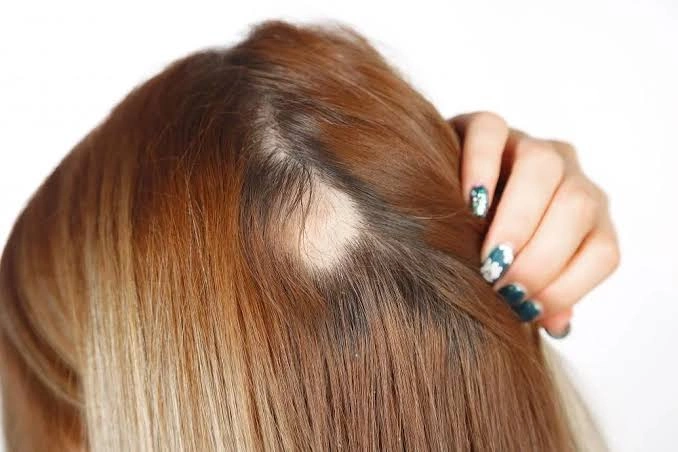
Rice water has not been proven to treat pattern hair loss, alopecia, bald patches, hormonal hair loss, or significant unexplained shedding. It is a shaft conditioning rinse, not a medical treatment.
Talk to a doctor or dermatologist if you notice:
- Persistent thinning or a widening part
- Bald spots or patches of missing hair
- Scalp inflammation, redness, or pain
- Heavy shedding that is not slowing down
Those signs deserve a real evaluation, not another round of a kitchen remedy. Rice water simply is not built to address what is happening at the follicle or hormonal level.
