
Yes, fiber is a real weight-loss tool, and a modest one. It will not melt fat or cancel a heavy weekend. What it does is make a smaller plate feel like enough, so you eat less without white-knuckling it.
Cut calories or carbs and hunger shows up fast, and if you have also heard fiber means gas, the whole idea sounds like trading hunger for bloating. The turn is simple: fiber’s main effect is not burning fat. It makes meals bulkier, slower to eat, and slower to digest.
So the lever only works when fiber replaces refined, calorie-dense food and goes up slowly enough that your gut keeps up. For you that means one breakfast swap first, a two-to-three-week ramp, serving sizes you can actually hit, a clear call on supplements, and a check of official guidance for a gram target.
Fiber is a real but modest lever. It fills meals and displaces denser food, and it works best paced slowly, not treated as a fat burner or a shortcut.
| Food | Typical serving | Fiber (approx.) | Best use |
|---|---|---|---|
| Cooked lentils | 1 cup | 15 g | Lunch soup or side |
| Cooked black beans | 1 cup | 15 g | Dinner chili or bowl |
| Raspberries | 1 cup | 8 g | Breakfast topping |
| Pear | 1 medium | 6 g | Snack |
| Chia seeds | 2 tbsp | 10 g | Stir into oatmeal or yogurt |
| Almonds | 1 oz | 3.5 g | Snack with fruit |
| Broccoli | 1 cup cooked | 5 g | Dinner vegetable |
| Oats | 1/2 cup dry | 4 g | Breakfast base |
What Fiber Actually Does for Appetite

Fiber helps you eat less because it makes the meal bigger and slower, not because it burns anything.
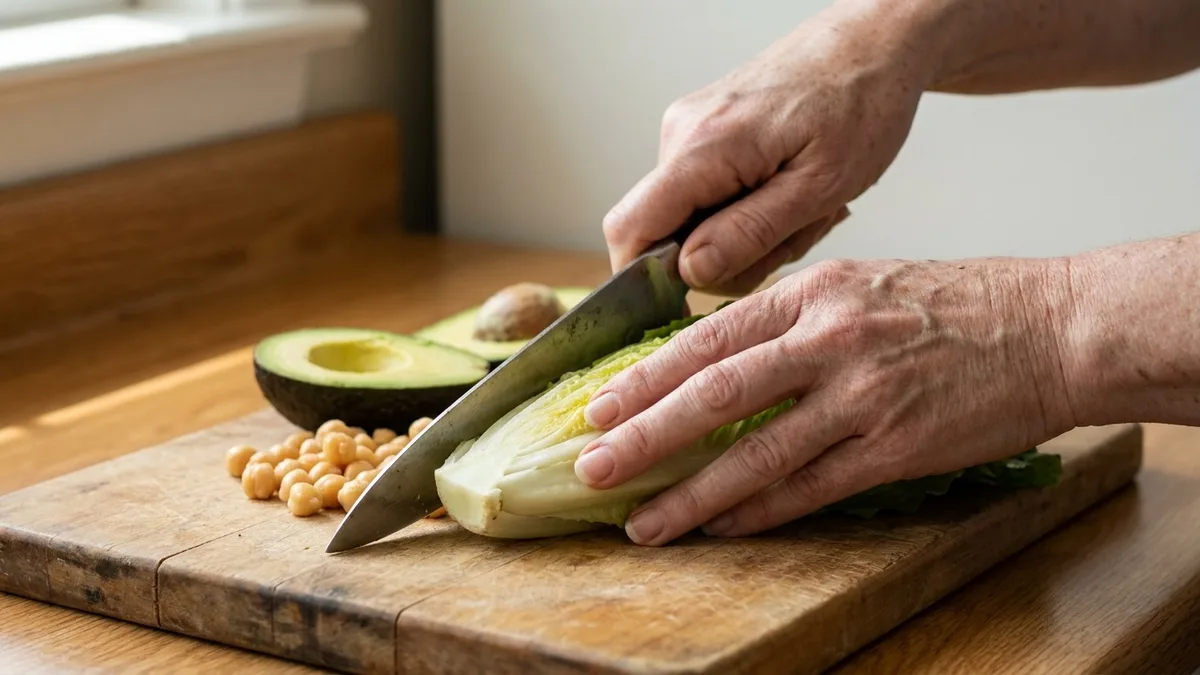
Picture the same plate pushed fuller: shredded cabbage, beans, a pear sliced alongside. All that volume carries water and takes real chewing, so the stomach stretches and signals done sooner than it would after a soft, dense meal of similar calories. You finish satisfied on less, and often the fork goes down earlier than it used to.
Then there is the gel. Soluble fiber absorbs water and thickens in the gut, and that slows how fast food leaves the stomach. Fullness doesn’t vanish twenty minutes after you stand up from the table; it holds for a couple of hours, which is exactly the stretch where the old pattern had you back at the cabinet.
fiber is not a fat burner. It does not cancel a surplus. Pile chia and almonds on top of the same diet and you have simply added calories, because those foods are calorie-dense even when they are high-fiber. The lever only moves when something gets pushed off the plate.
Effects also vary. One person feels sturdy after a cup of lentils, another barely notices, and the same food hits differently depending on what it is eaten with. That is why the useful measure is not a magic gram target but a blunter question you can ask of any meal: how much fullness am I getting per calorie here?
The Fiber Fullness Hierarchy
Start at the base and work up — each level adds fullness per calorie.
Build meals from the bottom up; reach for supplements last.
Soluble and Insoluble Fiber Both Matter
You don’t have to choose a type. The appetite effect comes from the mixed package in whole foods, not from one purified fiber.
Soluble fiber is the one that dissolves and turns gel-like in the gut. Oats, beans, apples, and psyllium are the familiar sources, and this is the type more often discussed for fullness and for a slower rise in blood sugar after a meal. It is the thickener, the one that keeps the stomach working longer.
Insoluble fiber does the opposite job. It does not dissolve; it adds bulk and moves things along, which is why whole grains, vegetables, nuts, and wheat bran are usually talked about in the context of regularity. Same food group, different assignment.
Most of what you would actually eat carries both at once. A bowl of oats, a serving of beans, an apple with the skin on, a handful of nuts, a pile of vegetables, all of them are blends. Chase soluble fiber alone and you spend effort for a result the mixed food was already delivering.
So the practical answer is boring in the best way: vary the sources and stop sorting them. Beans at lunch and vegetables at dinner cover both types without a spreadsheet, and the fullness you are after shows up from the whole food, not a purified extract in a capsule.
The Calorie-Displacement Trick That Works
Fiber cuts calories by replacing denser foods, not by sitting beside them. That swap is the whole trick.
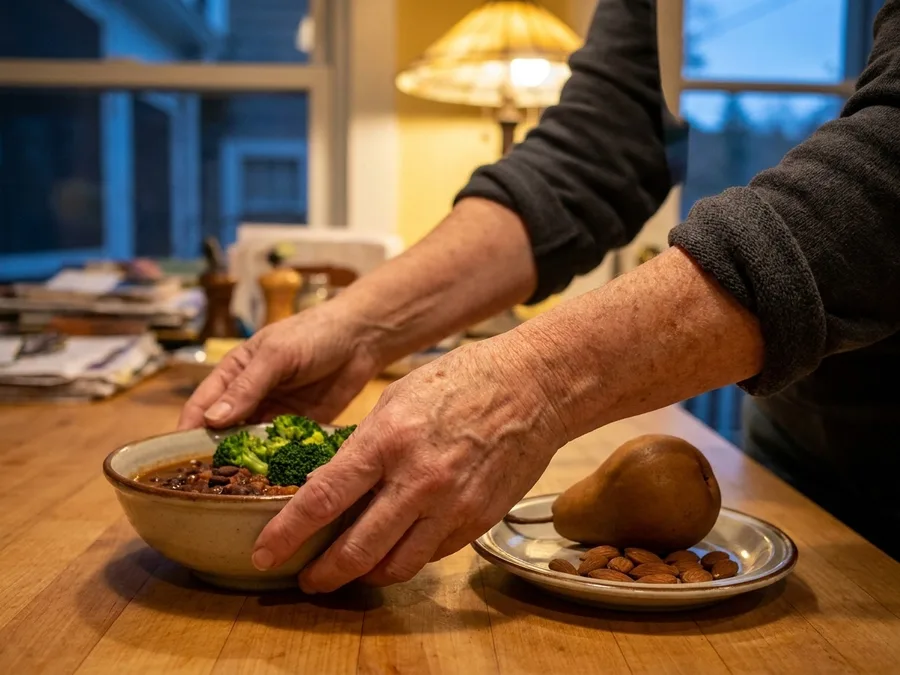
Trade white toast for oatmeal with berries. Trade some of the meat in a dish for lentils or beans. Trade the chips for a pear and a small handful of almonds. The portion still looks like a portion, still fills the plate, but the calories underneath it are lower and the staying power is longer.
A day built this way shows how it adds up. Breakfast of half a cup of dry oats (4 g), a cup of raspberries (8 g), and two tablespoons of chia (10 g). Lunch of a cup of cooked lentils in soup with whole-grain bread (15 g). Dinner of a cup of black beans in chili with a cup of broccoli (15 g and 5 g). Snacks of a medium pear (6 g) and an ounce of almonds (3.5 g).
Now the honest caveat. Add those same foods to your current diet, and you add calories, because almonds, chia, and bread are calorie-dense even though they are high-fiber. The fiber does nothing for you if nothing leaves the plate to make room for it.
⚠️ COMMON MISTAKE
Do not just add fiber on top
Sprinkling chia on your usual lunch adds fiber and calories. The win only comes when the fiber food replaces something more calorie-dense. Swap, do not stack.
How to Add Fiber Without the Bloat

Gas comes from bacteria in your gut fermenting fiber, and when you jump straight from a low-fiber plate to a high-fiber one, that population has no time to adapt. Large portions and too little fluid make it worse. The same bulk that fills you up is what produces gas when speed outruns tolerance, so the fix is pacing, not avoidance.
A three-week ramp keeps the lever usable: week one, add one fiber food at breakfast; week two, add one at lunch; week three, add one at dinner. Keep portions modest and drink fluids with and between meals.
Spread those servings across breakfast, lunch, dinner, and snacks instead of loading them into a single meal. Two modest portions of beans in one day tend to sit better than one large bowl, and it keeps fullness steady rather than spiking and dropping.
If discomfort shows up, cut the amount back and slow the pace rather than quitting. Severe or persistent symptoms are worth checking with a clinician before you push further.
📈 Three-Week Fiber Ramp
Week 1: Breakfast
Add one fiber food at breakfast, like oatmeal with raspberries and chia.
Week 2: Lunch
Add one fiber food at lunch, like lentil soup or a bean bowl.
Week 3: Dinner
Add one fiber food at dinner, like bean chili with broccoli.
Keep portions modest
Aim for one serving per meal, not three, and drink water with each meal.
Best High-Fiber Foods to Keep Ready
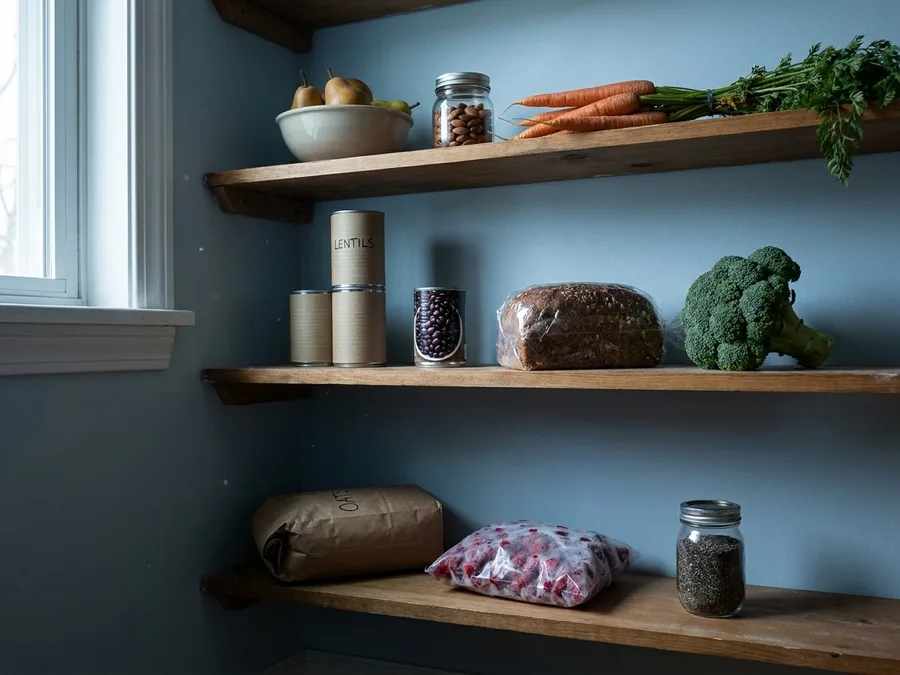
A ramp you can tolerate depends on the right foods being in reach, so build the list before the week starts. Stock three shelves, not a cabinet of orphans.
The breakfast shelf carries oats at 4 g per half cup dry, frozen raspberries at 8 g per cup, and chia at 10 g for two tablespoons. Nothing here spoils fast, and frozen berries mean you are never out of the fruit that makes oatmeal worth eating.
The meal shelf is canned lentils and canned black beans at about 15 g per cup, whole-grain bread, and broccoli at 5 g per cup. Batch a soup or chili on Sunday and you have four weekday lunches already made.
The snack shelf is one medium pear at 6 g, an ounce of almonds at 3.5 g, and carrots, kept visible and in front. Out of sight is skipped; on the counter is eaten.
The full grocery list: oats, canned lentils, canned black beans, frozen raspberries, pears, chia, almonds, whole-grain bread, broccoli, carrots. Cans, frozen bags, and batch cooking fit an ordinary schedule, and a filling meal does the calorie work, not a gram count alone.
Fiber swaps that work vs. fiber additions that backfire
Do this
- Swap white toast for oatmeal with berries
- Replace some meat with lentils or beans
- Choose a pear and almonds instead of chips
- Keep portions to one serving per meal
Not this
- Add chia on top of your usual lunch
- Eat a cup of beans plus broccoli plus a pear at dinner
- Ramp from low to high fiber in two days
- Rely on fiber pills instead of food
Do Fiber Supplements Help or Hurt?

A capsule or a spoon of powder can add fiber, but it cannot stand in for the volume of an actual meal. That is the whole answer, and it tells you where supplements fit: on the days whole food does not.
The mechanics are simple. Whole foods arrive with water, weight, and chewing time; a scoop stirred into a glass delivers fiber and little else. If fullness is what you are buying, the food is doing most of the work.
Psyllium is the supplement with the most going for it. A typical serving runs about 3 to 6 grams of fiber, which is real but modest next to a cup of lentils at 15 grams. Start with half a scoop for the first several days and let the label, not your impatience, set the pace.
Rush it and you get the same gas a fast food ramp gives you, often within a day or two. Supplements also tend to be less filling and carry fewer nutrients than the foods they imitate, which matters more after 50, when appetite is smaller and every meal has to earn its space.
The test is narrow. Does the supplement add fiber you tolerate on days when food cannot? If yes, keep it in the bag. If it is replacing meals you could have eaten, it is not helping.
💡 PRO TIP
Start with half a serving of psyllium
A typical serving is 3–6 g fiber. Begin with half that amount mixed into a full glass of water, and wait a few days before increasing. Rushing it is the main reason people blame fiber for gas.
Your First Week, Step by Step

Tomorrow morning, add one fiber food to breakfast and nothing else. Oatmeal with a cup of frozen raspberries and two tablespoons of chia is about 22 grams before you leave the kitchen: 4 from half a cup of dry oats, 8 from the berries, 10 from the chia. Eat it at the same time for five mornings. The week builds in three places. Keep breakfast, add one fiber food at lunch, keep one snack within reach.
Lunch is a cup of lentil soup with whole-grain bread, about 15 grams. The snack is a pear and an ounce of almonds, roughly 6 grams and 3.5.
Dinner carries the ramp with bean chili and broccoli – a cup of black beans at about 15 grams, a cup of broccoli at 5. That is over 60 grams for the day, more than you need to start. Halve any portion that feels like too much.
The grocery run covers ten items: oats, canned lentils, canned black beans, frozen raspberries, pears, chia, almonds, whole-grain bread, broccoli, carrots. Canned and frozen cost less and keep longer.
Look up a gram target in official dietary guidance. Spend the week watching two things: whether meals feel fuller and whether your gut stays quiet. Mild gas fading by day five is adaptation; worse gas on day seven means slow the pace, not abandon the plan.
Build The Fiber Habit You Can Keep
Fiber is a real weight-loss tool, but a modest one. It makes meals more filling and helps you displace calorie-dense foods, so you eat less without feeling deprived. It does not burn fat or cancel a surplus.
Start with one swap at breakfast — oatmeal with raspberries and chia instead of white toast. Ramp up over two to three weeks, keep portions modest, and drink fluids. Use supplements only when food is impractical. Check official guidance for a gram target, and give it a week to see if fullness rises without unacceptable gas.
Start with breakfast tomorrow
Swap your usual morning toast for oatmeal with raspberries and chia. That one change is the first step in the three-week ramp — and it is the easiest place to begin.
