

You hit 40, keep eating roughly the way you always have, and suddenly your waistband seems to remember every dinner you have ever eaten. It is easy to blame a metabolism that supposedly fell apart overnight.
The frustrating part is that blaming a mysterious metabolic slowdown can hide problems you can actually change. Metabolism itself often changes far less during middle age than people assume, while muscle, movement, sleep, food choices, hormones, and medications can quietly shift the equation.
That does not mean weight management stays equally easy. It means the explanation is usually more complicated than, “My metabolism turned 40 and stopped working.”
1. My Metabolism Fell Off a Cliff at 40

This is the biggest metabolism myth of them all. The 2021 human energy expenditure study found that adjusted metabolism was surprisingly stable through most of adult middle age rather than dropping sharply at 40.
What may change is your life around that metabolism. You may sit more, walk less, sleep less, lose some muscle, eat larger portions, or have less physically demanding work than you did at 25.
2. Menopause Automatically Makes Weight Gain Inevitable

Menopause deserves a more accurate explanation than simply saying it “kills metabolism.” Research suggests that chronological aging contributes substantially to weight gain, while the hormonal transition is strongly associated with changes in body composition and greater abdominal fat accumulation.
That distinction matters. A woman may notice her waist changing even when the scale has not changed dramatically, because fat distribution can shift toward the abdomen as estrogen levels change.
For women in their 40s and 50s, strength training, adequate sleep, physical activity, and dietary quality become especially useful because they address several of these changes at once.
3. Every Pound on the Scale Is Body Fat
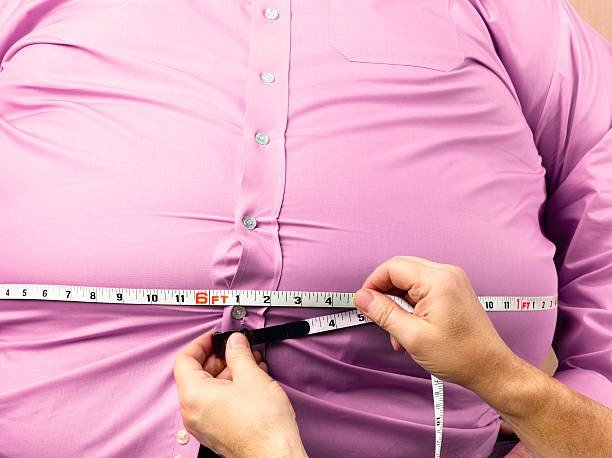
Body weight includes muscle, body fat, water, food in the digestive tract, and other tissues. Hormonal changes, sodium intake, constipation, carbohydrate intake, and some medications can all move scale weight without representing an equivalent increase in fat.
This becomes particularly noticeable during perimenopause, when hormonal fluctuations may affect fluid balance as well as appetite and body composition.
Cleveland Clinic also lists hormonal changes, aging, medical conditions, and medications among possible causes of unexplained weight gain.
4. I Work Out Three Times a Week, So Activity Cannot Be the Problem

A gym session is only one part of daily energy expenditure. Researchers use the term nonexercise activity thermogenesis, or NEAT, for calories used during ordinary movement such as walking, standing, household work, typing, and fidgeting.
One classic overfeeding experiment found enormous differences between individuals in how NEAT changed when extra calories were introduced. Those differences helped explain why some participants stored much more fat than others.
A person can exercise for 45 minutes and still spend most of the remaining day almost completely sedentary.
5. Cardio Is All I Need to Keep My Metabolism Young

Walking, cycling, swimming, and other aerobic activities are excellent for health, but they do not replace resistance exercise. Adults are advised to perform muscle-strengthening activity on at least two days each week in addition to aerobic activity.
Strength work becomes increasingly relevant because losing muscle changes body composition and can reduce the energy required to maintain your body.
You do not need bodybuilding workouts. Squats to a chair, rows, presses, hip hinges, resistance bands, machines, or appropriately selected weights can all provide resistance.
6. Barely Eat Anything, So Food Cannot Be the Reason

Most people are not deliberately misreporting their intake. Human beings are simply poor at remembering every bite, drink, cooking oil, snack, restaurant portion, and handful eaten during a busy day.
Food structure can make this even harder. In a controlled NIH trial of 20 adults, participants consumed about 500 additional calories per day when eating an ultra-processed diet compared with an unprocessed diet, despite the diets being designed with similar presented amounts of calories, sugar, fat, sodium, and fiber.
7. If a Food Is Healthy, Portions Do Not Matter

Olive oil, nuts, nut butter, avocado, granola, cheese, smoothies, and whole grain snacks can all fit into a nutritious eating pattern. They can also deliver substantial energy in relatively small servings.
Healthy eating and weight management are related, but they are not identical questions. CDC guidance notes that physically active people can still gain weight when energy intake regularly exceeds energy use.
Instead of banning nutritious foods, pay attention to serving size. Measuring calorie-dense foods for one week can be surprisingly educational.
8. Calories I Drink Do Not Really Count

Liquid calories can be easy to overlook because beverages generally do not feel like meals. Alcohol deserves special attention because it provides about 7 calories per gram, while experimental research suggests people often do not fully compensate for alcoholic beverage calories by eating less.
A systematic review of experimental studies found that alcohol consumption increased both food energy intake and total energy intake compared with nonalcohol conditions.
Although the studies were mainly performed in younger adults, the long-term relationship between alcohol and body weight remains complex.
9. Poor Sleep Makes Me Tired, Not Heavier

Sleep can influence eating behavior more than many people realize. Laboratory studies have linked insufficient sleep with increased food intake, especially during additional late evening waking hours.
A randomized trial involving 80 adults who typically slept less than 6.5 hours found that increasing sleep by about 1.2 hours was associated with roughly 270 fewer calories consumed per day.
| Quiet weight gain driver | What you may notice | Practical check |
|---|---|---|
| Less daily movement | Same workouts, fewer total steps | Track movement for one normal week |
| Poor sleep | Evening hunger, cravings, fatigue | Aim for a consistent sleep opportunity |
| Ultra-processed foods | Easy snacking, fast eating | Replace one daily meal with minimally processed foods |
| Alcohol | Evening calories plus extra eating | Count drinks for seven days |
| Loss of muscle stimulus | Less strength, more sitting | Add two weekly strength sessions |
| Medication effects | Weight changed after a new prescription | Review medications with your clinician |
| Perimenopause | Increasing waist size, sleep disruption | Discuss symptoms and risk factors with your clinician |
10. Skipping Breakfast Destroyed My Metabolism

There is no strong evidence that skipping breakfast automatically slows metabolism and causes weight gain. A systematic review of randomized trials found no meaningful body fat advantage to eating breakfast, and breakfast skipping produced a small reduction in body weight in the included trials.
That does not mean everyone should skip breakfast. Some people control appetite better with breakfast, while others prefer eating later.
Choose a meal schedule that helps you control hunger and maintain a nutritious diet instead of forcing breakfast because you believe metabolism requires it.
11. Eating Every Two Hours Keeps My Metabolism Burning

The body does use energy digesting food, but dividing the same intake into many tiny meals does not create a magical metabolic advantage. Eating four or more times daily is superior to eating three or fewer times for weight control.
Frequent eating can work for some people. For others, it creates six opportunities to overeat instead of three.
If weight is creeping upward, examine total daily intake before trying to manipulate meal frequency.
12. Protein Will Speed Up My Metabolism Enough to Fix Everything

Protein does have useful properties for weight management. Research reviews suggest it generally produces a greater thermic effect and can improve satiety compared with diets lower in protein.
But protein is not a fat-burning drug. Its bigger value after 40 may be helping maintain lean tissue, especially when paired with resistance training.
Build meals around reasonable protein sources such as fish, poultry, eggs, yogurt, beans, lentils, tofu, or other foods appropriate for your diet.
13. My Thyroid Must Explain All of This Weight

Hypothyroidism can absolutely contribute to weight gain and should not be dismissed when symptoms are present. What deserves correcting is the idea that an underactive thyroid routinely explains very large amounts of unexplained fat gain.
The American Thyroid Association states that roughly 5 to 10 pounds of weight gain may be associated with hypothyroidism for many patients, depending on severity, and much of that gain can reflect salt and water retention.
Symptoms such as unusual fatigue, feeling cold, constipation, dry skin, menstrual changes, and unexplained weight gain deserve a medical discussion.
14. My Medication Cannot Be Affecting My Weight

Sometimes the timing tells the story. If weight, appetite, fatigue, or fluid retention changed after starting or changing a medication, the prescription deserves review with the clinician who manages it.
NIDDK lists several medication groups that can contribute to weight gain in some people, including certain medicines used for depression, epilepsy, psychotic disorders, diabetes, allergies, blood pressure, and corticosteroid treatment.
Do not stop a prescribed medication because of the scale. Ask whether the medication could be contributing and whether medically appropriate alternatives exist.
15. Years of Dieting Permanently Broke My Metabolism

Metabolic adaptation is real, but the phrase “broken metabolism” overstates what the evidence shows. When people lose weight, a smaller body naturally requires less energy, and the body may also reduce energy expenditure somewhat beyond what size changes alone would predict.
A systematic review of 33 studies found evidence of adaptive thermogenesis in many studies, but better-designed research often found smaller or statistically insignificant effects. Adaptation also appeared to lessen after periods of weight stabilization.
That can make weight maintenance harder. It does not mean your body has become incapable of responding to diet or activity.
16. A Metabolism Booster or Fat Burner Can Fix This

Supplements promising to “ignite” metabolism are attractive because they make weight gain sound like a missing ingredient problem. The weight loss supplements work, and some ingredients can interact with medications or cause harm.
Spend that money on food, appropriate exercise, professional nutrition care, or medical evaluation before buying a capsule marketed as a metabolic shortcut.
17. Nothing Works After 40 As It Used To, So Why Bother

Your body at 45 is not identical to your body at 25. That does not mean it has stopped adapting.
Resistance training studies show that adults decades older than 40 can still gain strength and muscle. Research involving people 75 and older found significant improvements in both strength and muscle size with resistance exercise.
The better question is not, “How do I make my metabolism 25 again?” It is, “Which parts of my current routine are no longer matching my current body and lifestyle?”
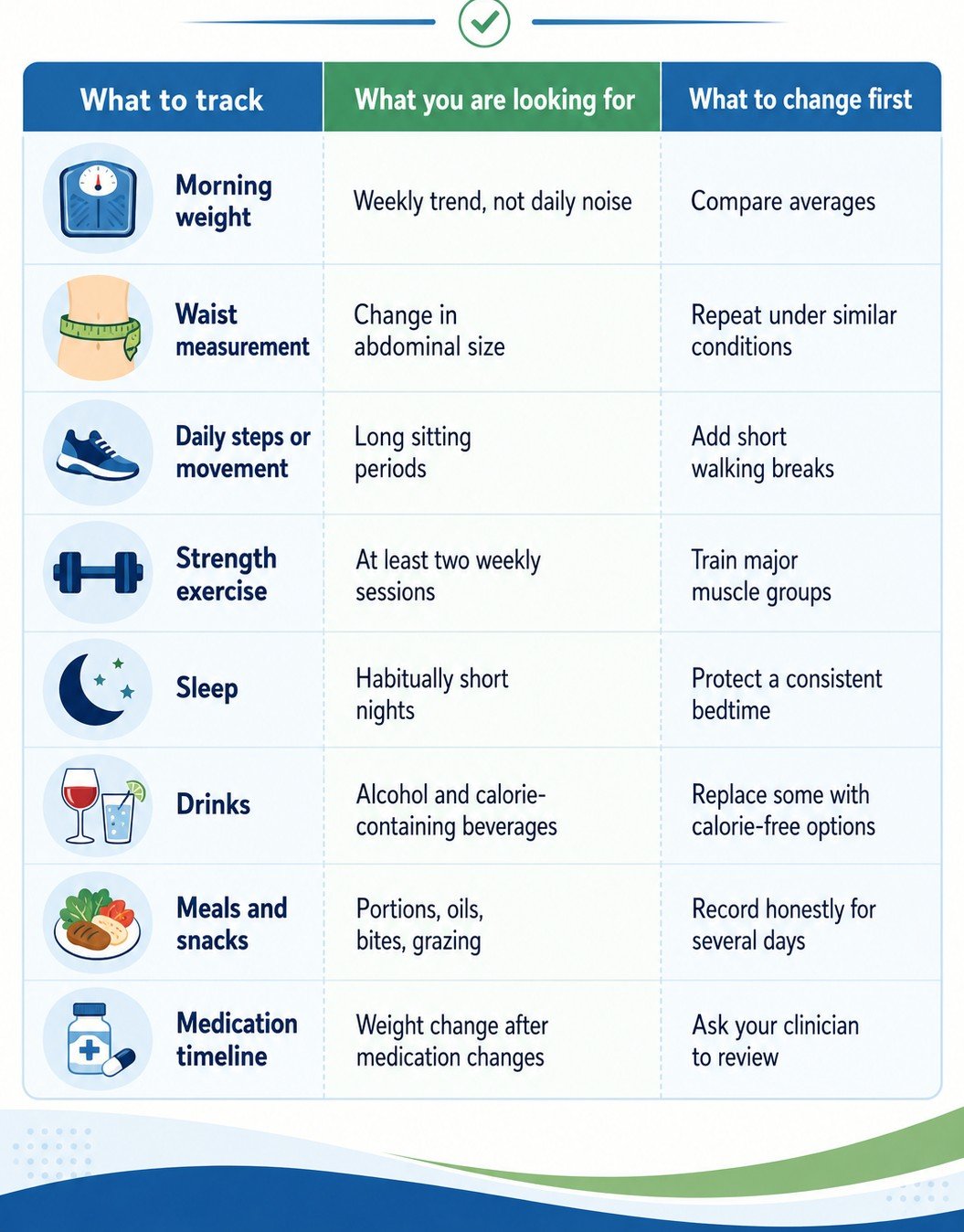
Try This Two-Week Reality Check
When Weight Gain Deserves a Medical Check

A gradual change over months is different from sudden unexplained weight gain. Medical causes should be considered when the pattern does not match obvious changes in food or activity.
- Rapid swelling of the legs, feet, abdomen, or face.
- Shortness of breath or difficulty breathing when lying down.
- Severe unexplained fatigue, marked cold intolerance, or other symptoms suggesting thyroid dysfunction.
- A rapid unexplained change after beginning a new medication.
These symptoms do not prove that something serious is wrong, but they should not be dismissed as a “slow metabolism.”
