
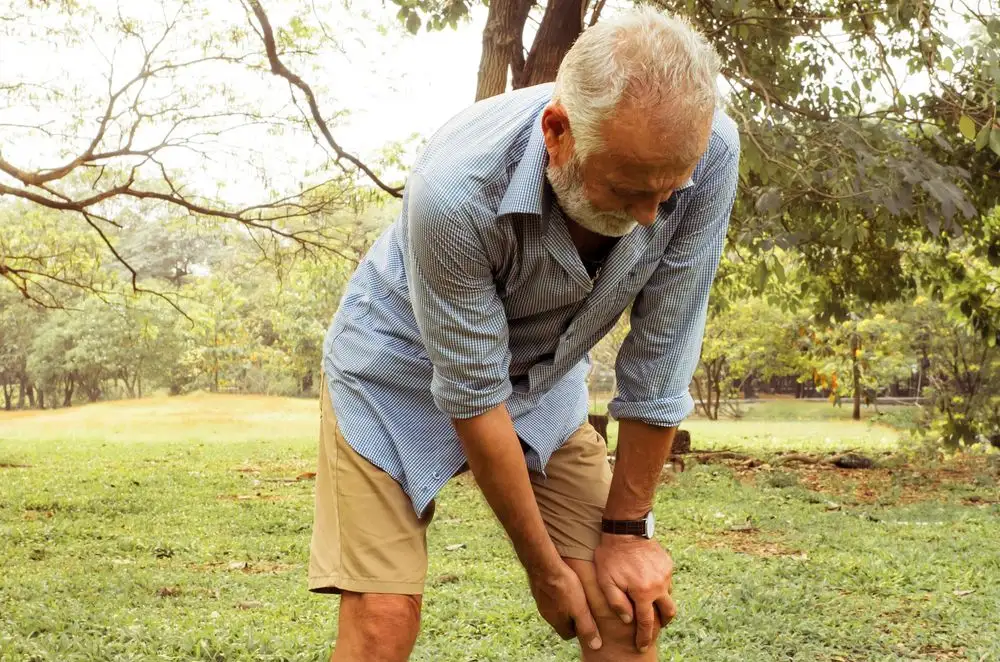
Your knee has started talking to you. Not screaming, just muttering. A little catch going down stairs. A wobble when you stand up too fast from the couch. Nothing an X ray would even flag.
That quiet warning is usually not your joint falling apart. It’s your muscles quietly checking out first, and the knee is the one left holding the bag. Ignore it long enough, and “a little stiff in the morning” turns into “I avoid stairs now,” which turns into a much bigger conversation with an orthopedic surgeon.
There is a specific, small set of moves that targets every muscle group actually responsible for keeping a knee stable after 50, and almost none of them involve a squat rack.
Before making any changes based on this article, talk to your doctor, especially if you are currently taking medication or have a diagnosed condition like knee osteoarthritis.
Why Knees Get Unreliable After 50 (It’s Rarely the Joint Itself)
Muscle loss, known clinically as sarcopenia, starts far earlier than most people realize. After age 30, people begin losing as much as 3% to 5% of their muscle mass per decade. It does not stay gentle. Sarcopenia typically becomes noticeable around age 50 and accelerates from there, with muscle strength dropping by roughly 1.5% to 5% per year once it picks up speed.
The knee has no say in this. It relies almost entirely on the muscles around it (quadriceps in front, hamstrings behind, calf below) to stay steady during walking, stair climbing, and simply standing up. When those muscles quietly weaken, the joint takes on load it was never designed to absorb alone.
This is not a fringe theory. Research on adults with knee osteoarthritis found that people with greater quadriceps strength had significantly less knee pain and better physical function over time compared to those with weaker quads. A separate cross sectional study found something blunter: subjects with weak quadriceps had significantly more severe symptoms and functional impairment than those with stronger ones.
In plain terms: a lot of what feels like “my knee is getting worse” is actually “my thigh stopped doing its job.”
The 30 Second Self Check You Can Do Right Now
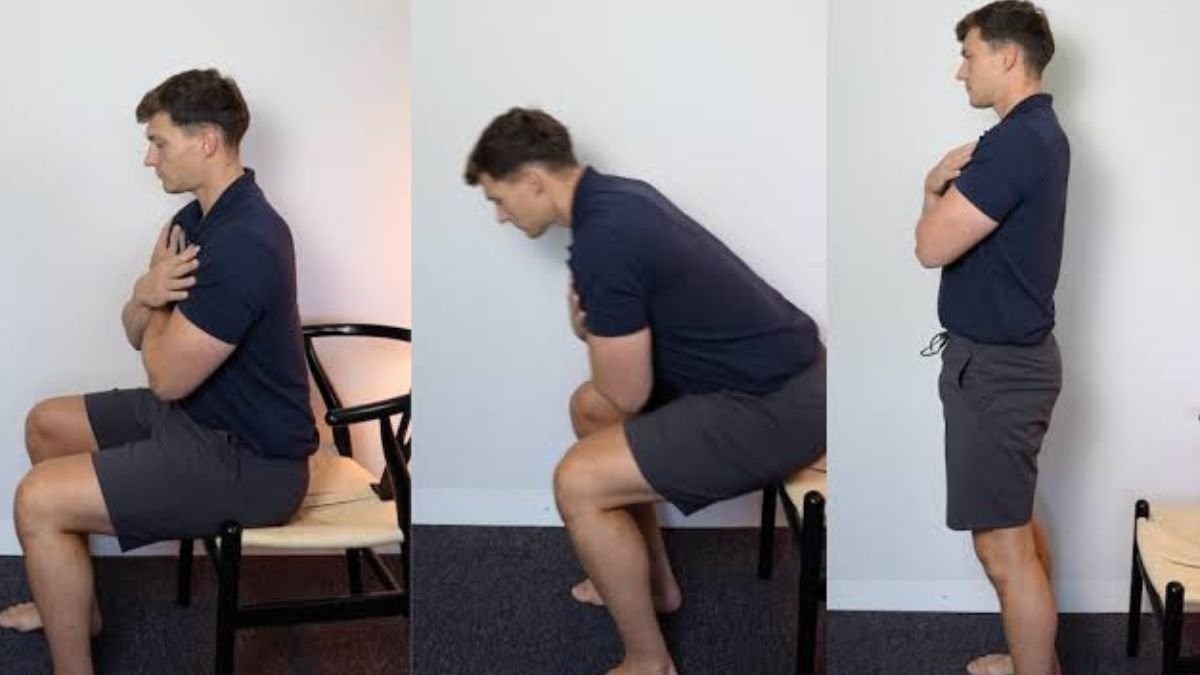
Before jumping into exercises, there’s a quick way to see where you’re starting from. It’s called the sit to stand test, and researchers use it as a real world stand in for leg strength and fall risk.
Sit in a sturdy armless chair. Cross your arms over your chest. See how many full stands you can complete in 30 seconds without using your hands.
In one study of older veterans, each additional repetition on this test was linked to a 24% lower chance of a fall in the following year. In another, seven repetitions was found to be a meaningful cutoff point for identifying higher fall risk.
This is not a pass or fail exam. It’s a baseline. Write your number down. That’s the number the routine below is quietly designed to improve.
The Four Muscle Groups an Unstable Knee Is Missing
A knee doesn’t get support from one muscle. It gets support from four directions: the front, the back, below, and the whole functional chain that ties them together when you actually move.
| Muscle Group | Exercise | How Often | Why It Matters |
|---|---|---|---|
| Quadriceps (front of thigh) | Seated Knee Extension | 1 to 2 times daily, 10 to 20 reps per side | Keeps the knee straight while walking and acts like a brake when stepping down |
| Hamstrings (back of thigh) | Hamstring Bridge | A few times per week, 10 to 15 reps | Stabilizes the knee during walking, lifting, and directional changes |
| Calf | Forward Lean Calf Raise | 1 to 3 sets, most days | Crosses both the ankle and the knee, influencing movement at both joints |
| Whole leg, functional | Sit to Stand Progression | 3 times per week | Converts isolated strength into the exact movement pattern knees fail at most: standing up |
1. Seated Knee Extension: Waking the Quad Back Up
Sit in a dining style chair and lean into the backrest. Straighten one leg as far as comfortably possible, pull your toes toward you, then squeeze the thigh muscle hard while keeping the knee locked straight.
The squeeze matters more than the movement. Actually focusing your attention on that contraction helps rebuild the communication between your brain and that muscle, something that fades quietly with age and inactivity.
Start around 10 reps per side. Work up toward 15 to 20 over time.
2. Hamstring Bridge: The Muscle Everyone Forgets
Lie on your back with your lower legs resting on a sturdy chair seat, torso and thighs at roughly a 45 degree angle. Press your lower back gently into the floor, then push through your heels to lift your hips, squeezing your hamstrings at the top. Lower slowly.
Most people over 50 have never intentionally trained this muscle in isolation. It’s easy to ignore because it doesn’t show up in a mirror the way quads do, but it does just as much work keeping the knee tracking correctly during everyday movement.
Aim for 10 to 15 reps, a few times a week.
3. Forward Lean Calf Raise: The Sneaky Knee Stabilizer
Stand about a yard from a wall, hands against it, and lean your body forward while keeping both feet flat. Rise onto your toes as high as possible, then lower slowly.
Leaning forward first stretches the calf further before it contracts, which trains a fuller range of motion than a standard upright calf raise. Because part of the calf crosses the knee joint itself, this indirectly supports knee mechanics too, not just the ankle.
Once you can do more than 15 reps easily, progress to a single leg version for roughly 15 reps per side.
Everyone’s body responds differently, so check with your doctor before trying this if you have an existing knee condition or take medication that affects balance.
4. Sit to Stand Progression: Where It Becomes Real Life
This is the one that actually matters most, because it mirrors the movement people lose first: standing up without hesitation.
Level 1. Sit near the edge of a chair, feet flat, lean forward using the cue “nose over toes,” then stand and lower back down slowly. Work toward 10 clean reps.
Level 2. Stagger your feet, one slightly back, one slightly forward, and repeat the same motion. The back leg does most of the work here, roughly 70% of the effort, letting you load one side harder with zero equipment.
Level 3. Single leg sit to stand. If a full chair height is too hard, stack towels on the seat to raise it 3 to 4 inches, master 10 reps, then remove a towel and repeat until you reach normal chair height.
Build from 3 reps toward 10 per side, roughly 3 sets on training days.
The Habit That Actually Moves the Needle
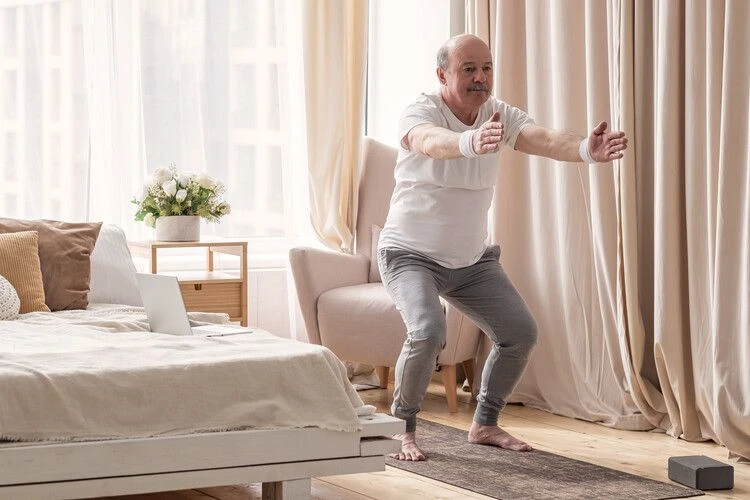
- Do the seated knee extension once, right now, for 10 reps per leg
- Set a phone reminder for the hamstring bridge three times this week
- Add the sit to stand test to your calendar monthly to track real progress
- Only add more reps or sets if your knees still feel good the next day
- Skip anything that causes sharp pain, discomfort during the move itself is a stop sign, not a challenge to push through
The Full Weekly Routine at a Glance
| Timeframe | What to Focus On | Realistic Expectation |
|---|---|---|
| Week 1 to 2 | Learn the movements, low reps, focus on the muscle contraction itself | Movements feel unfamiliar, some muscle soreness is normal |
| Week 3 to 4 | Build repetitions gradually, add the staggered sit to stand | Standing up starts to feel slightly less effortful |
| Week 5 to 8 | Introduce single leg calf raises and elevated single leg sit to stands | Noticeable improvement in stair confidence for many people |
| Ongoing | Full routine, 3 times weekly, roughly 10 to 12 minutes per session | Maintained strength requires continued consistency, not a finish line |
This timeline is a general pattern, not a guarantee. Arthritis severity, prior injuries, and overall activity level all change how quickly someone progresses.
It’s Not Just the Knee: Don’t Skip the Hips

Strong quads, hamstrings, and calves won’t fully solve the problem if the hips are weak, since hip muscles help control how the leg tracks with every step. A knee routine that ignores the hip is treating half the picture. If your knee pain persists despite consistent quad and hamstring work, hip strength is often the missing link worth addressing next.
When to Stop and Call a Doctor
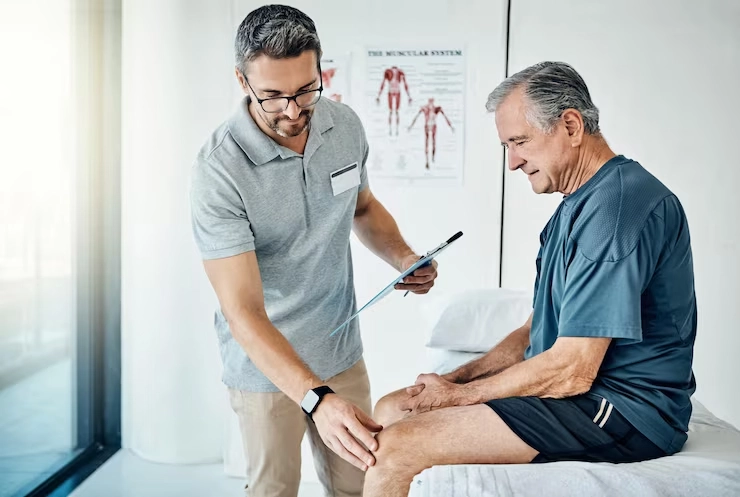
Most knee stiffness responds well to consistent strengthening, but a few signs mean this is no longer a strength problem to train through:
- Sudden, significant swelling in the knee
- A knee that gives way or buckles unexpectedly
- Sharp pain during rest, not just during movement
- Visible deformity or inability to bear any weight on the leg
Any of these warrant a call to a doctor before continuing any exercise routine.
A Few Common Questions
How long until this actually feels different? Many people notice standing up feels less effortful within 3 to 4 weeks of consistent practice, though full strength gains typically build over 8 to 12 weeks.
Can this replace physical therapy? No. This is a maintenance and prevention framework. Anyone with diagnosed knee osteoarthritis, a recent injury, or post surgical knees should follow guidance from a physical therapist or doctor first.
Is it safe with arthritis? Often yes, in a modified, pain free range. Some research has found that quadriceps strengthening does not equally benefit every knee, particularly knees with significant misalignment or looseness, which is exactly why checking with a doctor before starting matters more than following a generic internet routine.
Do I need equipment? A sturdy dining chair, a wall, and a floor mat. That’s the entire list.
This article is for informational purposes only and is not a substitute for professional medical advice, diagnosis, or treatment. Always consult your doctor or a qualified healthcare provider before making changes to your exercise routine, especially if you have an existing knee condition.
