

You wake up in the middle of the night to your partner throwing physical punches in the air or shouting aggressively at invisible intruders. Most people brush this off as a stressful nightmare or a passing phase of bad sleep caused by a busy work schedule.
When that chemical paralysis fails, allowing a person to physically and often dangerously act out their dreams, it points to a specific condition known as REM Sleep Behavior Disorder (RBD).
Far from a harmless sleep disturbance, medical researchers have discovered that this violent nighttime behavior acts as a neurological crystal ball. It is one of the strongest predictors we have for hidden neurodegenerative conditions—such as Parkinson’s disease or Lewy body dementia.
Ignoring these intense physical night terrors misses a critical warning sign that the brain is quietly undergoing a major structural change.
1. Dr. Robert And The Clinic Wake-Up Call

Dr. Robert remembers a specific patient who came into the clinic looking utterly exhausted and confused. The patient had started kicking his wife in his sleep and recently knocked a heavy brass lamp completely off his nightstand.
He was desperately fighting off imaginary dogs in his sleep and thought he was just having vivid stress dreams.
The patient felt immense guilt about bruising his wife during these episodes. He had tried drinking chamomile tea and going to bed earlier. Nothing he tried at home made any difference to the violent nighttime outbursts.
2. Recognizing The Neurological Red Flag

Many general practitioners might have misdiagnosed this severe thrashing as a lingering psychological issue or a trauma response. Dr. Robert knew immediately that this was not a psychological problem but a severe neurological warning.
This condition is not a quirky phase that a person simply outgrows over time. It is a direct and transparent window into the future health of the central nervous system. Catching it early gives patients a timeline that standard medicine rarely offers.
3. The Science Of Paralyzed Sleep
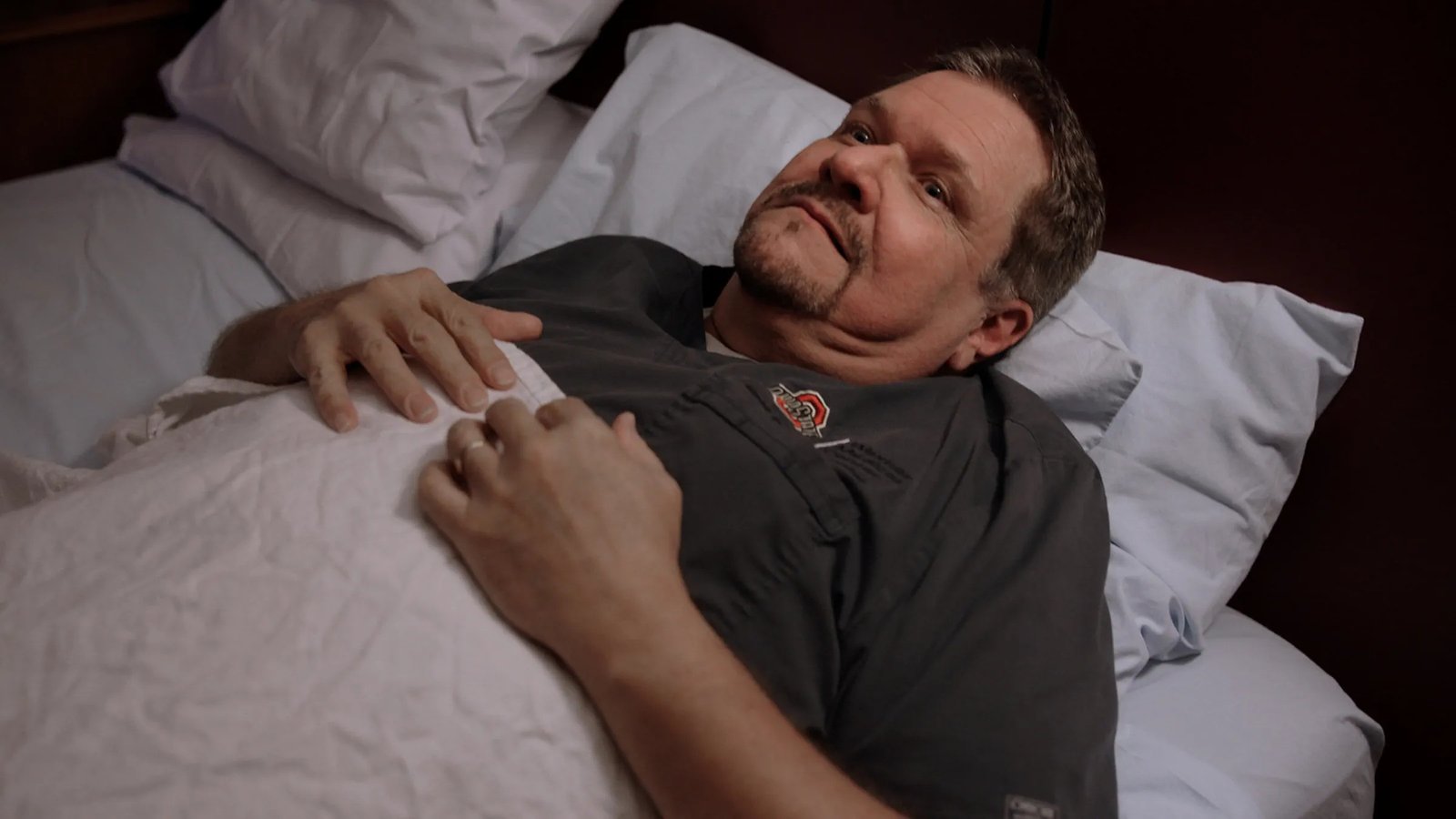
To understand why this terrifying behavior happens, you have to look at how a healthy brain manages a night of rest. When you drift off to sleep, your brain cycles through several different and distinct stages.
You move from light rest into deep restorative sleep and eventually enter Rapid Eye Movement sleep.
This final stage accounts for about twenty percent of a healthy adult sleep cycle. It is the period where your brain processes memories and generates your most vivid and complex dreams.
4. The Temporary Paralysis Mechanism

During a normal dream cycle, your brain is highly active, and your eyes dart back and forth beneath your closed eyelids. However, the body has an incredible defense mechanism to keep you safe in bed.
The base of your brain sends a chemical signal down your spinal cord to temporarily turn off your voluntary muscles.
This chemical lock involves specific neurotransmitters that quiet the motor neurons. Your brain might think you are sprinting away from danger, but your legs stay completely relaxed.
5. When The Brain Stem Fails

This protective temporary paralysis is called muscle atonia. It is a necessary function that prevents you from physically running or fighting while you dream. In a person with REM Sleep Behavior Disorder, this protective switch breaks down entirely and leaves the body free to move.
The breakdown does not happen overnight. It usually begins with small hand twitches or vocal mumbling before escalating into full physical action. Over several months, the chemical lock completely fails to secure the body during the dreaming phase.
6. The Danger Of Active Dreaming

The neurological pathway that is supposed to paralyze the body slowly degenerates over time. The brain simply no longer sends the stop signal to the muscles. When the person dreams about defending themselves from an attacker, they literally throw a real punch into the air.
Patients frequently report having highly defensive or action-packed dreams. They are rarely dreaming about walking through a peaceful garden. They are usually fighting off intruders, protecting their spouse from wild animals, or playing a high-stakes sport.
| Brain State | Normal Sleep Function | REM Sleep Behavior Disorder Function |
| Dreaming Brain Activity | High activity with vivid imagery | High activity with vivid imagery |
| Brain Stem Signal | Sends paralysis signal to spine | Fails to send paralysis signal |
| Muscle Tone | Complete relaxation | Active muscle engagement |
| Physical Movement | Stillness and small twitches | Thrashing, kicking, punching, leaping |
| Vocalization | Quiet occasional mumbling | Shouting, screaming, coherent talking |
7. The Eight-Year Warning Window For Parkinson’s

The breakdown of this sleep switch is rarely an isolated neurological event. Dr. Robert explains that it is often the very first clinical sign of diseases known collectively as synucleinopathies. These include Parkinson’s disease, Multiple System Atrophy, and Lewy Body Dementia.
Medical studies tracking this sleep disorder show a startling correlation. A vast majority of patients diagnosed with this specific dream enactment behavior will develop a full neurodegenerative disease.
8. How Toxic Proteins Spread

These debilitating diseases are all caused by a specific protein in the brain folding incorrectly and clumping together. This protein clumps into toxic clusters known in the medical world as Lewy bodies. These clusters do not just appear randomly across the entire brain tissue at once.
They start in very specific regions and slowly spread upward along neural pathways over many years. Researchers believe this toxic protein spread may even begin in the gut or the olfactory bulb before traveling to the brain.
9. The Damage Timeline

One of the very first places these toxic proteins accumulate is in the lower brainstem. This happens to be the exact area that houses the control center for your sleep paralysis switch. As the Lewy bodies damage this specific region, the patient gradually begins acting out their vivid dreams.
Because the brain stem is attacked so early in the disease process, the sleep symptoms appear first. It takes many years for the toxic proteins to continue their journey upward into higher brain regions.
10. The Link To Physical Motor Symptoms
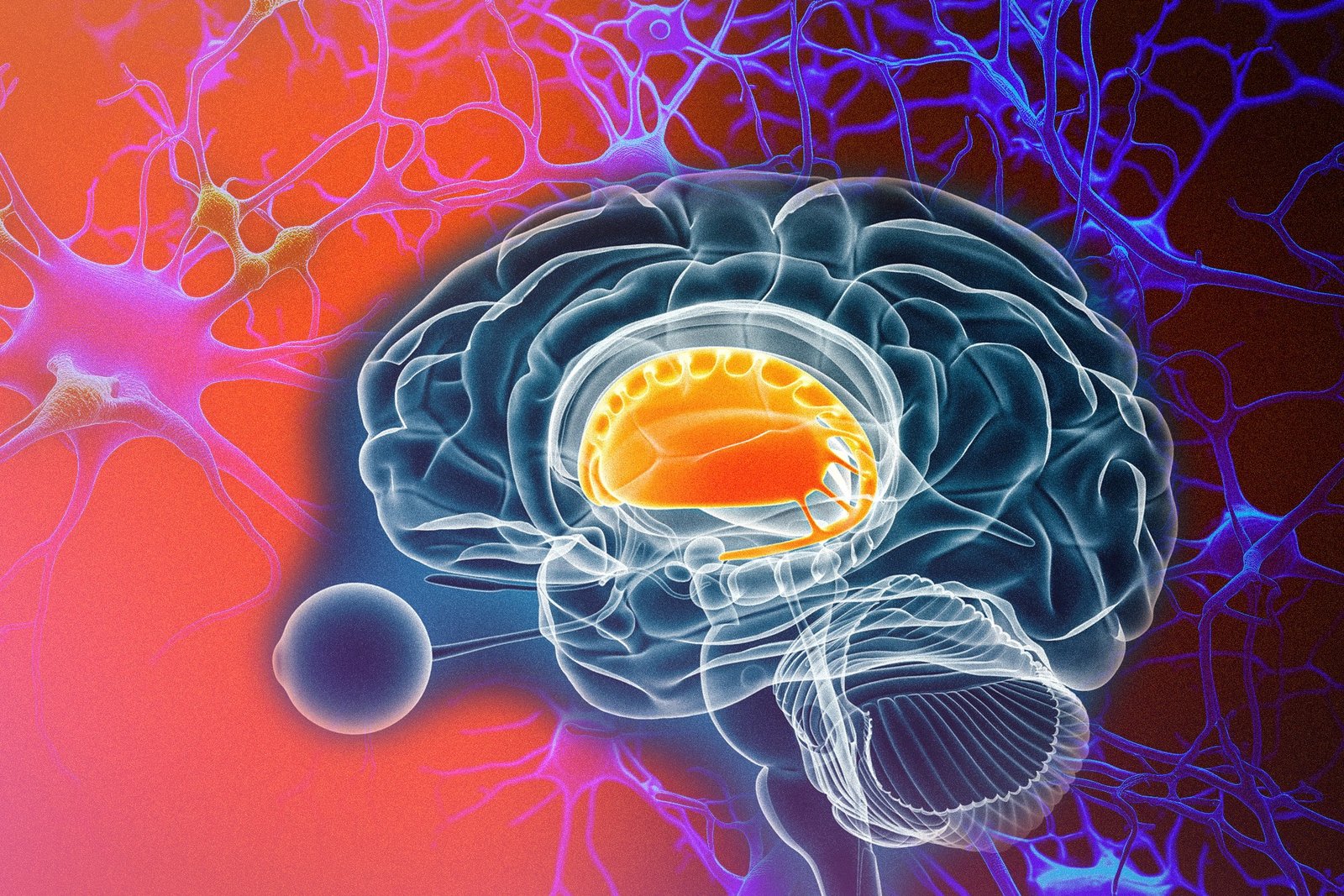
The toxic proteins eventually travel from the lower brain stem up into the substantia nigra. The substantia nigra is the critical part of the brain that produces dopamine and controls your daily physical movement.
By the time a patient develops a resting tremor or a shuffling walk, a massive amount of dopamine-producing cells have already died. The physical motor symptoms are actually late-stage signs of the disease.
11. Differentiating Thrashing From Normal Sleep Talking

Many people talk in their sleep or occasionally jerk awake from a falling dream. Dr. Robert is always careful to point out that not all nighttime movement is dangerous. True REM Sleep Behavior Disorder has a very specific presentation that looks vastly different from common sleep habits.
Simple sleep talking is usually harmless mumbling that happens during lighter stages of rest. It does not carry the same aggressive physical energy or coordinated movement. Understanding the difference prevents unnecessary panic in healthy adults.
12. Why Night Terrors Are Different

Sleepwalking typically occurs during deep non-dreaming sleep and involves a blank stare with zero memory of the event. Night terrors also happen in deep sleep and rarely involve a specific dream narrative.
These deep sleep behaviors are very common in children and young adults. They are completely unrelated to Parkinson’s disease or toxic brain proteins. The brain wave activity during these events looks nothing like the active dreaming phase.
13. The Key Sign Of Dream Enactment

Dream enactment happens during the Rapid Eye Movement phase, which occurs more often in the early morning hours. If you wake up a patient who is actively thrashing from this disorder, they become fully alert almost instantly.
More importantly, their physical actions perfectly match the story they were just dreaming about. If they were swinging their arms wildly in bed, they will tell you they were just dreaming about a boxing match.
14. The Specific Diagnostic Process In The Sleep Lab

When a patient arrives at the clinic with these symptoms, the mandatory first step is an overnight polysomnography. The patient spends the night in a comfortable clinic bed connected to various precision monitors.
Dr. Robert does not just look at oxygen levels during this comprehensive test. He specifically places small wire sensors to monitor the electrical activity in the patient’s chin and leg muscles.
15. Reading The Muscle Monitor Data
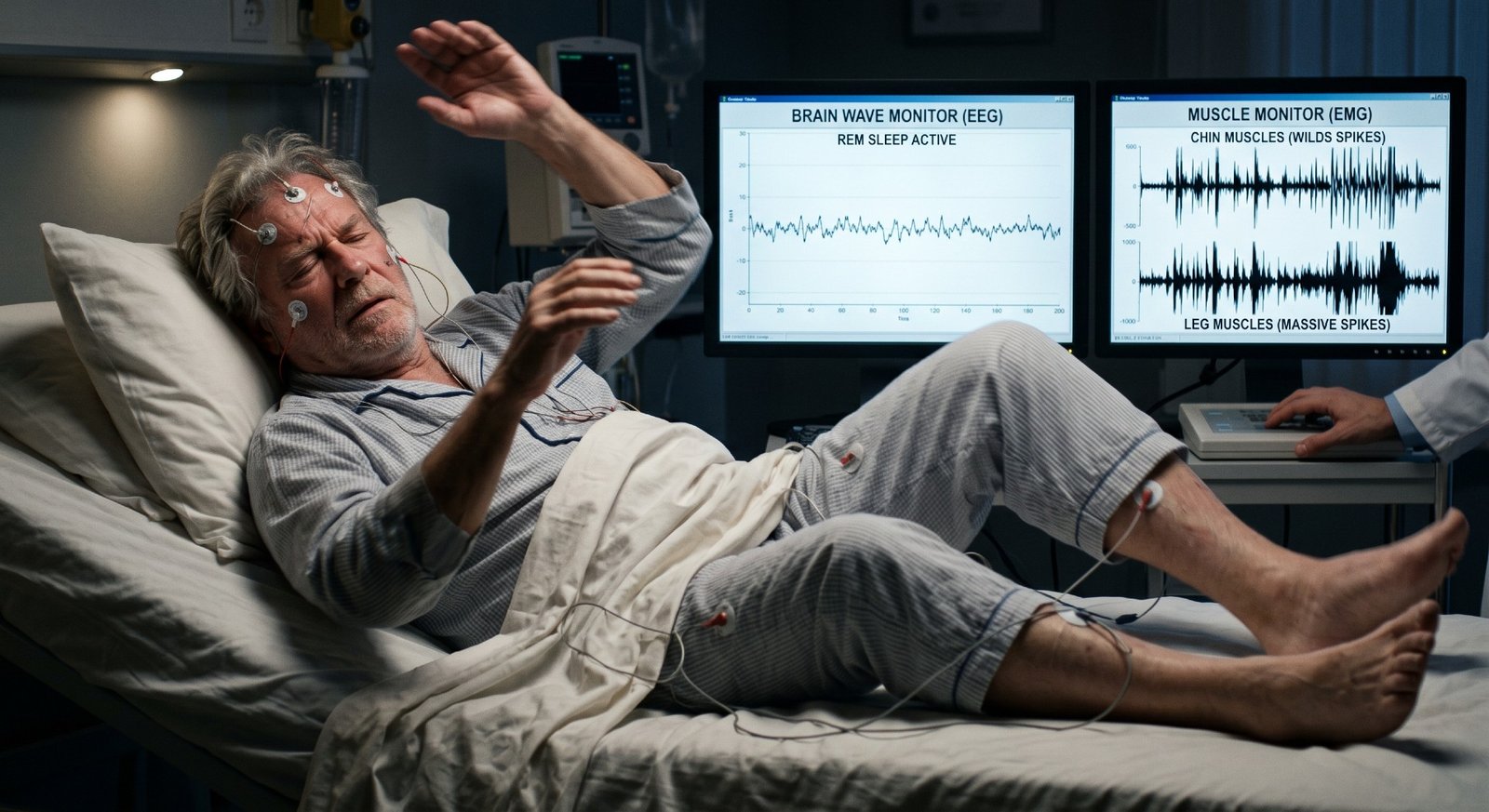
When the brain wave monitor shows the patient entering active dream sleep, the muscle monitor should go completely flat. A flat line on the screen means the muscles are safely and chemically paralyzed.
In a patient with this condition, the muscle monitor spikes aggressively with intense bursts of electricity. The chin muscles twitch wildly on the graph, and the leg muscles show massive spikes of active engagement.
| Sleep Disorder | Stage of Sleep | Memory of the Event | Typical Actions | Risk of Parkinson’s Link |
| Sleepwalking | Deep Sleep | None | Walking, eating, blank stare | Low |
| Night Terrors | Deep Sleep | None | Screaming, sweating, panic | Low |
| Sleep Apnea | Any Stage | None | Snoring, gasping, choking | Low |
| REM Sleep Behavior Disorder | Dream Sleep | Vivid memory | Punching, kicking, talking | High |
16. Creating A Safe Physical Sleep Environment

Once diagnosed, the most immediate danger of this condition is severe physical injury in the bedroom. Patients have been known to shatter glass windows or severely bruise their spouses while trying to escape a terrifying dream attacker.
Couples often feel overwhelmed by the need to change their intimate sleeping arrangements. Dr. Robert helps them understand that treating the bedroom like a safety zone is a temporary but urgent necessity.
17. Bedroom Modifications To Protect Your Partner

Dr. Robert advises patients to start by moving the bed frame completely away from any glass windows or mirrors. Nightstands should be swapped for soft fabric tables or removed entirely from the arm’s reach of the mattress.
In severe cases, the patient and their partner may need to sleep in separate beds or even separate rooms. Some couples find success by placing a large body pillow between them as a physical buffer. The priority is ensuring the healthy partner can sleep through the night without fear of a sudden physical strike.
18. Exploring Medication And Treatment Options

Once the physical bedroom is secured against accidents, doctors often explore medication options to suppress the violent nighttime movements. Standard over-the-counter sleeping pills do not fix this broken paralysis mechanism and can sometimes make confusion worse.
Clonazepam is a highly common medication used to reduce the frequency of the nighttime thrashing. High clinical doses of melatonin have also shown remarkable success in reducing dream enactment behaviors without heavy side effects.
19. Using The Eight-Year Head Start For Brain Health

Beyond simply treating the violent sleep movements, the true value of this diagnosis lies in the incredible early warning window. Knowing that a neurodegenerative disease is likely approaching gives the patient a massive and rare head start in modern medicine.
This early knowledge allows patients to adopt aggressive neuroprotective lifestyle changes immediately while they are still fully mobile. They can enter clinical trials designed to slow the toxic protein spread before severe brain damage occurs.
20. The Role of High-Intensity Aerobic Exercise

Rigorous exercise like stationary cycling, boxing, or fast walking is currently one of the most promising ways to protect the aging brain. Getting the heart rate up forces the body to release neuroprotective growth factors that strengthen brain cells.
Regular vigorous exercise builds a cognitive and physical reserve that can directly combat the encroaching disease. By the time a resting tremor eventually appears, the patient’s brain and body are incredibly strong and resilient.
| Management Strategy | Immediate Goal | Long-Term Benefit |
| Bedroom Modification | Prevent physical injury tonight | Sustained safety for patient and partner |
| Melatonin Therapy | Suppress muscle movement in dreams | Better quality uninterrupted sleep |
| Aerobic Exercise | Boost overall cardiovascular health | Potentially delay neurodegenerative decline |
| Neurological Tracking | Establish a clinical baseline | Catch early motor symptoms instantly |
