

Doing 30 push ups everyday sounds simple, but your body does not respond to the number alone. If those 30 repetitions are challenging, they can build real strength and endurance. If they become too easy, progress can slow even though you keep doing the work.
The surprising part is how much of your body is involved in every repetition. Your chest and arms do the obvious work, but your core, shoulders, shoulder blades, glutes, and even your nervous system have jobs too.
Here is what 30 push ups a day actually does to your body, what the research supports, and where the popular claims go too far.
If you have heart disease, uncontrolled high blood pressure, a recent injury, osteoporosis, or another medical condition that affects exercise safety, talk with your doctor before beginning a new daily strength routine.
What Muscles Are Actually Working During 30 Push Ups?
A push up is essentially a moving plank combined with an upper body pressing exercise. Cleveland Clinic identifies the chest, triceps, and shoulders as major working muscles, while Mayo Clinic also describes properly performed push ups as a core stability exercise.
The standard version can also load more of your body weight than many people expect.
| Area | What It Does During a Push Up | What You May Gain |
|---|---|---|
| Chest | Drives the body away from the floor | Pressing strength and muscle growth |
| Triceps | Straighten the elbows | Stronger arms and pressing ability |
| Shoulders | Assist pressing and stabilize the upper arm | Better upper body control |
| Core | Resists sagging and excessive spinal movement | Greater trunk stability |
| Serratus anterior | Helps control movement of the shoulder blades | Better scapular control |
| Glutes | Help keep the pelvis aligned | More stable plank position |
A standard floor push up can require you to support roughly 69 to 75 percent of your body weight depending on where you are in the movement. Cleveland Clinic notes that modified knee versions reduce that demand substantially.
That is one reason 30 good repetitions can feel very different from 30 rushed ones.
1. Your Chest Can Become Stronger

Your pectoralis major is one of the primary muscles moving you away from the floor. When that muscle repeatedly produces force against enough resistance, it receives a strength training stimulus.
In an eight week study involving 18 young men, participants training with appropriately loaded push ups increased pectoralis major muscle thickness. Their results were comparable with a group performing bench presses at a similar relative load.
Thirty repetitions can therefore help, but only when they remain challenging enough. If you can finish all 30 without approaching fatigue, moving harder may eventually matter more than adding more easy repetitions.
2. Your Triceps Get More Work Than You May Realize

Every time you straighten your elbows at the top of a push up, your triceps help produce the movement. That repeated elbow extension is why the back of your upper arms can become stronger over time.
In the same eight week trial, triceps muscle thickness increased in participants performing push ups twice each week.
Keep your elbows reasonably close to your body rather than letting them flare dramatically outward. Cleveland Clinic recommends this position partly because an excessively wide style can place greater stress on the shoulders.
3. Your Shoulders Learn to Stabilize Under Load
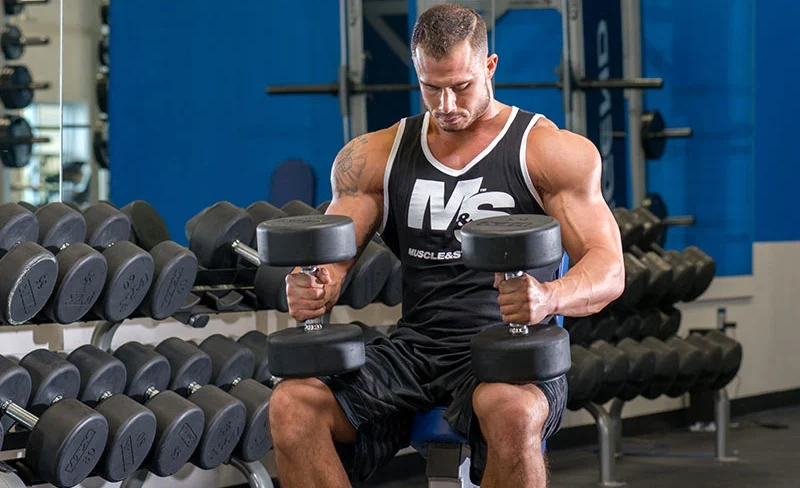
Push ups are not primarily a shoulder exercise, but the deltoids help control and support the movement. Your shoulder muscles must coordinate with the chest and arms while your body moves as one unit.
That can improve control during everyday pushing movements and other upper body exercises.
Do not assume wider hands automatically mean better shoulder training. Cleveland Clinic cautions that very wide push ups can increase shoulder stress, so shoulder width positioning is a sensible starting point for most people.
4. Your Core Is Working Through Every Rep

A good push up is also a plank. Your abdominal muscles contract to resist the pull of gravity and prevent your lower back from sagging.
Mayo Clinic specifically describes the push up as a useful core stability exercise when performed properly. Keeping the abdomen contracted and the spine aligned forces your trunk to remain rigid while the arms move.
Think about gently tightening your stomach and glutes before lowering yourself. If your hips drop before your chest does, your core is no longer maintaining the position effectively.
5. Your Shoulder Blades Get Their Own Workout
One less obvious muscle deserves attention: the serratus anterior. It runs along the sides of the rib cage and helps control movement of the shoulder blade.
A systematic review and meta analysis covering 19 studies and 356 participants found high serratus anterior activity during push up plus exercises. Stable surfaces tended to produce a useful combination of high serratus activity without unnecessarily increasing upper trapezius activity.
You do not need an unstable platform to make every push up more effective. A stable floor and controlled movement are enough to challenge important shoulder blade stabilizers.
6. Your Upper Body Endurance Can Improve

Strength tells you how much force you can produce. Muscular endurance tells you how long your muscles can continue working before fatigue takes over.
An eight week progressive push up study involving recreationally trained adults found training specific improvements after participants trained twice per week. The program examined strength, endurance, muscle activation, and neuromuscular efficiency.
If 10 repetitions currently feel difficult, reaching 20 or 30 controlled repetitions later is a meaningful endurance improvement.
7. Your Pressing Strength Can Carry Over to Other Exercises

Push up strength does not remain trapped inside the push up movement. Research suggests that properly loaded push up training can improve performance in other pressing tasks.
In the eight week push up versus bench press study, bench press maximum strength improved in the push up group from about 61 kilograms to 64 kilograms.
That does not mean push ups replace heavy bench pressing for everyone. It shows that body weight training can create a genuine strength stimulus when the resistance is appropriate.
8. Your Nervous System Becomes Better at the Movement
The first changes you notice are not always bigger muscles. Your nervous system also becomes more efficient at coordinating the muscles needed for the exercise.
Repeated practice improves movement skill, timing, and your ability to recruit the required muscles together. Progressive push up research has documented improvements in strength and training specific performance even over relatively short programs.
This is one reason your first week of 30 push ups may feel awkward while the same movement feels smoother several weeks later.
What Might Change Over the First Several Weeks?
There is no universal push up timeline. Training history, sleep, nutrition, age, starting strength, body weight, technique, and how difficult those 30 repetitions are will all affect the result.
Research trials demonstrating measurable muscle changes generally lasted several weeks rather than several days.
| Time Period | What You May Notice | What Is Happening |
|---|---|---|
| First week | Soreness, fatigue, improving coordination | Your body is adapting to a new workload |
| Weeks 2 to 4 | Repetitions may feel smoother | Movement efficiency and strength are improving |
| Weeks 4 to 8 | Better performance may become clearer | Repeated resistance can drive strength and muscle adaptation |
| After 8 weeks | The same 30 may feel much easier | Your body may need a harder variation or greater resistance |
This is a rough training guide, not a promise that everyone develops at the same speed.
Exercise adaptation varies widely between people. If you have joint problems, previous shoulder surgery, cardiovascular disease, uncontrolled blood pressure, or another condition that changes exercise tolerance, ask a qualified health professional how resistance exercise should be adjusted for you.
9. You Get Meaningful Resistance Without Lifting Weights
Push ups sometimes get dismissed because they use body weight rather than dumbbells or barbells. Physiologically, your muscles care about resistance and effort, not whether the resistance comes from iron or your own body.
During a standard push up, you may support a substantial portion of your body weight. Cleveland Clinic cites estimates around 75 percent in one part of the movement and about 69 percent in another.
That can be a serious load for a beginner. If floor push ups are too difficult, a wall, countertop, or other stable elevated surface can reduce the resistance.
10. Everyday Pushing Tasks May Feel Easier

Push ups train a movement pattern you use outside the gym. Pushing doors, moving objects away from you, getting up from the floor, and performing other upper body tasks all require some combination of pressing strength and trunk stability.
Cleveland Clinic includes push ups among functional strength exercises because the movement can support real life pushing ability.
The most useful training version is one you can control through a comfortable range of motion without losing body alignment.
11. Your Whole Body Learns to Stay Tighter

Your chest and arms create most of the visible motion, but they are not working alone. The glutes, abdomen, and other stabilizing muscles help maintain a straight line from your shoulders through your hips.
That full body tension prevents energy from leaking through a sagging pelvis or excessively arched back.
Mayo Clinic recommends keeping the body straight, contracting the abdominal muscles, and using smooth controlled movement rather than dropping rapidly toward the floor.
Today’s Challenge
- Start with a version that lets you keep clean form for every repetition.
- Split 30 repetitions into three sets of 10 if one long set causes your technique to fall apart.
- Keep your abdomen and glutes engaged from the first repetition to the last.
- When 30 becomes easy, increase difficulty rather than racing through more sloppy repetitions.
- Use a recovery day if soreness or joint discomfort is affecting your form.
12. Progressive Push-Ups Can Keep Building Strength
Your body adapts to repeated stress. That is useful, but it also means the exact same routine eventually becomes less challenging.
A randomized study of 23 moderately trained men compared progressive push up training with bench press training over four weeks. Participants trained three times each week, and both groups significantly improved upper body strength.
Once 30 standard repetitions feel comfortable, you can progress by slowing the lowering phase, elevating the feet, increasing range of motion, or choosing another harder variation.
13. Resistance Exercise May Support Healthier Blood Pressure

Resistance training can benefit cardiovascular health, but this claim needs careful wording. Research on blood pressure generally studies structured resistance programs, not exactly 30 push ups every morning.
A 2026 meta analysis of randomized trials in adults with hypertension or elevated blood pressure found that resistance training reduced both systolic and diastolic blood pressure compared with control conditions. The researchers also emphasized that resistance exercise should complement medical care rather than replace treatment.
Thirty push ups can contribute to a strength routine, but they should not be presented as a treatment for hypertension.
14. Push Up Capacity Can Reflect Broader Fitness

One of the most interesting push up studies did not ask people to perform 30 every day. Instead, researchers tested how many push ups men could perform and followed their cardiovascular outcomes.
The study included 1,104 occupationally active male firefighters with an average age of about 40. Over 10 years, men capable of more than 40 push ups at baseline had fewer cardiovascular disease events than men who completed fewer than 10.
The incidence rate ratio in the higher capacity group was 0.04, but this does not prove that doing more push ups caused the lower risk. Push up capacity may partly reflect overall fitness, body composition, and health.
15. It Can Contribute to Healthier Body Composition

Push ups burn some energy and stimulate muscle, but 30 repetitions are not a shortcut to losing belly fat. Fat loss still depends heavily on total energy balance, diet, activity level, and the rest of your exercise routine.
A meta analysis of 54 resistance training trials found an average reduction in body fat percentage of about 1.46 percentage points compared with inactive controls. Those studies involved fuller resistance programs lasting at least four weeks, so the result should not be assigned directly to one daily push up routine.
Think of push-ups as one useful piece of a larger activity plan rather than a stand-alone fat loss method.
16. Resistance Training May Support Mental Health
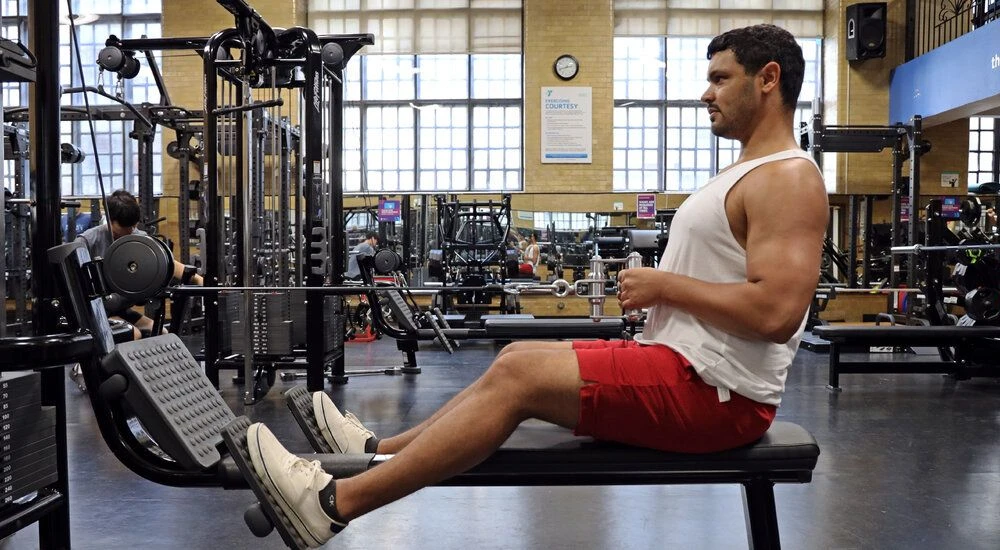
Physical benefits get most of the attention, but resistance training has also been studied for mental health. A meta analysis covering 16 articles and 922 participants found that resistance exercise training significantly reduced anxiety symptoms overall.
That evidence applies to resistance exercise as a category, not specifically to a 30 push up challenge. Still, a short repeatable exercise routine can form part of a broader pattern of physical activity that supports mental health.
The CDC also notes that regular physical activity supports both physical and mental health.
17. The Biggest Benefit May Be Building a Strength Habit You Can Progress

Thirty push ups take little equipment and can be done almost anywhere. That low barrier can make them easier to repeat consistently than a workout requiring a gym, machines, or a long block of free time.
Consistency matters, but progression matters too. The research showing strength gains used training that was sufficiently challenging, and some studies deliberately changed push up difficulty as participants improved.
So the goal should not be to worship the number 30. The goal is to make those repetitions appropriate for your current ability and gradually adjust the challenge as your body adapts.
When to Stop and Get Medical Advice

Normal muscle fatigue is different from symptoms that suggest something may be wrong.
- Stop exercising and seek medical attention for chest pain, pressure, or tightness, especially when accompanied by sweating, nausea, or pain spreading to the arm, jaw, back, or shoulder.
- Stop if exercise causes severe or unusual shortness of breath, fainting, or significant dizziness.
- Persistent sharp pain in the shoulder, elbow, wrist, neck, or back deserves evaluation rather than repeatedly training through it.
- Sudden weakness, numbness, or loss of normal arm function should not be treated as routine workout soreness.
