
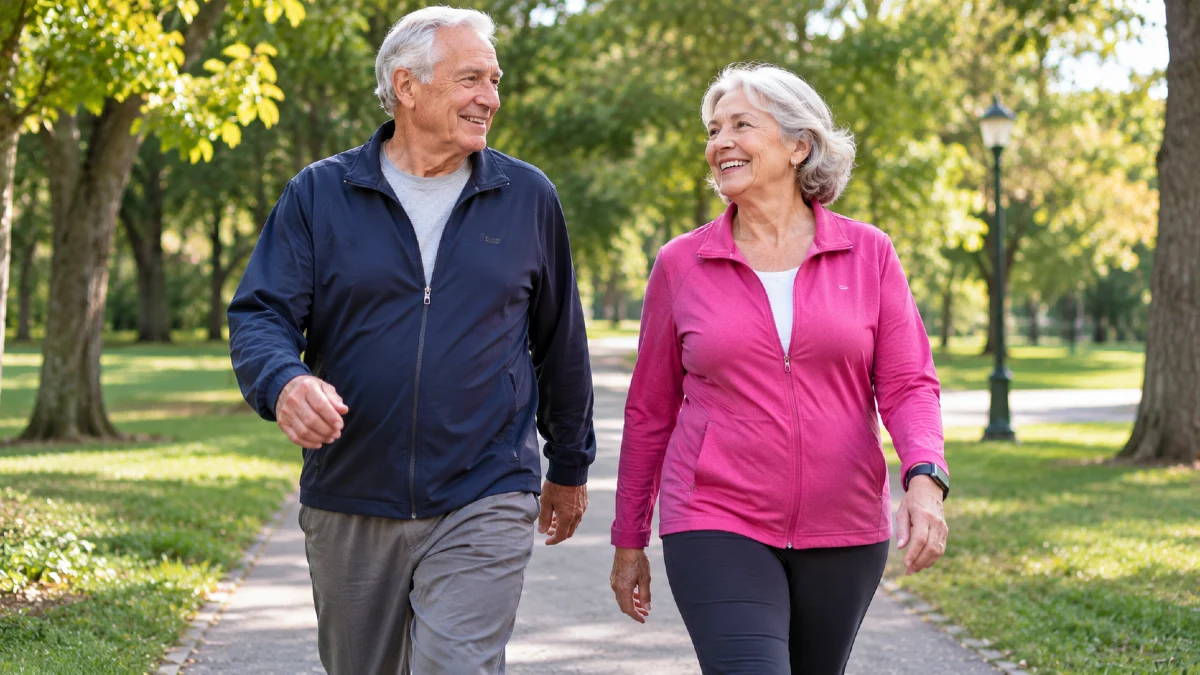
Many people worry about losing their memory as they get older, but few realize how much their everyday movement may matter. Dementia develops through complex changes in the brain, and some risk factors can build quietly for years before symptoms appear.
Researchers have repeatedly connected one surprisingly ordinary daily habit with a lower risk of dementia, even among people who are not especially athletic.
The encouraging part is that this habit does not require expensive equipment, complicated exercises, or hours at the gym. And newer research suggests the benefits may begin at a level most people can realistically achieve.
The Daily Habit Is Walking, but the Number of Steps Matters

Walking may be one of the simplest ways to support brain health as people age. It improves cardiovascular fitness, helps manage several chronic conditions, and provides regular physical activity without requiring a gym membership.
What makes walking especially interesting is the growing evidence connecting daily step counts with dementia risk. Researchers have found that people who walk more tend to experience lower rates of dementia than those who remain largely inactive.
A major study published in JAMA Neurology in 2022 followed 78,430 adults aged 40 to 79. Participants wore activity monitors, allowing researchers to measure their actual daily movements rather than relying entirely on what people remembered about their exercise habits.
Over a median follow-up of nearly seven years, 866 participants developed dementia. The researchers found a clear association between higher daily step counts and lower dementia incidence.
One of the most encouraging findings was that approximately 3,800 daily steps were associated with a 25% lower dementia risk. The comparison was based on statistical models examining different step counts, rather than an experiment assigning people to walking targets.
The strongest estimated association occurred at approximately 9,800 steps per day, which corresponded to about a 51% lower dementia hazard relative to the study’s modeled reference level.
These percentages describe associations within an observational study. They do not prove that walking a certain number of steps directly prevents dementia or guarantees an individual the same reduction in risk. JAMA Network+1
Walking is a promising habit for brain health, but it cannot guarantee dementia prevention. People with heart disease, significant mobility limitations, or other medical conditions should ask their healthcare provider about a suitable activity level.
What Researchers Found at Different Step Counts

For years, 10,000 daily steps became a familiar fitness target. Yet researchers are increasingly finding that meaningful health associations appear well below that number.
The 2022 study suggested there may be no single minimum threshold that everyone must cross before movement becomes worthwhile. People who are currently very inactive may have plenty to gain from simply increasing their usual daily activity.
| Daily step count | What the research suggests |
|---|---|
| Around 2,000 | Common reference level in step count comparisons; increasing activity may be beneficial |
| Around 3,800 | Associated with approximately 25% lower dementia hazard in the 2022 study |
| Around 7,000 | Supported by broader research connecting daily steps with lower risks of several chronic conditions |
| Around 9,800 | Associated with the strongest estimated dementia risk reduction in the 2022 study |
| Above 10,000 | May offer other health benefits, but more steps are not necessarily better for every outcome |
The important distinction is that these numbers come from population research. They are not precise medical prescriptions or guaranteed protective thresholds for individual people.
A person currently averaging 2,000 steps might reasonably begin by adding 500 steps each day. Someone already walking 6,000 steps may benefit from maintaining that activity consistently rather than chasing an unrealistic target.
Researchers also found that walking intensity appeared to matter. Faster, more purposeful steps were associated with stronger reductions in dementia incidence than step totals alone. JAMA Network+1
A 2026 Study Added Another Important Piece of Evidence

In November 2026, researchers published another significant study in Nature Medicine. This research focused on older adults who did not have cognitive impairment when the study began, including people with elevated levels of amyloid protein in their brains.
Amyloid is one of the proteins associated with Alzheimer’s disease. Its buildup can begin long before a person develops obvious memory problems.
The researchers examined physical activity alongside changes in cognition and brain pathology over time. They found that higher daily step counts were associated with slower cognitive and functional decline among participants with elevated amyloid.
The findings were particularly interesting at modest activity levels. Participants taking approximately 3,001 to 5,000 steps daily showed a slower decline than those in the inactive group.
People taking 5,001 to 7,500 daily steps showed further favorable associations. The study did not find proportionally greater benefits at every step count above that range.
Researchers also observed a connection between higher physical activity and slower accumulation of tau protein in a region of the brain involved in Alzheimer’s disease. Tau accumulation is another important feature of the disease process.
However, the researchers did not find that more walking was associated with a lower amyloid burden over time. This suggests that the relationship between movement and brain health is more complicated than simply removing harmful proteins.
Why Walking May Help Protect the Aging Brain
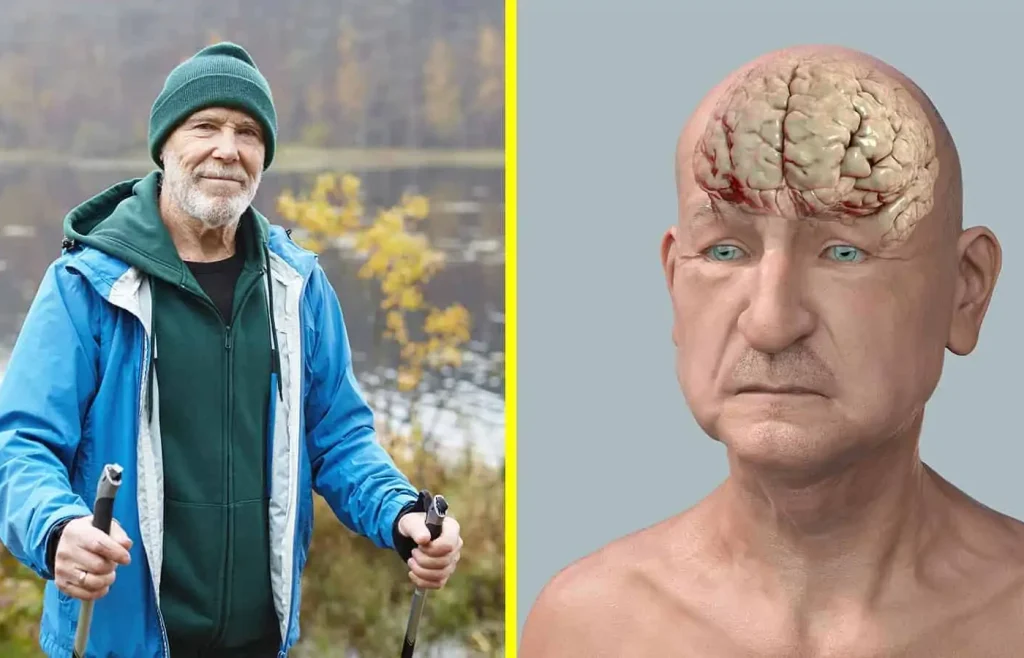
The brain depends on a continuous supply of oxygen, glucose, and other nutrients delivered through blood vessels. Anything that damages vascular health can also affect the brain’s ability to function efficiently.
Regular walking supports several systems involved in maintaining cognitive health. Researchers believe these effects may help explain why physically active adults often have better brain health outcomes.
1. Walking Supports Healthy Blood Circulation
Physical activity helps strengthen the cardiovascular system and supports blood vessel function. This matters because poor vascular health is associated with both stroke and vascular forms of cognitive impairment.
High blood pressure can damage small blood vessels throughout the body, including those supplying the brain. Over time, vascular injury can contribute to changes in thinking, memory, and decision-making.
Walking can help lower blood pressure and improve cardiovascular fitness, particularly when practiced regularly. Those benefits may be one pathway connecting physical activity with a lower dementia risk.
2. It Helps Control Blood Sugar
Diabetes is an established risk factor for cognitive decline and dementia. Persistently elevated blood sugar can damage blood vessels and contribute to metabolic changes that affect brain health.
Walking helps working muscles use glucose for energy. Regular activity can also improve insulin sensitivity, which helps the body regulate blood sugar more effectively.
A short walk after a meal may be a practical way to add movement during the day. However, people taking medications that can cause low blood sugar should discuss exercise timing and safety with their healthcare team.
3. Walking May Support Brain Structure
The brain contains networks of nerve cells that communicate through specialized connections. Maintaining these networks becomes increasingly important as the body ages.
Researchers are studying how exercise influences brain structure, nerve cell function, and substances involved in neuronal maintenance. One area of interest is brain-derived neurotrophic factor, or BDNF, which helps support neuronal survival and plasticity.
A National Institute on Aging report published in January 2025 described research involving 125 cognitively healthy adults between ages 22 and 94. Greater lifelong fitness was associated with favorable measures of white matter health, including features related to myelin.
Myelin helps protect nerve fibers and supports communication between different brain regions. Although the findings do not prove that daily walking prevents dementia, they offer another possible explanation for the relationship between physical fitness and healthy brain aging. National Institute on Aging+1
4. Movement Can Improve Sleep and Mood
Sleep problems, depression, and inactivity can overlap in older adults. Poor sleep can worsen daytime attention and memory, while low mood may reduce motivation to remain active.
Regular physical activity can support sleep quality and psychological well being. Walking outdoors may also provide opportunities for daylight exposure and social contact.
These benefits matter even when dementia prevention is not the immediate goal. Better sleep, mood, and physical function can improve everyday quality of life and make healthy routines easier to maintain.
Walking Speed May Matter More Than People Think
The 2022 dementia study examined more than just total daily steps. Researchers also measured how quickly participants moved during their most active periods.
The investigators found that higher walking cadence, meaning steps taken per minute, was associated with lower dementia incidence. Their findings suggested that purposeful walking could be particularly valuable.
This does not mean everyone should walk as quickly as possible. Walking intensity should match a person’s age, fitness level, medical conditions, and balance.
A useful approach is to walk at a pace that raises breathing slightly while still allowing conversation. For many adults, this is a practical way to recognize moderate-intensity activity.
| Walking style | Typical effort | Practical use |
|---|---|---|
| Gentle walking | Comfortable breathing | Good starting point for beginners and people rebuilding stamina |
| Moderate walking | Breathing faster but able to talk | Helps contribute toward weekly aerobic activity recommendations |
| Brisk walking | Noticeably increased breathing | Suitable for people who can safely tolerate a stronger effort |
| Short walking sessions | Several brief walks throughout the day | Helps people accumulate movement without one long session |
The CDC recommends at least 150 minutes of moderate-intensity aerobic activity per week for most adults aged 65 and older. Brisk walking is one way to reach that goal.
The guidance also encourages muscle strengthening activities at least twice weekly and activities that improve balance. Walking is valuable, but it should ideally be part of a broader physical activity routine. CDC+1
Exercise intensity is individual. People with heart conditions, breathing difficulties, severe arthritis, frequent falls, or physical limitations may need a modified activity plan developed with a qualified healthcare professional.
The Simplest Way to Make Walking a Daily Habit

One challenge with healthy routines is that people often begin with goals that are too demanding. They might decide to walk 10,000 steps immediately, experience soreness or exhaustion, and abandon the habit after several days.
A more practical approach is to work from a comfortable baseline. The aim is to make walking a predictable part of daily life before increasing the amount or intensity.
Start by noticing how much movement already happens during a normal day. A phone, pedometer, or fitness watch can help, although none is essential.
Once that baseline is clear, gradually add walking opportunities. Even an additional five or ten minutes may be manageable for someone who currently spends much of the day sitting.
Try This Today: A Simple Walking Routine
- Begin with 5 to 10 minutes of comfortable walking after breakfast.
- Add another short walk after lunch or dinner.
- Increase your usual daily steps gradually when movement feels comfortable.
- Include some purposeful walking at a moderately challenging pace if it is safe.
- Track consistency across the week rather than chasing a perfect number every day.
A helpful strategy is to connect walking with something already on the schedule. Morning coffee, a regular phone call, or finishing lunch can become reminders to get moving.
Walking with a friend or family member may also improve consistency. Social interaction provides another meaningful benefit, especially for older adults who spend much of their time alone.
How to Build Toward More Steps Without Overdoing It
There is no scientifically established four-week walking schedule that guarantees dementia risk reduction. Still, gradually increasing activity is a sensible way to build a sustainable routine.
The following example is designed for a generally healthy adult who has been relatively inactive. It is not a treatment plan, and the pace should be adjusted according to personal ability.
| Period | Suggested focus | Main objective |
|---|---|---|
| Week 1 | Record usual steps and add 5 minutes of walking | Establish a comfortable starting point |
| Week 2 | Add a second short walk when possible | Build consistency |
| Week 3 | Gradually extend one walking session | Improve walking endurance |
| Week 4 | Maintain regular walking and consider a slightly brisker pace | Make the routine sustainable |
Some people may progress faster, while others may need several weeks at the same level. Chronic pain, reduced mobility, medical treatment, and fatigue can all affect what is appropriate.
The most useful target is one that can be maintained safely. Walking consistently at a modest level is generally more realistic than repeatedly attempting an intense routine that cannot be sustained.
Does Walking Outdoors Offer Additional Benefits?

Walking does not require a park, scenic trail, or perfect weather. Indoor hallways, shopping centers, and treadmills can all provide opportunities to stay active.
However, outdoor walking may offer some additional practical advantages. Natural surroundings can make exercise more enjoyable, while community spaces may create opportunities to interact with other people.
Walking outdoors also exposes people to changing surfaces and environments, which may place different demands on balance and attention. These demands can be useful for some healthy adults, but uneven paths may increase fall risk for others.
There is not enough evidence to claim that outdoor walking is universally better than indoor walking for dementia prevention. The most suitable setting is one that allows safe, regular movement.
For older adults with balance problems, a familiar indoor route may be the better choice. Safety and consistency matter more than finding an ideal location.
What If Someone Cannot Walk Very Far?

Not everyone can comfortably walk several thousand steps per day. Arthritis, neuropathy, respiratory conditions, heart disease, and limited mobility can make walking difficult.
The broader evidence supporting physical activity is not limited to walking. The goal is regular movement appropriate to individual ability, rather than achieving a step count at any cost.
Some older adults may benefit from water exercises, stationary cycling, or supervised fitness programs. Others may use seated exercise routines or physical therapy to maintain strength and mobility.
People who use walkers or mobility aids can still benefit from suitable activity. A physical therapist can help identify movement options that support safety, endurance, and independence.
The CDC specifically advises older adults who cannot meet standard activity recommendations to remain as physically active as their health and abilities permit. Some activity is better than none, and individual circumstances should guide the plan. CDC+1
Can Walking Actually Prevent Alzheimer’s Disease?
This is where the scientific evidence requires careful interpretation. Walking is repeatedly associated with favorable brain health outcomes, but researchers have not established that any particular daily step count prevents Alzheimer’s disease.
Alzheimer’s develops through multiple biological processes, including changes involving amyloid, tau, inflammation, and nerve cell function. Age, genetics, vascular health, and other factors influence disease risk.
Observational studies cannot completely separate walking from other lifestyle characteristics. People who walk more may also have better mobility, healthier cardiovascular systems, stronger social connections, or fewer underlying illnesses.
There is also the possibility of reverse causation. Early brain changes could reduce physical activity before dementia is diagnosed, making inactivity partly a consequence of an emerging disease rather than only a potential contributor.
Researchers use statistical adjustments and other methods to reduce these problems, but uncertainty remains. That is why walking should be presented as a promising risk-reduction habit rather than a proven prevention strategy.
The 2024 Lancet Commission identified physical inactivity among 14 potentially modifiable dementia risk factors. Its analysis suggested that addressing these factors collectively could prevent or delay a substantial proportion of dementia cases at the population level.
Importantly, that estimate does not mean walking alone could prevent nearly half of dementia cases. It reflects the potential combined impact of addressing several risk factors across the lifespan. PubMed+1
Why Walking Should Be Part of a Bigger Brain Health Plan

Even though walking is the central habit, brain health depends on more than movement. Managing blood pressure, diabetes, hearing difficulties, and other medical conditions remains important.
Smoking, excessive alcohol consumption, untreated depression, and social isolation are also associated with dementia risk. Addressing these factors may improve health in ways that walking alone cannot.
The World Health Organization’s updated 2026 dementia risk reduction guidelines emphasize healthy behaviors alongside management of medical conditions and environmental risk factors. The overall approach is broader than any single daily habit.
For someone beginning with walking, the next step might be a routine blood pressure check or a conversation about hearing changes. Small actions can complement each other when they address different sources of risk. World Health Organization+2
What About People Who Already Notice Memory Changes?

Occasionally forgetting where the keys were placed is common and does not automatically indicate dementia. However, memory changes that affect daily functioning deserve medical attention.
Someone who repeatedly gets lost in familiar places, struggles to manage routine finances, or has increasing difficulty completing familiar tasks should speak with a healthcare professional. Changes in judgment, language, or behavior may also need evaluation.
Some cognitive problems have potentially treatable contributors, including medication effects, thyroid disorders, vitamin deficiencies, depression, and sleep problems. An assessment can help identify possible causes.
Walking may still be appropriate for people experiencing cognitive changes, but it is not a substitute for diagnosis or medical care. Families should also consider supervision and route safety when wandering or disorientation is a concern.
When to Seek Medical Attention
- New memory problems that interfere with everyday responsibilities should be medically assessed.
- Increasing confusion, getting lost in familiar places, or significant changes in behavior deserve prompt evaluation.
- Sudden confusion, facial drooping, difficulty speaking, or weakness on one side of the body may indicate a medical emergency. Call emergency services.
- Chest pain, severe breathlessness, or fainting during walking requires stopping activity and seeking urgent medical care.
The Most Important Lesson Is That Every Step Does Not Need to Be Perfect

The strongest message from recent walking research is not that everyone must reach 10,000 steps. It is that meaningful associations with brain health appear at levels of physical activity that many people may find achievable.
For someone who currently spends most of the day sitting, adding a short morning walk may represent real progress. For another person, maintaining regular brisk walking may be the more appropriate goal.
The evidence is promising because walking is accessible, inexpensive, and useful for several aspects of health. It can support cardiovascular fitness, physical independence, mood, and metabolic health while potentially contributing to lower dementia risk.
The most worthwhile daily habit is the one that becomes part of ordinary life. A comfortable, consistent walking routine may offer more lasting value than an ambitious exercise target that disappears after a few weeks.
Dementia risk cannot be reduced to a single number on a fitness tracker. Nevertheless, the research provides a practical reason to keep moving, at a safe and sustainable pace, throughout the years ahead.
