

You turn 40, your jeans feel tighter, and suddenly every extra pound seems to have the same explanation: your metabolism must be slowing down. That idea is repeated so often that many adults accept it as an unavoidable part of middle age.
Less daily movement, gradual muscle loss, shorter sleep, hormonal shifts, medications, and subtle changes in food intake can all matter long before metabolism itself shows a major age-related decline.
One of the largest studies ever conducted on human energy expenditure produced a surprising result. After accounting for body size and body composition, researchers found that daily energy expenditure remains remarkably stable from roughly age 20 through age 60.
1. Scientists Followed Metabolism From Infancy All the Way Into the 90s

Much of what people once believed about aging and metabolism came from smaller studies, estimates, or observations of people becoming less active as they aged. Researchers wanted to separate the effect of aging itself from changes in body size, muscle mass, and lifestyle.
A major study published in Science in 2021 brought together measurements from 6,421 people in 29 countries, ranging from eight-day-old infants to adults in their 90s.
The researchers then adjusted their calculations for differences in body size and fat-free mass. That step was crucial because a larger person or someone carrying more muscle naturally burns more energy than a smaller person.
| Age period | What happened to adjusted energy expenditure |
|---|---|
| Infancy | Metabolism rises rapidly and reaches exceptionally high levels |
| Childhood | Energy expenditure gradually declines toward adult levels |
| About 20 to 60 | Adjusted total energy expenditure remains relatively stable |
| After about 60 | Energy expenditure begins a gradual decline |
| Advanced age | The decline becomes increasingly noticeable |
2. Turning 40 Does Not Suddenly Flip a Metabolic Switch

The popular version of the metabolism story says that calorie burning begins falling rapidly sometime in the 30s or 40s. The study found little evidence for such a sudden biological cliff.
After researchers accounted for body composition, energy expenditure during adulthood remained surprisingly steady through middle age. The clearer age-related decline appeared after approximately 60, when adjusted energy use began dropping by about 0.7% per year on average.
A promotion may have created a desk-based schedule. Knee pain may have cut down evening walks. Sleep may be shorter, restaurant meals more frequent, or muscle mass lower than it was a decade ago.
3. What Scientists Mean When They Say “Metabolism”

The word metabolism is often used as though it describes one simple furnace inside the body. In reality, your total daily energy expenditure comes from several different processes.
Your body burns calories to stay alive. Your heart beats, lungs move air, kidneys filter blood, brain uses energy, and cells continuously perform chemical reactions even when you are lying completely still.
You also burn energy digesting and processing food. On top of that comes physical activity, which includes both structured exercise and ordinary daily movement.
| Part of daily energy expenditure | What it includes |
|---|---|
| Resting energy use | Breathing, circulation, brain activity, organ function, temperature regulation |
| Digestion | Energy required to digest, absorb, and process food |
| Exercise | Walking workouts, cycling, swimming, resistance training, sports |
| Everyday movement | Standing, stairs, shopping, cleaning, gardening, errands, fidgeting |
In other words, your cells may not suddenly burn fewer calories dramatically just because you turned 45, but your entire day may still require less energy than it did 15 years earlier.
4. Muscle Loss Can Quietly Change How Much Energy You Use

Muscle mass and strength tend to peak in early adulthood and gradually decline afterward. The process is usually slow at first, which makes it easy to overlook.
Someone may notice that carrying groceries feels harder, climbing stairs takes more effort, or getting up from the floor is less comfortable. Those small signs can reflect changes in strength and muscle that also influence activity levels.
Muscle itself requires energy to maintain, but its bigger role may be indirect. Stronger people generally find it easier to stay active, walk farther, lift objects, garden, exercise, and handle demanding everyday tasks.
When muscle declines, activity can decline with it. The combination can gradually lower total daily calorie use without producing an obvious moment when a person feels their metabolism “slow down.”
5. Your Workout May Be the Same While the Rest of Your Day Has Changed

Consider what happens when someone moves from an active workplace to a desk job. They may stop walking between buildings, climbing stairs, standing for long periods, or running errands during lunch.
Remote work can reduce movement even further. A commute that once involved walking through parking lots, train stations, offices, and stores can shrink to a few steps between the bedroom and home office.
Over thousands of small movements throughout a week, the calorie difference can become meaningful. That is one reason maintaining the same gym routine does not always guarantee that overall activity has remained unchanged.
6. Sleep Loss Can Make Weight Control Harder Than It Used to Be

Work pressure, caregiving, menopause symptoms, pain, stress, alcohol, late-night screen use, and sleep disorders can all shorten or fragment sleep. The effects can spill directly into appetite and food decisions.
Research suggests that insufficient sleep can increase hunger and make calorie-dense foods more appealing. When someone is exhausted, they may also move less during the day because their body is trying to conserve energy.
One randomized study involving adults with overweight found that participants who extended their sleep consumed roughly 270 fewer calories per day compared with a control group during the study period. Researchers did not tell them to follow a weight loss diet.
7. Menopause Can Change Body Shape Even Without a Metabolic Crash

Fat that was once distributed more heavily around the hips and thighs may begin accumulating around the abdomen. Falling estrogen levels appear to influence where body fat is stored.
This can create the impression that metabolism suddenly collapsed, especially when waist size changes faster than expected. The reality is more complicated.
Hormones can alter fat distribution, sleep, appetite, mood, and activity. At the same time, muscle mass may be declining, and daily movement may be falling.
That combination can make weight management more difficult even though researchers did not find a dramatic age-driven drop in adjusted total metabolism during the 40s and 50s.
8. Men Can Experience Similar Midlife Changes for Different Reasons

Men can gradually lose muscle, become more sedentary, sleep less, drink more alcohol, experience chronic stress, or develop health problems that affect activity. These changes often happen slowly enough that they become the new normal.
A person may still think they are eating “the same way” as they always have. Yet a slightly larger dinner, several drinks each weekend, fewer steps, and less muscle can create a different calorie balance than the same habits produced 15 years earlier.
That makes the phrase “my metabolism slowed down” an incomplete explanation for what may actually be several small changes occurring at once.
9. Food Portions Can Grow Without Feeling Like You Are Eating More

One of the trickiest parts of midlife weight gain is that people often genuinely feel they have not changed their diet.
The type of food may be the same, while the amount has slowly increased. A bowl becomes fuller, coffee drinks get sweeter, weekend restaurant meals become more common, or snacks become part of the evening routine.
Liquid calories are especially easy to overlook. Alcohol, sweetened coffee, soda, juice, and specialty drinks can add energy without creating the same fullness as a meal.
Someone who needs slightly fewer calories because they move less can therefore gain weight while eating what feels like a completely normal diet.
10. Certain Medications Can Affect Appetite and Body Weight

Certain antidepressants, antipsychotic medicines, corticosteroids, diabetes treatments, and other prescription drugs can contribute to weight gain in some patients. Effects vary widely depending on the medication and individual.
The important point is not to stop a medicine because weight has changed. Suddenly discontinuing some prescriptions can be dangerous.
Instead, look at timing. If your weight, appetite, fluid retention, or energy level changed noticeably after starting a medicine or increasing its dose, bring that pattern to your healthcare provider.
There may be an alternative treatment, a dose adjustment, or another explanation that needs to be considered.
11. Hypothyroidism Can Feel Like a “Broken Metabolism”

The thyroid gland produces hormones that help regulate how the body uses energy. When thyroid hormone levels become too low, a condition called hypothyroidism can develop.
Weight gain is one possible symptom, but it usually does not occur alone. Fatigue, feeling unusually cold, constipation, dry skin, hair changes, muscle weakness, and slowed thinking can occur as well.
If several of these symptoms appear together, asking your healthcare provider about thyroid testing can be more useful than experimenting with metabolism-boosting supplements.
12. The Myth Can Make Weight Loss Harder by Sending You After the Wrong Solution

People may spend money on fat burners, detoxes, teas, supplements, or extreme diets designed to “restart” metabolism. Most do little to address the real factors influencing weight.
Very restrictive diets can create another problem. They may be difficult to sustain and can make it harder to consume enough protein, fiber, vitamins, and minerals.
A better approach is to identify the parts of your energy balance that actually changed.
13. Strength Training Becomes Increasingly Valuable in Middle Age

Strength training creates a stimulus that tells the body to maintain and build muscle tissue. It can also improve balance, bone health, glucose handling, and the ability to perform everyday activities.
Resistance bands, machines, free weights, wall pushups, chair squats, and other appropriately challenging exercises can all work. The key is gradually asking muscles to do more over time while using safe technique.
Adults are generally advised to include muscle strengthening activity on at least two days each week.
If you are new to exercise or have significant joint, heart, balance, or neurological problems, ask a clinician or qualified exercise professional for an appropriate starting plan.
14. Walking Still Matters Even If It Does Not Feel Like “Exercise”

Walking is sometimes dismissed because it does not look intense enough to change metabolism.
A short walk increases movement that might otherwise have disappeared from the day. Repeated consistently, walking can help raise total physical activity without creating the recovery demands of hard exercise.
Walking after meals may also help with blood glucose control, which is particularly useful for people with insulin resistance or type 2 diabetes.
Ten minutes after lunch or dinner can be a realistic place to begin. The goal is consistency, not exhaustion.
Try This Seven-Day Metabolism Reality Check
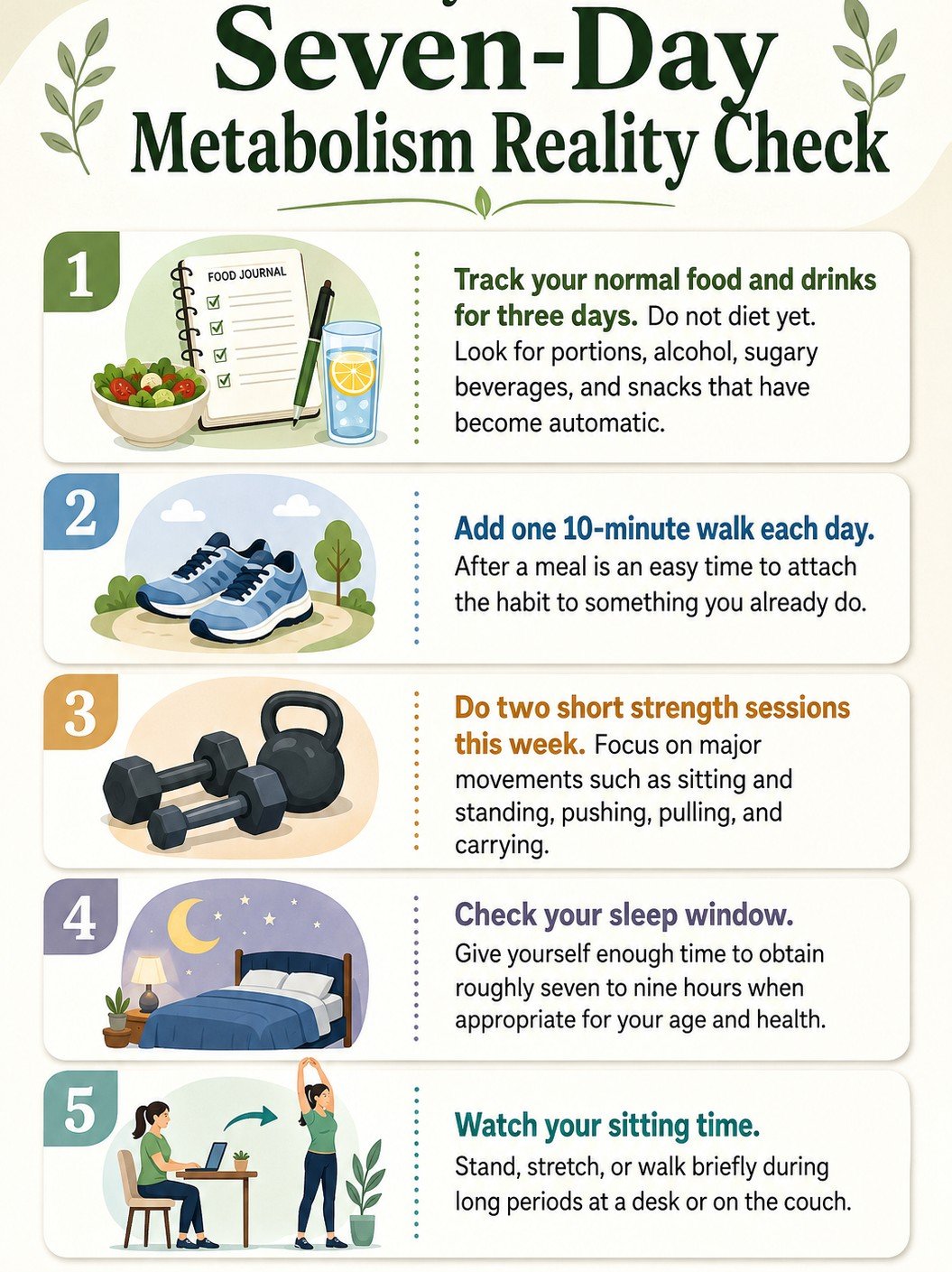
- Track your normal food and drinks for three days. Do not diet yet. Look for portions, alcohol, sugary beverages, and snacks that have become automatic.
- Add one 10-minute walk each day. After a meal is an easy time to attach the habit to something you already do.
- Do two short strength sessions this week. Focus on major movements such as sitting and standing, pushing, pulling, and carrying.
- Check your sleep window. Give yourself enough time to obtain roughly seven to nine hours when appropriate for your age and health.
- Watch your sitting time. Stand, stretch, or walk briefly during long periods at a desk or on the couch.
These simple observations can tell you more about what has changed since your 30s than guessing whether your metabolism has “shut down.”
When Weight Gain Deserves a Medical Check Instead of Another Diet

Slow weight gain over several years is common. Rapid or unexplained weight gain is different.
A sudden rise on the scale may sometimes represent fluid retention rather than body fat. Heart, kidney, thyroid, hormonal, and medication-related problems can occasionally contribute.
Chest pain, severe shortness of breath, fainting, or rapidly worsening swelling requires urgent medical evaluation.
