
You want hobbies that challenge your brain, but should you choose puzzles, a language app, or music lessons? It is easy to spend weeks chasing higher scores or longer streaks without knowing what those gains mean beyond the activity.
Getting better at a game doesn’t automatically mean you’ll remember appointments more easily. Research offers a useful way to compare these hobbies, and the key goes beyond which one looks hardest.
Mentally engaging hobbies can support an active, enjoyable life, but none of these activities is established as a guaranteed way to prevent dementia. They should not replace medical evaluation for changes in memory or thinking.
What Hobbies That Challenge Your Brain Actually Ask You to Do
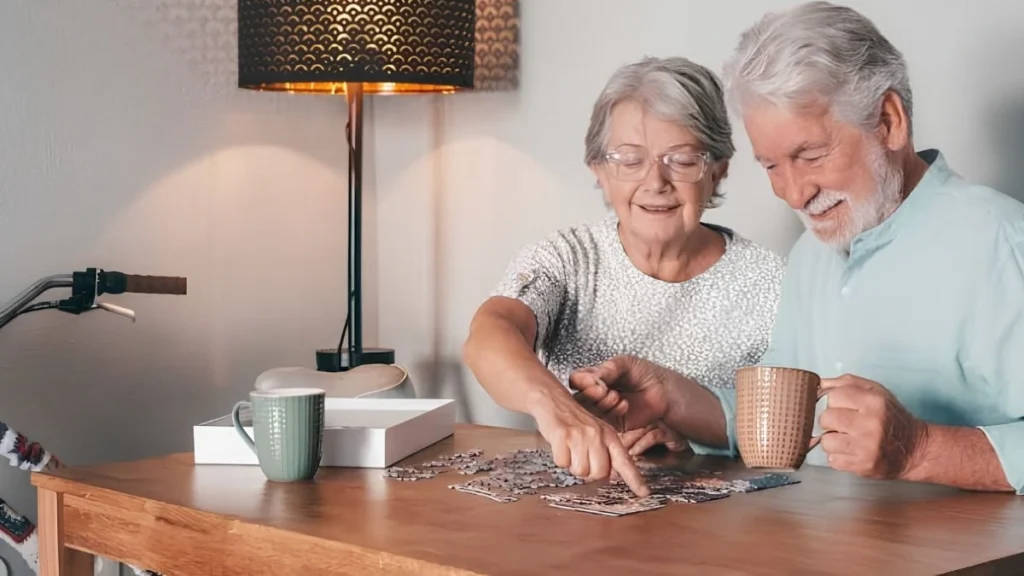
A crossword, a Spanish lesson, and a piano exercise create different demands. One asks you to retrieve a word, another to hold unfamiliar information in mind, and another to combine listening with movement.
Researchers often measure these abilities separately. Working memory helps you briefly hold and use information, while inhibition helps you resist an incorrect or distracting response.
Cognitive switching means moving between rules or tasks. A person learning music might switch between reading notes, checking finger placement, and adjusting timing.
The important question is whether practice improves abilities beyond the activity itself. Researchers distinguish gains on trained or closely related tasks from broader benefits that carry into other situations, and that broader transfer remains less certain.
| Hobby | What the activity asks you to do | What researchers have measured |
|---|---|---|
| Crossword puzzles | Retrieve words, interpret clues, and check answers against crossing letters | Overall cognitive performance and daily functioning in adults with mild cognitive impairment |
| Language apps | Learn unfamiliar words, remember rules, and select responses | Working memory, interference control, and response speed |
| Instrument lessons | Coordinate movement with sound, follow timing, and change between instructions | Processing speed, inhibition, switching, and memory |
These areas overlap, but the studies do not establish that one hobby strengthens every ability. The crossword, language, and music trials also used different participants and assessments, which prevents a simple ranking.
Why Crosswords Deserve More Than a Casual Dismissal
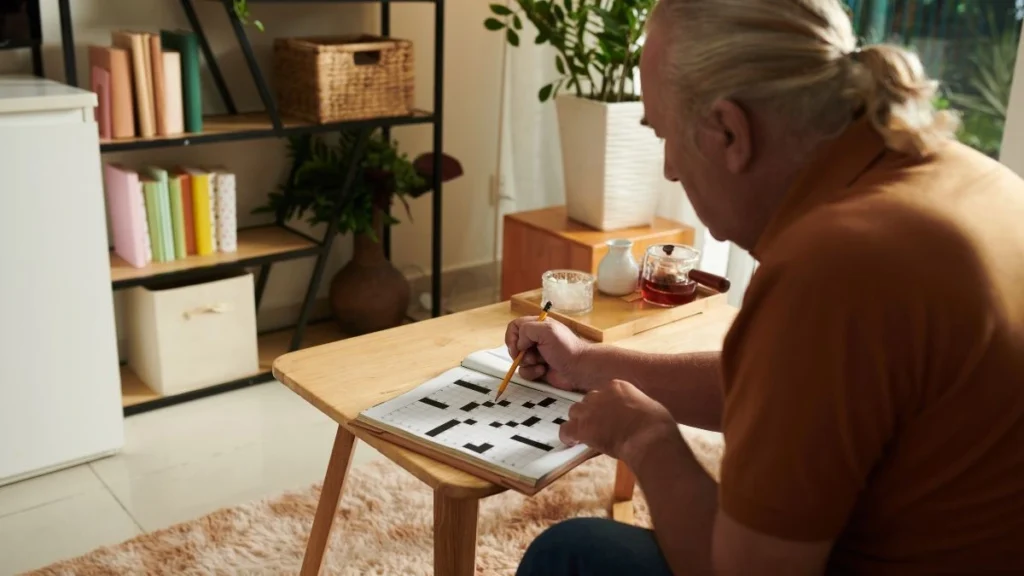
Crosswords can look less impressive than a colorful brain training app. Yet a familiar word puzzle has produced meaningful results in a controlled clinical trial.
In a 2022 study, researchers assigned 107 adults with mild cognitive impairment to computerized crossword puzzles or computerized cognitive games. Participants completed 12 weeks of intensive training, followed by booster sessions during a study lasting 78 weeks.
The crossword group performed better on the study’s primary cognitive measure. Researchers also reported less decline in daily functioning and less brain shrinkage on certain imaging measures compared with the games group.
That finding deserves attention, but so does the population studied. Mild cognitive impairment involves greater difficulties with memory or thinking than expected for a person’s age, so these results cannot automatically be applied to every healthy adult.
The comparison also matters. Crosswords outperformed the particular games used in this trial, which does not establish that they outperform language lessons, music lessons, or every commercial app.
For someone who enjoys crosswords, the practical appeal is clear. Clues create a reason to search memory, reconsider an answer, and use other letters to resolve uncertainty.
A useful approach is to choose puzzles that require some thought without making every clue feel impossible. Harvard Health recommends increasing difficulty as puzzles become easier and trying different puzzle types to maintain challenge.
A Language App Can Help, but the Streak Is Only Part of the Story

A language app offers something a puzzle usually cannot: a skill you may use with another person. That can make practice feel worthwhile even when changes on cognitive tests are modest.
One randomized trial studied 76 adults aged 65 to 75. Participants were assigned to learn Spanish with Duolingo, use the BrainHQ cognitive training app, or remain on a waiting list for 16 weeks.
The two active groups practiced for 30 minutes daily. Both improved relative to the waiting list on certain measures, including a task involving interference control and another involving working memory.
The results were not identical across all tests. BrainHQ produced stronger gains on some reaction time measures, while participants rated Duolingo as more enjoyable.
This gives readers a more useful message than a sweeping claim that language apps make everyone sharper. A language app may improve selected abilities under particular conditions, while also teaching a skill people enjoy.
For a beginner, a concrete goal can make the activity easier to use. Learning to introduce yourself, ask for directions, or describe your day creates a purpose beyond completing another screen.
Try recalling a few words before revealing the answer, then use them in a sentence aloud. Treat this as a way to practice the language, rather than proof that a particular technique prevents cognitive decline.
Music Lessons Combine Several Demands at Once
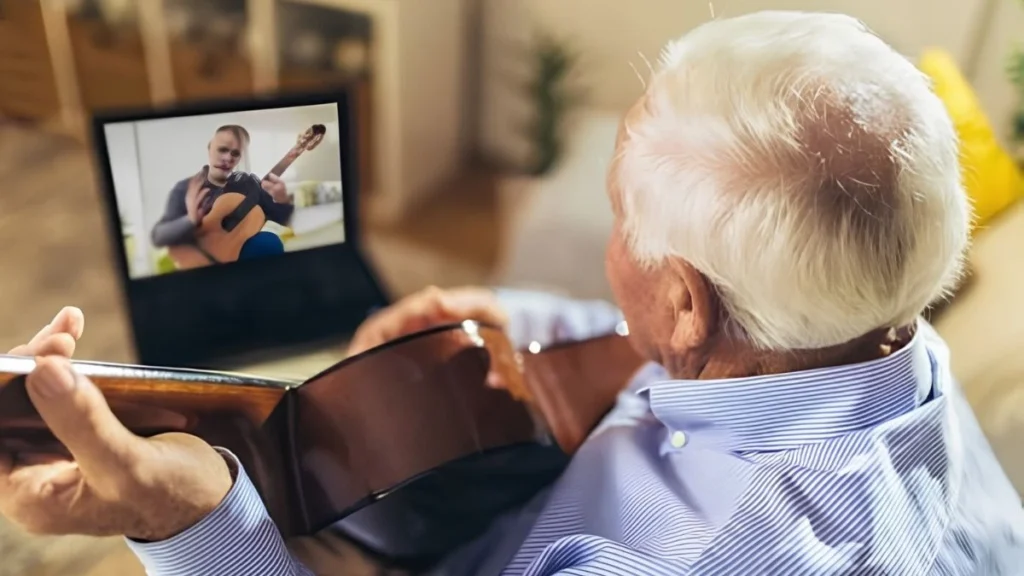
Playing an instrument asks you to connect what you see, hear, and do. Even a short passage may require reading a note, finding the right movement, maintaining timing, and listening for mistakes.
A 2022 randomized trial included 155 adults aged 60 to 80. Researchers compared piano training, computer-assisted cognitive training, and a group receiving no training.
The training programs lasted 16 weeks, with two group sessions each week lasting 90 minutes apiece. Both active groups improved working memory and processing speed compared with controls.
Piano training also showed an advantage in verbal category switching. This involves moving between categories during a verbal task, rather than simply naming as many items as possible from one category.
However, the broader evidence is mixed. A 2024 meta-analysis of 13 studies involving 502 participants found benefits for inhibition, switching, and processing speed, but no significant pooled benefit for working memory or verbal memory.
Most included studies also had concerns about bias. Music lessons therefore look promising for selected abilities, but claims that they improve every kind of memory would go beyond the evidence.
For someone interested in music, progress can be very specific. Learning a new rhythm, playing a short passage more smoothly, or coordinating both hands provides a clear practice target.
Those achievements matter on their own. You do not need to turn every enjoyable lesson into a medical intervention to justify continuing.
The Study Schedule Matters More Than the Marketing

A claim about “brain benefits” means little without knowing who participated and what they actually did. Structured research programs often involve much more practice than a few casual minutes between other activities.
| Research example | Participants | Schedule tested | What the schedule cannot establish |
|---|---|---|---|
| Crossword trial | 107 adults with mild cognitive impairment | Intensive training for 12 weeks, then boosters through 78 weeks | That occasional crosswords prevent dementia |
| Language app trial | 76 adults aged 65 to 75 | 30 minutes daily for 16 weeks | That a brief daily streak produces the same results |
| Piano trial | 155 adults aged 60 to 80 | Two 90-minute group sessions weekly for 16 weeks | That any amount of independent practice has equivalent effects |
These schedules describe the research, rather than a prescription for readers. They also show why headlines promising a sharper brain in a few days deserve caution.
Familiar Does Not Mean Useless, but Learning Needs Room to Continue

A familiar hobby can offer enjoyment, comfort, and a reason to spend time with others. It does not become worthless simply because you have practiced it for years.
However, an activity that now feels automatic may offer fewer opportunities to learn something new. Harvard Health recommends choosing challenging activities and keeping steady practice.
For crosswords, the next step might be a slightly harder puzzle or an unfamiliar clue style. For language learning, it might mean answering aloud without looking at the choices.
For music, it might mean working on a new passage instead of replaying only the easiest song. These are practical ways to create fresh learning goals, not clinically proven formulas for preventing memory loss.
Avoid making difficulty the only measure of value. A challenge you can work through gives you something to practice, while a task that feels impossible may simply become one you abandon.
How Long Before You Notice a Difference?

You may notice progress in the hobby before noticing anything elsewhere. Recognizing more words or playing a passage with fewer mistakes shows learning, but it doesn’t prove a general improvement in memory.
Research timelines also differ considerably. The language and piano studies assessed structured programs lasting 16 weeks, while the crossword trial followed participants through 78 weeks.
| Timeframe or milestone | What it can tell you | What it cannot tell you |
|---|---|---|
| Completing a harder puzzle | Your performance on that puzzle has progressed | That everyday memory has improved |
| Finishing a 16-week program | This is equal to the duration of the cited language and piano interventions | That an individual will reproduce the study average |
| Following crossword training for 78 weeks | This reflects the longer follow-up in the cited trial | That crosswords guarantee protection from dementia |
The distinction helps keep expectations realistic. The studies measured selected outcomes under defined conditions, rather than offering a countdown to better everyday thinking.
A simple practice note can still be useful. Record what you attempted, what became easier, and what you want to try next, and treat the record as a learning tool rather than a medical assessment.
Which Hobby Should You Choose First?
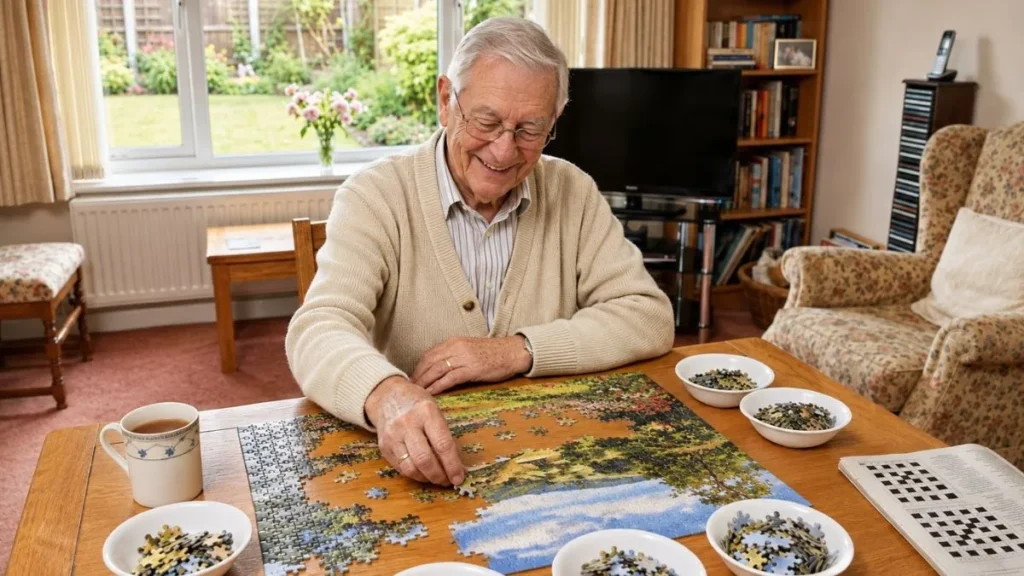
The research does not provide a fair, direct comparison between all three options. Different studies used different populations, practice schedules, and outcome measures.
Choose crosswords if you enjoy words and want an activity that is easy to begin. Choose language learning if communicating with family, preparing for travel, or understanding another culture gives practice a purpose.
Choose music lessons if sound and hands-on learning hold your attention. Consider the practical demands too, including access to an instrument, instruction, and a comfortable place to practice.
Starting with one activity can make a new routine easier to organize. Harvard Health specifically recommends choosing one new activity, considering a class, and scheduling consistent practice.
Keep the Hobby Inside a Bigger Health Picture

Mental activity belongs alongside other habits that support health. Mayo Clinic’s memory guidance also includes physical activity, adequate sleep, social contact, and management of chronic conditions.
A hobby should add something useful to that picture. A class might provide conversation as well as instruction, while a puzzle might offer an enjoyable break in the day.
The National Institute on Aging describes creative activities as promising for well-being and some cognitive outcomes, while emphasizing the need for more research. It also cautions readers about broad claims made for commercial brain games.
Try This Today
- Choose one hobby you would enjoy practicing again tomorrow.
- Pick one small target, such as several clues, a short introduction, or a musical phrase.
- Write down the next manageable challenge before finishing.
- Schedule another session at a time you can realistically keep.
Choose Something Worth Returning To
Puzzles, language apps, and music lessons all offer ways to practice demanding skills. Their benefits vary, and the evidence gives no reason to promise that one choice will protect everyone’s memory.
Start with an activity that interests you and offers room to improve. Learning something useful or enjoyable is a worthwhile result, even when its broader effects on brain health remain uncertain.
