

Learning something new takes longer now, and you wonder whether your brain is too old to change. That doubt can make you abandon a hobby or turn down a class before giving yourself enough time to learn. Your brain can still change at any age, and research offers practical clues about how to help it.
The answer starts with understanding what change actually means. It also means knowing which habits have evidence behind them and which promises stretch that evidence too far.
This article provides general health information, not a diagnosis. New or worsening memory problems deserve medical assessment, even when healthy habits appear to help.
How Your Brain Can Still Change at Any Age
Your brain’s ability to adapt is called neuroplasticity. It includes changes in connections between brain cells and in how networks work together as you learn, practice, and respond to experience.
This ability continues into older adulthood. The National Institute on Aging explains that older adults can still form memories and learn skills, although some tasks may require more time.
Think about learning an unfamiliar phone. At first, sending a photograph may require instructions, several attempts, and help finding the right button.
With practice, the sequence can become easier. That improvement is a useful example of learning, even if you still need reminders for something else.
Age does affect the process. Cleveland Clinic psychologist Grace Tworek explains that older people may need additional time and patience, but they retain the capacity to benefit from neuroplasticity.
The promise is realistic adaptability. It is not a guarantee that every brain function will improve or that a disease can be reversed.
What Actually Changes When You Learn
Brain cells communicate through connections called synapses. Experience can change these connections and the patterns of activity within brain networks.
That is why “growing new brain cells” is an incomplete explanation for learning. Much of the useful discussion concerns changes in existing connections and how they function.
Neuroscientists Jeffrey Kleim and Theresa Jones described principles of experience-dependent plasticity in a widely cited 2008 review. Their work examined learning and rehabilitation, including how the type and amount of experience influence adaptation.
One practical lesson is specificity. Practicing a particular skill helps train the systems involved in that skill, while benefits to unrelated abilities are less certain.
If your goal is learning to use video calling, practice starting and answering calls. Becoming faster at a familiar puzzle does not necessarily solve that particular problem.
Give Your Brain Something Worth Learning

A useful challenge asks you to pay attention, work with unfamiliar information, and gradually build competence. It also needs to interest you enough to keep returning.
The Synapse Project studied 221 adults ages 60 to 90. Participants included groups learning photography, quilting, or both, alongside comparison groups doing less demanding activities.
The demanding programs involved sustained learning over roughly three months. Some learning conditions improved episodic memory, the ability to remember events and experiences, compared with less demanding activities.
That finding does not mean everyone needs photography lessons. It suggests that continuing to acquire complex skills may offer something different from repeating an activity that has become effortless.
| Research example | Participants and timeframe | Measured result |
|---|---|---|
| Synapse Project | 221 adults ages 60 to 90, roughly three months | Some demanding learning conditions improved episodic memory |
| Aerobic exercise trial | 120 older adults, one year | Anterior hippocampal volume increased about 2% in the exercise group |
| U.S. POINTER | 2,111 adults ages 60 to 79, two years | A structured lifestyle program produced greater improvement in global cognition than a self-guided program |
These studies measured different things. A memory score, a brain scan measurement, and a combined cognitive score cannot be treated as interchangeable proof of dementia prevention.
Practice One Useful Skill at a Time

Start with something you would like to do more easily. “Get better with technology” is vague, while “send a photograph without help” gives you a clear task.
Break that task into smaller steps. You might first practice finding the photograph, then choosing a recipient, and finally sending it.
For a manageable beginning, schedule 10 to 15 minutes on several days this week. This is a practical scheduling suggestion, not a proven dose for changing brain structure.
Use instructions or feedback to check your attempts. At the next session, return to the difficult step before introducing another challenge.
Cleveland Clinic’s discussion of plasticity emphasizes repetition and meaningful practice. However, repetition should help you learn the intended task rather than repeatedly rehearse an avoidable mistake.
Choose a level where you can make progress with some effort. If every attempt ends in confusion, simplify the task or ask someone to demonstrate it more slowly.
Movement Supports More Than Your Muscles

Physical activity has evidence behind it that goes beyond general wellness advice. One frequently cited trial measured changes in an older brain structure directly.
In 2011, researchers reported a randomized trial involving 120 older adults assigned to aerobic exercise or a stretching control program. After a year, the aerobic group showed an increase of about 2% in anterior hippocampal volume, accompanied by improved spatial memory.
The hippocampus helps support memory and learning. Researchers also found an association between volume changes and blood levels of brain-derived neurotrophic factor, or BDNF.
BDNF is a protein involved in neuronal health and plasticity. However, a blood measurement does not establish the full explanation for exercise-related brain changes.
Walking, swimming, and other suitable aerobic activities can provide ways to move regularly. The right choice depends on your health, mobility, confidence, and access.
Exercise goals should reflect your current abilities and medical needs. Ask your healthcare provider about a suitable starting plan if you have balance problems, symptoms with activity, or a condition that limits movement.
Sleep Is Part of Learning
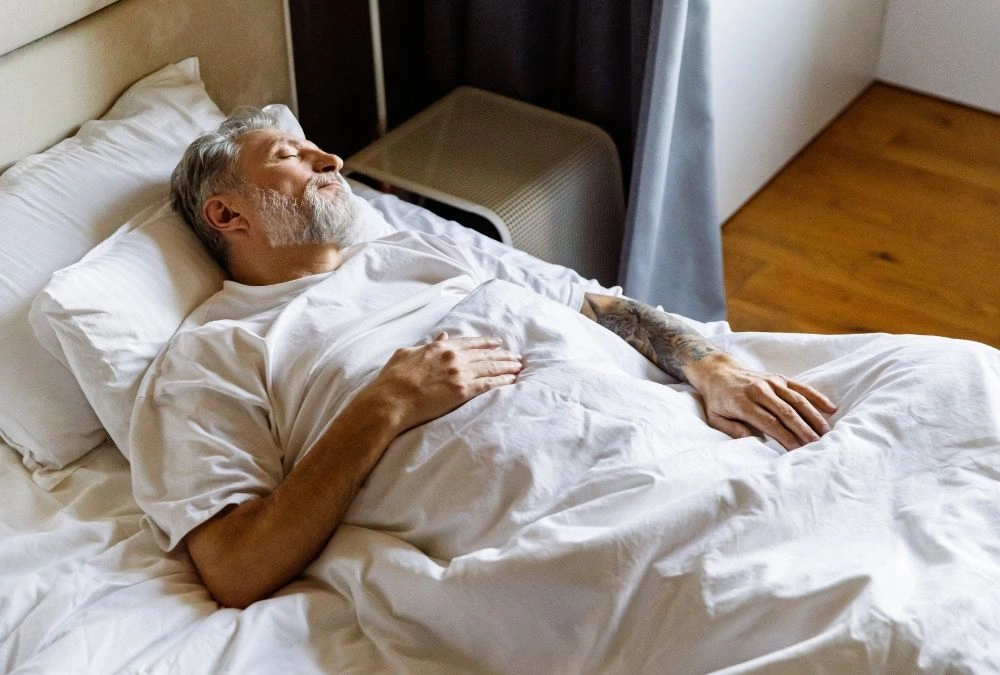
Practice is only one stage of remembering. Sleep helps stabilize recently learned information and connect it with existing memories.
NIH explains that sleep before learning helps prepare the brain to form memories. Sleep afterward supports consolidation, helping newly acquired information become more stable.
This gives sleep a direct place in your learning routine. Staying up late to squeeze in more practice can undermine the rest you need to support that effort.
Avoid turning one poor night into a prediction about your future memory. Look instead at your usual sleep pattern and whether persistent problems need professional attention.
| Area to support | Research-based reference | How to interpret it |
|---|---|---|
| Physical activity | General adult guidance recommends at least 150 minutes of moderate-intensity aerobic activity weekly | A general activity target, not a guaranteed dementia prevention dose |
| Sleep | NIA generally recommends seven to nine hours nightly | Adequate sleep supports cognitive health |
| Cognitive practice | Plasticity principles emphasize the nature of the practiced task | Choose practice that matches the ability you want to develop |
| Medication review | Some medicines and combinations can affect cognition | Discuss concerns with a clinician or pharmacist |
These references provide direction, but they do not replace individual advice. The most useful routine is one you can follow safely and consistently.
Healthy Habits Can Work Together

It is tempting to look for one exercise or food that does everything. Recent research has also examined programs that combine several areas of support.
The 2025 U.S. POINTER trial enrolled 2,111 adults ages 60 to 79 who had an increased risk of cognitive decline. Both study groups were encouraged to improve physical activity, diet, cognitive challenge, social engagement, and cardiovascular health monitoring.
The structured group received more intensive support and accountability. It showed a statistically significant advantage in global cognition over two years, although the difference was modest, about 0.029 standard deviations per year.
Both groups improved. Researchers said further follow-up was needed to understand the clinical importance and durability of the difference.
A reasonable practical takeaway is to build support around your habits. A scheduled class, walking partner, or regular practice appointment can give your intentions a place in the week.
Are Brain Games Worth Your Time?

Brain games can be enjoyable and challenging. The key question is whether improving at the game also improves the abilities you need outside it.
NIA cautions that commercial brain-training apps don’t automatically have the same evidence as programs studied in clinical research. Using the word “neuroplasticity” does not establish a product’s effectiveness.
There are promising findings from specific training. A 2026 ACTIVE study follow-up linked participants to Medicare records and found a lower hazard of diagnosed dementia among speed training participants who completed booster sessions.
The reported hazard ratio was 0.75, representing a 25% relative reduction. Participants without booster training did not show that same result, and the finding cannot be extended to every puzzle or app.
Play games because you enjoy them or want to improve those skills. Be more cautious when a company promises broad memory improvement or disease prevention.
Can a Special Diet Rebuild Your Brain?

Nutritious food supports overall health, but a healthy eating pattern should not be sold as a brain-rebuilding treatment. The distinction matters when observational findings become dramatic headlines.
A 2023 trial followed 604 participants for three years. It compared a MIND diet with a control diet that also included mild calorie restriction.
Cognition improved in both groups, with no statistically significant difference between them. Brain MRI outcomes also did not differ significantly.
This does not make nutritious meals pointless. It means the trial did not prove that the named diet outperformed its comparison for those outcomes.
Choose balanced meals that suit your health needs. Be skeptical of claims that one berry, powder, or supplement can reproduce the effects of a complete lifestyle program.
How Will You Know Practice Is Helping?

There is no universal deadline for changing your brain. Different skills, health conditions, and types of practice produce different learning experiences.
Look for progress in the task itself. You may need fewer prompts, complete more steps correctly, or understand an instruction that previously seemed confusing.
Keep a simple record of what you practiced and what remains difficult. This can guide the next session without turning every mistake into a judgment about your intelligence.
Notes and reminders remain useful tools. NIA includes calendars, routines, and written lists among practical ways to manage forgetfulness.
Try This Today
- Choose one useful task, such as sending a photo or practicing a musical phrase.
- Set aside 10 minutes, treating this as a manageable start rather than a medical prescription.
- Check one difficult step against reliable instructions.
- Return to the same skill tomorrow, using notes when helpful.
- Keep your usual bedtime, so practice does not replace sleep.
Know When More Practice Is Not the Answer

Learning more slowly can occur with aging. A change that interferes with familiar daily activities deserves a different response.
NIA identifies repeated questions, getting lost, and difficulty following familiar directions as reasons to seek medical assessment. These changes should not be dismissed as a lack of effort.
| Change you notice | Appropriate response |
|---|---|
| Occasionally forgetting a name or learning slowly | Allow time and use reminders, while discussing persistent concerns |
| Repeatedly asking the same questions | Arrange a medical assessment |
| Getting lost in familiar places | Seek medical assessment |
| Sudden confusion or disorientation | Get immediate medical help |
A clinician can assess possible contributors and decide what evaluation is needed. Sudden confusion requires urgent attention because some causes can be serious.
When to seek help: Contact a healthcare professional for repeated questions, getting lost, or growing difficulty managing familiar tasks. Get immediate medical help for sudden confusion.
Your brain retains the capacity to adapt, even when progress requires patience. Give it a meaningful task, return to that task regularly, and support the effort with movement, rest, and appropriate medical care.
