

You can look healthy in your 60s or 70s while quietly losing the strength and balance that protect your independence. These changes often appear before falls, difficult stairs, or trouble getting out of a chair.
Sean, a physical therapist for seniors, watches one everyday movement because it can reveal weakness, poor balance, and loss of control early.
You do it several times a day without thinking. Once you know what to watch for, it becomes surprisingly revealing.
A chair rise can provide useful information about strength and mobility, but it cannot diagnose a medical condition or predict exactly what will happen to your health. If standing feels unsafe, painful, or suddenly more difficult, speak with a doctor or physical therapist rather than testing yourself alone.
The Movement Is Simply Getting Out of a Chair

Watch someone rise from a chair without using their hands.
It looks almost too ordinary to matter. Yet the body has to coordinate several systems at once to make that simple movement happen smoothly.
The feet need a stable position. The trunk has to move forward enough to shift body weight over the feet.
Then the thighs and hips must generate enough force to lift the body while the ankles, core, and balance system keep everything controlled.
That is one reason clinicians use chair rise tests when evaluating older adults.
The Centers for Disease Control and Prevention includes the 30 second Chair Stand Test in its STEADI fall prevention tools. The test gives clinicians information about lower body strength and endurance.
But Mark would not watch only the number of repetitions.
How someone stands can matter just as much as whether they stand.
What a Physical Therapist for Seniors Sees That a Stopwatch Misses

Two people can finish the same number of chair stands and still move very differently.
One person may rise smoothly with equal pressure through both legs. Another may rock forward several times, push hard through the armrests, shift onto one leg, or wobble after reaching an upright position.
Those differences can provide useful clues.
| What Mark Notices | What It May Suggest | Why It Matters |
|---|---|---|
| Heavy use of the armrests | Reduced leg strength or confidence | Standing from toilets, cars, and low furniture may become harder |
| Several rocking attempts before standing | Difficulty generating force or shifting body weight | Daily transfers may require increasing effort |
| Favoring one leg | Pain, weakness, or asymmetry | Uneven loading can affect stairs and walking |
| Wobbling after standing | Reduced balance or stability | Loss of control may increase fall vulnerability |
| Dropping heavily into the chair | Reduced control while lowering | The legs must control the body in both directions |
| Gradually taking longer to rise | Reduced strength, power, or mobility | Slower performance has been associated with later functional limitation |
None of these patterns proves that something serious is wrong.
They are signals that tell a physical therapist where to look next.
Your Thighs Are Doing More Work Than You Think

The quadriceps at the front of the thighs play a major role in straightening the knees as the body rises. The hip muscles and trunk also contribute. If those muscles cannot produce enough force, the body often finds another strategy.
That may mean pushing through the hands, throwing the upper body forward, widening the feet, or leaning heavily onto the stronger leg. This matters because standing from a chair is not an isolated exercise.
The same physical capacity helps you rise from a toilet, climb stairs, step out of a car, recover from a low couch, and regain control when your balance suddenly shifts.
Researchers who study sarcopenia also pay attention to chair rise performance.
The European Working Group on Sarcopenia in Older People includes five chair rises as one way to assess muscle strength. Taking longer than about 15 seconds to complete five rises is one clinical threshold used to flag possible low muscle strength.
That does not mean anyone who takes 16 seconds has sarcopenia.
A diagnosis requires more information, but the test shows why something as ordinary as standing from a chair deserves attention.
It Is Not Just a Leg Strength Test
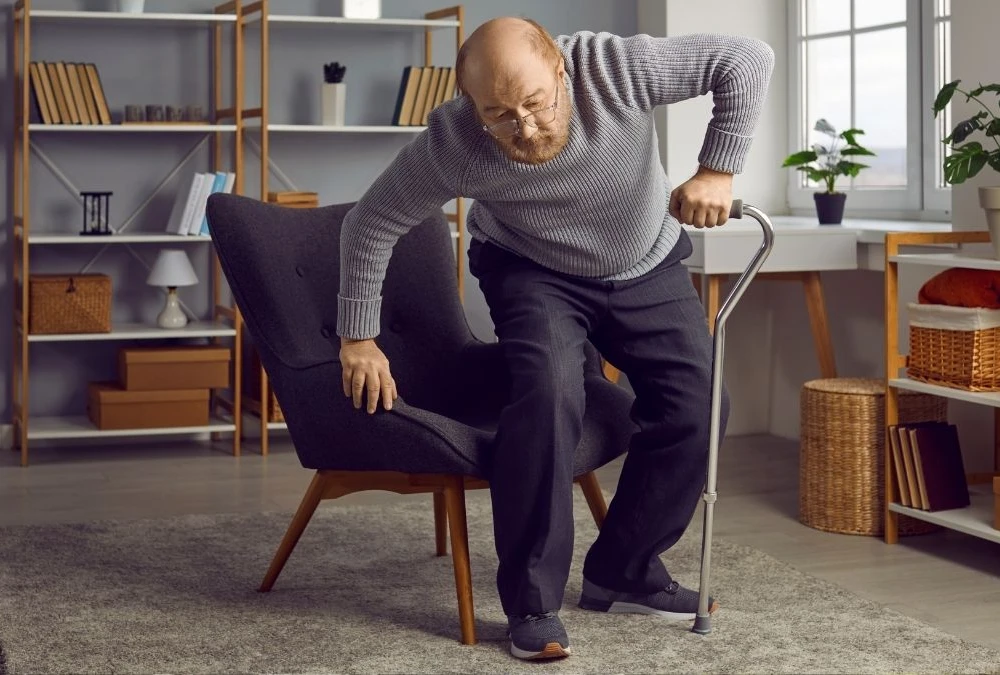
Here is where the movement becomes more interesting.
Research involving older adults has found that sit to stand performance reflects more than thigh strength alone. Balance, reaction time, sensation, vision, pain, body weight, and proprioception can also influence how well someone performs.
Proprioception is the body’s ability to sense where its joints and limbs are positioned. That means a difficult chair rise may have more than one explanation.
A person with strong legs but poor balance may hesitate once upright. Someone with knee pain may shift heavily to the opposite side. Someone who feels unsteady may use their arms even when their leg muscles could do more.
This is why simply counting repetitions cannot tell the entire story.
One Chair Test Has Been Linked With Future Independence
Chair stand performance has also been studied as a marker of future function.
One analysis of more than 2,300 high functioning older adults followed participants for eight years. Slower performance on a five chair stand test was associated with a greater chance of developing difficulty with everyday activities.
A more recent long term analysis followed more than 2,700 older adults for 15 years.
People who needed more than 15 seconds for the chair stand test had a higher mortality risk than those who completed it more quickly, even after researchers accounted for several other factors.
That does not mean a slow chair rise causes a shorter life. It is more likely that the movement captures several parts of physical reserve at once, including strength, coordination, balance, and overall health. That distinction matters.
The chair is not predicting your future. It is revealing how much physical capacity you have right now.
Try the 30 Second Chair Check Safely
The CDC uses a standardized version of the 30 second Chair Stand Test.
The formal version uses a stable chair about 17 inches high. The person sits near the middle of the seat, keeps both feet flat, crosses the arms over the chest, and repeatedly stands fully before sitting again.
At home, safety is more important than following the clinical test perfectly.
Place the chair against a wall so it cannot slide. If there is any concern about falling, have another person nearby. Do not cross your arms if standing without hand support already feels unsafe. Using the armrests is better than falling simply to obtain a number.
How Your Score Compares
| Age | Men Below Average | Women Below Average |
|---|---|---|
| 60 to 64 | Fewer than 14 | Fewer than 12 |
| 65 to 69 | Fewer than 12 | Fewer than 11 |
| 70 to 74 | Fewer than 12 | Fewer than 10 |
| 75 to 79 | Fewer than 11 | Fewer than 10 |
| 80 to 84 | Fewer than 10 | Fewer than 9 |
| 85 to 89 | Fewer than 8 | Fewer than 8 |
| 90 to 94 | Fewer than 7 | Fewer than 4 |
These values come from the CDC’s chair stand reference ranges and are used as part of fall risk assessment.
A lower score may suggest reduced lower body strength, but it is not a diagnosis.
Chair stand numbers should be treated as reference points rather than a pass or fail test. Arthritis, previous surgery, neurological conditions, pain, heart or lung disease, chair height, and testing technique can all affect performance.
The Number Is Only Half the Story
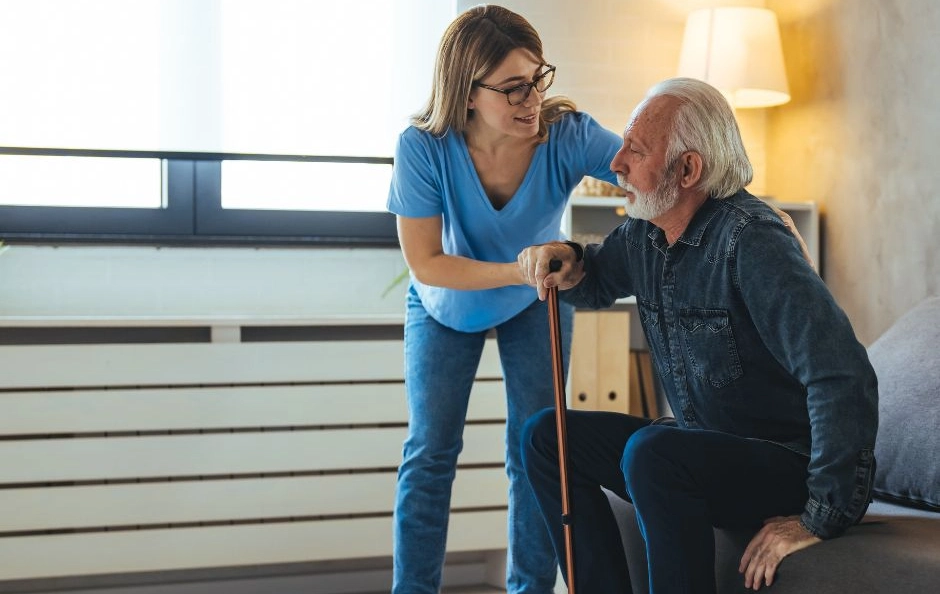
Someone can post a respectable score and still reveal a problem.
Sean would notice if the person repeatedly leans on one leg, loses balance after each rise, or drops suddenly into the seat. He would also watch whether the movement looks harder on the fifth repetition than on the first.
That change can reveal endurance limits that a single rise might hide. Speed matters, but movement quality matters too.
If the only way to stand quickly is to throw the upper body forward, bounce from the seat, or use excessive momentum, the number can look better without the movement actually being better.
Try This Today
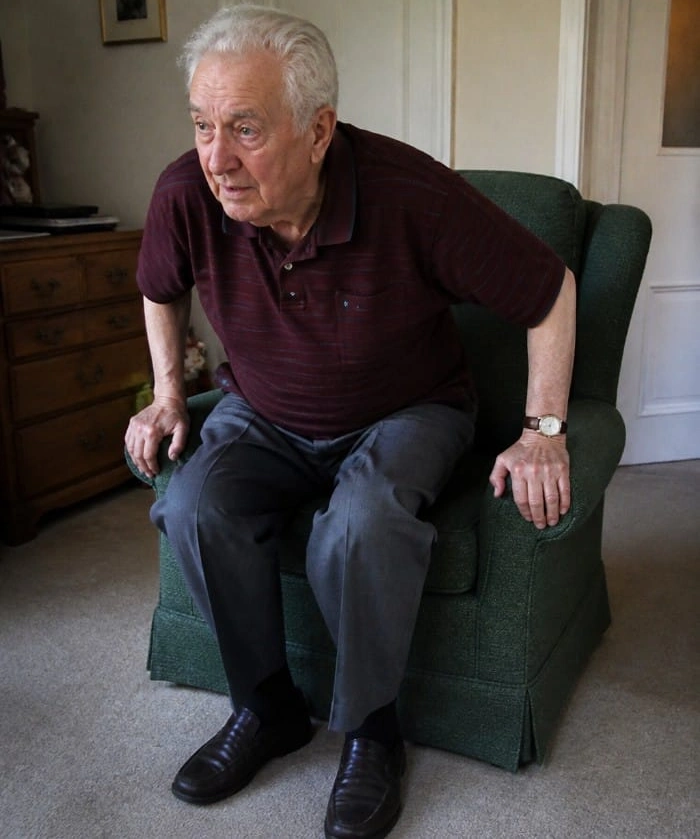
If getting out of a chair already feels comfortable and safe, use a few everyday rises as practice for keeping the movement strong.
- Place both feet firmly on the floor before standing.
- Bring the chest slightly forward so your weight moves over your feet.
- Push through both legs as evenly as possible.
- Stand fully upright and regain your balance before walking away.
- Lower yourself slowly instead of dropping into the chair.
You do not need to turn every chair into a workout.
A few controlled repetitions performed consistently can help reinforce the movement pattern.
The Floor Test Is Not the Same Thing
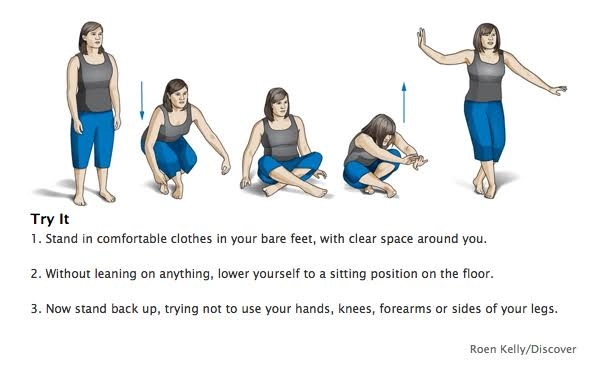
You may have seen videos of people sitting on the floor and standing back up without using their hands or knees. That is called the Sitting Rising Test, and it has received attention because poorer scores have been associated with higher long-term mortality risk.
One large study followed more than 4,000 adults for roughly 12 years. Participants with the lowest scores had substantially higher mortality than those who could sit and rise from the floor with little or no support.
But this is not the same test as the chair stand. It also may not be appropriate for someone with osteoporosis, poor balance, severe arthritis, recent surgery, dizziness, or difficulty getting off the floor.
For many older adults, the chair gives a safer and more practical look at everyday function.
Can You Improve What the Chair Test Reveals?
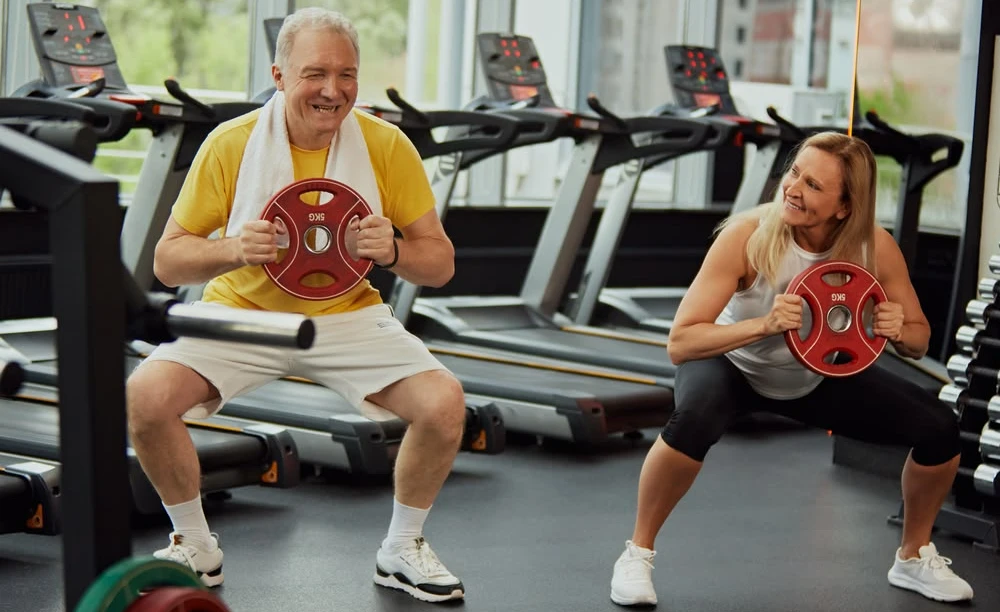
Often, yes. Muscle strength remains trainable later in life, and balance can also improve with appropriate practice.
The goal is not simply to become faster at standing. The better target is improving the physical abilities behind the movement.
| Habit or Exercise | Main Target | Practical Starting Point | Why It Helps |
|---|---|---|---|
| Sit to stands | Thigh and hip strength | A few controlled repetitions from a stable chair | Directly practices rising and lowering |
| Resistance training | Major leg and hip muscles | At least 2 days each week | Supports strength needed for daily tasks |
| Balance practice | Stability and body control | Regular practice near stable support | Helps control the body after standing |
| Walking | Endurance and mobility | Build a regular routine at a comfortable pace | Supports stamina but does not replace strength work |
| Slow chair lowering | Controlled leg strength | Take several seconds to sit when safe | Strengthens control during the downward phase |
The World Health Organization recommends muscle strengthening activity involving the major muscle groups on at least two days each week for older adults.
It also recommends regular multicomponent activity that emphasizes functional balance and strength for older adults who can safely perform it.
Walking Alone May Not Be Enough
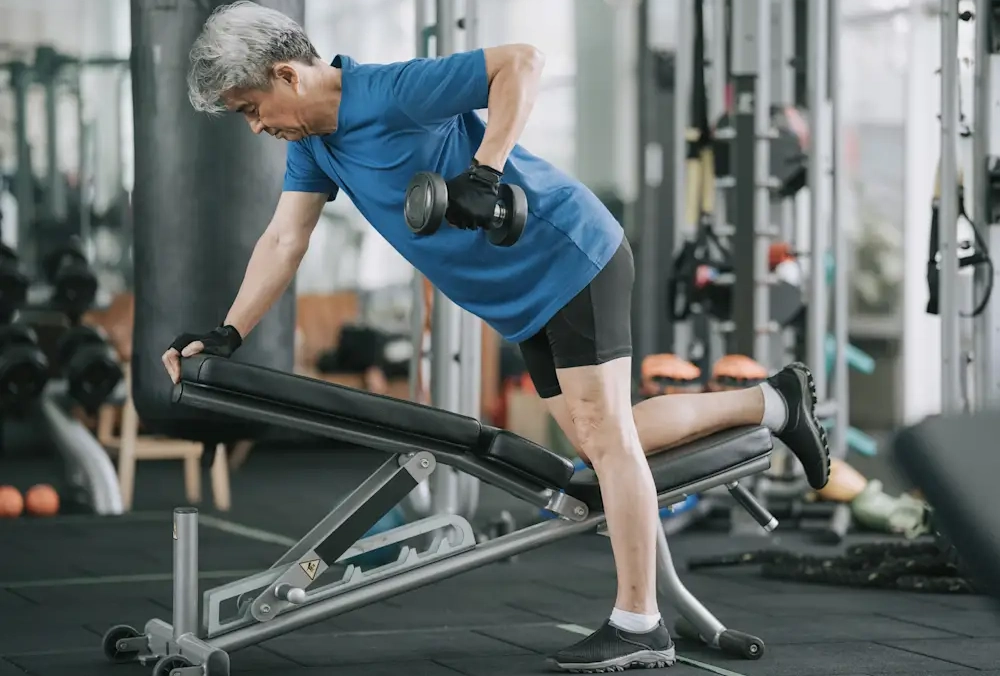
Walking is excellent for cardiovascular health, endurance, circulation, mood, and general mobility.
But walking does not challenge the leg muscles in exactly the same way as rising from a chair, climbing stairs, or performing resistance exercise.
That difference becomes more important with age.
A person may walk every day and still notice that getting out of low furniture is becoming harder.
Adding strength work can help address that gap.
Even simple resistance exercises can be useful when they are matched to the person’s ability and progressed gradually.
When the Chair Starts Feeling Lower Every Year
Video Credit: Will Harlow – Over-Fifties Specialist Physio
People sometimes joke that chairs seem to get lower as they get older. There is some truth hidden inside the joke.
A lower chair demands more strength because the knees and hips start from a deeper bend. The body must produce more force to rise. That is why someone may have no trouble getting out of a tall dining chair but struggle with a soft sofa.
Changes like that are worth noticing before they begin restricting daily life.
If someone starts avoiding low seats, using both hands every time, or choosing furniture based on how easy it is to get up, strength and mobility may already be affecting their behavior.
That is often a better reason to take action than waiting for a perfect test score.
Red Flags: Do Not Blame These on Normal Aging

A gradual decline deserves attention, but a sudden change can be more concerning.
Seek prompt medical care if difficulty standing appears with:
- Sudden weakness or numbness, especially on one side.
- Severe dizziness, fainting, or a sudden loss of balance.
- Chest pain or unusual shortness of breath during the movement.
- A sudden inability to bear weight or stand when you could previously do so.
Sudden facial drooping, speech difficulty, severe breathing trouble, or one sided weakness can be signs of a medical emergency and require immediate care.
One Bad Test Does Not Define Your Next Decade

A single slow chair rise does not mean independence is about to disappear. Pain, fatigue, poor sleep, illness, unfamiliar testing instructions, and even the chair itself can affect performance on a given day.
What matters more is the pattern. Are you using your hands more than you did six months ago? Are stairs becoming harder? Are you avoiding low chairs? Are you wobbling after standing when that never happened before?
Those changes deserve attention because they can appear before a major loss of function.
What Sean Really Wants Seniors to Notice

Sean is not looking for a perfect score. He is looking at whether the body can still create force, shift weight, stabilize itself, and control the descent without excessive compensation.
Two people can both be 72 and have very different levels of physical reserve. One may stand easily, stabilize immediately, and lower with control. Another may need both hands, several attempts, and a moment to regain balance.
That difference can reveal more about everyday function than age alone. The chair rise cannot tell you exactly what the next decade will bring.
But it can expose changes in strength, balance, coordination, and confidence early enough to do something about them.
And that is what makes such an ordinary movement worth watching.
This article is for informational and educational purposes only and is not a substitute for professional medical advice, diagnosis, or treatment. Talk with your doctor, physical therapist, or another qualified healthcare provider before beginning or changing an exercise routine, especially if you have balance problems, osteoporosis, recent surgery, significant joint pain, heart or lung disease, or another existing health condition.
