

Your eyesight can change slowly enough that you barely notice it happening. Reading becomes harder, headlights glare more at night, or the center of a page starts looking less sharp.
The problem is that aging eyes face years of oxidative stress, and conditions such as cataracts and age-related macular degeneration become much more common later in life.
Food cannot guarantee perfect vision, but what you eat may influence some of the processes that damage aging eye tissue. If one fruit deserves a regular place in an eye-healthy diet, the orange makes an unusually strong case.
Before changing your diet or starting eye health supplements, speak with your doctor or eye care professional if you have diabetes, kidney disease, age related macular degeneration, take prescription medicines, or follow a medically restricted diet.
Why Oranges Stand Out for Healthy Eyesight
Calling any food the single “best” food for eyesight requires some caution. No ophthalmology organization says eating one orange each day will prevent cataracts, macular degeneration, glaucoma, or vision loss.
Still, oranges combine two factors researchers find important for aging eyes: vitamin C and citrus flavonoids.
The American Academy of Ophthalmology lists oranges and other citrus fruits among foods that support eye health because they provide vitamin C. Vitamin C works as an antioxidant, helping the body deal with free radicals that can damage cells over time.
That matters because the eye is especially exposed to oxidative stress. Light, oxygen use, inflammation, smoking, and normal aging all contribute to chemical reactions that can gradually affect the lens and retina.
What an orange brings to the eye health conversation
| Component | Why researchers care | What it may support |
|---|---|---|
| Vitamin C | Major water-soluble antioxidant | Protection of eye tissues from oxidative damage |
| Flavanones such as hesperidin | Plant compounds with antioxidant and anti-inflammatory activity | Possible support against age-related retinal damage |
| Carotenoids | Plant pigments found in varying amounts in citrus | Broader antioxidant protection |
| Whole fruit fiber | Slows eating and supports metabolic health | Helpful because diabetes and vascular disease can threaten vision |
The strongest point is not that oranges “repair” eyesight. It is that they fit into the dietary pattern that ophthalmologists already recommend for protecting aging eyes.
Vitamin C Does More Than Help With Colds

Vitamin C rarely gets discussed as an eye nutrient as often as vitamin A, lutein, or zeaxanthin. Yet the eye contains tissues that depend heavily on antioxidant defenses.
The National Institutes of Health recommends 90 milligrams of vitamin C daily for adult men and 75 milligrams for adult women. People who smoke need an additional 35 milligrams because smoking increases oxidative stress and vitamin C requirements.
Vitamin C is especially interesting when researchers look at the eye’s lens. The lens must remain transparent for light to pass through clearly, and oxidative damage is one of several processes involved in cataract formation.
A study involving female twins found that higher dietary vitamin C intake was associated with less progression of nuclear cataract over roughly a decade. The researchers estimated that environmental factors accounted for much of the variation in cataract progression, although the study was observational and cannot prove that vitamin C itself prevented cataracts.
That distinction matters. Eating vitamin C-rich foods is sensible. Treating vitamin C as a cure for cataracts is not.
The Orange Study That Makes This Fruit Especially Interesting

Here is where oranges become more interesting than simply being another vitamin C food.
Researchers followed adults in Australia as part of the Blue Mountains Eye Study. The analysis included 2,856 adults aged 49 and older at baseline, with 2,037 participants included in the 15-year incidence analysis.
Researchers examined the association between flavonoid intake and age-related macular degeneration. Flavonoids are plant compounds found in fruits, vegetables, tea, and other plant foods.
Participants who reported eating at least one serving of oranges a day had a lower risk of developing late age-related macular degeneration during follow up compared with people who reported never eating oranges. The adjusted odds ratio was 0.39.
This was an observational study. It found an association, not proof that oranges caused the lower risk. People who frequently eat fruit may also have healthier diets, exercise more, smoke less, or have other habits that affect eye health.
Still, the finding gives oranges something many eye health headlines lack: specific research involving the fruit itself, rather than assumptions based solely on one vitamin.
Oranges Are Helpful, but They Cannot Replace Lutein and Zeaxanthin

There is one mistake worth avoiding. Eating oranges does not mean you can ignore dark leafy vegetables.
Lutein and zeaxanthin are carotenoids concentrated in the retina, particularly around the macula. The National Eye Institute says they may work as antioxidants and help absorb high-energy blue and ultraviolet light.
Spinach, kale, collard greens, broccoli, peas, and similar foods are much more important dietary sources of these compounds than oranges.
That is why an orange works best as part of an eye-protective plate, rather than as a magic food eaten by itself.
| Eye-supportive nutrient | Useful food sources | The main reason it matters |
|---|---|---|
| Vitamin C | Oranges, grapefruit, strawberries, peppers | Antioxidant protection |
| Lutein | Kale, spinach, collards, peas | Concentrates in the retina |
| Zeaxanthin | Leafy greens, eggs, some colorful produce | Helps form macular pigment |
| Vitamin A precursors | Sweet potato, carrots, cantaloupe, apricots | Needed for normal retinal function |
| Vitamin E | Almonds, sunflower seeds, avocado | Helps protect cell membranes |
| Omega-3 fats | Salmon, sardines, other oily fish | Supports broader retinal and vascular health |
| Zinc | Seafood, meat, dairy, beans | Involved in retinal function |
The American Academy of Ophthalmology makes a similar point. A diet rich in fruits, vegetables, whole grains, healthy fats, and other nutrient-dense foods supports the eyes better than focusing on one isolated ingredient.
What Large Studies Say About Fruit and Macular Degeneration
One large prospective analysis followed 77,562 women and 40,866 men aged 50 or older. People eating at least three servings of fruit per day had a lower risk of neovascular age related maculopathy than people eating fewer than 1.5 servings daily.
Again, that does not prove fruit directly prevents macular degeneration. But it adds weight to the idea that regular fruit intake may matter more than chasing one supplement or occasional “superfood.”
Another study followed 4,202 adults aged 55 or older who did not have age-related macular degeneration at baseline. A dietary pattern containing vegetables, fruit twice daily, and fish twice weekly was associated with a lower risk of developing AMD.
How Much Orange Should You Actually Eat?

You do not need to eat oranges all day. For most people, one whole orange is a practical serving. It can be eaten with breakfast, as an afternoon snack, or alongside another meal.
Whole fruit usually makes more sense than relying on orange juice. Juice removes much of the natural fiber and makes it easier to consume a large amount of fruit sugar quickly. That distinction can matter particularly for people with diabetes or prediabetes.
Whole orange versus orange juice
| Choice | Fiber | Eating speed | Blood sugar consideration | Best routine use |
|---|---|---|---|---|
| Whole orange | Higher | Slower | Usually easier to portion | Strong everyday choice |
| Fresh orange segments | Higher | Slower | Similar to whole fruit | Strong choice |
| 100 percent orange juice | Low | Very fast | Easier to consume more carbohydrate quickly | Smaller portions |
| Sugary orange drinks | Usually little or none | Fast | Often contain added sugar | Best limited |
You also do not need to force oranges into your diet if you dislike them. Grapefruit, strawberries, kiwi, cantaloupe, and other fruits can contribute useful nutrients.
The goal is a food pattern you can realistically maintain.
Individual nutrition needs vary. People with diabetes, kidney disease, digestive conditions, or medication restrictions may need different fruit portions or choices. Grapefruit can also interact with certain medications, so ask a pharmacist or doctor if you are unsure.
The Bigger Eye Health Story Is the Retina’s Antioxidant Defense
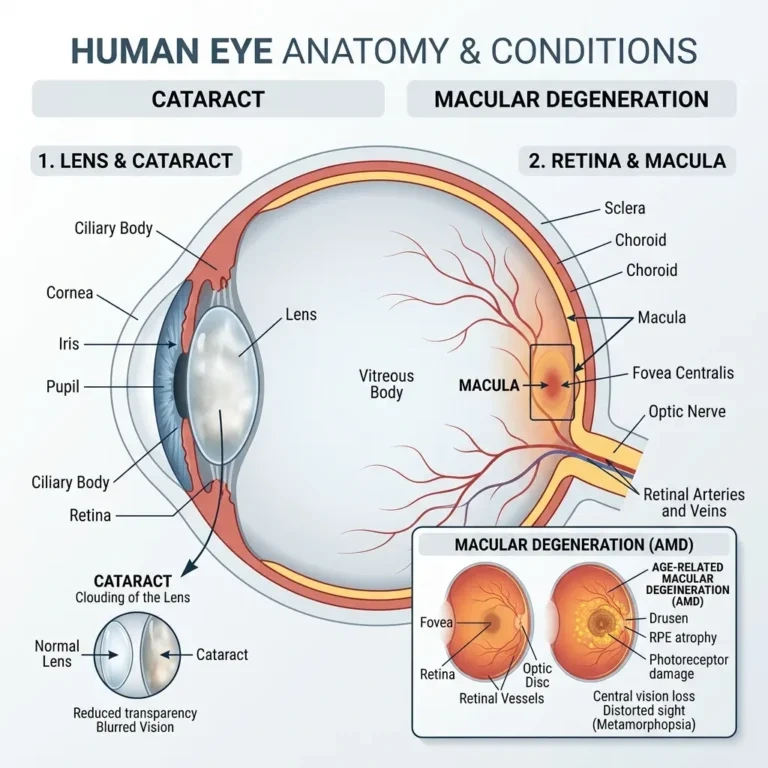
The retina has an unusual job. It receives light all day while consuming large amounts of oxygen. That creates conditions where oxidative stress can occur.
The macula, located near the center of the retina, gives you the sharp central vision needed for reading, recognizing faces, driving, and seeing fine detail. Age-related macular degeneration damages this area.
Lutein and zeaxanthin accumulate in retinal tissue and form part of the macular pigment. That is one reason eye research focuses heavily on these two nutrients.
The National Eye Institute’s AREDS and AREDS2 trials give us one of the clearest examples of nutrition affecting an eye disease.
For people with intermediate AMD or certain forms of late AMD, the AREDS or AREDS2 supplement formulations reduced progression to advanced AMD by about 25 percent. These supplements are not recommended simply because someone wants “stronger eyesight,” and they do not prevent AMD from developing in healthy eyes.
This is where many online eye health articles become misleading.
Food supports eye health. Food does not replace medical treatment, eye exams, or AREDS2 when an ophthalmologist determines AREDS2 is appropriate.
What About Vitamin A?

Vitamin A deserves a place in this discussion because it is directly involved in vision.
Your retina needs vitamin A to convert light into electrical signals that can be interpreted by the brain. Severe vitamin A deficiency can also cause serious eye problems, including difficulty seeing in dim light.
Orange colored foods such as sweet potatoes, carrots, cantaloupe, mango, and apricots provide beta-carotene, which the body can convert to vitamin A.
But that does not make large vitamin A supplement doses better. The goal is adequate nutrition, not megadosing.
Why Supplements Are Not the Same as Eating an Orange
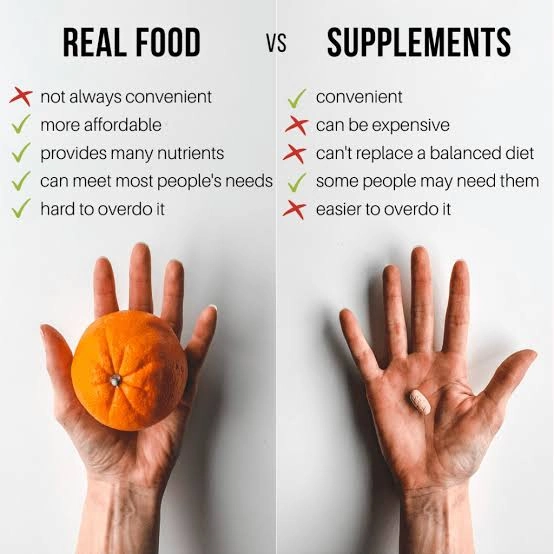
It is tempting to reduce all of this to a pill. That is not what the strongest research says.
AREDS2 supplements contain specific doses of vitamin C, vitamin E, lutein, zeaxanthin, zinc, and copper. They were studied for people at particular stages of AMD, not as general supplements for everyone who wants healthy eyes.
The National Eye Institute specifically notes that AREDS2 does not prevent AMD from starting. Its role is mainly to slow progression in certain people who already have significant AMD.
So eating an orange and taking AREDS2 solve two very different problems.
Try This Today: An Eye-Friendly Daily Habit
- Eat one serving of whole fruit, such as an orange, instead of replacing fruit with juice.
- Add one dark leafy green food during the day for lutein and zeaxanthin.
- Include fish regularly if it fits your diet.
- Do not smoke, since smoking raises the risk of several serious eye diseases.
- Keep regular dilated eye examinations, especially as you get older or if you have diabetes.
The Fruit Matters, but So Do Your Blood Vessels
Healthy eyesight depends on more than antioxidants.
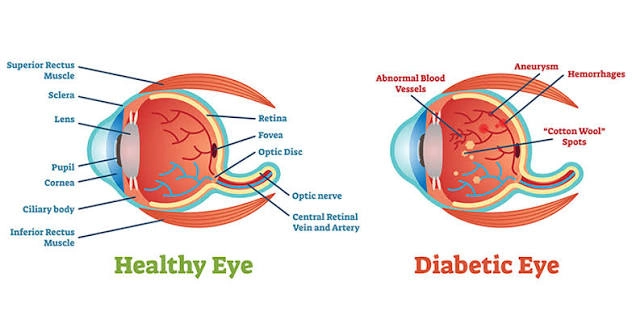
The retina is supplied by very small blood vessels. Conditions that damage the vascular system can also damage the eyes.
Diabetes is one clear example. Persistently high blood glucose can damage retinal blood vessels and cause diabetic retinopathy.
High blood pressure and smoking also matter for eye health.
That is why Cleveland Clinic recommends a broader Mediterranean-style eating pattern rather than one isolated “eye food.” Fruits, vegetables, healthy fats, fish, nuts, legumes, and minimally processed foods supply several nutrients at the same time.
What Oranges Can and Cannot Do
| What oranges may help provide | What oranges cannot do |
|---|---|
| Vitamin C | Restore vision already lost from AMD |
| Antioxidant compounds | Cure cataracts |
| Citrus flavonoids | Treat glaucoma |
| A useful daily fruit serving | Replace diabetic eye care |
| Part of an eye-healthy dietary pattern | Replace the prescribed medicine |
| A convenient alternative to processed snacks | Guarantee that AMD will never develop |
That right-hand column is just as important as the left.
Nutrition can shift risk and support normal body function. It cannot make serious eye disease disappear.
Do Not Blame These Changes on Aging

Contact an eye doctor promptly if you notice:
- Sudden loss or major reduction of vision
- New flashes of light or a sudden shower of floaters
- Straight lines suddenly look bent, distorted, or wavy
- A new dark or blank area in the center of your vision
Sudden vision loss or a curtain-like shadow across your vision can be an emergency. Seek urgent medical care rather than waiting to see whether food or rest makes it better.
So, Is an Orange Really the #1 Best Fruit for Healthy Eyesight?

There is no scientifically established champion fruit for eyesight.
But if you want one simple fruit to add regularly, oranges deserve a place near the top. They supply vitamin C, offer citrus flavonoids, and have unusually interesting observational research linking frequent intake with lower late AMD risk.
Pair citrus fruit with dark leafy greens, colorful vegetables, healthy fats, fish when appropriate, good blood sugar control, no smoking, and regular eye exams. That combination has far more evidence behind it than any miracle fruit ever will.
