
Your mind keeps wandering, but your body feels too tense to settle. You reread the same paragraph, lose your place, and grow frustrated when trying harder does not help.
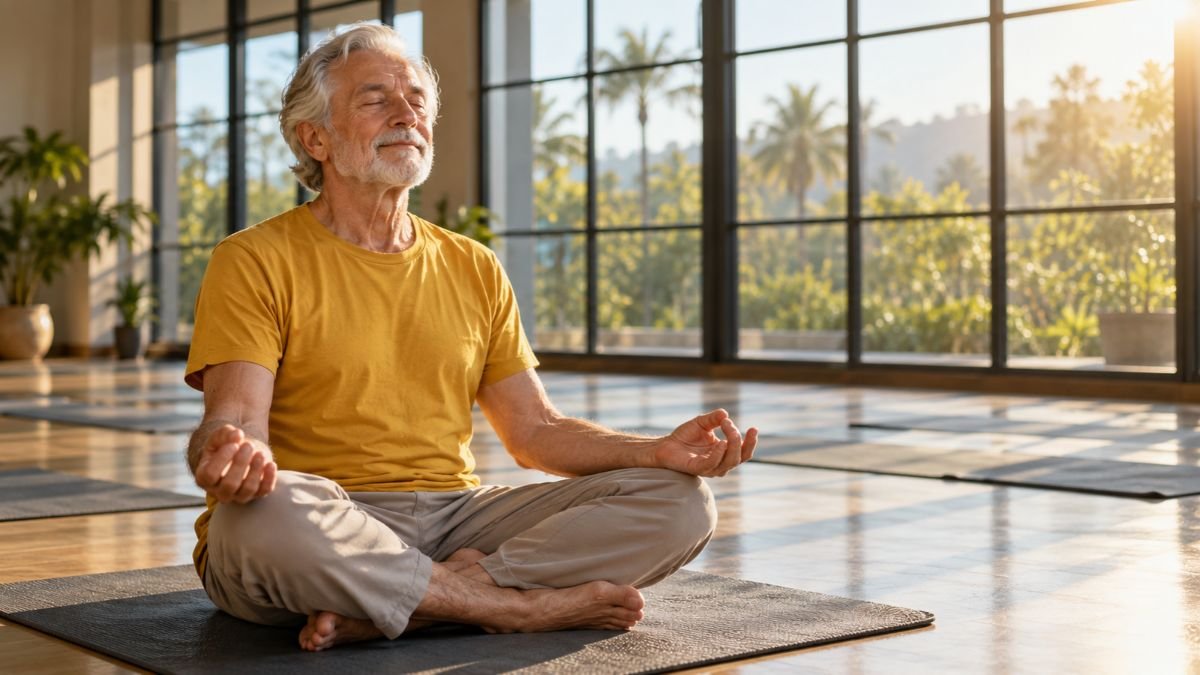
Brain-friendly yoga offers a gentle way to practice focus while easing physical tension. The starting point is simpler than a deep stretch or a perfect pose.
This article provides general health information, not a personalized exercise plan. Before starting yoga, consult your healthcare provider if you have a diagnosed condition, a recent injury or medical restrictions on activity.
What Makes Brain-Friendly Yoga Different?
“Brain-friendly yoga” is a useful description, rather than a recognized medical category. Here, it means combining comfortable movement, easy breathing, and deliberate attention without pushing your body into difficult positions.
You might notice your feet on the floor as you stand. You might follow a small movement with your breath, then return to that sensation when your thoughts wander.
Researchers propose that yoga engages several connected processes, including attention, awareness of bodily sensations, and emotional regulation. However, yoga styles differ considerably, making it difficult to identify exactly which ingredient produces a particular benefit.
The practical goal is a manageable place to return your attention. You do not need to empty your mind or become flexible before beginning.
What the Focus Studies Actually Found

Some yoga research measures executive function, a set of skills that help you manage information and behavior. These include working memory, resisting distractions, and switching between tasks.
Working memory helps you hold an instruction in mind while carrying it out. Task switching helps you move from one activity to another without losing track of what you need to do.
In a small 2013 study, 30 female college students completed yoga, aerobic exercise, and baseline testing sessions. After a 20-minute yoga session, they performed better on tests of working memory and inhibitory control, which involves resisting an automatic or distracting response.
That finding is encouraging, but its limits matter. The study examined immediate performance in young women, rather than lasting improvements in everyday concentration across all ages.
A 2014 randomized trial studied 118 adults with an average age of 62. Participants attended either Hatha yoga or stretching and strengthening classes for one hour, three times weekly, over eight weeks.
The yoga group showed greater improvements on measures of working memory and mental task switching. Researchers still called for larger trials, and the findings came from a structured program with substantially more practice than an occasional stretch break.
| Research finding | Reasonable takeaway | Limit to remember |
|---|---|---|
| Better performance after a 20-minute session | Yoga may have immediate effects on certain thinking tasks | One small study cannot predict everyone’s response |
| Improvements after an eight-week program | Regular practice may support some executive skills | The program involved supervised, hour-long classes |
| Benefits on specific cognitive tests | There are promising results worth studying | Test improvements do not establish dementia prevention |
The useful message is that yoga deserves consideration as a supportive practice. It does not follow that one pose treats memory loss or that a short routine can resolve every cause of poor focus.
How Feeling Calmer May Help Attention
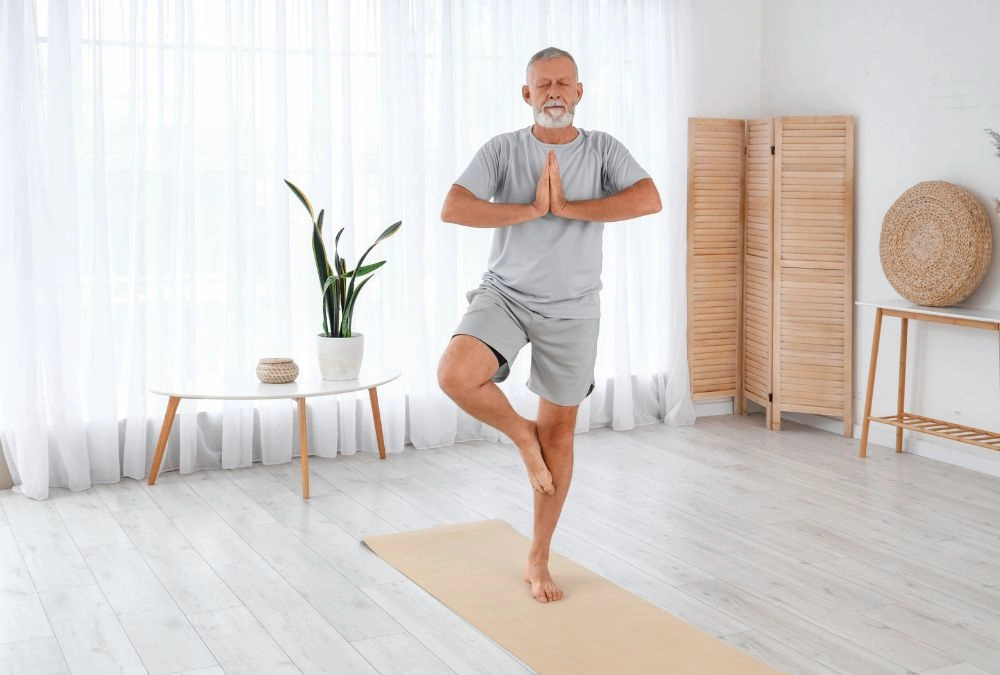
Yoga may influence concentration partly through the stress response. Researchers have investigated the hypothalamic-pituitary-adrenal axis, a hormone signaling system involved in how the body responds to stress.
In a 2016 study, yoga participants showed improved accuracy on executive function tasks and a reduced cortisol response compared with a stretching group. Changes in stress measures were associated with cognitive performance, supporting stress regulation as one possible pathway.
That does not mean you need to monitor cortisol or achieve a particular breathing pattern. It means the calming and attention components of yoga may work together, although the exact relationship remains uncertain.
The movement itself also gives you something specific to follow. Instead of demanding that you “concentrate harder,” a simple practice asks you to notice one sensation and return to it.
Start With Breathing You Do Not Have to Force

Sit in a stable chair with your feet comfortably supported. Rest your hands on your thighs or the chair arms, and allow your shoulders to settle.
Notice a few ordinary breaths before changing anything. Then let your breathing become gentle and regular, without pulling in the largest breath possible.
The NHS recommends breathing as deeply as feels comfortable without forcing it. Its stress-breathing exercise offers optional counting from one to five on the inhale and again on the exhale, repeated for at least five minutes.
Counting is a tool, not a target you must reach. If it makes breathing feel awkward, return to an easy rhythm and simply notice the breath.
A shorter introduction can help you become familiar with the practice. However, a minute of breathing should not be described as a proven dose for improving cognition.
Build a Gentle Practice Around Simple Moves
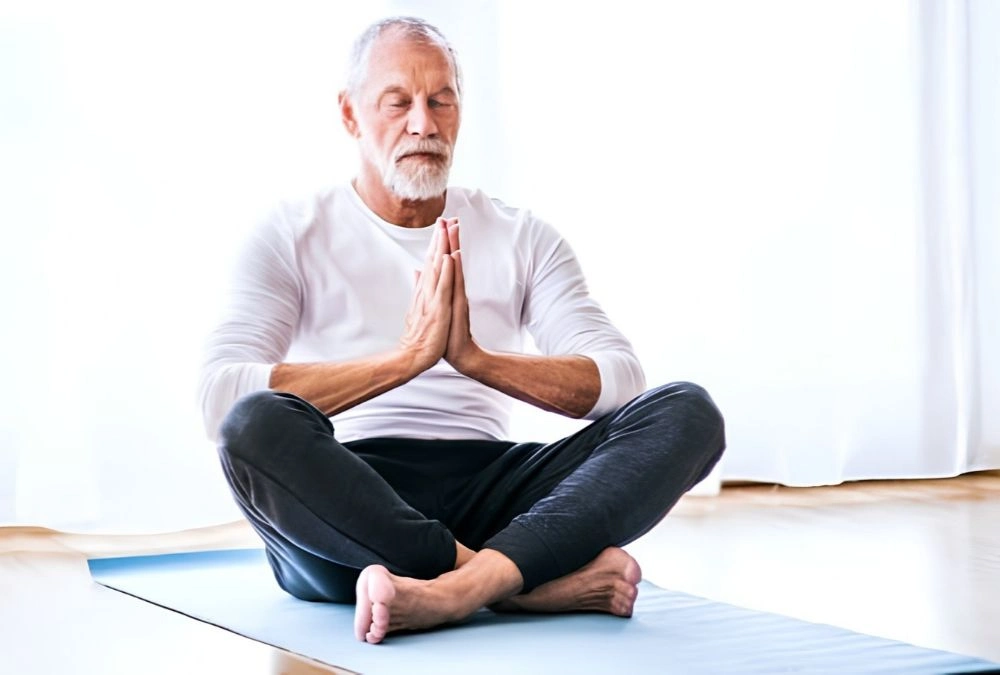
Cleveland Clinic describes yoga therapy as a combination of movement, breathing, mindfulness, and relaxation. Its examples include posture awareness, side bends, cat cow, and a period of rest at the end.
The sequence below uses those general principles in an accessible starting routine. The repetitions are practical suggestions, rather than a research-tested prescription.
Your balance, mobility and health history may require changes to these movements. Pregnancy, glaucoma, high blood pressure, arthritis and sciatica can affect which yoga positions are appropriate, so discuss relevant restrictions with your healthcare professional or instructor.
Find Your Base With Seated Mountain
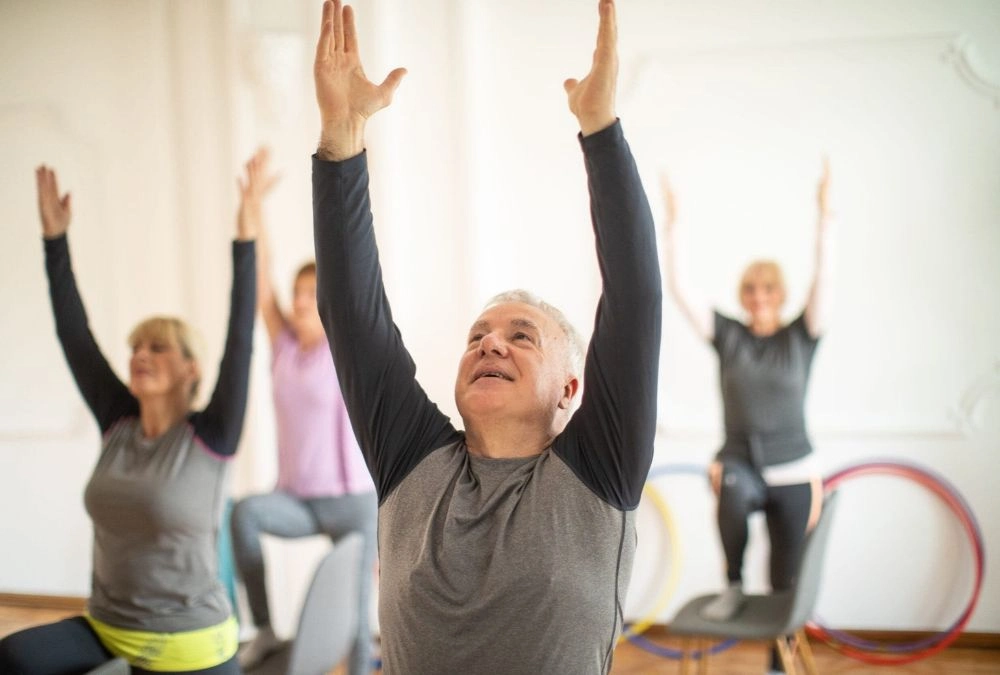
Sit comfortably tall, keeping your feet supported and your hands relaxed. Avoid pulling your shoulders back so firmly that your posture becomes stiff.
Stay for three to five comfortable breaths, noticing the contact beneath your feet and seat. This is an adaptation of mountain pose, which Cleveland Clinic includes among foundational beginner positions.
The attention task is simple: notice where your body meets its support. When a thought interrupts, return to that feeling without trying to correct every detail of your posture.
Match a Small Movement to Your Breath
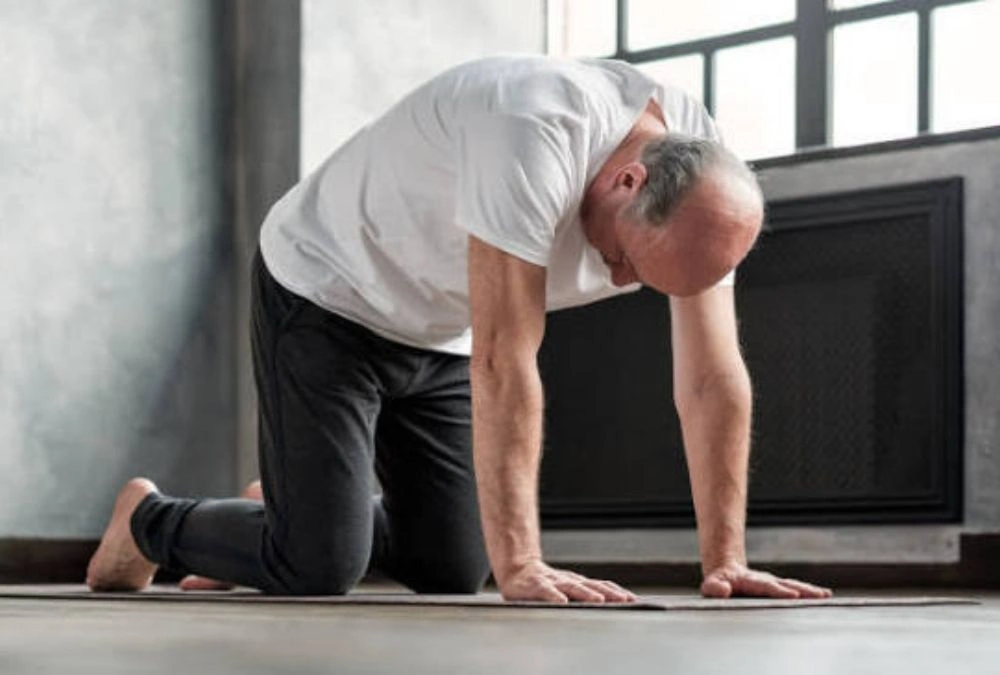
For a seated variation of cat cow, place your hands on your thighs. As you inhale comfortably, gently open your chest without throwing your head backward.
As you exhale, return through neutral and allow a small rounding through your upper back. Try three slow cycles, keeping the movement smaller if a wider range feels uncomfortable.
Cleveland Clinic describes cat cow as a movement that coordinates inhalation and exhalation with changes in spinal position. The seated version offers a way to explore that coordination without placing weight through your hands and knees.
Explore a Comfortable Side Reach
Keep both sides of your seat supported and lift one arm only as far as feels easy. Make a small side bend, return to the middle, and repeat on the other side.
If lifting an arm is uncomfortable, keep your hands resting and skip the reach. Side bends appear among Cleveland Clinic’s yoga therapy tools, but a deeper stretch has not been established as better for focus.
Finish With Support, Not Another Challenge
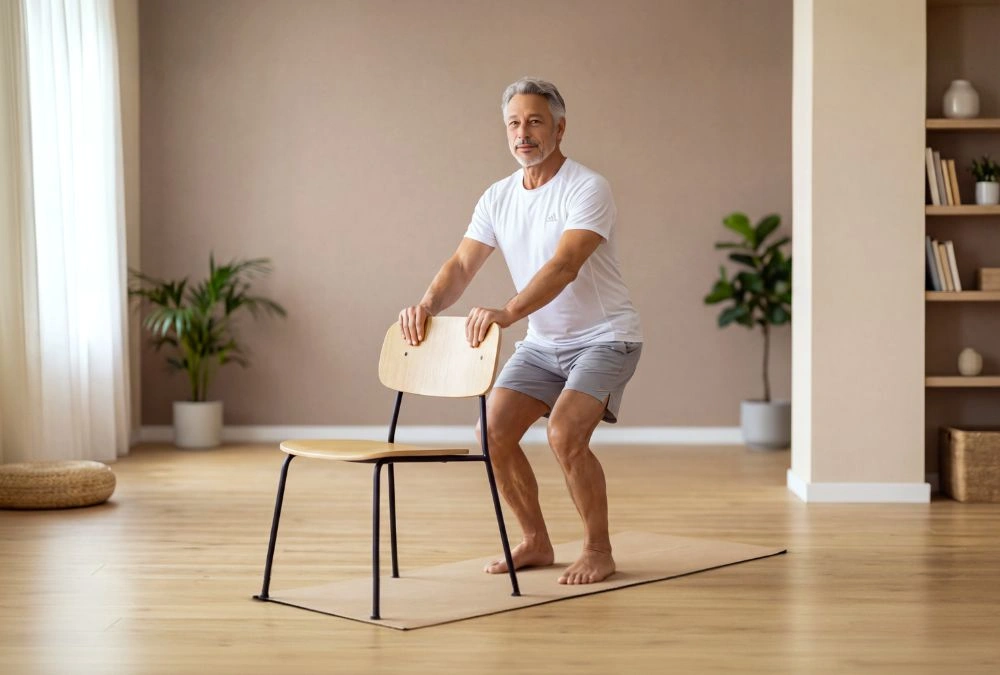
If standing feels comfortable, stand near a stable support with your feet about hip width apart. Let your arms rest and notice how your weight meets the floor for several easy breaths.
Otherwise, remain seated and settle against the chair back. Finish with a quiet pause, allowing your breathing to return to its natural rhythm.
Cleveland Clinic’s home practice guidance recommends ending with a comfortable resting position. It also advises bringing attention back to breathing when the mind wanders.
| Part of the practice | Suggested starting point | Attention cue |
|---|---|---|
| Comfortable breathing | Begin with a brief introduction | Follow an easy inhale and exhale |
| Seated mountain | Three to five comfortable breaths | Notice feet and seat against support |
| Small seated cat cow | Three slow cycles | Match movement with breathing |
| Gentle side reach | One comfortable reach per side | Notice sensation without pushing |
| Supported rest | A quiet pause at the end | Feel your hands resting |
No individual movement here is a proven brain treatment. The purpose is to practice comfortable movement, breathing, and attention together.
Try This Today
- Put a stable chair on a nonslip surface.
- Begin with one minute of easy, unforced breathing.
- Choose two comfortable movements from the table.
- Return to one cue, such as the feeling beneath your feet.
- Finish by noticing whether you feel settled, unchanged or uncomfortable.
How Much Practice Is Enough?
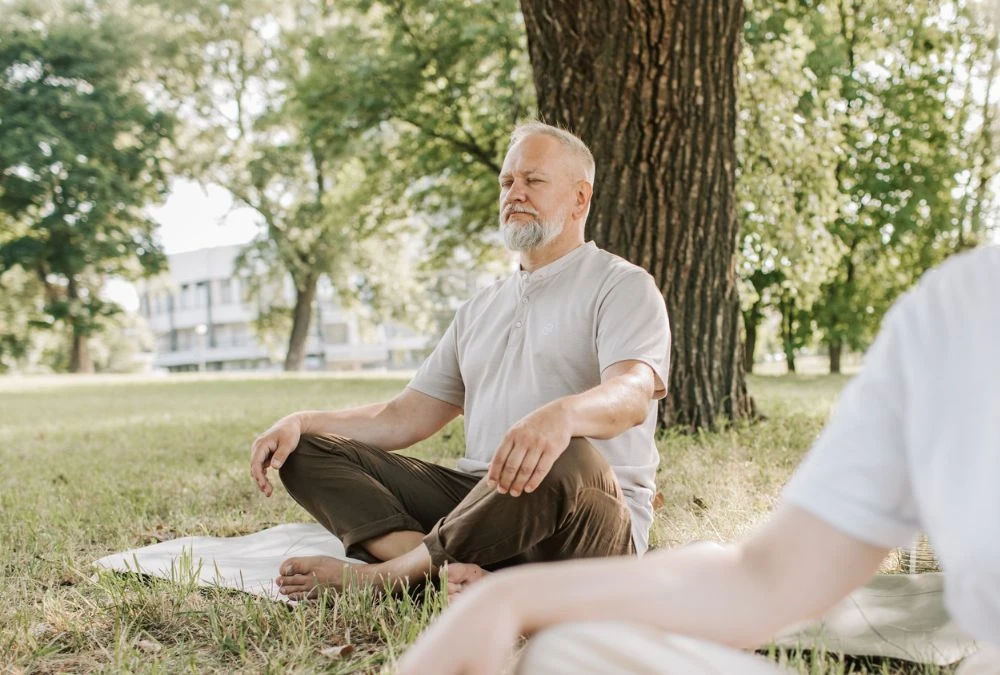
There is no established minimum dose of gentle yoga that guarantees better focus. Studies use different styles, schedules, and tests, so their results cannot be reduced to one universal number.
The eight-week trial involved three hour-long classes each week. A short home routine can introduce useful skills, but it should not inherit the same promised outcomes.
For beginners, a routine that feels manageable may be easier to repeat. Cleveland Clinic encourages simple, consistent practice and notes that yoga can fit into ordinary moments, including at a desk or before bed.
Choose a predictable pause and begin there. Add time only when the practice remains comfortable, rather than stretching a session to meet an arbitrary goal.
What If Your Mind Keeps Wandering?
Distraction does not mean the session has failed. Returning to a chosen sensation is part of the practice, and Cleveland Clinic explicitly includes this instruction in its home yoga guidance.
Use a cue you can identify easily. The pressure beneath your feet or the movement of one comfortable breath is more useful than a broad command to “be present.”
You also do not have to force yourself to enjoy relaxation. Mayo Clinic notes that some people, particularly those with a trauma history, can experience emotional discomfort during relaxation techniques.
If a practice becomes distressing, stop and try a different approach with appropriate guidance. Relaxation is a skill to explore, rather than another standard you must meet.
Notice Progress Without Turning It Into a Test
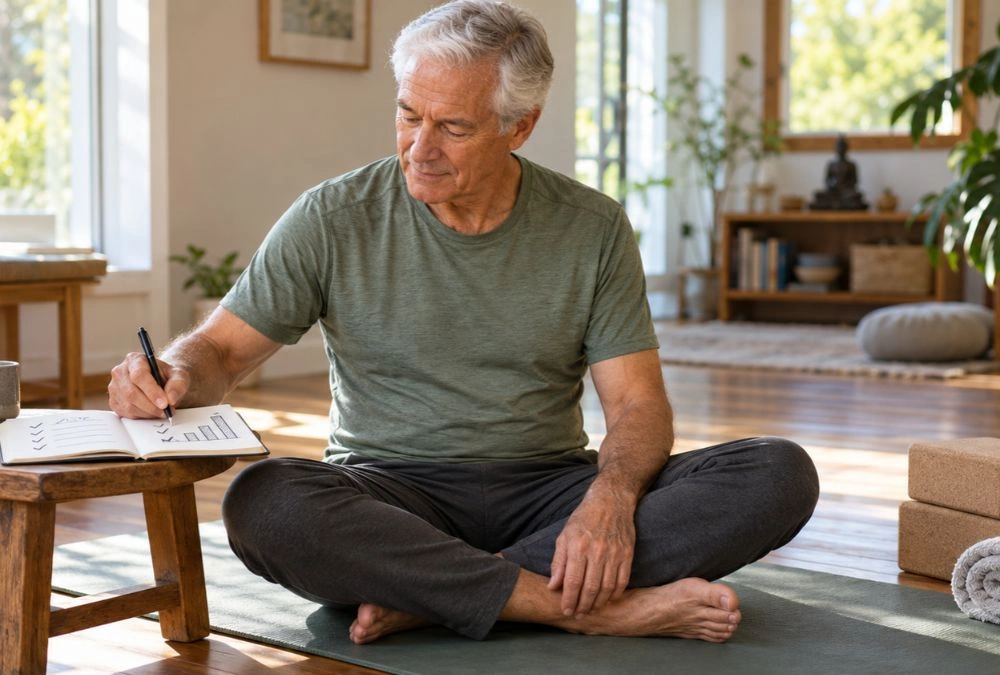
The studies discussed here used formal cognitive measures. A home check cannot tell you whether your working memory has improved or your brain structure has changed.
It can still provide useful feedback about comfort and consistency. Keep a brief note if that helps, without treating each session as a performance review.
| What to notice | A useful question | What it tells you |
|---|---|---|
| Physical comfort | Did any movement cause pain or strain? | Whether the routine needs adjustment |
| Attention | Could you return to one cue after wandering? | How the practice felt that day |
| Emotional response | Did you feel calmer, unchanged, or distressed? | Whether this approach suits you |
| Practical fit | Was the routine easy to fit into your day? | Whether the schedule is sustainable |
These observations are practical suggestions, not a validated self-test. Persistent concentration difficulties deserve attention beyond changing your yoga routine.
Can Yoga Replace Anxiety Treatment?

Feeling tense before a task differs from having an anxiety disorder. Evidence about yoga for everyday stress should not be used to promise treatment for a diagnosed condition.
A randomized trial involving 226 adults with generalized anxiety disorder compared Kundalini yoga, cognitive behavioral therapy, and stress education. Yoga produced benefits, but the study did not establish it as equivalent to CBT, and the authors supported CBT remaining a first-line treatment.
That trial also tested a structured program, rather than this short sequence. Continue prescribed care and discuss any changes with the professional treating you.
When to Stop and Get Medical Help

Sudden changes in thinking or coordination need urgent attention. Stop practicing and call your local emergency number for these warning signs:
- Sudden confusion, trouble speaking, or difficulty understanding speech.
- Sudden weakness or numbness, particularly on one side.
- Sudden loss of vision, balance, or coordination. These can indicate stroke, even if they improve quickly.
- Chest pain with breathlessness, sweating, nausea, or lightheadedness.
For pain or fatigue during a movement, stop and rest. MedlinePlus recommends staying within your comfort level and seeking modifications rather than pushing through an unsuitable pose.
Give Your Attention Somewhere Gentle to Land
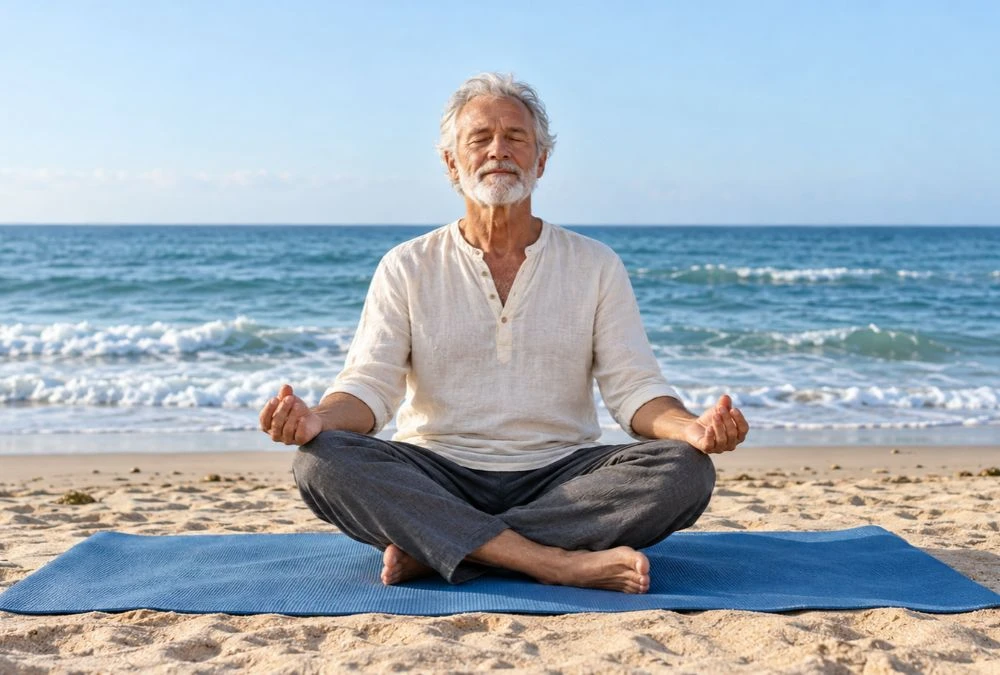
Gentle yoga offers a concrete way to combine movement, breathing, and attention. Research suggests potential benefits for some thinking skills, while leaving questions about the best style, duration, and amount of practice.
Start with a comfortable position and one clear cue. A useful session gives you a manageable practice to return to, without requiring perfect stillness or an impressive stretch.
