
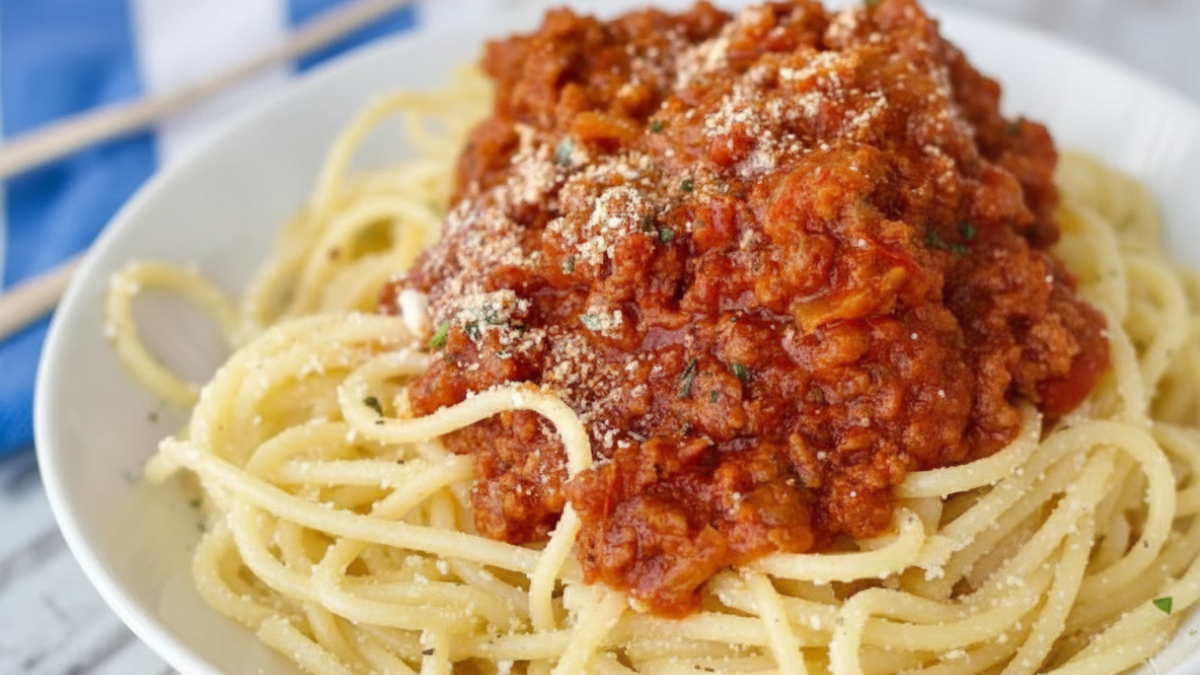
Sunday dinner shouldn’t taste like a jar of sugar and preservatives.
You know the smell I’m talking about. It’s that deep, rich garlic-and-tomato scent that fills the whole house. It sticks to your clothes and makes your neighbors jealous. But for most of us, creating that smell feels impossible.
We try. We buy fresh basil. We simmer tomatoes. Yet, the result is often disappointing. Maybe it’s too watery. Perhaps it’s so acidic it gives you heartburn. Or maybe it just tastes… flat.
So we go back to the jar. I have spent the last 15 years addressing this issue. I stopped trying to copy 8-hour chef recipes and started focusing on what actually creates flavor. The result is this homemade spaghetti sauce recipe. It is reliable. It is rich. And it uses a specific mix of meats and a secret umami booster to get that “all day” taste in just a couple of hours.
The Science of Flavor
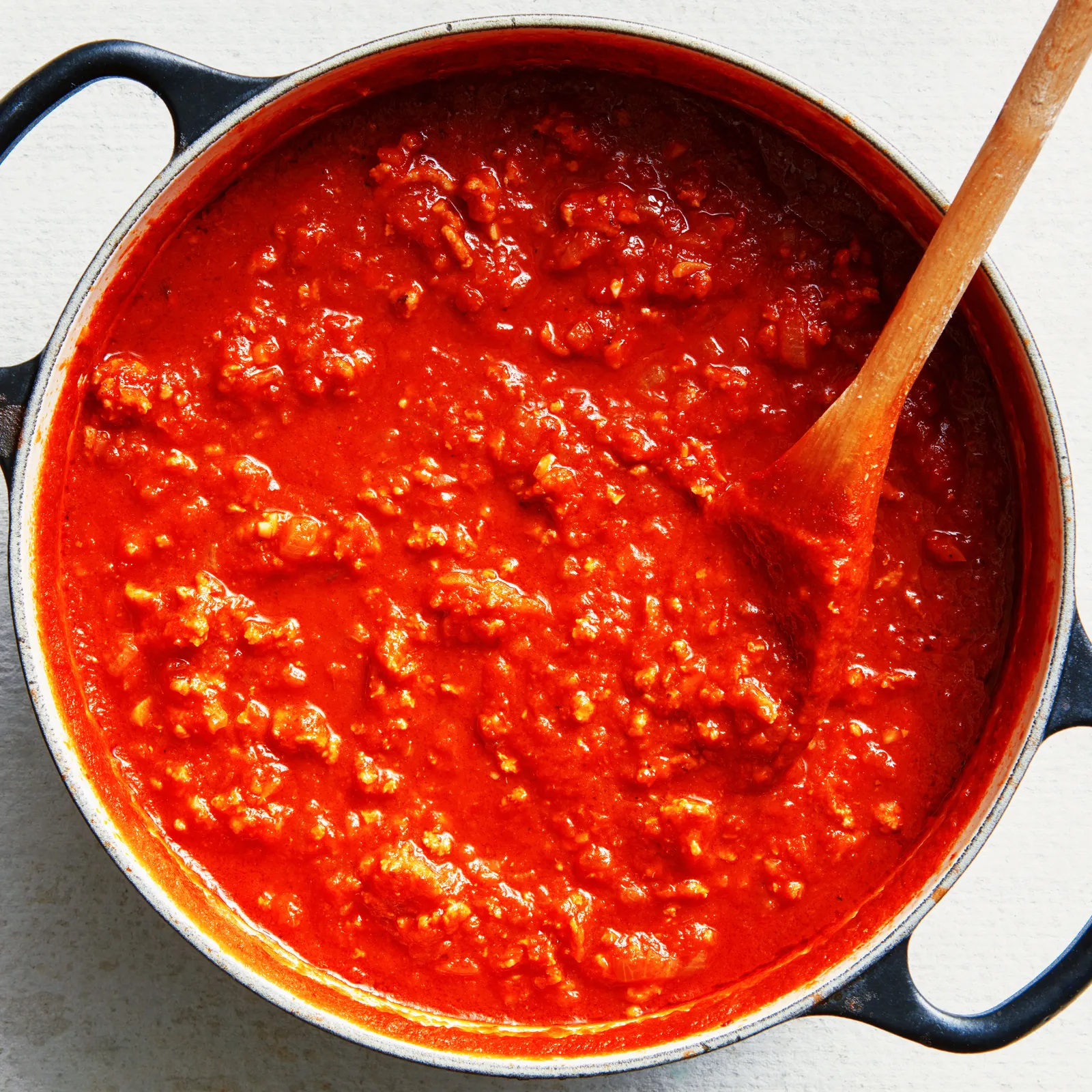
Good cooking is chemistry, not magic. You don’t need an Italian grandmother to make great sauce. You just need to understand three simple concepts. Once you have the fat right, you have to fix the acidity. Then, you boost the savory notes.
Here is the breakdown:
1. The Fat Carrier (The “Sunday Gravy” Base)
Flavor lives in fat. If you use lean ground beef, your sauce will taste like diet food. You need pork fat.
I use a mix of ground beef (80/20) and mild Italian sausage. The fennel and spices in the sausage cure into the fat as it renders. This flavored fat then coats every piece of pasta later. This is the base of the best meat sauce for pasta.
Here is the “Sunday Gravy Base” card component. Design Logic: Theme: “Rich Ragu” – Uses Deep Tomato Red, Sausage Brown, and Rendered Fat Gold to visualize the cooking process. Graphics: Pure CSS shapes representing a cast-iron skillet browning meat, a fat droplet, a meat ratio chart, spice infusion, and coated pasta. Structure: Follows the strict “Navigation Ninja” vertical layout. HTMLThe Fat Carrier
-
Flavor Lives in Fat Lean beef tastes like diet food. You need fat for a rich sauce.
-
The Perfect Mix Use ground beef (80/20) mixed with mild Italian sausage.
-
Render & Cure Fennel and spices from the sausage cure into the fat as it renders.
-
The Gloss This flavored fat coats every piece of pasta later.
2. The Acid Balance (The Carrot Trick)
Tomatoes are acidic. This is why many people dump spoonfuls of sugar into their sauce.
Don’t do that. Sugar makes the sauce taste like candy.
Instead, use a finely grated carrot. As the carrot cooks down, it releases natural, earthy sugars. This balances the sharp acidity of the tomatoes without making the dish taste artificial. Samin Nosrat, author of Salt, Fat, Acid, Heat, teaches that balancing acid is the key to making food taste “restaurant quality.”
The Acid Balance
-
Acidity Problem Tomatoes are naturally acidic, which can make sauce taste sharp.
-
Skip the Sugar Don’t dump sugar. It makes the sauce taste artificial like candy.
-
The Carrot Trick Use finely grated carrot. It releases earthy sugars as it cooks down.
-
Restaurant Quality Balancing acid naturally is the key to professional-level flavor.
3. Umami Bombs (The Secret Weapon)
This is the part that scares people, but you have to trust me. You need a “glutamate” source. This is the savory flavor that makes you want another bite.
I use a dab of anchovy paste or a Parmesan rind.
If you hate fish, don’t worry. You will not taste the anchovy. It melts away completely. It leaves behind a salty, meaty depth that beef alone cannot provide. It is the slow-cooked bolognese secret that most restaurants use but never tell you.
The Umami Bomb
-
Savory Glutamates You need a savory source that makes you crave another bite.
-
Secret Ingredients Use a dab of anchovy paste or a Parmesan rind in the simmer.
-
Melts Away It melts completely. You won’t taste fish, just savory power.
-
Meaty Depth Provides a richness beef alone cannot. The restaurant secret.
The “Non-Negotiable” Ingredients
I am usually flexible with recipes. Not here.
If you buy cheap ingredients, you will get a cheap-tasting sauce. There are only a few items in this pot, so every single one has to pull its weight.
Here is your shopping list rulebook:
- San Marzano Tomatoes: Look for the DOP label (Protected Designation of Origin). These tomatoes grow in volcanic soil in Italy. They have fewer seeds and lower acidity than standard American tomatoes. If you buy a standard can of “Hunts,” your sauce will be watery. Brands like Cento are worth the extra dollar.
- Tomato Paste in a Tube: Do not buy the little cans. Canned paste often tastes metallic because the acid reacts with the tin. Tube paste is fresher. Plus, you can put the cap back on and keep it in the fridge.
- Fresh vs. Dried Herbs: Use dried oregano at the start of cooking. The long heat helps release its oils. Use fresh basil at the very end. If you cook fresh basil for an hour, it turns black and bitter.
- The Meat Mix: 1 pound of 80/20 Ground Beef and 1 pound of Mild Italian Sausage (casings removed).
Non-Negotiables
-
San Marzano DOP Volcanic soil, fewer seeds. Hunts will make it watery.
-
Tube vs. Can Avoid metallic canned taste. Tube is fresher and resealable.
-
Herb Timing Dried oregano at start (heat). Fresh basil at end (finish).
-
The Meat Mix 1 lb 80/20 Beef + 1 lb Mild Italian Sausage (casings off).
Step-by-Step Cooking Method
We start with heat.
This method relies on building layers. Do not throw everything in the pot at once. We are building a foundation.
1. The Brown (The Maillard Reaction)
Grab your heavy Dutch oven (like a Le Creuset or Lodge). Heat it over medium-high.
Add your meat. Do not crowd the pan. If you pack the meat too tightly, it will steam rather than brown. You want the meat to turn dark brown, almost crispy in spots. This is called the Maillard reaction. It happens when meat hits 300°F+, creating new flavor compounds that didn’t exist before.
- Tip: Do this in two batches if your pot is small.
2. The Veggie Sweat
Remove the meat, but leave the grease. That is liquid gold. Add your diced onions and that grated carrot.
Cook them in the meat fats until they are soft and translucent, about 8 minutes. Add garlic only in the last minute so it doesn’t burn.
3. The “Bloom.”
Clear a small spot in the center of the pan. Squeeze in 3 tablespoons of tomato paste.
Fry the paste for 2 minutes. It should turn from bright red to a deep brick red. This “blooming” process cooks out the raw, tinny flavor of the paste.
4. The Deglaze and Simmer
Pour in half a cup of dry red wine (Cabernet or Merlot works well). Scrape the bottom of the pot with a wooden spoon. Those stuck-on brown bits are full of flavor.
Add your crushed San Marzano tomatoes, your dried oregano, and your secret weapon (anchovy paste or parmesan rind). Return the meat to the pot.
Bring it to a bubble, then drop the heat to low. Cover the pot, but leave the lid slightly cracked. Let it simmer.
- Minimum time: 45 minutes.
- Gold standard: 2 hours.
5. The Finish (The Butter Trick)
Turn off the heat. Remove the parmesan rind. Taste the sauce. Add salt and pepper now. Finally, stir in one tablespoon of cold butter and your fresh chopped basil.
The butter emulsifies the sauce. It smooths out any remaining acidity and gives the sauce a velvety, glossy texture. This is a technique famously used by Italian cooking legend Marcella Hazan.
Mistakes That Ruin Good Sauce
I have made every mistake on this list, so you don’t have to. If your sauce has failed in the past, it was likely due to one of these three reasons.
- Draining the Fat: I see people cook the meat, then dump all the liquid into a tin can. Stop. You are throwing away the flavor. If there is a massive pool of oil, spoon a little off. But you generally need that fat to carry the spices.
- Boiling vs. Simmering: High heat destroys tomato sauce. It breaks the emulsion, separating the oil from the tomatoes. You want a gentle, lazy bubble. If it is splashing on your stove, the heat is too high.
- Over-salting Early: Tomatoes reduce as they cook. This means the liquid evaporates, but the salt stays. If you salt perfectly at the beginning, your sauce will be a salt lick by the end. Add a pinch at the start, but do your final seasoning right before you serve.
Sauce Mistakes
-
Draining the Fat Stop dumping the liquid. You need that fat to carry the flavor.
-
Violent Boiling High heat destroys sauce. Aim for a gentle, lazy bubble only.
-
Early Over-Salting Tomatoes reduce, but salt stays. Season fully at the very end.
