

You sit down to finish one simple task, but your attention keeps slipping away. You reread the same paragraph, lose your place, and reach for your phone before you notice what you’re doing. Soon, a ten-minute job has eaten half an hour, and the work is still waiting.
There are simple ways to train your brain for better focus, and several start with changes you can try today.
These 19 strategies cover attention practice, fewer distractions, and habits that support clear thinking. They work in different ways, so choose a few that address what actually interrupts your day.
These strategies provide general education and cannot diagnose the cause of poor concentration. Talk with your healthcare provider if attention problems are new, persistent, or affecting daily life.
1. Practice Bringing Your Attention Back

Sit comfortably and spend a few minutes noticing your natural breathing, without forcing deep breaths. When you realize you are thinking about dinner or tomorrow’s errands, gently return to the sensation of breathing.
That return is the practice, so a wandering mind does not mean you have failed. A 2013 randomized study found that a two-week mindfulness course improved working memory and reading comprehension while reducing distracting thoughts, although a short home exercise cannot be assumed to deliver the same results.
2. Read Until You Can Explain the Main Point

Choose a short passage and read it without opening another screen, then pause and describe its main point. This gives your reading a clear purpose and helps reveal whether you followed the meaning.
Start with a manageable stretch, perhaps five to ten minutes, and return to the passage if you lose the thread. Harvard Health recommends quiet reading as attention practice, with breaks and gradual increases rather than pushing through an exhausting session.
3. Give One Task a Clear Finish Line

Before beginning, define exactly what “finished” means, such as reviewing one bill or answering one message. A clear endpoint makes it easier to notice when you have switched to something unrelated.
Your brain must redirect attention when you move between demanding tasks, creating a switching cost. Keep a scrap of paper nearby for unrelated thoughts, record them briefly, and return to the job instead of acting on each one immediately.
4. Set Your Phone Up Before It Interrupts

Silence nonessential notifications before you begin a task, while allowing urgent contacts through if needed. This reduces outside signals competing for your attention.
Harvard Health includes notification controls and website blockers among practical ways to limit digital distraction. Try completing one ordinary activity, such as reading your mail, with alerts off, then notice how often you finish without switching away.
What Different Focus Strategies Can Actually Do
| Strategy | What researchers examined | What the findings support |
|---|---|---|
| Mindfulness training | A two-week course | Improvements in working memory and reading comprehension in that study |
| Brain training tasks | Six weeks of online practice involving 11,430 people | Better performance on practiced tasks, without evidence of transfer to untrained tasks |
| A single exercise session | A review of 113 studies in healthy young adults | A small average cognitive benefit |
| MIND eating pattern | A three-year trial involving 604 older adults | No significant cognitive advantage over the comparison diet |
These studies measured different outcomes in different groups. A result involving memory, reaction speed, or a game score does not automatically establish better concentration in every daily situation.
5. Find Out Whether Background Sound Helps

Try a demanding task with the television and background conversations removed. Competing speech gives you additional information to filter while you are trying to understand something else.
Cleveland Clinic recommends reducing environmental distractions when concentration matters. Compare two similar activities, such as reading comparable articles in quiet and with your usual background sound, and judge understanding rather than assuming a familiar soundtrack helps.
6. Take a Break Before You Start Guessing

Notice when you begin skimming instructions, making avoidable errors, or reading without understanding. Those signs can help you decide when to pause instead of continuing without making progress.
Scheduled breaks are one practical approach because attention can fade during sustained work. Try a work period you can manage, followed by a brief pause, and adjust it to the task; the popular 25-minute work and five-minute break pattern is an option, not a biological rule.
7. Learn a Skill That Requires Real Decisions

Choose something that asks you to follow steps, notice mistakes, and adjust, such as photography, music, or quilting. These activities provide meaningful practice with learning rather than simply repeating something you already do automatically.
The National Institute on Aging describes research in which older adults learning digital photography or quilting showed memory benefits, while stressing that lasting cognitive benefits remain uncertain. Start with one small project you want to complete, such as learning to photograph an indoor scene in natural light.
8. Give Your Brain Something Worth Learning

Break a complicated instruction into short, meaningful groups before trying to follow it. Chunking organizes information so you do not have to treat every detail as a separate item.
A familiar example is dividing a phone number into groups instead of reading it as one long string. Apply the same idea to a new household task by writing three short stages, completing the first, and checking the next rather than holding the full sequence in mind.
9. Say Back What You Need to Understand

After receiving important information, explain the main steps in your own words. This encourages active processing and gives the other person a chance to correct anything you missed.
Cleveland Clinic recommends verbalizing and repeating new information as learning strategies. At an appointment, try saying, “To check that this is clear, the next step is to book the test,” and write down exact instructions rather than relying on memory for details that affect your care.
10. Give New Information a Familiar Connection

Connect a new detail with something you already know, such as linking a name with a familiar person who shares it. That connection provides an additional cue for remembering the information.
Associations support learning and recall, although they are not proof that your general attention span has grown. When meeting someone, listen carefully to the name, use it naturally once, and choose a private connection that makes sense to you.
Ways to Train Your Brain for Better Focus During Ordinary Tasks
| Everyday task | Technique to try | What to notice |
|---|---|---|
| Reading an article | Read quietly, then explain the main point | Whether you understood the passage |
| Following instructions | Group steps and say them back | Whether you missed or confused a step |
| Completing paperwork | Work on one task with alerts silenced | Whether you finish with fewer switches |
| Learning a skill | Follow one manageable lesson | Whether you can perform the new step |
| Doing sustained work | Schedule a break that suits the task | Whether errors increase before the pause |
These approaches draw on medical guidance about concentration and learning. They are practical experiments, not diagnostic tests or promises of a particular improvement.
11. Stop Keeping Every Errand in Your Head
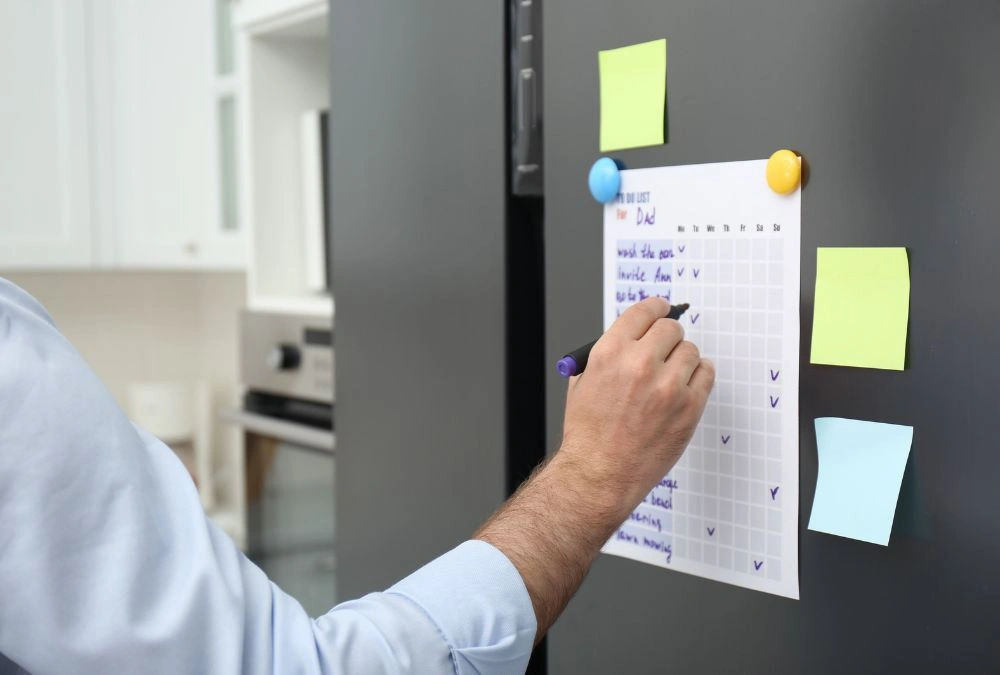
Use one reliable place to record appointments, pending jobs, and errands. An external record means you have less information to keep rehearsing while you are doing something else.
Mayo Clinic recommends updated task lists and a consistent place for essentials such as keys and glasses. Before a focused activity, spend a minute recording unfinished jobs, then choose which one matters now rather than repeatedly reviewing the entire list mentally.
Try This Today
- Choose one small task with a clear endpoint.
- Write down unrelated errands before starting.
- Silence nonessential alerts for five minutes.
- Return to the next step whenever attention wanders.
- Record one thing that made the task easier.
12. Treat Sleep as Part of Attention Training

Protect enough time for sleep instead of trying to compensate for tiredness with more effort. Sleep deficiency can interfere with focusing, learning, and reacting, so poor concentration may reflect inadequate rest.
Mayo Clinic recommends seven to nine hours of sleep for adults, alongside attention to sleep quality. Keep a regular schedule where possible, and discuss loud snoring, repeated awakenings, or persistent daytime sleepiness with a medical professional rather than assuming extra time in bed solves everything.
13. Build Movement Into Your Week

Make regular movement part of your routine, using activities that suit your abilities. Physical activity supports circulation and can help with sleep and stress, both of which affect thinking.
General guidance for most adults includes at least 150 minutes of moderate aerobic activity each week. Shorter walks count toward that total, so start with a manageable amount and build a routine instead of waiting until you can do a long workout.
14. Experiment With Moving Before Mental Work

Try a comfortable walk before a task requiring concentration and notice how you feel afterward. A 2024 review covering 4,390 healthy young adults found a small average cognitive benefit after a single exercise session, including improvements on some working memory and inhibition tasks.
Researchers discuss changes in brain signaling and growth-related factors as possible contributors, but those mechanisms do not guarantee a noticeable boost for each person. Treat movement before work as an experiment, with no need to turn it into an intense workout.
Choose physical activity that suits your abilities and health conditions. If you have exercise restrictions or are unsure what is safe, ask your healthcare provider before increasing your activity.
15. Check the Trade-Off With Caffeine

If you use coffee or tea for alertness, pay attention to sleep, jitters, and anxiety as well. Caffeine can help short-term focus, but unwanted effects can make additional servings counterproductive.
The FDA cites 400 milligrams daily as an amount generally not associated with adverse effects for most adults, while emphasizing that sensitivity varies. This is not a daily target or a recommendation to begin using caffeine; check the amount in your usual drinks before assuming every cup is equivalent.
16. Choose Regular, Balanced Meals

Build meals around a variety of vegetables, fruit, whole grains, and protein sources such as beans or fish. This supports overall health without asking one food or nutrient to function as a focus treatment.
Be cautious about claims that a particular eating plan guarantees sharper thinking. In the three-year MIND diet trial, both groups received counseling and mild calorie restriction, and researchers found no significant difference in cognitive outcomes between the diets.
17. Give Conversation Your Full Attention

Make room for regular contact with people you enjoy, and occasionally have a conversation with phones put away. Social connection can help counter stress and depression, both of which can affect thinking.
Mayo Clinic includes time with others among habits that support memory and brain health. During your next conversation, listen to the end of the person’s point and ask a relevant follow-up question, using the exchange as an everyday opportunity to stay engaged.
18. Judge Brain Games by What They Teach

Enjoy a puzzle or game if you like it, but keep its benefits in perspective. Practicing a particular task can improve performance on that task without producing a broad change in everyday thinking.
A six-week online study of 11,430 participants found improvements on trained activities without evidence of transfer to untrained tasks. The National Institute on Aging also cautions that commercial brain training apps have not established the same benefits as specific research-based training programs, so choose games for enjoyment and realistic learning goals.
19. Look for Causes That Practice Cannot Fix

Keep a brief note of when concentration problems happen, including changes in sleep, mood, and medicines. Conditions such as sleep apnea and depression, along with medication effects, can interfere with attention.
Hearing and vision difficulties can also make information harder to take in, creating problems that may feel like poor focus. Bring persistent or worsening changes to a healthcare professional, and request a medication review rather than stopping or adjusting treatment yourself.
When Focus Problems Deserve a Closer Look
| Pattern | Possible contributor | Appropriate next step |
|---|---|---|
| Loud snoring and daytime sleepiness | Sleep apnea | Ask about a sleep assessment |
| Concentration problems with low mood | Depression or another mood concern | Discuss symptoms and daily functioning |
| Difficulty after a medication change | Medication effects | Request a review |
| Trouble following speech or reading | Hearing or vision difficulties | Arrange an appropriate check |
| Worsening difficulty with familiar tasks | A condition needing assessment | Book a medical appointment |
These patterns have several possible explanations. A healthcare professional can assess the cause rather than assuming attention practice is the missing answer.
When to Seek Medical Help
- Sudden confusion or disorientation: Seek emergency medical help immediately. Sudden confusion can have serious causes and differs from ordinary distraction.
- Sudden trouble speaking, weakness on one side, or sudden vision loss: Call 911 in the United States or your local emergency number. Possible stroke symptoms require emergency care even if they disappear.
- Persistent or worsening problems affecting daily activities: Arrange a medical appointment, especially when familiar work, appointments, or independent living become harder.
Start With the Task You Want to Make Easier
Choose one daily frustration, such as losing your place while reading, and pair a short practice with a useful change to your surroundings. For example, read one section with notifications silenced, then explain its main point.
Look for practical progress rather than perfect concentration. Finishing a task more accurately or returning to it more easily is useful feedback, while continued difficulty is a reason to seek advice.
